 fb2
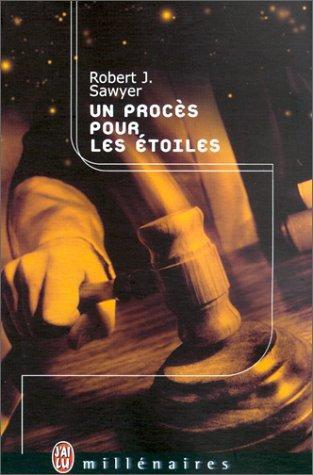
fb2Pour Frank Nobilio, le conseiller scientifique du président des Etats-Unis, le premier contact entre l'humanité et une race extraterrestre est assurément un succès : les Tosoks, malgré leur aspect déroutant, sont amicaux et tout disposés à faire bénéficier les hommes de leur avance technique. Quant à ces derniers, ils ont réussi à passer outre un bien légitime désarroi face aux caractéristiques morphologiques de leurs visiteurs pour réserver à ceux-ci le meilleur accueil possible. Mais une nuit, un des savants de l'entourage des aliens est assassiné dans des conditions atroces, et tous les indices semblent accuser Hask, l'un des Tosoks. Bientôt arrêté, emprisonné et traduit en jugement, Hask risque d'être exécuté à moins que Frank et Dale, son avocat, ne parviennent à établir son innocence. Leur tâche s'annonce d'autant plus difficile que leur client se montre peu coopératif, laissant entendre que l'enjeu de ce procès dépasse de loin le cadre étroit de la justice humaine... Un roman époustouflant - et souvent drôle - qui fait cohabiter très intelligemment la thématique classique du " premier contact " et le thriller juridique haletant à la John Grisham !
Voici la suite d’Éveil, qui racontait l’émergence d’une Intelligence Artificielle sur le réseau Internet. Caitlin, jeune aveugle de naissance, a recouvré la vision grâce à une prothèse informatique et joue un rôle essentiel dans cette émergence puis dans l’éducation de cette conscience non humaine, Webmind.
L’accès progressif de Webmind à la totalité des ressources d’Internet lui confère des pouvoirs surhumains, presque divins. Qui ne manquent pas d’inquiéter le gouvernement américain. Peut-on laisser survivre une entité qui dispose de connaissances et de pouvoirs formidables alors qu’on ignore tout de ses intentions ?
Caitlin, qui lui fait une confiance absolue, parviendra-t-elle à la sauver ?
Éveil puis Veille renouvellent complètement le thème de l’Intelligence Artificielle. Humain contre machine. Humain et machine. Sommes-nous au bord de la Singularité prédite par Vernor Vinge, l’auteur de Rainbows End ?
Ces romans témoignent aussi d’un sens de l’humain rare dans la science-fiction et propre à Robert J. Sawyer.
Éveil a été retenu parmi les cinq derniers titres en lice pour le prix Hugo 2010.
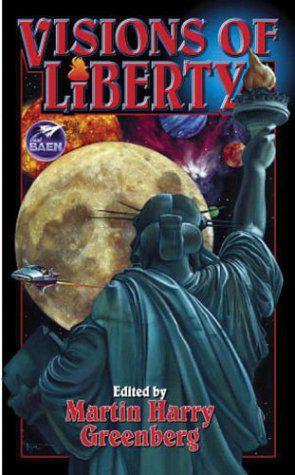
In Visions of Liberty, ten top science fiction writers, several of them Hugo or Nebula awardwinners, create ten very different futures in which Government does not exist and explore the possibilities of a truly free society. Among the roster: Hugo winner and Grand Master Jack Williamson; Michael Resnick, winner of four Hugos and a Nebula, and author of the international best seller, Santi-Ago; Michael A. Stackpole, author of eight New York Times best sellers; best-selling novelist Jane Undskold, New York Times best-selling author James P. Hogan, Robert J. Sawyer, winner of the Nebula Award for best novel of the year; and more.
As threats to liberty arise in our own time, so it will be in the future. In this volume, a stellar cast of Science Fiction luminaries consider how the future might be different—and how freedom might truly triumph.
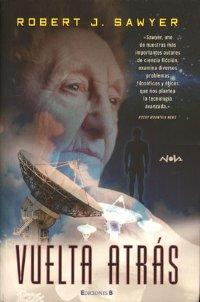
La doctora Sarah Halifax logró descifrar y contestar el primer mensaje enviado por extraterrestres. Al cabo de treinta y ocho años, cuando ella es ya casi nonagenaria, llega la respuesta. Sólo Sarah es capaz de descifrarla, si vive el tiempo suficiente… Sarah y su esposo Don son sometidos a un costoso tratamiento de rejuvenecimiento (vuelta atrás). Don recupera la fortaleza física de sus veinticinco años, pero Sarah…
Sawyer ofrece de nuevo una interesantísima exploración ética y moral, esta vez a escala humana y también cósmica, sobre la vida y el papel de la tecnología en el desarrollo futuro del ser humano.
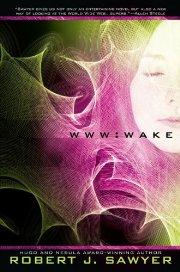
Caitlin was born blind, and when, newly arrived in tenth grade, she is offered a chance at an experimental procedure to give her sight, she leaps at it, despite previous disappointments. When she returns from the Tokyo hospital in which she underwent the procedure, it seems a failure. Soon enough, though, she discovers that, instead of reality, she is perceiving the Web. What’s particularly interesting is the background noise. Something strange is floating around behind the nodes of normal Webspace; a closer look reveals that, whatever it is, it’s not just meaningless noise. Caitlin’s story alternates with those of Hobo, a chimp whose claim to fame is being one of the first two apes to video-chat online; an entity of mysterious provenance; and a Chinese dissident blogger who is quite curious about why everything from outside China is blocked. Sawyer’s take on theories about the origin of consciousness, generated within the framework of an engaging story, is fascinating, and his approach to machine consciousness and the Internet is surprisingly fresh.
Nominated for Hugo Award for Best Novel in 2010.
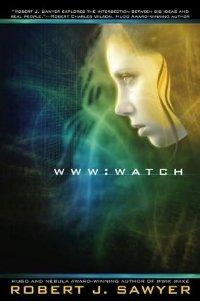
Webmind is an emerging consciousness that has befriended Caitlin Decter and grown eager to learn about her world. But Webmind has also come to the attention of WATCH—the secret government agency that monitors the Internet for any threat to the United States—and they’re fully aware of Caitlin’s involvement in its awakening.
WATCH is convinced that Webmind represents a risk to national security and wants it purged from cyberspace. But Caitlin believes in Webmind’s capacity for compassion—and she will do anything and everything necessary to protect her friend.

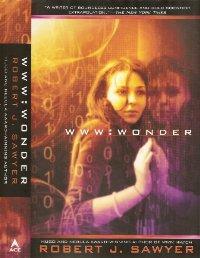
Webmind—the vast consciousness that spontaneously emerged from the infrastructure of the World Wide Web—has proven its worth to humanity by aiding in everything from curing cancer to easing international tensions. But the brass at the Pentagon see Webmind as a threat that needs to be eliminated.
Caitlin Decter—the once-blind sixteen-year-old math genius who discovered, and bonded with, Webmind—wants desperately to protect her friend. And if she doesn't act, everything—Webmind included-may come crashing down.

First published in the anthology Sherlock Holmes in Orbit, edited by Mike Resnick and Martin H. Greenberg (DAW, 1995); authorized by Dame Jean Conan Doyle.
Winner of both the CompuServe Science Fiction and Fantasy Forum’s Sixth Annual HOMer Award for Best Short Story of the Year and Le Grand Prix de l’Imaginaire, France’s top SF award, for Best Foreign Short Story of the Year.