
 fb2
fb2
The premise of Margaret Millar’s new suspense novel is simple and shocking. Charlie Gowen, a handsome young man with a badly disordered past, finds himself profoundly drawn toward a nine-year-old girl. His past record suggests, even to Charlie himself, that his sick passion for little Jessie is placing her life in jeopardy. But he can’t stay away from her school, her street, her house.
If the premise of Mrs. Millar’s story is simple enough, its development is complex and compelling. Charlie’s fiancée Louise, who loves him desperately, risks her life in an effort to save him from the dark forces of his own nature. Half a dozen other adults, Jessie’s parents, friends and neighbors, become involved in the network of guilt and menace which surrounds the child. Without sacrificing its quality of almost unbearable suspense, this novel makes a searching and scathing inquiry into the guilty relations of adults with children. To read it is a shaking experience.
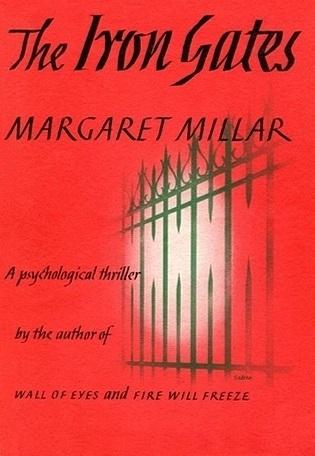
Lucille Morrow, the central figure in this novel of psychological mystery, was, to all appearances, a fortunate and happy woman. In early middle life she retained the beauty of her youth: her husband. Dr. Morrow, was wealthy and devoted to her; she was the mistress of a large and charming house, properly staffed.
No one was more astonished than her immediate family when Lucille, in mad fear and horror, ran away from her comfortable home, her loving husband, and all the things she had seemed to value. In one day she changed from a serene and self-possessed woman into a creature dominated by a fear so intense that she was glad to be shut up behind the iron gates of an asylum for the insane.
In searching for the cause of Lucille Morrow’s flight Detective Inspector Sands (whom we met in Wall of Eyes) followed a long trail which took him to the ugly cadaver of an ex-convict in the Toronto morgue, through the maze of fears which tortured the mind of Lucille Morrow in her last days, and even back to the bloody death of Dr. Morrow’s first wife sixteen years before. As his case progressed, Sands observed, with the cold and catholic sympathy which made him a great detective, the deterioration of the Morrow family under the influence of fear and guilt.
The Iron Gates is a strange and fascinating novel of murder psychological horror and inevitable retribution. Few writers have approached insanity, human fear and human evil with more relentless honesty and more precision of style.
Did she fall?
When Mrs. Wilma Wyatt crashed to her death from the balcony of her room in a Mexico City hotel, no one knew whether it was an accident, suicide or murder.
And when, shortly after, her friend and travelling companion, Amy Kellogg, disappeared into thin air, the mystery deepened. Did Wilma fall...?
Or was she pushed?
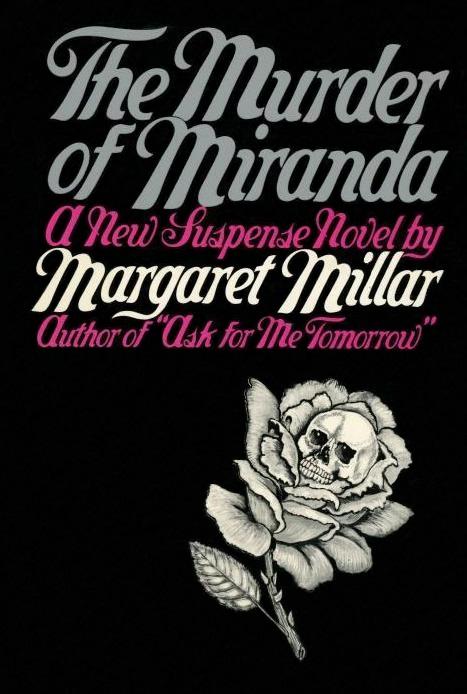
Miranda Shaw was a rich and recent widow in her early fifties. The head lifeguard at the Penguin Beach Club, Grady Keaton, was exactly half her age. When Grady and Miranda dropped out of sight at the same time, rumors began to circulate among the other members and employees of the club. And when Admiral Young’s two somewhat addled daughters, Cordelia and Juliet, spotted some of Miranda’s jewels at an estate auction, the rumors darkened and the hunt was on.
Tom Aragon, the engaging lawyer who solved the bizarre mystery in Ask for Me Tomorrow, has to undertake an even stranger case in Margaret Millar’s new tragicomedy. Aragon has the dubious assistance of nine-year-old Frederic Quinn, who boasts of his Mafia connections at private school. Adding to the confusion is Mr. Van Eyck, who, under cover of age and convenient spells of deafness, eavesdrops on his fellow members and commits his findings to paper in the form of anonymous letters.
Margaret Millar’s new novel is one of her best, and certainly her funniest. Its structure is as dazzling as its prose is witty. The author contrives to postpone the full solution until the last words of the final sentence, when the elements of the plot come together and the characters who sustain it, living and dead, are shown in tragic relation to each other.
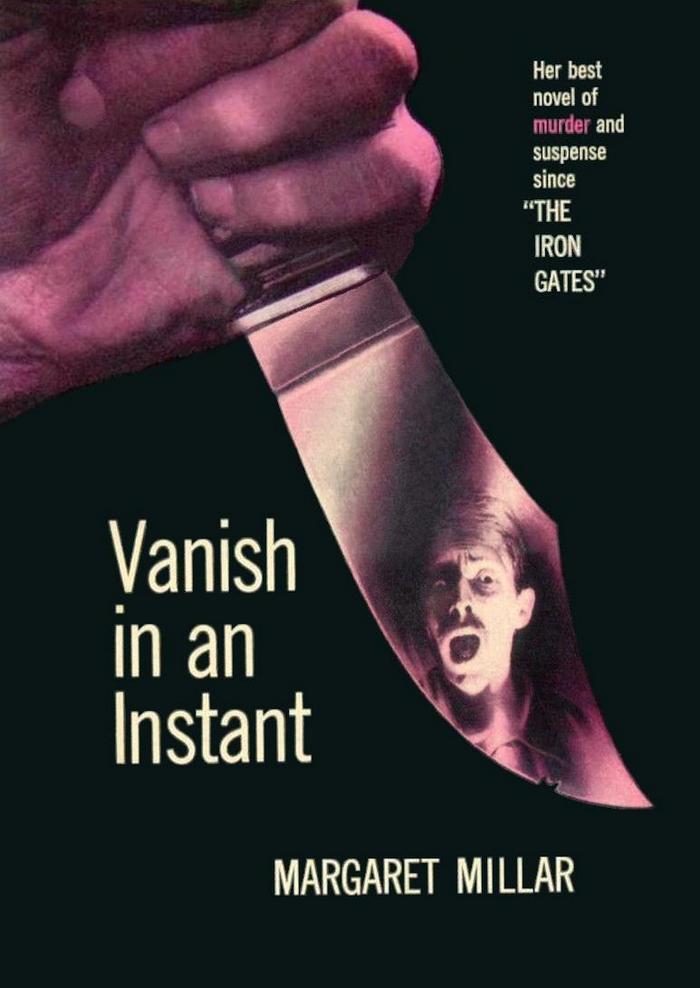
Virginia Barkeley spoiled child of a wealthy family, sat it a Michigan jail cell and refused to answer even her lawyer’s questions. Her husband knew that she had been intimate with Claude Margolis. Her mother knew that Virginia was capable of killing a man with a knife. Even Meecham, her lawyer, believed that she was guilty, so far as he believed anything at all.
Then Meecham was approached by a young man with a weirdly distorted body and death in his face. His name was Earl Duane Loftus. and he brought with him a signed confession which the police were unable to pick to pieces. If Loftus was lying, his lie seemed as unshakable as truth itself. But if Loftus was telling the truth, he had killed on impulse a man he had never seen before.
Meecham, a doubter by nature, doubted this. He resolved to probe the lives beneath the obvious police case: the ingrown hatreds which flourished subtly behind the social facade which Virginia Barkeley’s family tried to maintain; the side streets and dark alleys of frustration where Earl Loftus had developed his twisted idealism. Somewhere, he suspected. he would find a link between these two lives and the death of Margolis. But the truth he found was unexpected and shocking. In the climax of his search, Meecham caught a flashing glimpse of a tragic reality, redeemed by a love which was literally stronger than death.
Here is a mystery novel in the great tradition. Its author, Margaret Millar, has forged two reputations in the past ten years, one as a brilliant writer of mystery stories, one as a serious novelist. In this book her diverse talents have merged completely to produce a baffling mystery which is also a first-rate novel.
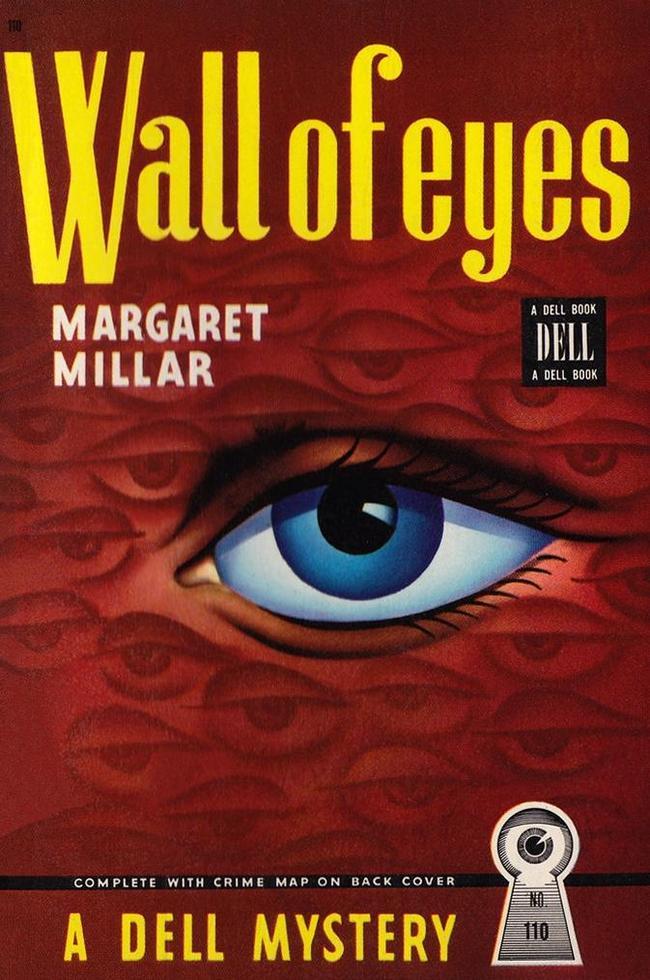
Alice told the psychiatrist about her blind sister.
“She has built a wall of eyes around her, the good eyes of the rest of us, the eyes of the people who hate her and watch her and wait for her to die. That’s what she says, that the eyes are watching and waiting.”
Soon the waiting would be over.