
 fb2
fb2En La cabeza de la hidra (1978) ensaya una novela policiaca con un tema histórico mexicano, Una familia lejana (1980) se enraíza en la fantasía y en la historia, relaciona varios continentes, diversos niveles de historicidad (el mundo prehispánico) y tradiciones literarias.

Los conflictos sociales y económicos que han separado culturalmente a México de los Estados Unidos tienen una larga historia. En La frontera de cristal, Carlos Fuentes reproduce esta separación entre los dos países a lo largo de doscientos años.
Los Barroso son una familia mexicana que, como muchas, emigra a los Estados Unidos en busca de mejores oportunidades. Pero, para su sorpresa, la lucha por la existencia en ese país se vuelve una verdedera guerra de supervivencia. Cada miembro de la familia se enfrenta inevitablemente a algunos de los grandes problemas sociales del país norteamericano: la discriminación, el racismo, la violencia, el sufrimiento. Con esta novela, Carlos Fuentes retrata las motivaciones y necesidades que orillan a las familias mexicanas de esta condición a aventurarse en los sinsabores del rechazo de una sociedad extranjera.
En el año 2020, en un México sin telecomunicaciones ni computadoras porque los norteamericanos (proveedores únicos) lo tienen castigado, se desata la lucha por la presidencia, es decir, por sentarse en la Silla del Águila y no abandonarla nunca. Aquí no hay lealtad que valga: por conseguir el poder, el padre es capaz de traicionar al hijo, la esposa al cónyuge, el secretario de Estado al Primer Mandatario. Y todo puede pasar: crímenes de viejos caciques, espionaje de supuestos allegados, maniobras tétricas, extorsión sexual? e incluso, que reaparezca en la escena política un fallido candidato presidencial al que todos creyeron asesinado años atrás. El triunfador, el Ungido, oculta un pasmoso secreto que será necesario preservar a toda costa.

Un recorrido por la vida íntima de una mujer y sus pasiones, los obstáculos, prejuicios, dolores, amores y alegrías que la conducen a conquistar su libertad propia y su personalidad creativa. Una saga familiar, originada en Veracruz. Laura Díaz y otras figuras de la talla de Frida Kahlo y Diego Rivera comparten aspectos centrales de la historia cultural y política del país, y nos llevan a reflexionar sobre la historia, el arte, la sociedad y la idiosincrasia de los mexicanos. En esta novela, como nunca antes, Fuentes es fiel a su propósito de describirnos el cruce de caminos donde se dan cita la vida individual y la colectiva.
In Myself with Others, Fuentes has assembled essays reflecting three of the great elements of his work: autobiography, love of literature, and politics. They include his reflections on his beginning as a writer, his celebrated Harvard University commencement address, and his trenchant examinations of Cervantes, Gabriel Garcia Marquez, and Borges.
One of the great masterpieces of modern Latin American fiction, "Terra Nostra" is concerned with nothing less than the history of Spain and of South America, with the Indian Gods and with Christianity, with the birth, the passion, and the death of civilizations. Fuentes skillfully blends a wide range of literary forms, stories within stories, Mexican and Spanish myth, and famous literary characters in this novel that is both a historical epic and an apocalyptic vision of modern times. "Terra Nostra" is that most ambitious and rare of creations-a total work of art.
In this witty and enthralling saga of revolutionary South America, Carlos Fuentes explores the period of profound upheaval he calls" the romantic time." His hero, Baltasar Bustos, the son of a wealthy landowner, kidnaps the baby of a prominent judge, replacing it with the black baby of a prostitute. When he catches sight of the baby's mother, though, he falls instatnly in love with her and sets off on an anguished journey to repent his act and win her love.
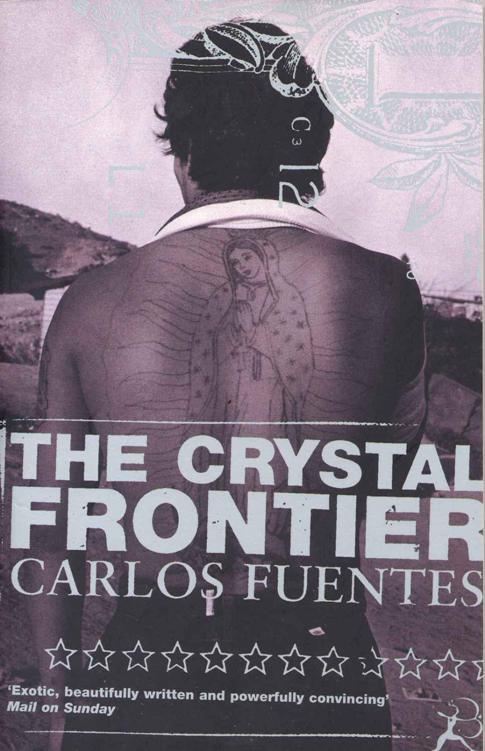
The nine stories comprising this brilliant new work of fiction from Carlos Fuentes all concern people who in one way or another have had something to do with, or still are part of, the family of one Leonardo Barroso, a powerful oligarch of northern Mexico with manifold connections to the United States. Each story concerns an encounter — sometimes hilarious, often tragic, frequently ambivalent, inevitably poignant — that in its own dramatic way epitomizes some striking contrast along the invisible, reflective, dangerous frontier that divides the North American world.Yet beyond the emblematic power of Fuentes's fiction to make us think about the political and cultural themes defining that world, there is the sheer human diversity of life on the "crystal frontier": these extraordinary stories pulse with vivid experience — of love in its many guises, of loneliness, of youth and old age, of heartbreak and redemption. Like many of the greatest Spanish-language novels, this exuberant fiction contains and alludes to journalism, politics, economics, famous tall tales, and picaresque adventures, all united by the "vitality, variety, and narrative force that Fuentes always gives his work" (La Jornada).
A panoramic novel covering four generations of Mexican history, as recalled by a dying industrialist.
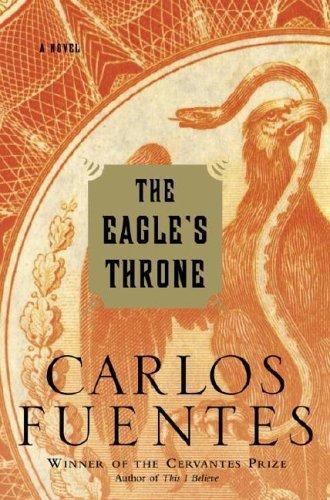
Here is a true literary event — the long-awaited new novel by Carlos Fuentes, one of the world’s great writers. By turns a tragedy and a farce, an acidic black comedy and an indictment of modern politics, The Eagle’s Throne is a seriously entertaining and perceptive story of international intrigue, sexual deception, naked ambition, and treacherous betrayal.
In the near future, at a meeting of the United Nations Security Council, Mexico’s idealistic president has dared to vote against the U.S. occupation of Colombia and Washington’s refusal to pay OPEC prices for oil. Retaliation is swift. Concocting a “glitch” in a Florida satellite, America’s president cuts Mexico’s communications systems — no phones, faxes, or e-mails — and plunges the country into an administrative nightmare of colossal proportions.
Now, despite the motto that “a Mexican politician never puts anything in writing,” people have no choice but to communicate through letters, which Fuentes crafts with a keen understanding of man’s motives and desires. As the blizzard of activity grows more and more complex, political adversaries come out to prey. The ineffectual president, his scheming cabinet secretary, a thuggish and ruthless police chief, and an unscrupulous, sensual kingmaker are just a few of the fascinating characters maneuvering and jockeying for position to achieve the power they all so desperately crave.
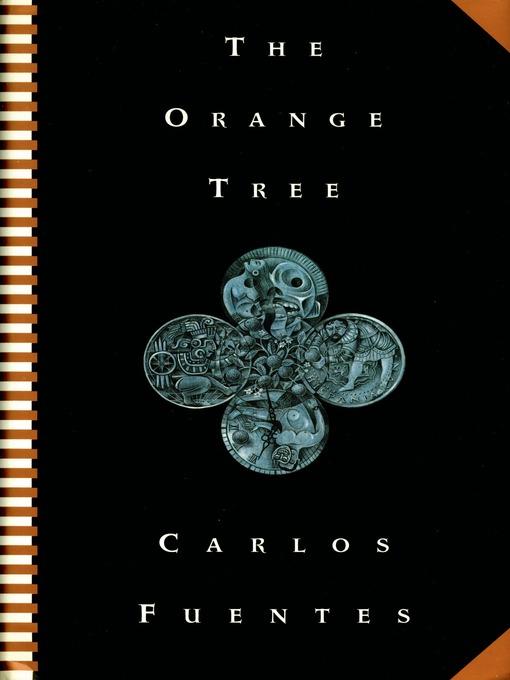
In the five novellas that comprise The Orange Tree, Carlos Fuentes continues the passionate and imaginative reconstruction of past and present history that has distinguished Terra Nostra and The Campaign. From the story of Columbus's arrival in the Caribbean, to the fate of Hernan Cortes's two sons, to the destruction of the Spanish city of Numantia by the Romans and the annihilation of Hollywood by Acapulco, Fuentes couples the epic grandeur of the spiritual and the historical with the many pleasures of the flesh. "In The Orange Tree," he remarks, "I gather together not only all my most immediate sensual pleasures — I see, touch, peel, bite, swallow — but also the most primordial sensations: my mother, wet nurses, breasts, the sphere, the world, the egg." The result is a sensitive exploration of cultural conflict that is also a feast for the senses.
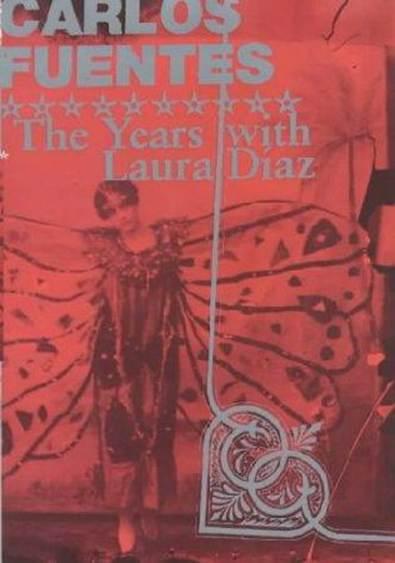
A radiant family saga set in a century of Mexican history, by one of the world's greatest writers.Carlos Fuentes's hope-filled new novel sees the twentieth century through the eyes of Laura D'az, a woman who becomes as much a part of our history as of the Mexican history she observes and helps to create. Born in 1898, this extraordinary woman grows into a wife and mother, becomes the lover of great men, and, before her death in 1972, is celebrated as a politically committed artist. A complicated and alluring heroine, she lives a happy life despite the tragedies and losses she experiences, for she has borne witness to great changes in her country's life, and she has loved and understood with unflinching honesty.In his most important novel in decades, Carlos Fuentes has created a world filled with brilliantly colored scenes and heartbreaking dramas. The result is a novel of subtle, penetrating insight and immense power.
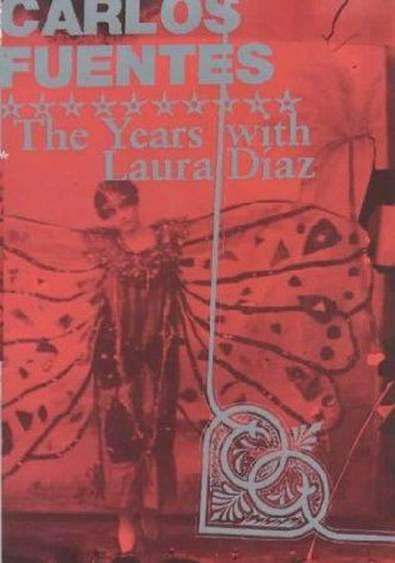
A radiant family saga set in a century of Mexican history, by one of the world's greatest writers.Carlos Fuentes's hope-filled new novel sees the twentieth century through the eyes of Laura D'az, a woman who becomes as much a part of our history as of the Mexican history she observes and helps to create. Born in 1898, this extraordinary woman grows into a wife and mother, becomes the lover of great men, and, before her death in 1972, is celebrated as a politically committed artist. A complicated and alluring heroine, she lives a happy life despite the tragedies and losses she experiences, for she has borne witness to great changes in her country's life, and she has loved and understood with unflinching honesty.In his most important novel in decades, Carlos Fuentes has created a world filled with brilliantly colored scenes and heartbreaking dramas. The result is a novel of subtle, penetrating insight and immense power.
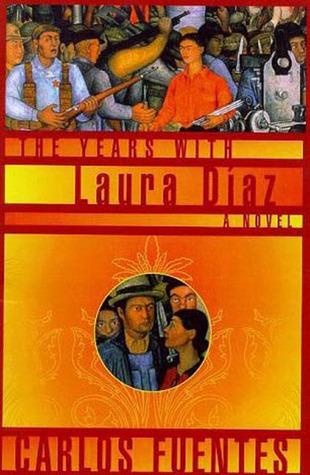
The Years with Laura Diaz is Carlos Fuentes's most important novel in several decades. Like his masterpiece The Death of Artemio Cruz, the action begins in the state of Veracruz and moves to Mexico City — tracing a migration during the Revolution and its aftermath that was a feature of Mexico's demographic history and is a significant element in Fuentes's fictional world.Now the principal figure is not Artemio Cruz (who, however, makes a brief appearance) but Fuentes's first major female protagonist, the extraordinary Laura Diaz. Fuentes's richly woven narrative tapestry of her life from 1905 to 1978 — filled with a multitude of witty, heartbreaking scenes and the sounds and colors, tastes and scents of Mexico — shows us this wonderful woman as she grows into a politically committed artist who is also a wife and mother, a lover of great men, and a complicated and alluring heroine whose brave honesty prevails despite her losing a brother, son, and grandson to the darkest forces of Mexico's turbulent, often corrupt politics. In the end, Laura Diaz herself dies, after a life filled with tragedy and loss, but she is a happy woman, for she has borne witness to and helped to affect the course of history, and has loved and understood with unflinching honesty.
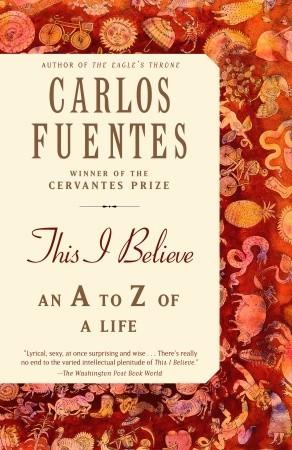
In this masterly, deeply personal, and provocative book, the internationally renowned Mexican writer Carlos Fuentes, whose work has been called “a combination of Poe, Baudelaire, and Isak Dinesen” (Newsweek), steps back to survey the wellsprings of art and ideology, the events that have shaped our time, and his extraordinary life and fiercest passions.
Arranged alphabetically from “Amore” to “Zurich,” This I Believe takes us on a marvelous inner journey with a great writer. Fuentes ranges wide, from contradictions inherent in Latin American culture and politics to his long friendship with director Luis Buñuel.
Along the way, we find reflection on the mixed curse and blessing of globalization; memories of a sexual initiation in Zurich; a fond tracing of a family tree heavy with poets, dreamers, and diplomats; evocations of the streets, cafés, and bedrooms of Washington, Paris, Santiago de Chile, Cambridge, Oaxaca, and New York; and a celebration of literary heroes including Balzac, Cervantes, Faulkner, Kafka, and Shakespeare. Throughout, Fuentes captivates with the power of his intellect and his prose.
Here, too, are vivid, often heartbreaking glimpses into his personal life. “Silvia” is a powerful love letter to his beloved wife. In “Children,” Fuentes recalls the births of his daughters and the tragic death of his son; in “Cinema” he relives the magic of films such as Citizen Kane and The Wizard of Oz. Further extending his reach, he examines the collision between history and contemporary life in “Civil Society,” “Left,” and “Revolution.”
And he poignantly addresses the experiences we all hold in common as he grapples with beauty, death, freedom, God, and sex. By turns provocative and intimate, partisan and universal, this book is a brilliant summation of an international literary career. Revisiting the influences, commitments, readings, and insights of a lifetime, Fuentes has fashioned a magnificently coherent statement of his view of the world, reminding us once again why reading Fuentes is “like standing beneath the dome of the Sistine Chapel. . The breadth and enormity of this accomplishment is breathtaking” (The Denver Post).
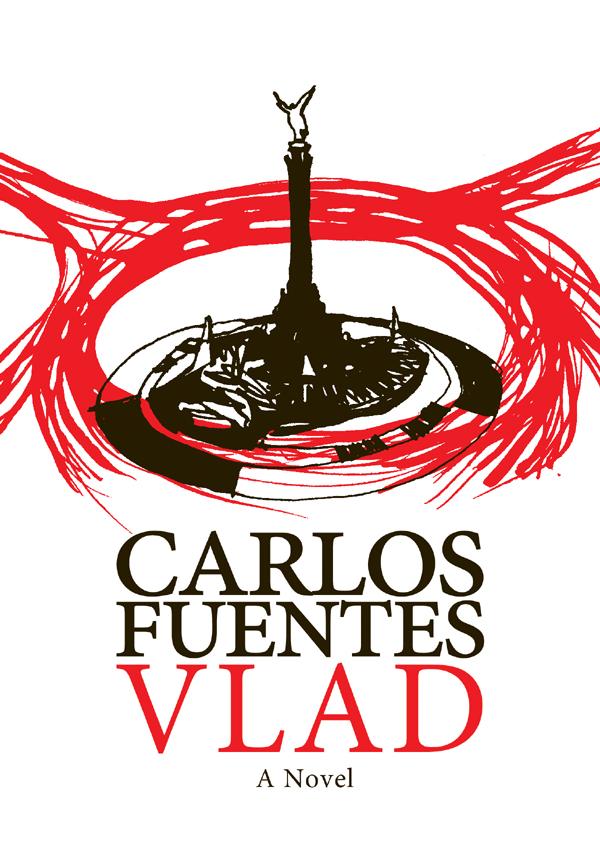
Where, Carlos Fuentes asks, is a modern-day vampire to roost? Why not Mexico City, populated by ten million blood sausages (that is, people), and a police force who won't mind a few disappearances? "Vlad" is Vlad the Impaler, of course, whose mythic cruelty was an inspiration for Bram Stoker's Dracula. In this sly sequel, Vlad really is undead: dispossessed after centuries of mayhem by Eastern European wars and rampant blood shortages. More than a postmodern riff on "the vampire craze," Vlad is also an anatomy of the Mexican bourgeoisie, as well as our culture's ways of dealing with death. For-as in Dracula-Vlad has need of both a lawyer and a real-estate agent in order to establish his new kingdom, and Yves Navarro and his wife Asunci n fit the bill nicely. Having recently lost a son, might they not welcome the chance to see their remaining child live forever? More importantly, are the pleasures of middle-class life enough to keep one from joining the legions of the damned?