 fb2
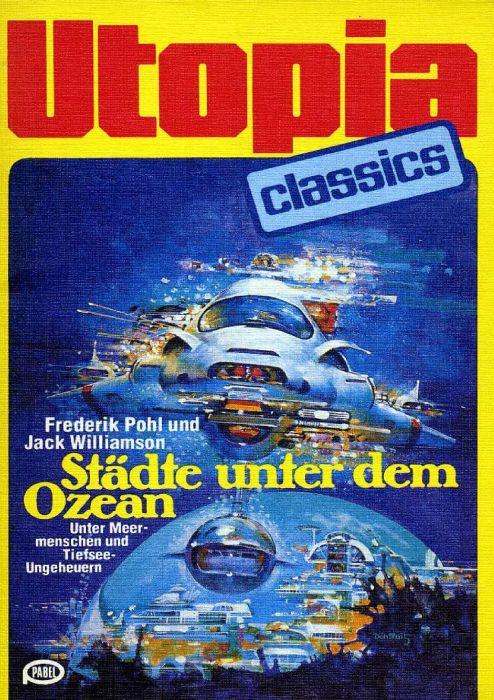
fb2Aus der Reihe »Utopia-Classics« Band 6
Frederik Pohl und Jack Williamson
Städte unter dem Ozean
Der Kampf um die Tiefsee-Festung
Die Menschheit ist längst darangegangen, die Tief see zu erschließen und die Schätze des Meeresgrundes, die zunehmend wichtiger für den Erhalt der technischen Zivilisation werden, systematisch abzubauen. Dennoch gibt es in der Tiefsee Bereiche, die ihre Geheimnisse nicht preisgeben. Monströse Geschöpfe wachen darüber, daß ihr Herrschaftsgebiet unangetastet bleibt.
Nach DUELL IN DER TIEFE (UTOPIA-CLASSICS Band 4) ist dies der zweite, völlig in sich abgeschlossene Band der berühmten Tiefsee-Trilogie der Autoren. Der dritte Roman erscheint unter dem Titel ALARM IN DER TIEFSEE als Band 8 in der UTOPIA-CLASSICS-Reihe.
Titel des Originals: UNDERSEA FLEET
Aus dem Amerikanischen übertragen von Lern Sobez
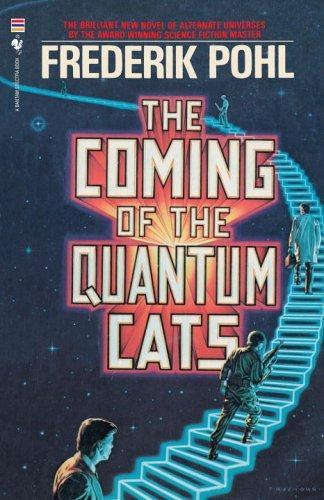
This novel is set in a series of alternative versions of the present day and firmly based in current scientific thinking. The author is a leading figure in the science fiction world and has won numerous awards for "Man Plus", "Gateway" and "Jem".
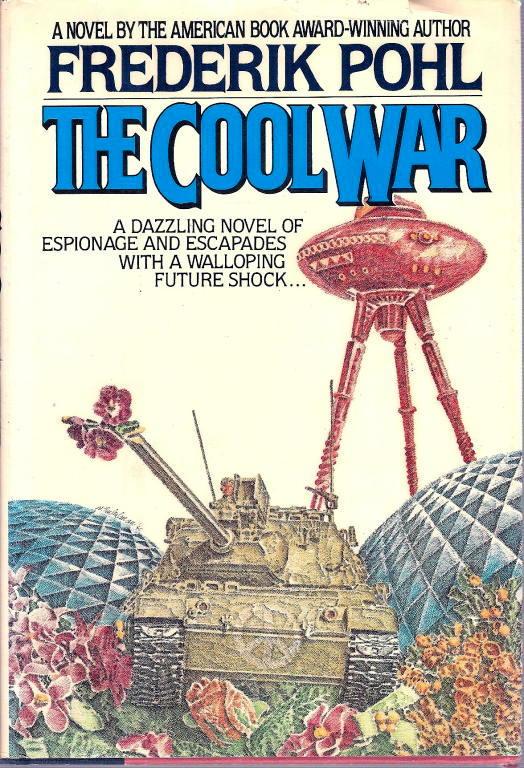
Fred Pohl, multiple winner of science-fiction’s top awards, presents a breathtaking romp through the energy-poor world of the 2020s—a gripping chase-intrigue novel with a highly unlikely stand-in for James Bond.
One day, the Reverend Hornswell Hake had nothing worse to contend with than the customary power shortages and his routine pastoral chores, such as counseling the vivacious Alys Brant—and her husbands and wife. At nearly forty, his life was placid, almost humdrum.
The very next day, Horny Hake was first enlisted as an unwilling agent of the Team—secret successor to the long-discredited CIA—and then courted by an anti-Team underground group. In practically no time at all, Horny and Alys were touring Europe on a mission about which he knew zip, except that it was a new move in the Cool War, the worldwide campaign of sabotage that had replaced actual combat.
For the team and its opponents, though, the Cool War could be as perilous as any hot one, as Horny Hake discovered when he came up against
• Leota, lovely leader of the underground cabal, dedicated to destroying the Team;
• Yosper, the Bible-thumping, foul-mouthed nonogenarian killer;
• The Reddi twins, professional terrorists who turned up in the oddest places at the worst times and always managed to make Horny’s life miserable;
• And Pegleg, master of such lethal toys as the Bulgarian Brolly and the Peruvian Pen.
Picaresque and fast-moving, THE COOL WAR is also a deeply ironic, often hilarious, yet thought-provoking look at where we could be, some forty years from now.
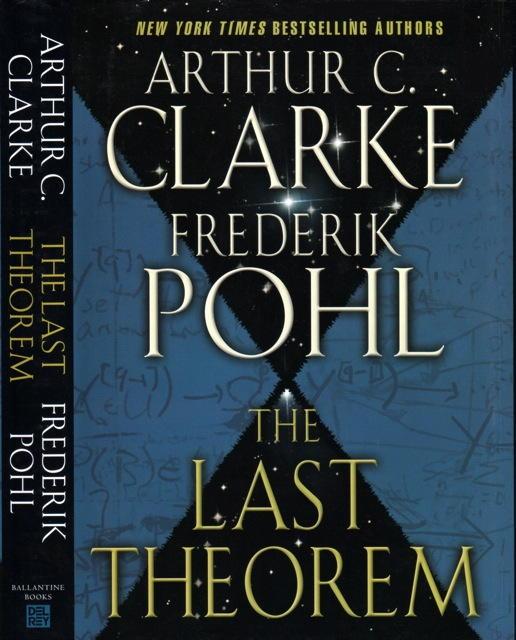
Two of science fiction’s most renowned writers join forces for a storytelling sensation. The historic collaboration between Frederik Pohl and his fellow founding father of the genre, Arthur C. Clarke, is both a momentous literary event and a fittingly grand farewell from the late, great visionary author of 2001: A Space Odyssey.
The Last Theorem is a story of one man’s mathematical obsession, and a celebration of the human spirit and the scientific method. It is also a gripping intellectual thriller in which humanity, facing extermination from all-but-omnipotent aliens, the Grand Galactics, must overcome differences of politics and religion and come together… or perish.
In 1637, the French mathematician Pierre de Fermat scrawled a note in the margin of a book about an enigmatic theorem: “I have discovered a truly marvelous proof of this proposition which this margin is too narrow to contain.” He also neglected to record his proof elsewhere. Thus began a search for the Holy Grail of mathematics—a search that didn’t end until 1994, when Andrew Wiles published a 150-page proof. But the proof was burdensome, overlong, and utilized mathematical techniques undreamed of in Fermat’s time, and so it left many critics unsatisfied—including young Ranjit Subramanian, a Sri Lankan with a special gift for mathematics and a passion for the famous “Last Theorem.”
When Ranjit writes a three-page proof of the theorem that relies exclusively on knowledge available to Fermat, his achievement is hailed as a work of genius, bringing him fame and fortune. But it also brings him to the attention of the National Security Agency and a shadowy United Nations outfit called Pax per Fidem, or Peace Through Transparency, whose secretive workings belie its name. Suddenly Ranjit—together with his wife, Myra de Soyza, an expert in artificial intelligence, and their burgeoning family—finds himself swept up in world-shaking events, his genius for abstract mathematical thought put to uses that are both concrete and potentially deadly.
Meanwhile, unbeknownst to anyone on Earth, an alien fleet is approaching the planet at a significant percentage of the speed of light. Their mission: to exterminate the dangerous species of primates known as homo sapiens.
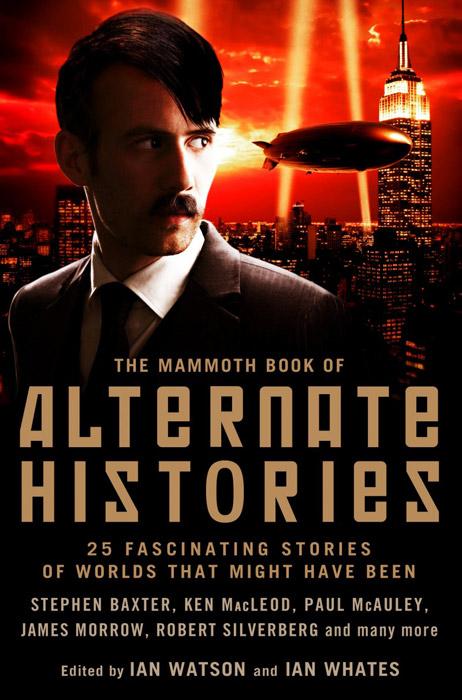
Every short story in this wonderfully varied collection has one thing in common: each features some alteration in history, some divergence from historical reality, which results in a world very different from the one we know today. As well as original stories specially commissioned from bestselling writers such as James Morrow, Stephen Baxter and Ken MacLeod, there are genre classics such as Kim Stanley Robinson’s story of how World War II atomic bomber the Enola Gay, having crashed on a training flight, is replaced by the Lucky Strike with profoundly different consequences.
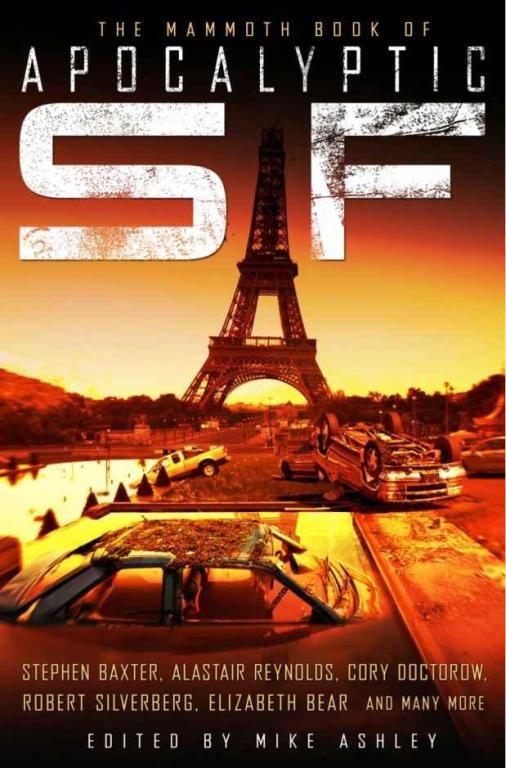
Stories of the fall of civilisation, the destruction of the Earth and the end of the Universe itself
The last sixty years have been full of stories of one or other possible Armageddon, whether by nuclear war, plague, cosmic catastrophe or, more recently, global warming, terrorism, genetic engineering, AIDS and other pandemics. These stories, both pre- and post-apocalyptic, describe the fall of civilization, the destruction of the entire Earth, or the end of the Universe itself. Many of the stories reflect on humankind’s infinite capacity for self-destruction, but the stories are by no means all downbeat or depressing — one key theme explores what the aftermath of a cataclysm might be and how humans strive to survive.
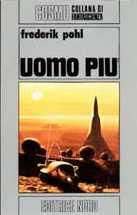
Questo nuovo romanzo di Frederik Pohl ci presenta il primo tentativo di colonizzazione del pianeta Marte: non il Marte sognato dalla fantascienza di cinquant’anni fa, ma il Marte che oggi conosciamo attraverso i risultati trasmessi dalle sonde spaziali.
Il protagonista della colonizzazione è Uomo Più: l’uomo più gli ausili che gli possono offrire i computer, e il protagonista del romanzo è il primo di questi uomini. Macchine sofisticate collegate al suo corpo hanno sostituito i suoi organi con altri organi artificiali, ed egli è ora adatto a vivere nell’atmosfera rarefatta di Marte, a trarre dal sole l’energia che gli occorre. Ma i suoi ex simili, le persone umane normali, non lo riconoscono più come uno di loro, e Marte, considerato come un’avventura e un episodio, si rivela il suo esilio e la sua casa.
Nominato per i premi Hugo, Campbell e Locus in 1977.