 fb2
fb2INTELLIGENTES LEBEN AUF DEM JUPITER …
… vermutet Direktor L. Zhang Wo, Leiter der wissenschaftlichen Beobachtungsstation im Orbit des Riesenplaneten. Und tatsächlich lassen Erkenntnisse einer Tauchexpedition in den Tiefen der Jupiter-Atmosphäre darauf schließen. Doch solche Forschungsvorhaben können nur heimlich durchgeführt werden, weil die christlichen Kreationisten und islamischen Fundamentalisten, die auf der Erde das Sagen haben, in der Suche nach außerirdischen Lebewesen eine Blasphemie sehen und alle Maßnahmen in dieser Richtung mit allen Mitteln unterbinden.
Grant Archer, ein idealistischer junger Astronom, wird als Spitzel auf die Station entsandt, um Beweise für gottlose Aktivitäten zu sammeln. Doch schon bald überwiegt seine Neugier und sein Forscherdrang die Loyalität zu seinen inquisitorischen Auftraggebern.
Grant Archer merely wanted to work quietly as an astronomer on the far side of the moon. But a coalition of censorious do-gooders who run 21st century America sends him to a research station in orbit around Jupiter to spy on the scientists who work there. What they don’t know is that Grant’s loyalty to science may be greater than his loyalty to the New Morality.

Al tempo dei Condannati di Messina (Urania n. 601) vedemmo partire dalla Terra una singolare astronave-prigione con a bordo migliaia di indesiderabili. Ora sono passati cinquant’anni. Il gigantesco veicolo spaziale, la cui popolazione è più che raddoppiata, è in vista di Prossima Centauro. Ma dopo circa mille miliardi di chilometri nello spazio, come un’auto dopo centomila chilometri su strada, anche la più grossa e robusta delle astronavi comincia a dare dei fastidi. Ce la faranno i nostri esiliati ad arrivare su un pianeta abitabile? Il segnale d’allarme, l’incendio, i cinquanta morti con cui si apre il romanzo, permettono di dubitarne.

Era notte nell'emisfero occidentale quando il Sole emise la sua grande fiammata, e questo salvò il continente americano dalla combustione totale. Ma non lo salvò dalle atomiche sovietiche che cominciarono subito a piovere. Perché, chi avrebbe potuto dar torto ai pochi russi superstiti sottoterra, nella stanza dei bottoni, se pensarono che l'attacco fosse venuto dall'America?
Ormai non ci sono dubbi: sotto le spoglie umane di John O’Ryan si nasconde una figura mitica, il leggendario cacciatore Orion. A crearlo è stato l’essere di un lontanissimo futuro che ha scelto di farsi chiamare Ormazd, e che con il suo aiuto intende condurre nel tempo e nello spazio una guerra spietata contro il più acerrimo nemico dell’umanità, Ahriman. Il primo scontro (in Orion, Urania 1038) sembra essersi concluso vittoriosamente, ma in realtà l’intervento di Orion ha causato una frattura nel continuum spazio-temporale, concedendo ad Ahriman e ai suoi neandertaliani un cosmo tutto per loro. Ormazd non ha affatto gradito la cosa e ha deciso di punire Orion strappandogli ciò che ha di più caro, per costringere il cacciatore a riprendere la sua battuta. Questa volta lo scenario-sarà il passato e la posta in gioco il salvataggio di Troia… perché Ormazd è deciso a cambiare addirittura la trama del tempo pur di distruggere definitivamente il suo nemico.
In Ben Bova’s novel JUPITER, physicist Grant Archer led an expedition into Jupiter’s hostile planet-wide ocean, attempting to study the unusual and massive creatures that call the planet their home. Unprepared for the hostile environment and crushing pressures, Grant’s team faced certain death as their ship malfunctioned and slowly sank to the planet’s depths. However one of Jupiter’s native creatures—a city-sized leviathan—saved the doomed ship. This creature’s act convinced Grant that the huge creatures were intelligent, but he lacked scientific proof.
Now, several years later, Grant prepares a new expedition to prove once and for all that the huge creatures are intelligent. The new team faces dangers from both the hostile environment and from humans who will do anything to make sure the mission is a failure, even if it means murdering the entire crew.


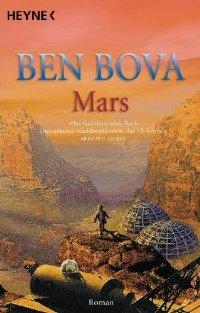
Dies ist die Geschichte der ersten bemannten Mars-Mission. Die Geschichte einer Handvoll Männer und Frauen, die alles riskieren, um die Geheimnisse unseres sagenumwobenen Nachbarplaneten zu lüften. Eine Geschichte menschlicher Größe und Tragik — und die Geschichte der unglaublichsten Entdeckung aller Zeiten.
Jamie Waterman, a Native American geologist, is chosen at the last minute for the first manned exploration of the planet Mars. On touchdown, he is so overwhelmed with the emotion of the moment that he utters a Navajo phrase instead of the political statement he is supposed to read. This sets off a chain reaction among the leaders and politicians on Earth. Thus starts Bova’s sprawling space opera. The expedition, seen from Jamie’s point of view, is really the protagonist here. The story is filled with lots of characters of different nationalities and there’s plenty of political intrigue. Of course, there are obstacles to overcome: a meteor almost destroys the lab, the doctor neglects his duty and nearly kills them all, crew members come down with mysterious “Martian flu,” and through it all is the never-ending search for evidence of life on this planet. Bova has done extensive research and his descriptions of Mars and the conditions under which the study is conducted are very plausible. All in all, a satisfying story.
The novel is a part of currently 17-volume series “Grand Tour” that presents the theme of exploration and colonization of the Solar System by humans. Written in 1992 “Mars”, according to the internal in-universe chronology, stands 4th in the series and is immediately continued by “Return to Mars” published in 1999 which stands 7th. Events depicted in “Moonrise” (1996) and “Moonwar” (1998) take place between those of “Mars” and “Return to Mars” and are loosely related to them.
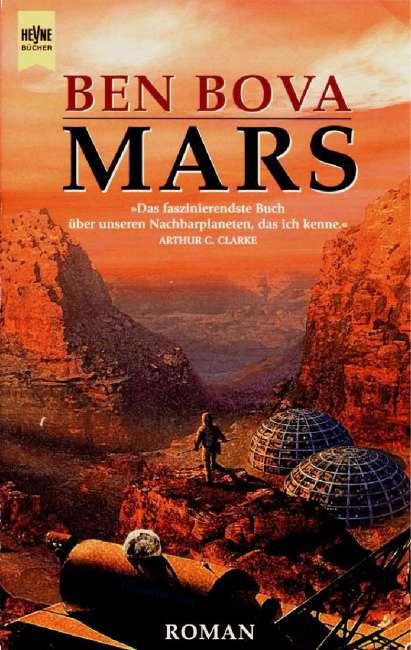
Das größte Abenteuer der Menschheit steht unmittelbar bevor: die erste bemannte Mars-Mission. Dies ist ihre Geschichte, eine Geschichte von menschlicher Größe und Tragik - und von der unglaublichsten Entdeckung aller Zeiten.
«Ein atemberaubendes Buch!» Ray Bradbury
Über den Autor
Ben Bova, 1932 in Philadelphia geboren, ist einer der bekanntesten Science-Fiction-Autoren unserer Zeit. Insbesondere mit seinen Romanen aus der sogenannten Sonnensytem-Reihe „Mars“, „Venus“, „Jupiter“ und zuletzt „Saturn“ ist er außerordentlich erfolgreich. Bova lebt mit seiner Familie in Florida.
Jamie Waterman, a Native American geologist, is chosen at the last minute for the first manned exploration of the planet Mars. On touchdown, he is so overwhelmed with the emotion of the moment that he utters a Navajo phrase instead of the political statement he is supposed to read. This sets off a chain reaction among the leaders and politicians on Earth. Thus starts Bova’s sprawling space opera. The expedition, seen from Jamie’s point of view, is really the protagonist here. The story is filled with lots of characters of different nationalities and there’s plenty of political intrigue. Of course, there are obstacles to overcome: a meteor almost destroys the lab, the doctor neglects his duty and nearly kills them all, crew members come down with mysterious “Martian flu,” and through it all is the never-ending search for evidence of life on this planet. Bova has done extensive research and his descriptions of Mars and the conditions under which the study is conducted are very plausible. All in all, a satisfying story.
The novel is a part of currently 17-volume series “Grand Tour” that presents the theme of exploration and colonization of the Solar System by humans. Written in 1992 “Mars”, according to the internal in-universe chronology, stands 4th in the series and is immediately continued by “Return to Mars” published in 1999 which stands 7th. Events depicted in “Moonrise” (1996) and “Moonwar” (1998) take place between those of “Mars” and “Return to Mars” and are loosely related to them.

Jamie Waterman discovered the cliff dwelling on Mars, and the fact that an intelligent race lived on the red planet sixty-five million years ago, only to be driven into extinction by the crash of a giant meteor. Now the exploration of Mars is itself under threat of extinction, as the ultraconservative New Morality movement gains control of the U.S. government and cuts off all funding for the Mars program.Meanwhile, Carter Carleton, an anthropologist who was driven from his university post by unproven charges of rape, has started to dig up the remains of a Martian village. Science and politics clash on two worlds as Jamie desperately tries to save the Mars program and uncover who the vanished Martians were.
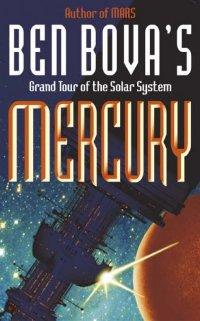
A tale of revenge and technological endeavor set on our solar system’s most desolate stage. The closest planet to the sun, Mercury is a rocky, barren, heat-scorched world. The planet’s surface faces the sun for nearly sixty earth days at a time, and the only places that stay cool are the ice caches at Mercury’s poles.

Kosmiczna winda wywożąca na orbitę towary i ludzi to projekt inżynieryjny istniejący od XX wieku, teraz wreszcie staje się rzeczywistością. Dla inżyniera Bracknella jest ona dziełem życia, ale dla wielkich korporacji, które na tanim transporcie na orbitę stracą majątki, oraz dla Nowej Moralności, dla której budowa wieży w niebo jest obrazą Boga, stanowią cierń w boku. Zostaje zawiązany spisek i wieża runie w dół, grzebiąc w globalnej katastrofie miliony ludzi. Winnym zostanie uznany Bracknell, karą jest wygnanie Ziemi.
Inżynier traci dorobek całego życia, ale przypadkiem dowiaduje się o sabotażu i spisku i od tej pory całe swoje życie podporządkowuje jednemu — zemście na osobach winnych zniszczenia wieży i jego osobistej tragedii.

El tema de esta novela es el aterrador mundo del futuro: la gente y la política mundial en el año 1999. La población de la tierra ha llegado a ocho mil millones de seres humanos. La escasez creciente de recursos naturales ha conducido a.las dos grandes potencias al borde del conflicto nuclear.
A pocos cientos de kilómetros sobre la superficie terrestre, en sus respectivas colonias lunares, los Estados Unidos y la Unión Soviética luchan afiebradamente por completar sus propias redes de satélites que los protegerán de un ataque atómico.
Ambas potencias saben que quien complete primero la red protectora quebrará en su favor el largo equilibrio de fuerzas. Así se ganaría una ventaja decisiva.
Dos hombres están vitalmente comprometidos en este posible holocausto: el jefe ruso y el jefe norteamericano de las bases lunares. Afortunadamente para la humanidad, ambos hombres son idealistas de buena voluntad, decididos a luchar juntos por conquistar un mundo donde sea posible la coexistencia. ¿Triunfarán los idealistas? ¿Qué fuerzas luchan contra ellos? ¿Podrán sobrevivir? Este es el dramático nudo de esta magistral novela de suspenso.
Former astronaut Paul Stavenger is driven by his vision of colonizing space. His dream becomes a reality with the creation of a viable, flourishing, nearly self-sufficient community at Moonbase. But Paul has made an implacable enemy; one who will carry his vendetta to the frontiers of space.
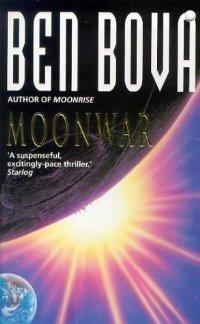
The sequel to “Moonrise”.
Douglas Stavenger and his dedicated team of scientists are determined to defend their life’s work, but technology-hating factions on Earth want to close the flourishing space colony, Moonbase. Can a combination of military defence and political wisdom save the colony?
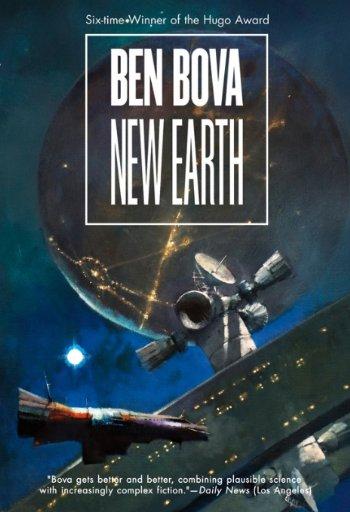
It’s not easy running a hotel, and some of the most challenging problems are little ones!