Foundation’s Friends
|
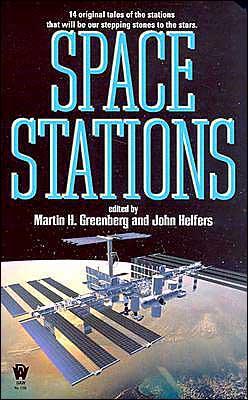
Space Stations
15 all-new stories of tomorrow from 15 of the best sci-fi writers of todayThe challenge and lure of space exploration has long been fertile ground for some of the finest science fiction stories. Here, fifteen of the best chroniclers of the day after tomorrow present unique tales of space stations both in our own solar system and far beyond.From BooklistThis neat little theme anthology contains a satisfying mixture of old hands’ and newcomers’ stories. In the opener, Timothy Zahn’s “The Battle of Space Fort Jefferson,” a space fort that is crumbling into disrepair as an unpopular tourist destination wins its first battle—finally—though only by means of the vagaries of decaying equipment. In Jean Rabe’s “Auriga’s Streetcar,” a gem of a piece, an old “spacer” finds herself on the way to a distant star in the belly of an even older space observatory towed by unknown aliens. Robert J. Sawyer’s “Mikeys” relates the work of those who go almost to the target and the unexpected event that brings them to the forefront. The closer, Gregory Benford’s “Station Spaces,” is a doozy about what happens when human merges with machine, and the building of human habitation on Luna. Despite, or possibly as a result of, a literally (i.e., spacially) limited topic, these stories cover a lot of ground.Regina Schroeder
|
Space Stations
15 all-new stories of tomorrow from 15 of the best sci-fi writers of todayThe challenge and lure of space exploration has long been fertile ground for some of the finest science fiction stories. Here, fifteen of the best chroniclers of the day after tomorrow present unique tales of space stations both in our own solar system and far beyond.From BooklistThis neat little theme anthology contains a satisfying mixture of old hands' and newcomers' stories. In the opener, Timothy Zahn's “The Battle of Space Fort Jefferson,” a space fort that is crumbling into disrepair as an unpopular tourist destination wins its first battle—finally—though only by means of the vagaries of decaying equipment. In Jean Rabe's “Auriga's Streetcar,” a gem of a piece, an old “spacer” finds herself on the way to a distant star in the belly of an even older space observatory towed by unknown aliens. Robert J. Sawyer's “Mikeys” relates the work of those who go almost to the target and the unexpected event that brings them to the forefront. The closer, Gregory Benford's “Station Spaces,” is a doozy about what happens when human merges with machine, and the building of human habitation on Luna. Despite, or possibly as a result of, a literally (i.e., spacially) limited topic, these stories cover a lot of ground.Regina Schroeder
|
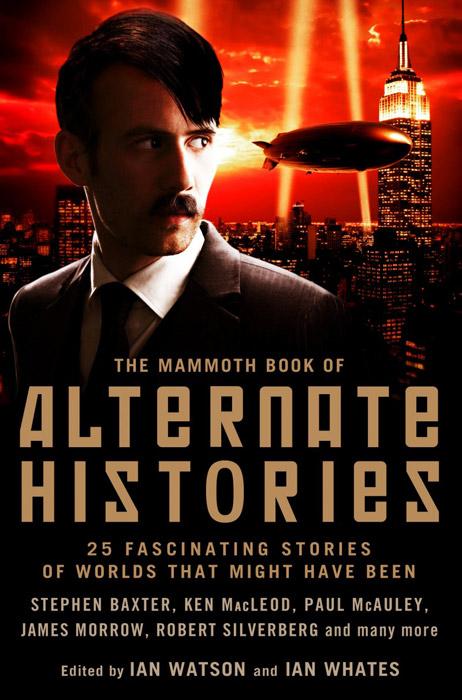
The Mammoth Book of Alternate Histories
Every short story in this wonderfully varied collection has one thing in common: each features some alteration in history, some divergence from historical reality, which results in a world very different from the one we know today. As well as original stories specially commissioned from bestselling writers such as James Morrow, Stephen Baxter and Ken MacLeod, there are genre classics such as Kim Stanley Robinson’s story of how World War II atomic bomber the Enola Gay, having crashed on a training flight, is replaced by the Lucky Strike with profoundly different consequences.
|