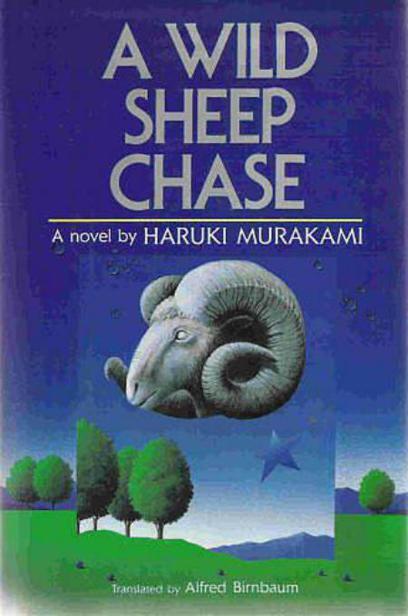
 fb2
fb2ACCLAIM FOR Haruki Murakami
“[A Wild Sheep Chase is] a bold new advance in international fiction…. Youthful, slangy, political, and allegorical.”
—The New York Times
“Murakami’s writing injects the rock ‘n’ roll of everyday language into the exquisite silences of Japanese literary prose.”
—Harper’s Bazaar
“[Murakami belongs] in the topmost rank of writers of international stature.”
—Newsday
“Greatly entertaining…. Will remind readers of the first time they read Tom Robbins or … Thomas Pynchon.”
—Chicago Tribune
“Murakami captures a kind of isolation that is special in its beauty, and particular to our time…. His language speaks so directly to the mind that one remembers with gratitude what words are for.”
—Elle
“[A Wild Sheep Chase] begins as a detective novel, dips before long into screwball comedy, and at its close—when the dead speak—becomes a tale of possession. That such unruly, disjunctive elements mingle harmoniously within it is perhaps the signal feat in this highly accomplished piece of craftsmanship.”
—Brad Leithauser, The New Yorker
“A world-class writer who has both eyes open and takes big risks…. If Murakami is the voice of a generation, then it is the generation of Thomas Pynchon and Don DeLillo.”
—The Washington Post Book World
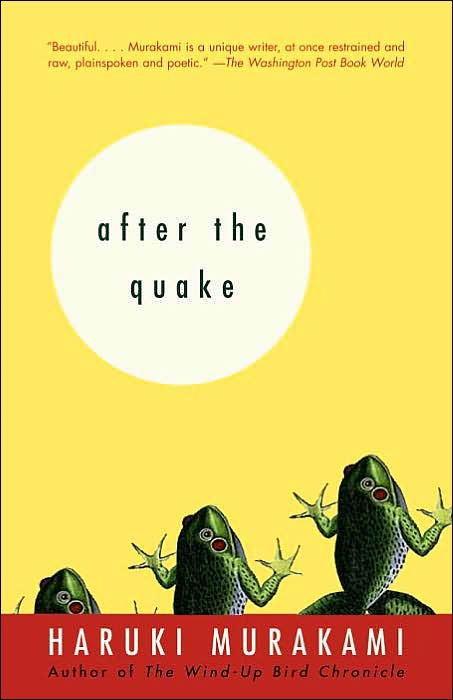
The six stories in Haruki Murakami’s mesmerizing collection are set at the time of the catastrophic 1995 Kobe earthquake, when Japan became brutally aware of the fragility of its daily existence. But the upheavals that afflict Murakami’s characters are even deeper and more mysterious, emanating from a place where the human meets the inhuman.
An electronics salesman who has been abruptly deserted by his wife agrees to deliver an enigmatic package—and is rewarded with a glimpse of his true nature. A man who has been raised to view himself as the son of God pursues a stranger who may or may not be his human father. A mild-mannered collection agent receives a visit from a giant talking frog who enlists his help in saving Tokyo from destruction. As haunting as dreams, as potent as oracles, the stories in After the Quake are further proof that Murakami is one of the most visionary writers at work today.
Haruki Murakami, a writer both mystical and hip, is the West’s favorite Japanese novelist. Perhaps unsurprisingly, Murakami lived abroad until 1995. That year, two disasters struck Japan: the lethal earthquake in Kobe and the deadly poison gas attacks in the Tokyo subway. Spurred by these tragic events, Murakami returned home. The stories in After the Quake are set in the months that fell between the earthquake and the subway attack, presenting a world marked by despair, hope, and a kind of human instinct for transformation. A teenage girl and a middle-aged man share a hobby of making beach bonfires; a businesswoman travels to Thailand and, quietly, confronts her own death; three friends act out a modern-day Tokyo version of Jules and Jim. There’s a surreal element running through the collection in the form of unlikely frogs turning up in unlikely places. News of the earthquake hums throughout. The book opens with the dull buzz of disaster-watching: “Five straight days she spent in front of the television, staring at the crumbled banks and hospitals, whole blocks of stores in flames, severed rail lines and expressways.” With language that’s never self-consciously lyrical or show-offy, Murakami constructs stories as tight and beautiful as poems. There’s no turning back for his people; there’s only before and after the quake.
—Claire Dederer
These six stories, all loosely connected to the disastrous 1995 earthquake in Kobe, are Murakami (The Wind-Up Bird Chronicle; Norwegian Wood) at his best. The writer, who returned to live in Japan after the Kobe earthquake, measures his country’s suffering and finds reassurance in the inevitability that love will surmount tragedy, mustering his casually elegant prose and keen sense of the absurd in the service of healing. In “Honey Pie,” Junpei, a gentle, caring man, loses his would-be sweetheart, Sayoko, when his aggressive best friend, Takatsuki, marries her. They have a child, Sala. He remains close friends with them and becomes even closer after they divorce, but still cannot bring himself to declare his love for Sayoko. Sala is traumatized by the quake and Junpei concocts a wonderful allegorical tale to ease her hurt and give himself the courage to reveal his love for Sayoko. In “UFO in Kushiro” the horrors of the quake inspire a woman to leave her perfectly respectable and loving husband, Komura, because “you have nothing inside you that you can give me.” Komura then has a surreal experience that more or less confirms his wife’s assessment. The theme of nothingness is revisited in the powerful “Thailand,” in which a female doctor who is on vacation in Thailand and very bitter after a divorce, encounters a mysterious old woman who tells her “There is a stone inside your body…. You must get rid of the stone. Otherwise, after you die and are cremated, only the stone will remain.” The remaining stories are of equal quality, the characters fully developed and memorable. Murakami has created a series of small masterpieces.
Copyright 2002 Cahners Business Information, Inc.
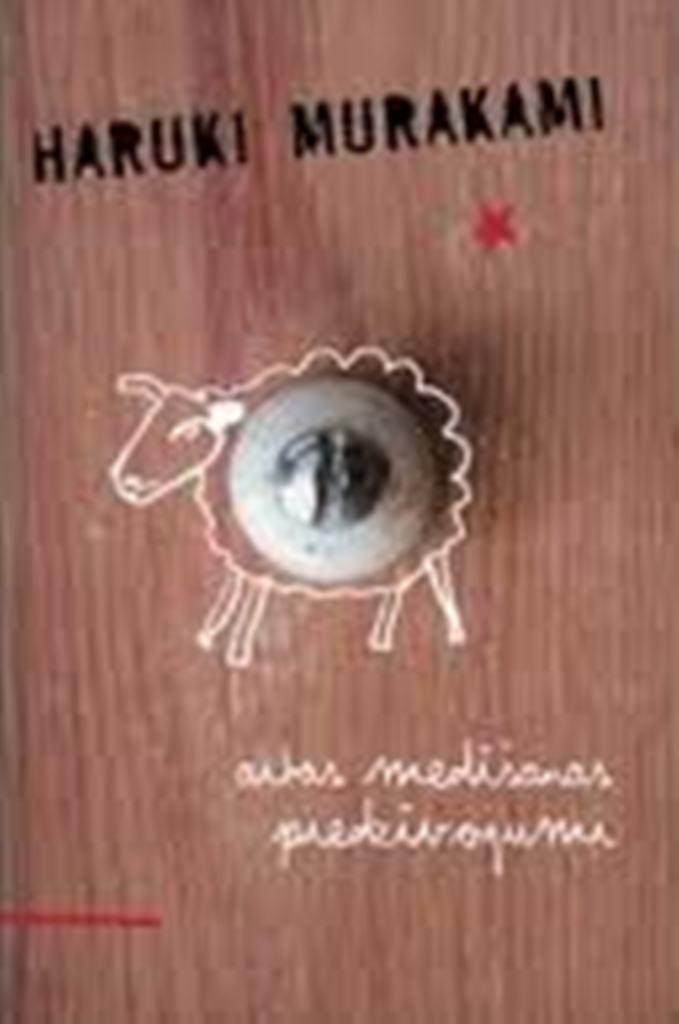
Haruki Murakami
Aitas medīšanas piedzīvojumi
Ir simboliski sapņi, un ir realitāte, kuru šie sapņi simbolizē. Vai arī – ir simboliska realitāte; šī realitāte atdzīvojas sapņos. Kurš no šiem raksturojumiem piemērotāks Haruki Murakami prozai, laikam īsti skaidrs nav joprojām. Bet tikmēr pa simbolisku zemi simboliskā ceļojumā dodas simbolisks varonis pat bez vārda. “Aitas medīšanas piedzīvojumi” ir vienlaikus reālistisks un pavisam nereāls romāns, kā jau lielākoties ar Murakami darbiem mēdz būt. Šī ir grāmata, kurā pirmoreiz parādās Aituvīrs, būtne, kas smaržo pēc vilnas, augsnes un silta mitruma. Vai viņš ir ļauns? Labs? Bikls kā aita, tomēr caurcaurēm bara dzīvnieks, rāms un ar cietu galvu, viņš vēro varoņa meklējumus. Bet aita, ap kuru vērpjas sižets, šķiet nenotverama... “– Šī simbola aita un aita zīmējumā, kas saglabājies ārsta piezīmēs, ir pilnīgi vienādas. Vēl vairāk – tās ir pilnīgi vienādas ar to aitu, kas redzama tavā fotogrāfijā. Vai tev neliekas, ka šiem faktiem ir ļoti dziļa nozīme?
– Varbūt vienkārši sakritība, – es sacīju.”
No japāņu valodas tulkojusi Ingūna Beķere
Māksliniece Agne Dautartaite-Krutuliene
Redaktore Aija Lāce
2004
FB2 failu izveidojis Imants Ločmelis

Haruki Murakami
Bezkrāsu Cukuru Tadzaki un viņa svētceļnieka gadi
Bezkrāsu Cukuru Tadzaki ir dīvaina pagātne un tukša nākotne. Brīdī, kad sastopamies ar jauno vīrieti, viņš mēģina vienlaikus lūkoties abos šajos virzienos un tādējādi atrast sevi šodienā. Cukuru ir 36 gadus vecs, veselīgs vīrietis, inženieris, kurš būvē un atjauno dzelzceļa stacijas. Reiz Cukuru Tadzaki ir bijis piederīgs, viņam ir bijuši draugi, mērķis un "vieta, kur atgriezties", taču jau kādu laiku viņa dzīve ir bez krāsas un satura - un viņš beidzot mēģina noskaidrot tā iemeslu.
Mūzika, sarunas un pārdomas, atmiņas, kas savijušās ar nākotnes pieredzējumiem, realitāte, kura nemanāmi pāriet sapņos un atkal atgriežas atpakaļ sākumpunktā: tas ir ceļš, pa kuru jānoiet ikvienam. Pašam. Ļaujoties Haruki Murakami plūstošajam stāstījumam, ir viegli pārvarēt laika un telpas barjeras, un šis literārais ceļošanas veids ir viens no iemesliem, kāpēc Murakami darbi valdzina dažādu paaudžu lasītājus.Zvaigzne ABC, 2014
Haruki Murakami (1949) ir spilgtākais un pamanāmākais no mūsdienu japāņu rakstniekiem. Viņa grāmatas drukā miljoniem eksemplāru metienos. Gan dzimtajā Japānā, gan citās valstīs Murakami ir fanu klubi, un - pats zīmīgākais - tajos runā nevis par viņu, bet par katru viņa jauno grāmatu. Ar katru gadu Murakami kults pieņemas spēkā - un katrs jaunais romāns pulcē arvien jaunus rakstnieka sekotājus.
• Aitas medīšanas piedzīvojumi
• Dejo, dejo, dejo
• Skarbā brīnumzeme un pasaules gals
• Kafka liedagā
• 1Q84, triloģija
Haruki Murakami savā vienkāršajā, bet elegantajā rakstības stilā radījis cerības un drosmes piesātinātu stāstu par Cukuru Tadzaki, kurš cenšas atklāt savas pagātnes noslēpumu.
Stylist
“Bezkrāsu Cukuru Tadzaki un viņa svētceļnieka gadi” ir romāns gan jaunam, gan pieredzējušam lasītājam. Tas atklāj vēl kādu Haruki Murakami personības šķautni, kuru nemaz nav tik viegli aprakstīt. Neglābjami stūrgalvīgs, divdomīgs autors, kurš drosmīgi virzās uz jaunu brieduma līmeni.
New York Times
Bagātīgs un pat brīnišķīgs literārs darbs. Patiess un pārliecinošs stāsts.
Spectator
Haruki Murakami savā prozā saplūdina vienkāršību un dziļumu, radot harmonisku naivuma un izsmalcinātības savienojumu.
Independent
Bezkrāsu Cukuru Tadzaki un viņa svētceļnieka gadi
Colorless Tsukuru Tazaki and His Years of Pilgrimage
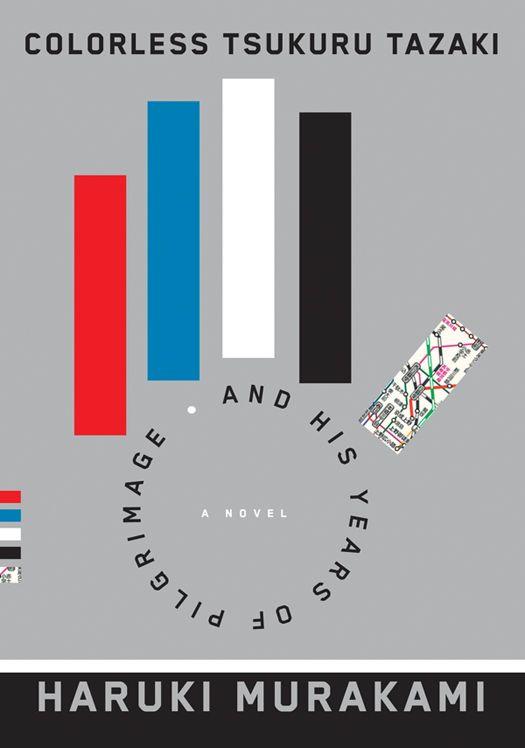
Tsukuru Tazaki had four best friends at school. By chance all of their names contained a colour. The two boys were called Akamatsu, meaning “red pine”, and Oumi, “blue sea”, while the girls’ names were Shirane, “white root”, and Kurono, “black field”. Tazaki was the only last name with no colour in it.
One day Tsukuru Tazaki’s friends announced that they didn’t want to see him, or talk to him, ever again.
Since that day Tsukuru has been floating through life, unable to form intimate connections with anyone. But then he meets Sara, who tells him that the time has come to find out what happened all those years ago.
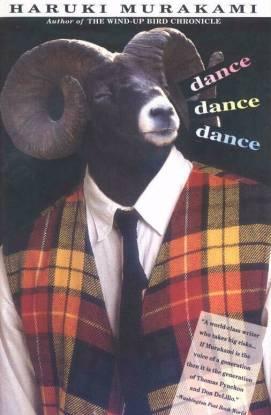
Acclaim for HARUКI MURAKAMI'S
DANCE DANCE DANCE
«An entertaining mix of modern sci-fi, nail-biting suspense, and ancient myth ... a sometimes funny, sometimes sinister mystery spoof . . . [that] also aims at contemporary human concerns.» — Chicago Tribune
«The plot is addictive.» — Detroit Free Press
«There are novelists who dare to imagine the future, but none is as scrupulously, amusingly up-to-the-minute as ... Murakami.» — Newsday
«[Dance Dance Dance] has the fascination of a well-written detective story combined with a surreal dream narrative . . . full of appealing, well-developed characters.»
— Philadelphia Inquirer
«A world-class writer who . . . takes big risks. ... If Murakami is the voice of a generation, then it is the generation of Thomas Pynchon and Don DeLillo.»
— Washington Post Book World
«All the hallmarks of Murakami's greatness are here: restless and sensitive characters, disturbing shifts into altered reality, silky smooth turns of phrase and a narrative with all the momentum of a roller-coaster. . . . This is the sort of page-turner [Mishima] might have written.»
— Publishers Weekly
«[Murakami's] writing injects the rock 'n' roll of everyday language into the exquisite silences of Japanese literary prose.» — Harper's Bazaar
«One of the most exciting new writers to appear on the international scene.» — USA Today
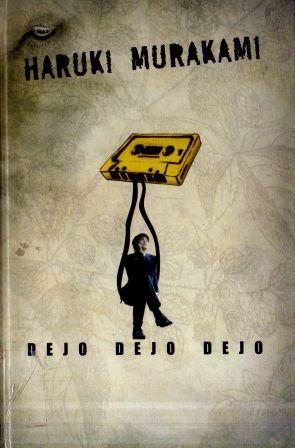
Haruki Murakami
Dejo Dejo Dejo
Šajā spriedzes pilnajā, misticisma apdvestajā Haruki Murakami romānā galvenais varonis (lasītājam jau pazīstams no autora iepriekšējā darba "Aitas medīšanas piedzīvojumi"; pazudušo draudzeni meklējot, ierodas kādā viesnīcā un nokļūst dīvainā pasaulē. Tur viņš iepazīstas ar Aituvīru, kas māca viņam deju soļus. Un cauri bāru apmeklētāju sarunu gudrībām un amerikāņu banalitātēm izkristalizējas atziņa: nevajag vienmēr visam meklēt racionālu izskaidrojumu. Ja esi zaudējis visu, "…vienkārši dejo, neapstājies, dejo ".
Viens no mūsdienu populārākajiem un savā dzimtenē Japānā pretrunīgāk vērtētajiem rakstniekiem
Haruki Murakami
(dz. 1949) jaunībā aizrāvies ar politiku un rokmūziku. Murakami pirmie prozas darbi parādījās XX gs. 80. gados, un kritiķi tūlīt sāka lauzt šķēpus par viņa literāro darbu žanru un stilu.
Šī japāņu rakstnieka darbi ir pārpilni ar kaut ko netverami austrumniecisku, kaut gan viņa varoņi ēd nevis suši, bet hamburgerus, čipsus un snikerus un sakē vietā dzer alu, savu dzīvi pavada bāros, makdonalda tipa ēstuvēs un netīrās viesnīcās…
Dejo, dejo, dejo ir mūsdienu zinātniskās fantastikas un senu mītu valdzinošs sajaukums. Dažbrīd tas uzjautrina, bet dažbrīd atgādina draudīgu parodiju par mistērijām mūsdienu sabiedrībā.
Chicago Tribune
Ir daudzi rakstnieki, kuri iedrošinās zīmēt nākotnes vīzijas, bet reti kurš ir tik smalki un uzjautrinoši ultramoderns kā Murakami. Šim rakstniekam piemīt vienlaikus gan eiropeiska domāšana, gan japāņu mentalitāte. Radītie tēli piedzīvo daudz absurdu situāciju, kas sauc atmiņā S. Beketa varoņus.
Newsday
Pasaules klases rakstnieks, kuru droši var dēvēt par mūsdienu paaudzes balsi. Šajā romānā viens no mūsdienu īpatnējākiem mūsdienu rakstniekiem sakausē zinātnisko fantastiku, skarbu trilleri un spožu satīru jaunā literatūras žanrā.
Washington Post Book World
Dejo, dejo, dejo ir spīdoši uzrakstīts detektīvstāsts, kuru papildina sirreālistiski sapņi un spilgti, brīnišķīgi veidoti varoņu raksturi.
Vieni kritiķi uzskata, ka šie romāni ir fantāzijas ar nereāliem varoņiem, fantastiskām būtnēm un paša izdomātiem mītiskiem tēliem. Otri apgalvo, ka tie ir īpatni detektīvstāsti ar pakaļdzīšanos, noslēpumainām slepkavībām un ieiešanu paralēlajās pasaulēs. Trešie ka tie ir romāni-alegorijas, kuros patiesībā jālasa, tā sakot, starp rindām.
Philadelphia Inquirer
Šis darbs ir pārpilns ar mistēriju, mistiku, seksu un rokenrolu. Spraigs sižets, asprātīgs humors. Stāstījums rauj uz priekšu gluži kā dīzeļmotors…
Los Angeles Times Book Review
Noskannējis grāmatu un failu izveidojis Imants Ločmelis
No japāņu valodas tulkojusi Ingūna Beķere
Mākslinieks Arnis Zariņš
Redaktore Mirdza Kalva
Apgāds Zvaigzne ABC, SIA, K. Valdemāra ielā 6, Rīgā, LV-1010. Red. nr. L-1653. Jelgavas tipogrāfija
O Tulkojums latviešu valodā, Apgāds Zvaigzne ABC ISIIN 1983. gada marts
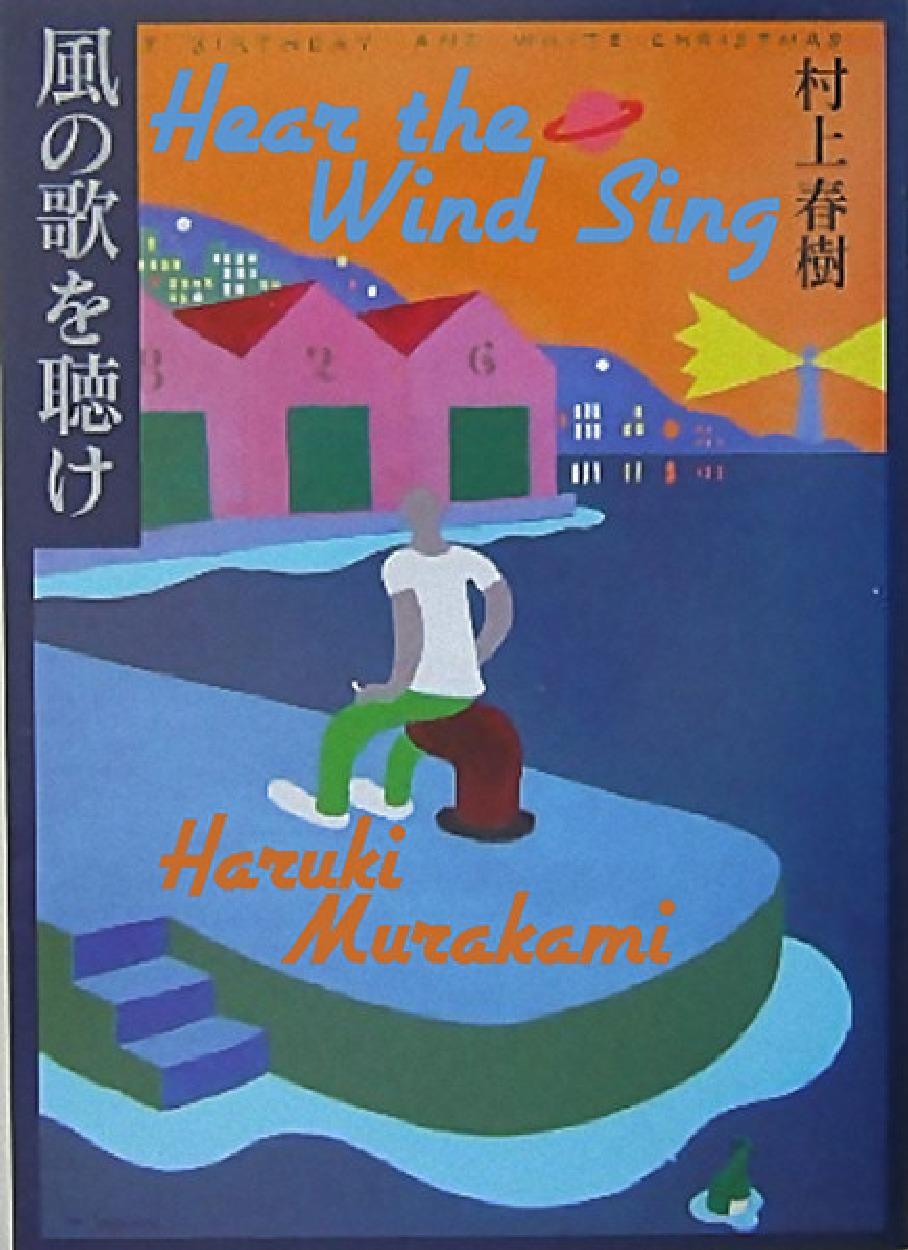
Hear the Wind Sing (風の歌を聴け Kaze no uta o kike?) is the first novel by Japanese writer Haruki Murakami. It first appeared in the June 1979 issue of Gunzo (one of the most influential literary magazines in Japan), and in book form the next month. The novel was adapted by Japanese director Kazuki Ōmori in a 1981 film distributed by Art Theatre Guild. An English translation by Alfred Birnbaum appeared in 1987.
It is the first book in the so-called "Trilogy of the Rat" series of independent novels, followed by Pinball, 1973 (1980) and A Wild Sheep Chase (1982), before the later epilogue Dance Dance Dance (1988). All four books in the series have been translated into English, but Hear the Wind Sing and Pinball, 1973 (which are realist novels slightly differing from the author's later style) were never widely distributed in the English-speaking world, having only been published in Japan by Kodansha under their Kodansha English Library branding (for English Foreign Language learners), and both only as A6-sized pocketbooks. Translations by Ted Goossen of "Hear the Wind Sing" and "Pinball, 1973" are scheduled to be released by Knopf on August 4, 2015 under the title "Wind, Pinball".

Amazon.com
The opening pages of a Haruki Murakami novel can be like the view out an airplane window onto tarmac. But at some point between page three and fifteen-it's page thirteen in Kafka On The Shore-the deceptively placid narrative lifts off, and you find yourself breaking through clouds at a tilt, no longer certain where the plane is headed or if the laws of flight even apply.
Joining the rich literature of runaways, Kafka On The Shore follows the solitary, self-disciplined schoolboy Kafka Tamura as he hops a bus from Tokyo to the randomly chosen town of Takamatsu, reminding himself at each step that he has to be "the world¹s toughest fifteen-year-old." He finds a secluded private library in which to spend his days-continuing his impressive self-education-and is befriended by a clerk and the mysteriously remote head librarian, Miss Saeki, whom he fantasizes may be his long-lost mother. Meanwhile, in a second, wilder narrative spiral, an elderly Tokyo man named Nakata veers from his calm routine by murdering a stranger. An unforgettable character, beautifully delineated by Murakami, Nakata can speak with cats but cannot read or write, nor explain the forces drawing him toward Takamatsu and the other characters.
To say that the fantastic elements of Kafka On The Shore are complicated and never fully resolved is not to suggest that the novel fails. Although it may not live up to Murakami's masterful The Wind-Up Bird Chronicle, Nakata and Kafka's fates keep the reader enthralled to the final pages, and few will complain about the loose threads at the end.
From Publishers Weekly
Starred Review. Previous books such as The Wind-Up Bird Chronicle and Norwegian Wood have established Murakami as a true original, a fearless writer possessed of a wildly uninhibited imagination and a legion of fiercely devoted fans. In this latest addition to the author's incomparable oeuvre, 15-year-old Kafka Tamura runs away from home, both to escape his father's oedipal prophecy and to find his long-lost mother and sister. As Kafka flees, so too does Nakata, an elderly simpleton whose quiet life has been upset by a gruesome murder. (A wonderfully endearing character, Nakata has never recovered from the effects of a mysterious World War II incident that left him unable to read or comprehend much, but did give him the power to speak with cats.) What follows is a kind of double odyssey, as Kafka and Nakata are drawn inexorably along their separate but somehow linked paths, groping to understand the roles fate has in store for them. Murakami likes to blur the boundary between the real and the surreal-we are treated to such oddities as fish raining from the sky; a forest-dwelling pair of Imperial Army soldiers who haven't aged since WWII; and a hilarious cameo by fried chicken king Colonel Sanders-but he also writes touchingly about love, loneliness and friendship. Occasionally, the writing drifts too far into metaphysical musings-mind-bending talk of parallel worlds, events occurring outside of time-and things swirl a bit at the end as the author tries, perhaps too hard, to make sense of things. But by this point, his readers, like his characters, will go just about anywhere Murakami wants them to, whether they "get" it or not.

Książka "Koniec świata i Hard-boiled Wonderland" opublikowana została prawie dwadzieścia lat temu, w 1985 roku, co może oznaczać, że Japonia wcześniej niż Ameryka przejęła się ideą matriksa, zapewne dlatego, że silnie doświadczyła strachów społeczeństw wysoko stechnicyzowanych. Ktoś dobierze się do naszego mózgu, coś, dajmy na to elektryczna maszynka do mięsa czy telewizor, roztoczy kontrolę nad naszym życiem. W jednej z pierwszych scen książki Murakamiego bohater jedzie dźwiękoszczelną windą, gorączkowo zastanawiając się, gdzie ukryte są kamery.
Hikikomori siedzą w kuchniach
Bohaterowie większości książek Harukiego Murakamiego rezygnują z intratnych posad, eleganckich mieszkań, luksusowych samochodów, a ich marzeniem jest, jak w przypadku bohatera "Końca świata…", żeby kupić sobie mały domek na wsi, pić piwo, słuchać Mozarta i uczyć się greki. Niestety, aby zarobić na domek, bohater "Końca świata…" pracuje w Systemie (i przetwarza w swoim bezbronnym, ale genialnym mózgu jakieś skomplikowane dane). Pracuje jednak niechętnie, jakby półgębkiem.
Bohaterowie, których stworzył Murakami, przypominają dzisiejszych hikikomori – młodych Japończyków, którzy zamykają się w domach i latami z nich nie wychodzą. Jak alarmują psychologowie i socjolodzy, to coraz powszechniejszy w Japonii rodzaj depresji. Hikikomori zostają przez Murakamiego wywabieni z domów, bo muszą (o ironio losu!) ratować świat. Także bohater "Końca świata…" rad nie rad włazi do kanałów, zmaga się z podziemnymi stworami, przyjmuje dziwnych gości, którzy demolują mu mieszkanie – jest oczywiście Alicją w Krainie Czarów bezradną wobec wciąż strofujących ją istot. Za przewodnika po krainie "pod ziemią" (po zaświatach?) ma zaś dorosłą wersję "króliczka" – pulchną dziewczynę w różowym kostiumiku.
Proza Murakami kipi tego typu absurdalnym humorem. Japoński pisarz zbiera jak odkurzacz literackie (i filmowe) tropy, figury stylistyczne, schematy fabularne – jest w prozie może kimś porównywalnym do Tarantino, ale przy tym ma coś z powagi czy ponuractwa Lyncha (tak jak on lubi eksponować motywy odsyłające do psychoanalizy: studnie, tunele). Murakami prowokuje porównania z filmem, ponieważ jego proza jest gęsta od obrazów. W tym sensie zmysłowa, a nie intelektualna.
Silnie eksploatowany przez horrory klasy B motyw "stworów z podziemi, które porywają ludzi i żywią się trupami" u Murakamiego rozwija się ku mniej spektakularnej, ale może tym intensywniejszej grozie – ku skojarzeniom z pisarstwem najwybitniejszego nowelisty japońskiego Akutagawy Ryunosukego (twórcy m.in. opowiadania o Kappach – krainie wodników) i ku jego "Życiu pewnego szaleńca" – pełnej bólu opowieści o świecie, który rozsypuje się jak stłuczone lustro.
Nawiązania do "Alicji w Krainie Czarów" w "Końcu świata…" można uznać jedynie za grę na planie fabuły albo wziąć za wskazówkę. "Alicja…" to analiza umysłu pogrążonego we śnie napisana przez matematyka. Abstrahując od operacji logicznych, postawiony tam zostaje egzystencjalny problem tożsamości. Czy ja to ja? Gdzie jest moja stopa? – pytała Alicja zagrożona roztopieniem się w… Śnie? Niebycie? Śmierci? I w istocie to sen i śmierć są tematem "Końca świata…" Harukiego Murakamiego.
Schodzenie do bardo
Bohater żyje w dwóch nurtach. Murakami prowadzi narrację w ten sposób, że związki przyczyny i skutku między poszczególnymi etapami jego historii są zamazane. W nurcie dziennym dostaje jakieś zadania do wykonania, racjonalizuje rzeczywistość, próbuje panować nad sytuacją i złożyć świat w spójną całość. W nocnym "stanie przejścia" przebywa w mieście zasypanym śniegiem, za którego murami umierają jednorożce, a na peryferiach dogorywają cienie, które odłączono od ciał. Pracuje w bibliotece, gdzie z czaszek jednorożców wydobywa się i czyta sny (przypomina się tu i Poe, i Borges).
"Koniec świata…" może być odczytany jako zapis wędrówki po bardo – buddyjskiej krainie zmarłych-żywych – które jest miejscem jakiegoś stanu pośredniego, gdzie umysł jeszcze żyje fantomami dni, kakofonią obrazów. "Dlaczego słońce wciąż świeci? Dlaczego ptaki wciąż śpiewają? Czyżby nie wiedziały, że świat się już skończył?" – czytamy w motcie książki.
Murakami potrafi w prozie osiągnąć to, co rzadko się udaje – z obrazów opatrzonych, dźwięków osłuchanych i wyzutych z wszelkiego czaru, jak Sting puszczany w supermarketach, z fragmentów wydobytych z pamięci i uczuć tak odległych, jakby przytrafiły się komuś innemu – Murakami potrafi ułożyć historię, która jest jak dziecięca zabawa, wciagająca i jednak groźna, tajemnicza jak jednorożce, które są obecne, a przecież nigdy nie istniały.
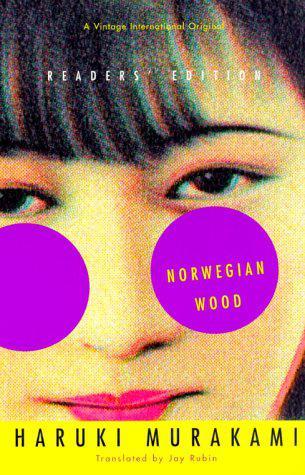
This stunning and elegiac novel by the author of the internationally acclaimed Wind-Up Bird Chronicle has sold over 4 million copies in Japan and is now available to American audiences for the first time. It is sure to be a literary event.
Toru, a quiet and preternaturally serious young college student in Tokyo, is devoted to Naoko, a beautiful and introspective young woman, but their mutual passion is marked by the tragic death of their best friend years before. Toru begins to adapt to campus life and the loneliness and isolation he faces there, but Naoko finds the pressures and responsibilities of life unbearable. As she retreats further into her own world, Toru finds himself reaching out to others and drawn to a fiercely independent and sexually liberated young woman.
A poignant story of one college student's romantic coming-of-age, Norwegian Wood takes us to that distant place of a young man's first, hopeless, and heroic love.
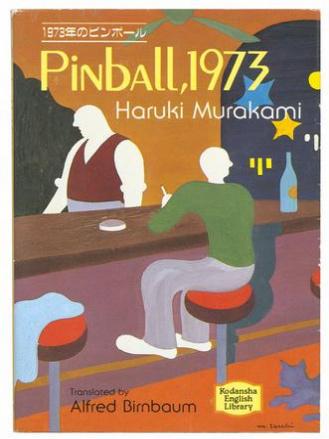
Pinball, 1973 is a novel published in 1980 by Japanese author Haruki Murakami. The second book in the "Trilogy of the Rat" series, it is preceded by Hear the Wind Sing and followed by A Wild Sheep Chase, and is the second novel written by Murakami.
Haruki Murakami
Skarbā brīnumzeme un pasaules gals
No japaņu valodas tulkojusi Inese Avana
Murakami lasīt ir stilīgi. Tas ir piedzīvojums, pēc kura mainās pasaules uztvere. Tā domā visā pasaulē Ņujorkā, Parīzē, Berlīnē, Kalkutā, Maskavā, Tbilisi, Tokijā, Romā un Rīgā.
Nebrīnies, ka rodas vēlme izlasīt citus Murakami darbus. Ja šī ir pirmā Murakami grāmata, ko turi rokā, ievēro: šis ir īpašs darbs un īpašs autors. Uzdāvini sev atklāsmes prieku. Latviski iznākuši romāni "Kafka liedagā", "Aitas medīšanas piedzīvojumi", "Dejo, dejo, dejo" u.c.
Šis ir noslēpumainākais un mistiskākais Haruki Murakami darbs. Tajā pamīšus savīti divi stāstījumi: viens par skaitļotāju, kas apstrādā pazemes laboratorijā mītoša zinātnieka pētījumu rezultātus, izmantojot unikālas īpaši pilnveidota prāta spējas un speciālas kodēšanas sistēmas, otrs par pilsētu, kurā ienākošie pamet savu ēnu un zaudē atmiņu, tādējādi atsakoties no sava "es"… Abi stāsti grāmatas beigās savijas, dodot vietu skumīgi poētiskām pārdomām par dzīves jēgu.
Haruki Murakami (1949) dzimis Kioto Japānā. Viņa darbi tulkoti un izdoti vairāk nekā četrdesmit valodās, autors ieguvis dažādas literārās balvas. Taču vislielākā balva ir tā, ka Murakami kļuvis par kulta rakstnieku jau divām japāņu, amerikāņu un eiropiešu paaudzēm.
www.e-gramatnica.lv www.zvaigzne.lv
Murakami drosmīgā gatavība doties taisnā ceļā uz pašām virsotnēm ir tieša norāde uz viņa ģenialitāti… Pasaules klases rakstnieks, kas dzīvo ar vajājām acīm un ir gatavs uzņemties lielu risku.
Washington Post Book World
Bagāts ar darbību, satrauktām gaidām, neparedzētiem sīkumiem… Provokatīvs darbs.
The Atlantic
Amerikāniskā dzīvesprieka un japānisko šaušalu sajaukums.
Esquire
Murakami talants ir viņa ironiskās novērotāja spējas, kas norāda uz kaut ko vēl nopietnāku… Viņš ir jautrs, absurds un ari vientuļš.
Los Angeles Times Book Review
Arņa Kilbloka vāka dizains
Redaktore Aija Lāce
Apgāds Zvaigzne ABC, SIA, K. Valdemāra ielā 6, Rīgā, LV-1010. Red. nr. T-250. Jelgavas tipogrāfija
Visas ši darba tiesības ir aizsargātas. Izdevumu reproducēt, kopēt vai citādi pavairot un izplatīt aizliegts bez apgada rakstiskas at|aujas.
© 2. Izdevums, tulkojums lutvieiu valoda. Apgāds Zvaigzne ABC ISBN 978-99R4-40-504-9
Kāpēc saule vēl turpina spīdēt? Kāpēc putni turpina dziedāt?
Viņi droši vien nezina, Ka pasaules gals jau ir sācies.
Noskannējis grāmatu un failu izveidojis Imants Ločmelis
"Pasaules gals" [1]

Born in 1951 in an affluent Tokyo suburb, Hajime—beginning in Japanese—has arrived at middle age wanting for almost nothing. The postwar years have brought him a fine marriage, two daughters, and an enviable career as the proprietor of two jazz clubs. Yet a nagging sense of inauthenticity about his success threatens Hajime’s happiness. And a boyhood memory of a wise, lonely girl named Shimamoto clouds his heart.

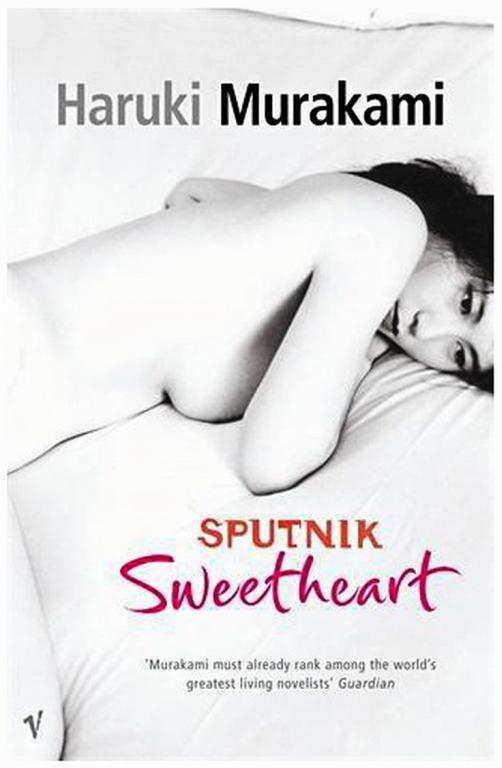
Sumire is in love with a woman seventeen years her senior. But whereas Miu is glamorous and successful, Sumire is an aspiring writer who dresses in an oversized second-hand coat and heavy boots like a character in a Kerouac novel.
Sumire spends hours on the phone talking to her best friend K about the big questions in life: what is sexual desire, and should she ever tell Miu how she feels for her? Meanwhile K wonders whether he should confess his own unrequited love for Sumire.
Then, a desperate Miu calls from a small Greek island: Sumire has mysteriously vanished…
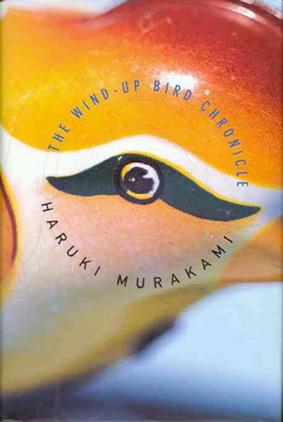
Japan's most highly regarded novelist now vaults into the first ranks of international fiction writers with this heroically imaginative novel, which is at once a detective story, an account of a disintegrating marriage, and an excavation of the buried secrets of World War II.
In a Tokyo suburb a young man named Toru Okada searches for his wife's missing cat. Soon he finds himself looking for his wife as well in a netherworld that lies beneath the placid surface of Tokyo. As these searches intersect, Okada encounters a bizarre group of allies and antagonists: a psychic prostitute; a malevolent yet mediagenic politician; a cheerfully morbid sixteen-year-old-girl; and an aging war veteran who has been permanently changed by the hideous things he witnessed during Japan's forgotten campaign in Manchuria.
Gripping, prophetic, suffused with comedy and menace, The Wind-Up Bird Chronicle is a tour de force equal in scope to the masterpieces of Mishima and Pynchon.

Murakami czuje się świetnie również w zwartej oszczędnej i precyzyjnej formie krótkiego opowiadania. Kilkoma słowami zarysowuje wyraziste, sugestywne światy, a każda z historii jest przekonująca, pełna i satysfakcjonująca. Każdy z bohaterów odbywa jakąś podróż czy to w rzeczywistym, geograficznym, czy jedynie wewnętrznym, duchowym wymiarze do której bodźcem staje się tytułowe trzęsienie ziemi każdy z nich odkrywa w sobie jakąś tajemnicę, którą próbuje przeniknąć albo po prostu pogodzić się z jej istnieniem każdy ma jakąś obsesję, która zatruwa mu życie każdy jest uwikłany bądź dopiero się wikła w skomplikowane relacje z innymi ludźmi, poprzez które następuje niejako wzajemna wymiana sekretnych duchowych labiryntów. Nieposkromiona wyobraźnia Murakamiego raz po raz rozsadza ramy realności, przenosząc czytelnika to w świat snów, to marzeń, to czystej surrealnej fantazji.
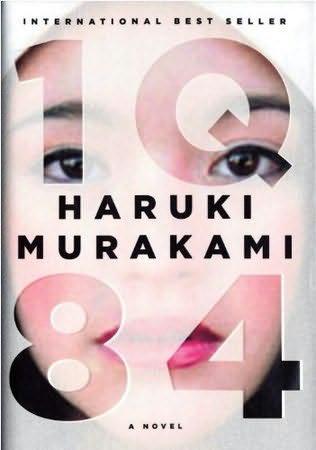
The long-awaited magnum opus from Haruki Murakami, in which this revered and best-selling author gives us his hypnotically addictive, mind-bending ode to George Orwell's 1984.