
 fb2
fb2Napoleon is in New Orleans in William Sanders's «Empire»; the German Empire thrives in 1929 in Harry Turtledove's "Uncle Alf"; Pancho Villa's about to become the vice-president in S.M. Stirling and Richard Foss's «Compadres»; and General Patton gets a new diary in Roland J. Green's "George Patton Slept Here." In Alternate Generals II, a collection of 13 wild speculations for those who enjoy specifically military alternative histories, Harry Turtledove (Colonization: Aftershocks) also gathers stories from the likes of Chris Bunch, Michael F. Flynn and Susan Shwartz.
Michael F. Flynn’s stories have appeared in Analog, F&SF, and elsewhere. He has been a three-time Hugo award finalist—most recently for his novella, “Melodies of the Heart” (Analog, January 1994). His most recent works include a novel of the near future, Firestar (Tor, 1996), and a collection of short tales, The Forest of Time and Other Stories (Tor, April 1997). The sequel to the former book, Rogue Star, will be out from Tor next spring. “House of Dreams” is the author’s first tale for Asimov’s.
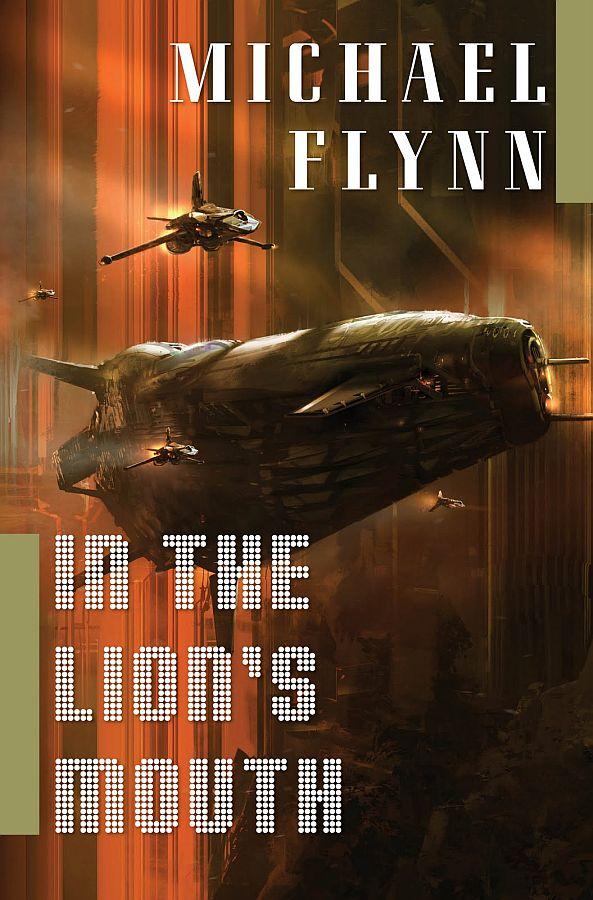
It’s a big Spiral Arm, and the scarred man, Donavan buigh, has gone missing in
it, upsetting the harper Mearana’s plans for a reconciliation between her
parents. Bridget ban, a Hound of the League, is unconvinced that reconciliation
is either possible or desirable; but nonetheless has dispatched agents to
investigate the disappearance. After all, Donovan had once done the favor for
her (in Up Jim River).
There is a struggle in the Lion’s Mouth, the bureau that oversees the Shadows—a
clandestine civil war of sabotage and assassination between those who would
overthrow Those of Name and the loyalists who support them. And Donovan, one
time Confederal agent, has been recalled to take a key part, willingly or no.
For seven decades, L. Sprague de Camp was a giant in both science fiction and fantasy, renowned for his fast-moving action-adventure tales with a strong humorous element. Now, Hugo-winner and best-selling author Harry Turtledove has gathered together top writers in SF and fantasy to write stories in the same humorous adventure vein which de Camp practically invented. On board are Poul Anderson, Frederik Pohl, David Drake, Judith Tarr, Esther M. Friesner, S.M. Stirling, Michael F. Flynn, Turtledove himself and more.
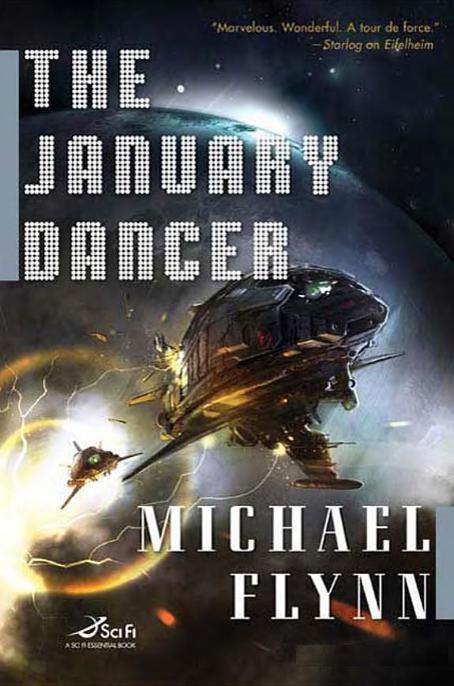
A triumph of the New Space Opera: fast, complicated, wonder-filled!
Hugo Award finalist and Robert A. Heinlein Award–winning SF writer Michael
Flynn now turns to space opera with stunningly successful results. Full of rich
echoes of space opera classics from Doc Smith to Cordwainer Smith, The
January Dancer tells the fateful story of an ancient pre-human artifact of
great power, and the people who found it.
Starting with Captain Amos
January, who quickly loses it, and then the others who fought, schemed, and
killed to get it, we travel around the complex, decadent, brawling, mongrelized
interstellar human civilization the artifact might save or destroy. Collectors
want the Dancer; pirates take it, rulers crave it, and they’ll all kill if
necessary to get it. This is a thrilling yarn of love, revolution, music, and
mystery, and it ends, as all great stories do, with shock and a
beginning.
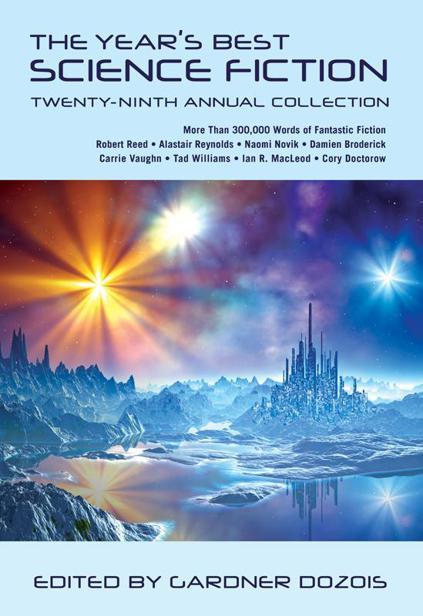
In the new millennium, what secrets lay beyond the far reaches of the universe? What mysteries belie the truths we once held to be self evident? The world of science fiction has long been a porthole into the realities of tomorrow, blurring the line between life and art. Now, in The Year’s Best Science Fiction: Twenty-Ninth Annual Collection the very best SF authors explore ideas of a new world. This venerable collection brings together short stories from award winning authors and masters of the field such as Robert Reed, Alastair Reynolds, Damien Broderick, Elizabeth Bear, Paul McAuley and John Barnes. And with an extensive recommended reading guide and a summation of the year in science fiction, this annual compilation has become the definitive must-read anthology for all science fiction fans and readers interested in breaking into the genre.
In this collection of thirty-five science fiction stories from 2011, Gardner Dozois once again identifies the best stories of the year.
In the new millennium, what secrets lay beyond the far reaches of the universe? What mysteries belie the truths we once held to be self evident? The world of science fiction has long been a porthole into the realities of tomorrow, blurring the line between life and art. Now, in The Year’s Best Science Fiction: Twenty-Ninth Annual Collection the very best SF authors explore ideas of a new world. This venerable collection brings together short stories from award winning authors and masters of the field such as Robert Reed, Alastair Reynolds, Damien Broderick, Elizabeth Bear, Paul McAuley and John Barnes. And with an extensive recommended reading guide and a summation of the year in science fiction, this annual compilation has become the definitive must-read anthology for all science fiction fans and readers interested in breaking into the genre.
In this collection of thirty-five science fiction stories from 2011, Gardner Dozois once again identifies the best stories of the year.
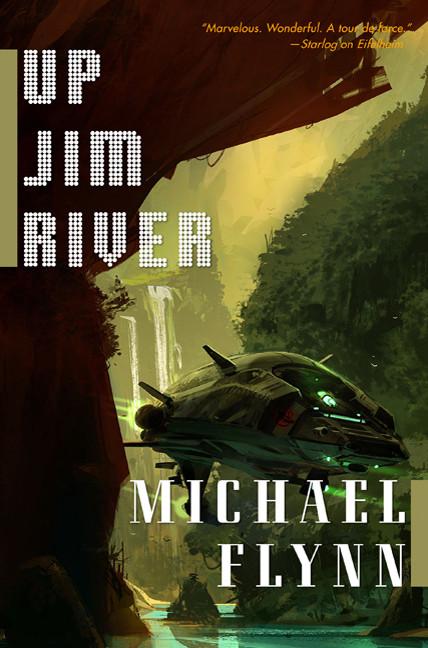
The Hound Bridget ban has vanished and the Kennel (the mysterious superspy
agency) has given up looking for her. But her daughter, the harper Mearana, has
not, and she has convinced the scarred man, Donovan, to aid in her search.
But Donovan’s mind has been shattered by Those of Name, the rulers of the
Confederacy, and no fewer than seven quarreling personalities now inhabit his
skull. How can he hope to see Mearana safely through her quest?
Together, they follow Bridget ban’s trail to the raw worlds of the frontier,
edging ever closer to the de-civilized and barbarian planets of the Wild. Along
the way, they encounter evidence that they too are being followed—by a deadly
agent of Those of Name.From BooklistOn the harper Mearana’s home planet, up Jim
River is a saying indicating a journey ever further into danger and the
unknown. Mearana’s mother, Bridget ban, has disappeared on mysterious business.
Even the Kennel, her employer and one of the galaxy’s two sources of secret
agents, didn’t know what she was looking for or where she went. Mearana is
determined, though, to discover her mother’s fate. She manages to convince the
scarred man, the Fudir, who was once Donovan but became six or seven
personalities after a botched experiment by Those of Name, to join her out of a
sense of nostalgia. The worlds inhabited by these people are sufficient reason
to read the novel. The extrapolations of linguistic drift and remnants of
ancient history that Flynn conjures constitute a fascinating story in
themselves. Adding to them a tense and thrilling search from the bar on Jehovah
to the very Wild itself, through strange cultures and dangerous ports, just
makes the book all the more engaging.