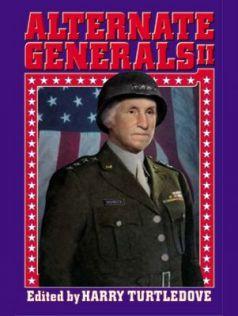
 fb2
fb2Napoleon is in New Orleans in William Sanders's «Empire»; the German Empire thrives in 1929 in Harry Turtledove's "Uncle Alf"; Pancho Villa's about to become the vice-president in S.M. Stirling and Richard Foss's «Compadres»; and General Patton gets a new diary in Roland J. Green's "George Patton Slept Here." In Alternate Generals II, a collection of 13 wild speculations for those who enjoy specifically military alternative histories, Harry Turtledove (Colonization: Aftershocks) also gathers stories from the likes of Chris Bunch, Michael F. Flynn and Susan Shwartz.
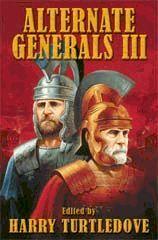
With its dual portrait of generals Grant and Lee on opposing sides of the Roman Civil War, the jacket of editor Turtledove's solid third alternative military history anthology neatly evokes this popular subgenre. While there's no such story, Robert E. Lee must decide, as the ambassador to Britain of a victorious but ostracized Confederacy, where his true loyalties lie in Lee Allred's provocative "East of Appomattox." Similarly, Roland J. Green's " 'It Isn't Every Day of the Week' " shows how altering the outcome of a few minor incidents can turn history on its head, making General "Old Hickory" Jackson and the Cherokee Nation allies when the U.S. is drawn into the Napoleonic wars. Chris Bunch's "Murdering Uncle Ho" vividly demonstrates the wisdom of "be careful what you wish for" in the book's most intensely drawn battle sequences; this tale of an alternative Vietnam War draws some disturbing parallels with Iraq, as does Turtledove's own "Shock and Awe." Esther M. Friesner's "First, Catch Your Elephant" may not tell us much about Hannibal, but it succeeds marvelously as comedy.
An all-original collection of twenty-seven stories by some of today’s most inventive authors about alien encounters with humans-from the aliens’ perspective.

Explore fascinating, often chilling “what if” accounts of the world that could have existed–and still might yet…Science fiction’s most illustrious and visionary authors hold forth the ultimate alternate history collection. Here you’ll experience mind-bending tales that challenge your views of the past, present, and future, including:
• “The Lucky Strike”: When The Lucky Strike is chosen over The Enola Gay to drop the first atomic bomb, fate takes an unexpected turn in Kim Stanley Robinson’s gripping tale.
• “Bring the Jubilee”: Ward Moore’s novella masterpiece offers a rebel victory at Gettysburg which changes the course of the Civil War… and all of American history.
• “Through Road No Wither”: After Hitler’s victory in World War II, two Nazi officers confront their destiny in Greg Bear’s apocalyptic vision of the future.
• “All the Myriad Ways”: Murder or suicide, Ambrose Harmon’s death leads the police down an infinite number of pathways in Larry Niven’s brilliant and defining tale of alternatives and consequences.
• “Mozart in Mirrorshades”: Bruce Sterling and Lewis Shiner explore a terrifying era as the future crashes into the past–with disastrous results.
…as well as works by Poul Anderson • Gregory Benford • Jack L. Chalker • Nicholas A. DiChario • Brad Linaweaver • William Sanders • Susan Shwartz • Allen Steele • and Harry Turtledove himself!
The definitive collection: fourteen seminal alternate history tales drawing readers into a universe of dramatic possibility and endless wonder
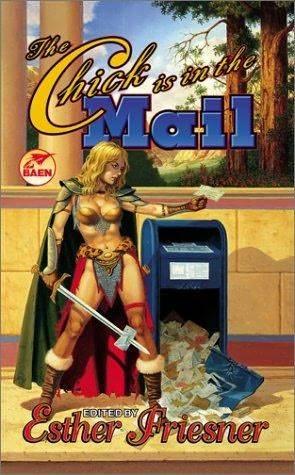
An anthology of stories edited by Esther M. Freisner and Martin Harry Greenberg
In a collection of fantasy stories, warrior women take on pirates invading a charity ball, bring an obnoxious loremaster to justice, protect children from magically-summoned barbarian hordes, and rescue Tokyo from destructive reptiles.

William Sanders, author of fifteen published books, is best known to science fiction fans for the alternate-history comedies Journey to Fusang and The Wild Blue and the Gray, and for his short stories based on Cherokee tradition. (Two of these stories have appeared in the twelfth and thirteenth editions of the Year’s Best Science Fiction.) In his first tale for Asimov’s, Mr. Sanders works both veins at once…