 fb2
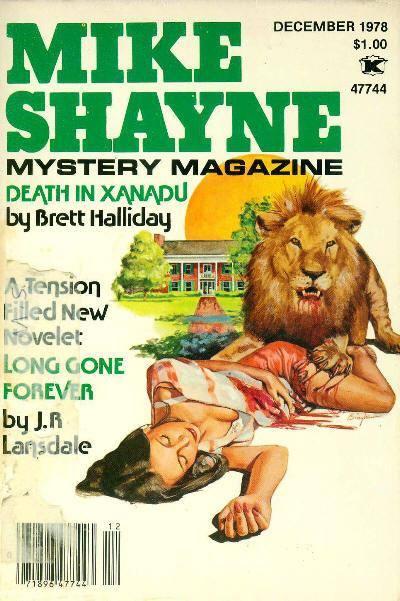
fb2This is the fourth story about Martin H. Ehrengraf, the dapper little lawyer whose clients always turn out to be innocent. Unlike Perry Mason, Ehrengraf rarely sees the inside of a courtroom, but like that fellow, he never loses a case.
Ehrengraf charges high fees, and has the good sense to represent individuals able to pay them. But in the present story he accepts a court appointment to defend a hapless indigent who has evidently beaten his wife to death in a drunken argument.
A fellow attorney assumes Ehrengraf will have his client plead guilty to manslaughter, accept his $175 fee, and go on to other matters. But how could Ehrengraf allow an innocent man to plead guilty? And why should he be content with $175, when there are other ways to make a case profitable?

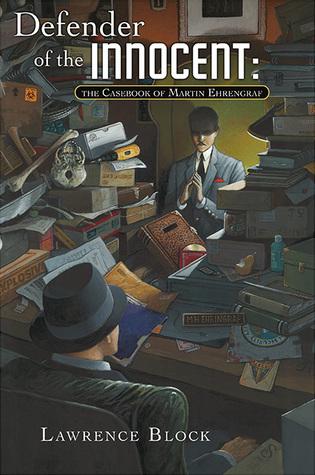
Martin Ehrengraf, the criminal defense attorney who takes cases on a contingency basis, made his debut in 1978; by 2003 he’d successfully demonstrated the innocence of ten clients. Now he’s back for the first time in almost a decade, in The Ehrengraf Settlement.
A pillar of the community, a rich man with a trophy wife, exceeds his authority as a leader of the local Vigilance Commission and shoots a man down on a neighbor’s lawn. Ehrengraf, convinced of his client’s innocence, works his subtle magic, and charges are dropped. But the client makes a fatal mistake: he pays Ehrengraf only a tenth of the agreed-upon fee.
And Ehrengraf realizes that he himself has made a tragic mistake. The client he presumed innocent must have been guilty all along...
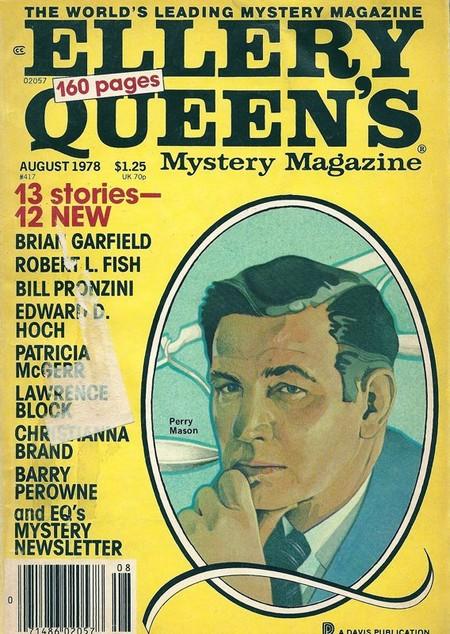
This is the third story about Martin H. Ehrengraf, the diminutive defense attorney who rarely sees the inside of a courtroom. In the preceding story, The Ehrengraf Presumption, he spells out his core principle thus:
“The Ehrengraf Presumption. Any client of Martin H. Ehrengraf is presumed by Ehrengraf to be innocent, which presumption is invariably confirmed in due course, the preconceptions of the client himself notwithstanding.”
In his first two appearances, Ehrengraf would certainly appear to have been saddled with clients who in fact committed the crimes of which they stood accused. But in Grantham Beale, the little lawyer is cursed with a genuinely innocent client, innocent not only of the murder for which he has been convicted but hopelessly innocent in the ways of the world.
It’s a challenge for Ehrengraf, and one to which he rises with zeal and dispatch.
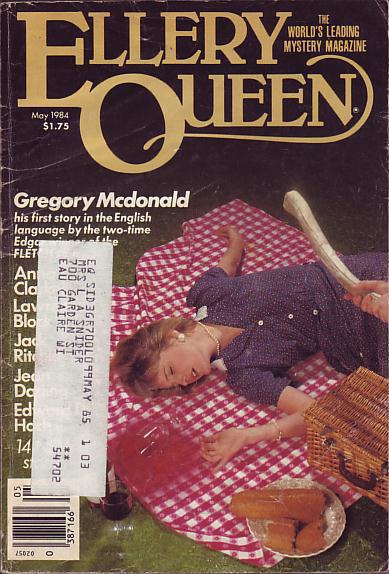
The Ehrengraf Nostrum is the eighth of ten stories about the determined and resourceful attorney, Martin H. Ehrengraf.
Ehrengraf’s cases, while refashioned by the perverse imagination of his biographer, sometimes draw their inspiration from the real world. Such is clearly the case in the present instance, and readers with good memories will surely recall the rash of pointless deaths that have burdened us to this day with containers of patent medicine that only a child can open.
But I digress...

This is the sixth story about Martin H. Ehrengraf, diminutive attorney who represents criminal defendants on a contingency basis. In earlier appearances, the little lawyer has quoted William Blake, Winthrop Mackworth Praed, Thomas Hood, and Andrew Marvell, so it’s clear that he sees poetry as a sacred calling.
However vile the crime, however damning the evidence, Ehrengraf knows with utter certainty that young William Telliford is innocent. And nothing can keep him from establishing that innocence beyond dispute.
Then again, circumstances alter cases, don’t they?
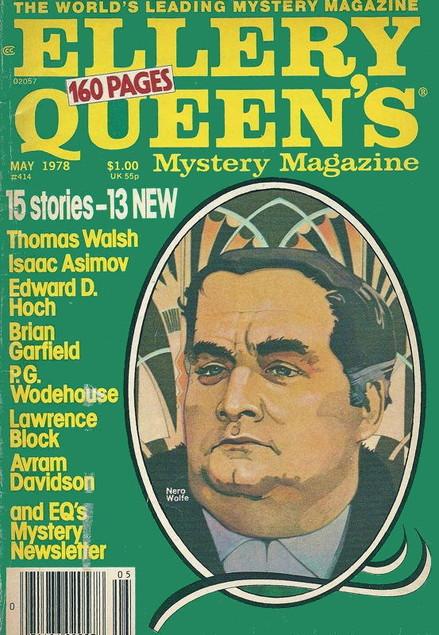
When I finished writing The Ehrengraf Defense in 1976, I knew I had found a character I’d like to revisit. But it was Frederic Dannay’s immediate enthusiasm for Ehrengraf that made me write one story after another about the diminutive attorney. Fred, of course, was one of the pair of cousins who wrote the Ellery Queen mysteries, and it was Fred who edited Ellery Queen’s Mystery Magazine, and he snapped up the stories as quickly as I wrote them.
Ehrengraf’s debut grew out of a plot device; in the course of my writing the story, Martin Ehrengraf came into being. In his second appearance, we see him more fully realized, tailoring his approach to the case to suit circumstances, and altering them to his purposes.
“The Ehrengraf Presumption. Any client of Martin H. Ehrengraf is presumed by Ehrengraf to be innocent, which presumption is invariably confirmed in due course, the preconceptions of the client himself notwithstanding.”
Words to live by...
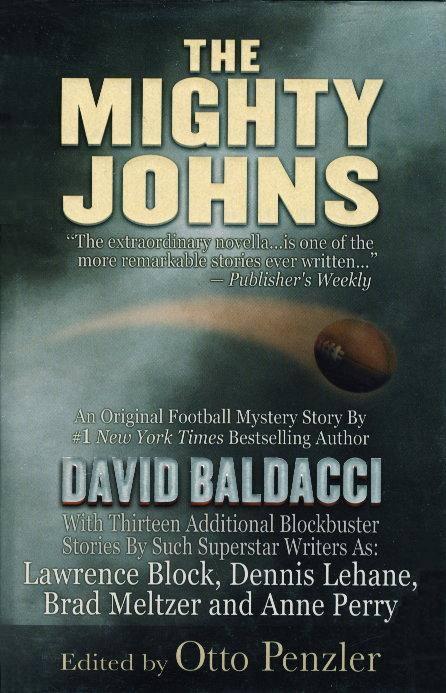
The Ehrengraf Reverse is the last of ten stories about the dapper little defense attorney who rarely sees the inside of a courtroom because he never is encumbered with a guilty client. It was requested by Otto Penzler for an anthology of football stories; for all the weekend afternoons I spend in front of the TV, this would seem to be the only story of mine with a gridiron setting.
The difficulty, with Ehrengraf, is finding appropriate variations on the theme. I’m pleased with the one that shaped up for this story, and hope you enjoy it.
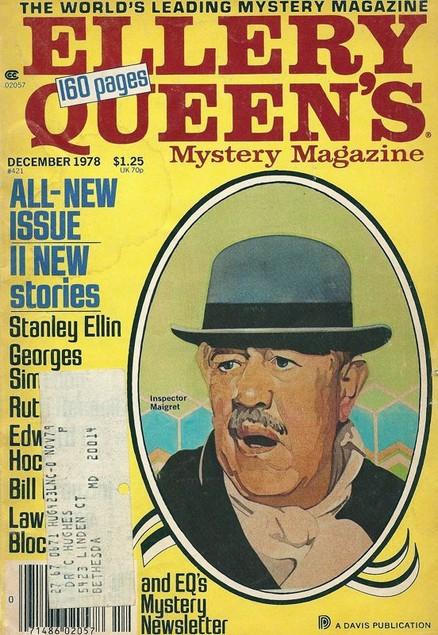
This, the fifth story about Martin H. Ehrengraf, presents the criminous criminal lawyer with a different sort of problem. He’s engaged to defend a man who anticipates being charged with homicide. But no one has been murdered.
Yet.
In the beleaguered but resourceful Ethan Crowe, Ehrengraf has a client who sees the wisdom of hedging his bets before he places them. In Terence Reginald Mayhew, the little lawyer has an adversary with the terrifying power of madness housed in the body of a housebound cripple.
Ehrengraf, a great fan of poetry, has cited William Blake and Winthrop Mackworth Praed in earlier stories; in Riposte he finds the opportunity to quote two of his favorites, Christopher Smart and Thomas Hood.
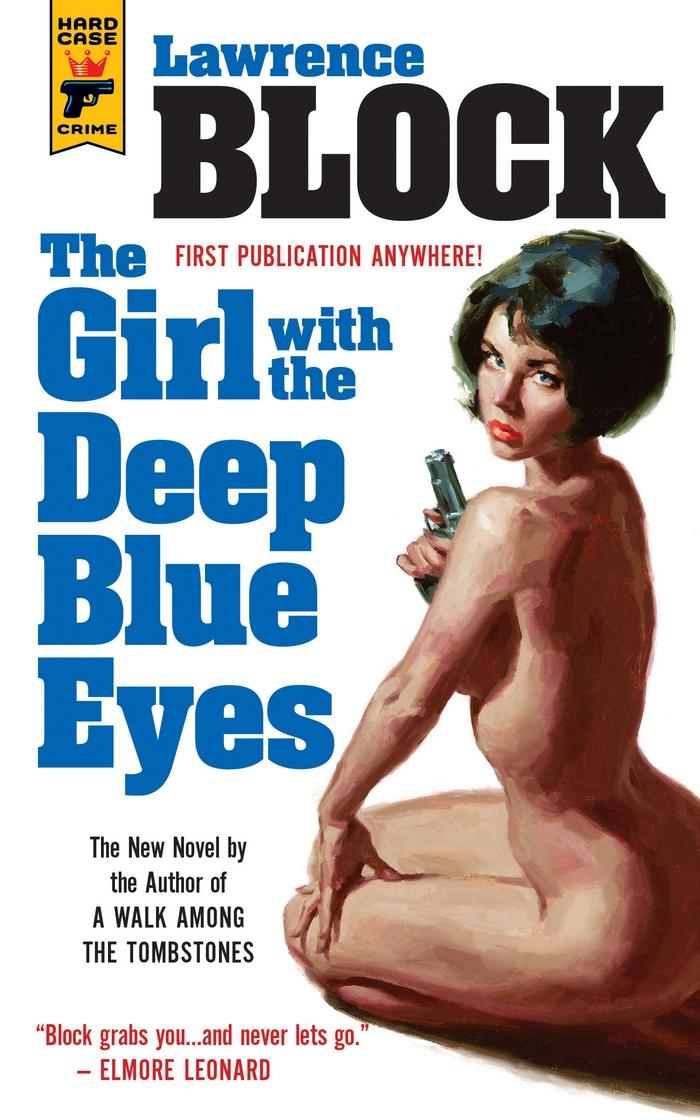
In the depths of her blue eyes, he glimpsed... murder.
Cashed out from the NYPD after 24 years, Doak Miller operates as a private eye in steamy small-town Florida, doing jobs for the local police. Like posing as a hit man and wearing a wire to incriminate a local wife who’s looking to get rid of her husband. But when he sees the wife, when he looks into her deep blue eyes...
He falls — and falls hard. Soon he’s working with her, against his employer, plotting a devious plan that could get her free from her husband and put millions in her bank account. But can they do it without landing in jail? And once heХs kindled his taste for killing... will he be able to stop at one?
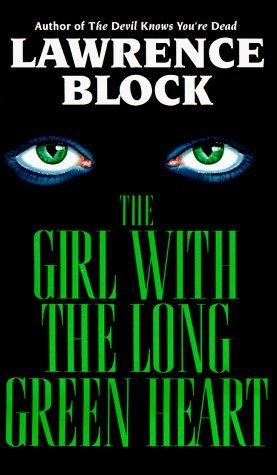
Even before he invented Matthew Scudder and Bernie Rhodenbarr, Block was writing terrific thrillers such as this.
Johnny Hayden and his partner had the perfect scam selling worthless Canadian land to marks. The scam just has to work, because at stake is Evvie — the girl with the long green heart.
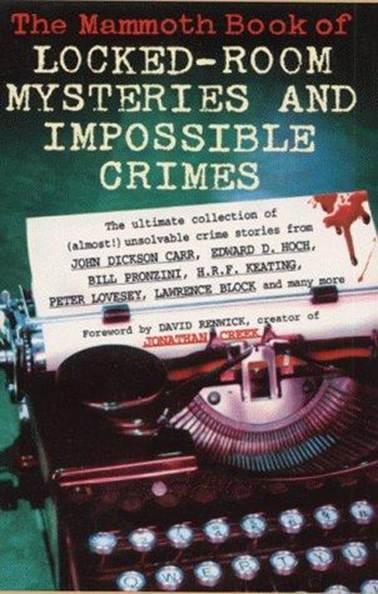
An anthology of stories
A new anthology of twenty-nine short stories features an array of baffling locked-room mysteries by Michael Collins, Bill Pronzini, Susanna Gregory, H. R. F. Keating, Peter Lovesey, Kate Ellis, and Lawrence Block, among others.
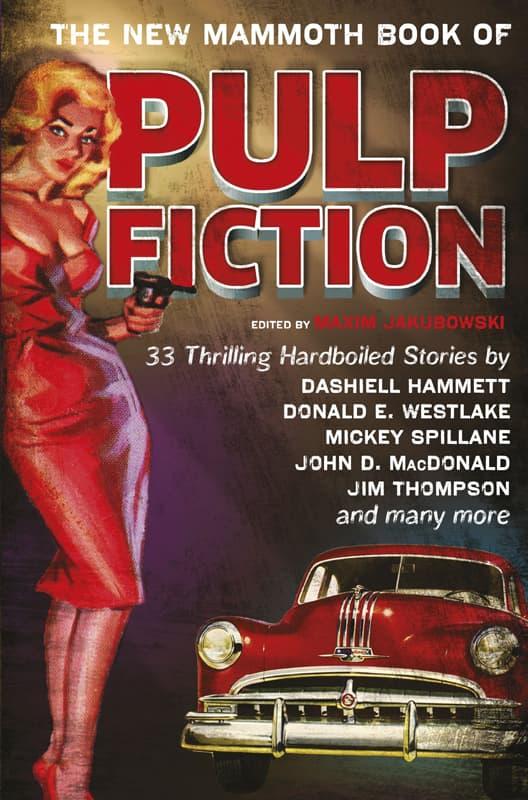
Pulp fiction has been looked down on as a guilty pleasure, but it offers the perfect form of entertainment: the very best storytelling filled with action, surprises, sound and fury. In short, all the exhiliration of a roller-coaster ride. The 1920s in America saw the proliferation of hundreds of dubiously named but thrillingly entertaining pulp magazines in America: Black Mask, Amazing, Astounding, Spicy Stories, Ace-High, Detective Magazine, Dare-Devil Aces. It was in these luridly-coloured publications, printed on the cheapest pulp paper, that the first gems began to appear. The one golden rule for writers of pulp fiction was to adhere to the art of storytelling. Each story had to have a beginning, an end, economically-etched characters, but plenty going on, both in terms of action and emotions. Pulp magazines were the TV of their day, plucking readers from drab lives and planting them firmly in thrilling make-believe, successors...

Evan Tanner can’t sleep. Ever. Which gives him plenty of free time to get involved in lots of interesting endeavors in all sorts of exotic locales. Now Tanner’s in Thailand with a partially baked plan and a butterfly net, hoping to snare a beautiful missing chanteuse who’s metamorphosed into an international jewel thief. Tanner hopes everyone will buy his disguise as a rare butterfly researcher. And everyone does… Except the guerilla band holding him captive. They intend to remove his head when the sun rises, so Tanner must put his fate in the hands of a randy Thai youth who will do anything for a woman, even set a suspected spy free. Soon they’re running through the jungle together, chased by bandits, soldiers, and yellow fever, and racing headlong into the heart of darkness – and into the flames of war.
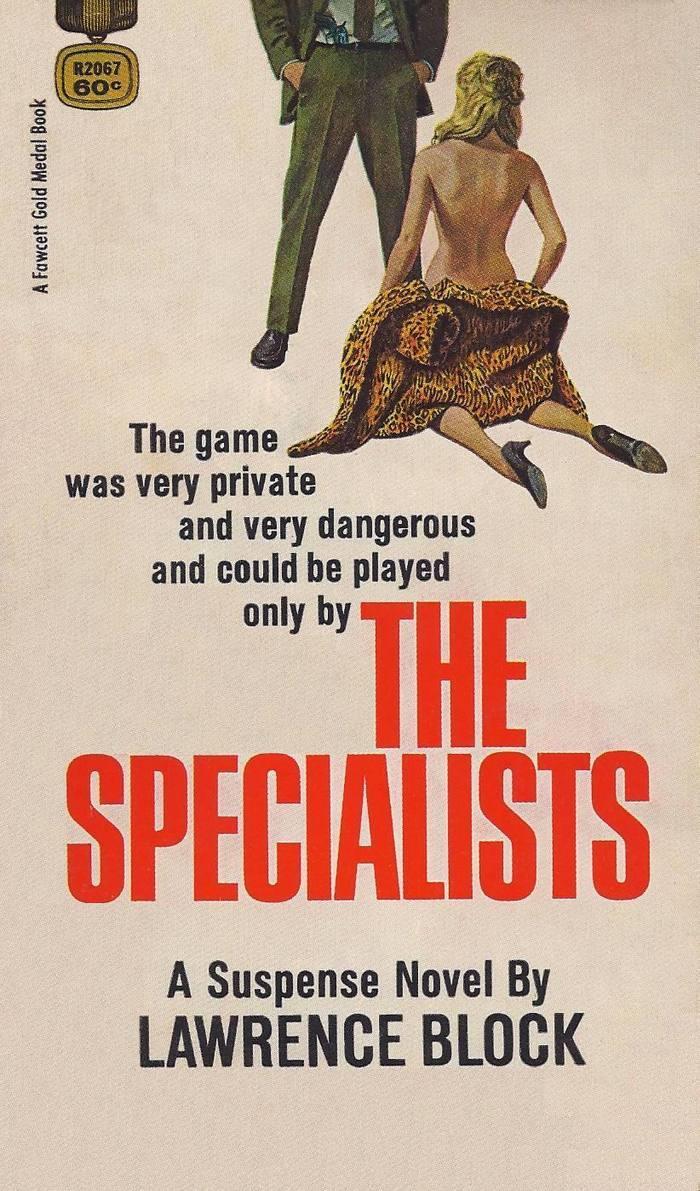
This time it started with a call girl.
She came running to Eddie Manso scared stiff. A bad scene with some sadistic hood. The guy had told the girl he was a rich banker. That's what interested Eddie. The guy had said he owned the banks.
A hood who owned banks?
Eddie called the colonel and the colonel called the others...
There were six of them. Specialists. Ex-soldiers, each with a unique talent. There game was getting to a special kind of vermin, the kind that preyed on innocents... the kind the law never seemed to be able to grab.
There was always trouble, but this one was going to be really rough. The "banker" was no ordinary hood. And he had his own army of specialists.
From Library Journal
Block introduced Evan Tanner, specialist in lost political causes, in this rousing, often comic 1966 yarn. Unable to sleep for 15 years following a Korean War head wound, Tanner devotes his considerable free time to reading, learning languages, and turning his affliction into a livelihood by writing theses and dissertations for graduate students in New York. Then he learns of hidden Armenian gold in Turkey and sets off on an unlikely adventure that makes him the most wanted fugitive in the world as well as the accidental leader of a Macedonian revolt. Block's tale gets off to an engaging start, sags in the middle partly because of some bone-jarring violence, and recovers neatly at the end. Nick Sullivan handles the characters' many accents quite well. Highly recommended.
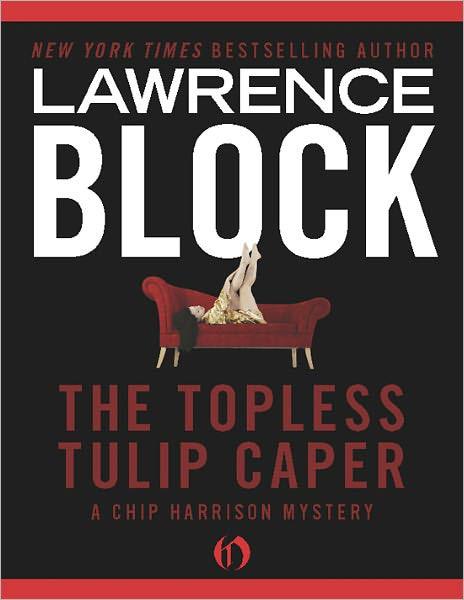
Edgar Award-winning author Lawrence Block returns with another outrageous caper featuring Chip Harrison...a sleuth who always seems to get into trouble with a capital T! Now a man about town working for a famous detective, Chip Harrison finds himselfat a Times Square Club waiting for his latest client, a stripper, to finish a night’s work. When she completes her set, she introduces him toher roommate, a dancer who’s targeted for murder...and killed in the club right before their very eyes! The list of suspects is as long as the line outside the club, and now it will take all of Chip’s street smarts to trap a killer!
Lawrence Block is one of the most respected and bestselling authors ofmystery fiction
Lawrence Block has won the Edgar Award three times, the Shamus Award four times, the Maltese Falcon Award twice, and was named Grandmaster by the Mystery Writers of America
Previously published under pseudonyms and in omnibus collections, this isthe first time the Chip Harrison novels are being individually published under Lawrence Block’s name
The Chip Harrison mystery series also includesMake Out With Murder,Chip Harrison Scores Again, andNo Score

El crimen es el crimen, pero el asesinato es algo mayor, diferente. Nadie tiene derecho a arrojar al río la cabeza de un pequeño ladrón y chantajista. Por lo menos según el codigo de honor de Matt Scudder…
Giros Jablon, un delincuente de poca monta, acude a donde un antiguo policía al que respetaba, Matt Sudder, para entregarle un sobre que debe abrir tan sólo si muere violentamente. Cuando es asesinado Scudder lo abre y averigua que estaba chantajeando a tres personas importantes una de las cuales, con casi total seguridad, es el responsable de su asesinato.
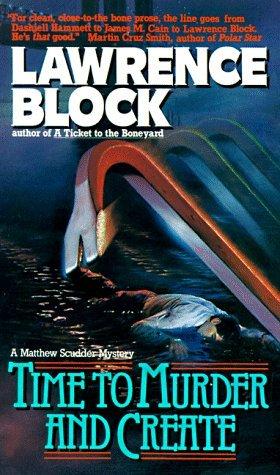
The Spinner is dead, bashed on the head and left to rot in a river. There are three suspects. Henry Prager has paid enough for the sins of his daughter, and begs Scudder not to destroy his shaky business or the fragile girl's reformed life. Beverly Etheridge cheerfully admitted all the sex acts Scudder had seen in the photos and she promises to show him a few more. Theodore Huysendahl offers Scudder enough money to choke even a blackmailer's greed, a proposition no sane man would turn down. Scudder's code of honour demands that one of them will pay…