
 fb2
fb2A man tumbles through wild surf, half drowned, to collapse on a moonlit beach. When he regains consciousness, he has no memory of who he is or where he came from. He knows only that the woman who washed ashore with him has disappeared sometime in the night, and that he has awakened in a surreal landscape of savage beauty-a mysterious watery world encircled by a thin spine of land. Aided by strange tribesmen, he will journey to the cove of the spine kings, a brutal race that has enslaved the woman and several of the tribesmen. That is only the beginning of his quest, as he struggles to find his identity in this cruel and dreamlike land-and seeks out the woman whose grip on his imagination is both unfathomable and unshakable. Haunting and lyrical, filled with uncommon beauty and terrific peril, A Short, Sharp Shock is an ambitious and enthralling story by one of science fiction's most respected talents. Kim Stanley Robinson is the author of over twenty books and has won every major award in the science fiction genre. Originally published in 1990, A Short, Sharp Shock remains a singular work in his canon that engages his interests in the environment and plumbs the absurdities of the human condition while charting unique narrative terrain. This anti-oedipal edition includes an insightful introduction by esteemed science fiction scholar and critic Robert Crossley as well as a study guide, both of which encourage readers to explore the literary prowess that makes this novel a rare gem of twentieth century American literature.
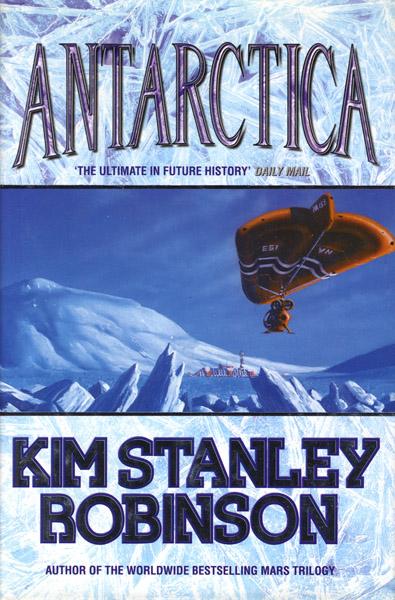
From the award-winning author of the Mars Trilogy comes a thrilling new novel…
Kim Stanley Robinson, author of the Hugo and Nebula award-winning Mars trilogy, is one of the most original and visionary writers of fiction today. Now, in his latest novel, he takes us to a harsh, alien landscape covered by a sheet of ice two miles deep. This is no distant planet—it is the last pure wilderness on earth.
A stark and inhospitable place, its landscape poses a challenge to survival; yet its strange, silent beauty has long fascinated scientists and adventurers. Now Antarctica faces an uncertain future. The international treaty that protects the continent is about to dissolve, clearing the way for Antarctica’s resources and eerie beauty to be plundered. As politicians and corporations move to determine its fate from half a world away, radical environmentalists carry out a covert campaign of sabotage to reclaim the land. The winner of this critical battle will determine…
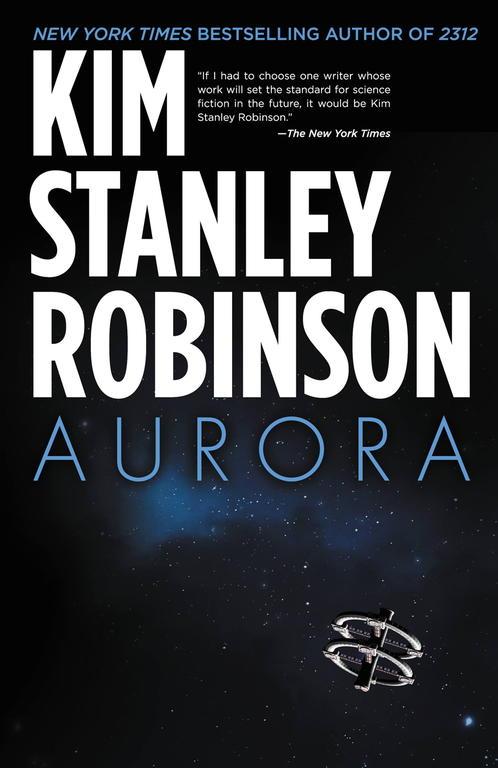
A major new novel from one of science fiction’s most powerful voices, AURORA tells the incredible story of our first voyage beyond the solar system.
Brilliantly imagined and beautifully told, it is the work of a writer at the height of his powers.
Our voyage from Earth began generations ago.
Now, we approach our new home.
AURORA.
“Black Air” tells the story of the Spanish Armada from the point of view of a young boy able to sense the impending death of other people.
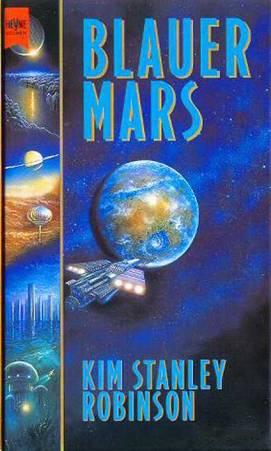
Das Terraforming des Mars nimmt seinen Fortgang. Allmählich entsteht ein zweiter »Blauer Planet«, ein neuer Lebensraum für die Menschheit. Doch die ersten Siedler wehren sich, ihre neue Heimat von einem Millionenheer unersättlicher Neuankömmlinge überfluten und ausbeuten zu lassen.
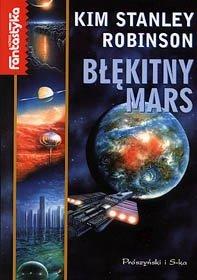
Błękitny Mars kończy jedną z najwspanialszych sag science fiction, jakie kiedykolwiek napisano; stanowi trzecią część trylogii, wydaną po oklaskiwanym przez krytyków Czerwonym Marsie, który otrzymał Nebulę dla najlepszej powieści oraz Zielonym Marsie, zwycięzcy Nagrody Hugo w tej samej kategorii. Mars zatracił już charakterystyczną czerwoną barwę, teraz dominuje roślinna zieleń i błękit mórz. Ludziom żyłoby się wspaniale, gdyby nie gwałtowny napływ Ziemian. Przerażeni falą imigracji tubylcy mają do wyboru pustoszącą eksplozję populacyjną albo międzyplanetarną wojnę.
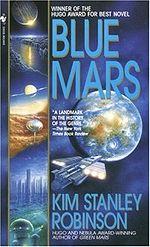
Red Mars, the kickoff to Robinson's epic Mars trilogy, won the Nebula for best SF novel of 1992; its follow-up, Green Mars, won the parallel Hugo for 1994. The conclusion to the saga is not unlike the terrain of Robinson’s Red Planet: fertile and fully developed in some spots, vast and arid in others but, ultimately, it’s an impressive achievement. Using the last 200 years of American history as his template for Martian history, Robinson projects his tale of Mars’s colonization from the 21st century, in which settlers successfully revolt against Earth, into the next century, when various interests on Mars work out their differences on issues ranging from government to the terraforming of the planet and immigration. Sax Russell, Maya Toitovna and others reprise their roles from the first two novels, but the dominant “personality” is the planet itself, which Robinson describes in exhaustive naturalistic detail. Characters look repeatedly for sermons in its stones and are nearly overwhelmed by textbook abstracts on the biological and geological minutiae of their environment. Not until the closing chapters, when they begin confronting their mortality, does the human dimension of the story balance out its awesome ecological extrapolations. Robinson's achievement here is on a par with Bradbury’s The Martian Chronicles and Herbert’s Dune, even if his clinical detachment may leave some readers wondering whether there really is life on Mars. (Piblishers Weekly)
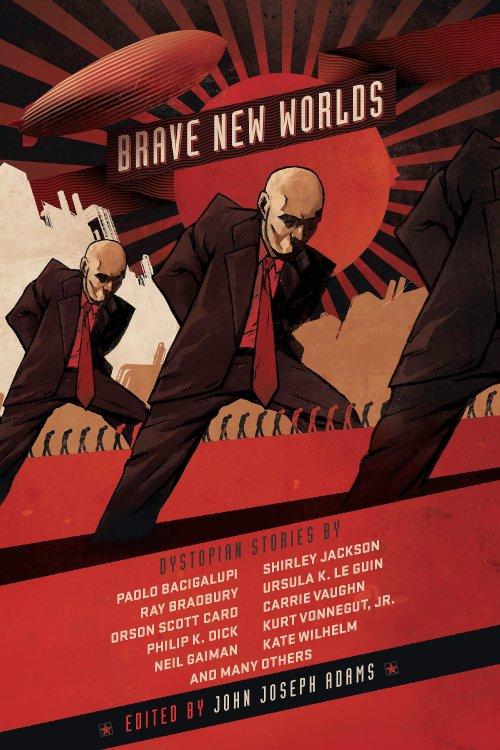
When the government wields its power against its own people, every citizen becomes an enemy of the state. Will you fight the system, or be ground to dust beneath the boot of tyranny?
In his smash-hit anthologies Wastelands and The Living Dead, acclaimed editor John Joseph Adams showed you what happens when society is utterly wiped away. Now he brings you a glimpse into an equally terrifying future — what happens when civilization invades and dictates every aspect of your life?
From 1984 to The Handmaid’s Tale, from Children of Men to Bioshock, the dystopian imagination has been a vital and gripping cautionary force. Brave New Worlds collects 33 of the best tales of totalitarian menace by some of today’s most visionary writers.
From Huxley's Brave New World, to Orwell's 1984, to Atwood's The Handmaid's Tale, dystopian books have always been an integral part of both science fiction and literature, and have influenced the broader culture discussion in unique and permanent ways. Brave New Worlds brings together the best dystopian fiction of the last 30 years, demonstrating the diversity that flourishes in this compelling subgenre. This landmark tome contains stories by Ursula K. Le Guin, Cory Doctorow, M. Rickert, Paolo Bacigalupi, Orson Scott Card, Neil Gaiman, Ray Bradbury, and many others.

Quelle aurait été l’histoire du monde si l’Europe chrétienne avait disparu au Moyen Age, ravagée par la peste ? L’Islam et la Chine seraient devenus les civilisations dominantes, découvrant l’Amérique, se faisant la guerre, inventant le chemin de fer et l’atome, cherchant à l’emporter, à imposer la foi de Mahomet, Bouddha ou Confucius…
A travers les destins de trois personnages — un sentimental, un révolté et un intellectuel —, Kim Stanley Robinson dépeint de façon étonnamment réaliste sept cents ans de l’histoire d’un univers foisonnant, où les aventures individuelles se mêlent à la trame historique et se répondent à travers les siècles et les continents. D’abord simple soldat dans l’armée de Tamerlan, Bold rencontrera Kyu, un jeune eunuque noir, et I-Chi, une restauratrice chinoise en quête des plats les meilleurs. Incendies, inondations, épidémies, guerres, révoltes, le destin va jouer avec ces personnages et les entraîner, au fil des siècles et de leurs diverses réincarnations, dans des aventures fascinantes.
A la fois roman d’initiation et vrai-faux roman historique, Chroniques des années noires est un livre profondément original, une somme impressionnante d’érudition et d’imagination ainsi qu’un merveilleux plaidoyer pour la paix dans le monde et la beauté de la vie.

Niezwykle realistyczny opis kolonizacji Marsa przez Ziemian na początku XXI wieku. Dramatyczne dzieje osadników, którzy doprowadzają do totalnej katastrofy, próbując przystosować planetę do zamieszkania.
Czy mimo eksperymentów na ekosferze planety i zbrodniczych posunięć międzynarodowych korporacji finansowych Mars się odrodzi i stanie się dla ludzi prawdziwym domem?
Czerwony Mars to pierwsza część trzytomowego cyklu o kolonizacji Czerwonej Planety, obsypywanego licznymi nagrodami. Autor, Kim Stanley Robinson, z dużym znawstwem przedstawia technologiczne aspekty ogromnego, kosmicznego przedsięwzięcia, ukazując jednocześnie skomplikowane losy ludzi uwikłanych w uczuciowe, polityczne i społeczne konflikty. Zawiść, miłość, polityczne ambicje i fanatyzm - to wszystko tworzy mieszankę wybuchową, która łatwo może unicestwić marzenia o stworzeniu nowej Ziemi.
Kolejne części cyklu to Zielony Mars i Błękitny Mars.
Powieść otrzymała nagrodę BSFA w 1992, Nebula w 1993.
Nominovana do nagród Hugo, Clarke i Locus w 1993.


First published in Asimov’s Science Fiction in Sep 1986. Later published as part of Escape from Kathmandu collection (Tor Books, 1989).
The second of three linked novels set in the strife-torn world of big science, operating out of the corrupt political heart of the developed world. In the interface between big science and big business lies the potential for the absolute destruction or salvation of our world, as new discoveries open ever more remarkable doorways into the future. And while good intentions may underlie the science that leads to these discoveries, human greed, on an individual, political or corporate basis, will always seek a way to exploit each and every new development. Combining superb narrative and beautiful writing, these will not only be highly entertaining thrillers but will also offer the reader a privileged insight into and greater understanding of the bigger picture and how the jigsaw pieces of science, politics and business operate in the modern world. The events of the books will focus on: a science-industrial spy, based in part on the amazing multiple-lives of FBI spy Ronal Hansen; a US patent office lawyer; a venture capitalist; a Washington lobbyist; a Congressional aide; a Buddhist scientist, recently arrived in the West; a Senator and several scientists at a biotech lab outside Washington.

An elegantly crafted and beguiling novel set in the very near future. Anna Quibler is a technocrat at the National Science Foundation while her husband, Charlie, takes care of their toddler and telecommutes as a legislative consultant to a senator. Their family life is a delight to observe, as are the interactions of the scientists at the NSF and related organizations. When a Buddhist delegation, whose country is being flooded because of climate change, opens an embassy near the NSF, the Quiblers befriend them and teach them to work the system of politics and grants. The Buddhists, in turn, affect the scientists in delightful and unexpectedly significant ways. The characters all share information and theories, appreciating the threat that global warming poses, but they just can’t seem to awaken a sense of urgency in the politicians who could do something about it. (Robinson’s characterizations of politicians are barbed, and often hilarious.) As the scientists focus on the minutiae of their lives, the specter of global warming looms over all, inexorably causing a change here, a change there, until all the imbalances combine to bring about a brilliantly visualized catastrophe that readers will not soon forget. Even as he outlines frighteningly plausible scenarios backed up by undeniable facts, the author charms with domesticity and humor. This beautifully paced novel stands on its own, but it is the first of a trilogy. As readers wait impatiently for the next volume, they will probably find themselves paying closer attention to science, to politics, and to the weather.
Won BSFA Award in 2004, Locus Award in 2005.
An elegantly crafted and beguiling novel set in the very near future. Anna Quibler is a technocrat at the National Science Foundation while her husband, Charlie, takes care of their toddler and telecommutes as a legislative consultant to a senator. Their family life is a delight to observe, as are the interactions of the scientists at the NSF and related organizations. When a Buddhist delegation, whose country is being flooded because of climate change, opens an embassy near the NSF, the Quiblers befriend them and teach them to work the system of politics and grants. The Buddhists, in turn, affect the scientists in delightful and unexpectedly significant ways. The characters all share information and theories, appreciating the threat that global warming poses, but they just can’t seem to awaken a sense of urgency in the politicians who could do something about it. (Robinson’s characterizations of politicians are barbed, and often hilarious.) As the scientists focus on the minutiae of their lives, the specter of global warming looms over all, inexorably causing a change here, a change there, until all the imbalances combine to bring about a brilliantly visualized catastrophe that readers will not soon forget. Even as he outlines frighteningly plausible scenarios backed up by undeniable facts, the author charms with domesticity and humor. This beautifully paced novel stands on its own, but it is the first of a trilogy. As readers wait impatiently for the next volume, they will probably find themselves paying closer attention to science, to politics, and to the weather.
At the heart of a provocative narrative that stretches from Renaissance Italy to the moons of Jupiter is the father of modern science: Galileo Galilei. To the inhabitants of the Jovian moons, Galileo is a revered figure whose actions will influence the subsequent history of the human race. From the summit of their distant future, a charismatic renegade named Ganymede travels to the past to bring Galileo forward in an attempt to alter history and ensure the ascendancy of science over religion. And if that means Galileo must be burned at the stake, so be it. From Galileo's heresy trial to the politics of far-future Jupiter, Kim Stanley Robinson illuminates the parallels between a distant past and an even more remote future--in the process celebrating the human spirit and calling into question the convenient truths of our own moment in time.
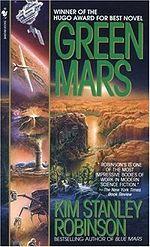
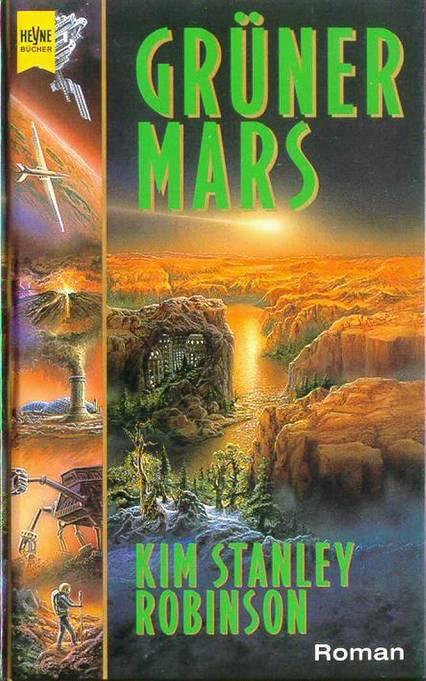
Es ist die größte Herausforderung, der sich die Menschheit je gegenübersah: die Besiedlung unseres Nachbarplaneten Mars. Die Verwandlung einer lebensfeindlichen Wüstenwelt in einen blauen Planeten wie die Erde. Von der ersten bemannten Landung auf dem Mars über die frühen Kolonien und ihre Auseinandersetzungen, welche Form von Gesellschaft sie erbauen sollen, bis zum riskanten Versuch, das Klima einer ganzen Welt zu verändern — Kim Stanley Robinson erzählt in seiner Mars-Trilogie die Geschichte der Zukunft wie ein großes historisches Epos.