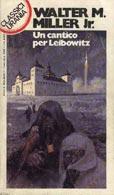
 fb2
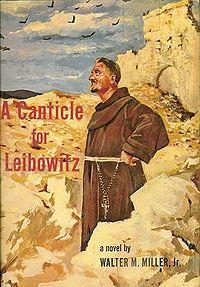
fb2A Canticle for Leibowitz is a post-apocalyptic science fiction novel by American writer Walter M. Miller, Jr., first published in 1960. Based on three short stories Miller contributed to the science fiction magazine The Magazine of Fantasy and Science Fiction; it is the only novel published by the author during his lifetime. Considered one of the classics of science fiction, it has never been out of print and has seen over 25 reprints and editions. Appealing to mainstream and genre critics and readers alike, it won the 1961 Hugo Award for best science fiction novel.
Set in a Roman Catholic monastery in the desert of the Southwestern United States after a devastating nuclear war, the story spans thousands of years as civilization rebuilds itself. The monks of the Albertian Order of Leibowitz take up the mission of preserving the surviving remnants of man's scientific knowledge until the day the outside world is again ready for it.
Inspired by the author's participation in the Allied bombing of the monastery at Monte Cassino during World War II, the novel is considered a masterpiece by literary critics. It has been compared favorably with the works of Evelyn Waugh, Graham Greene, and Walker Percy, and its themes of religion, recurrence, and church versus state have generated a significant body of scholarly research. Miller's follow-up work, Saint Leibowitz and the Wild Horse Woman, was published posthumously in 1997. (Wikipedia)
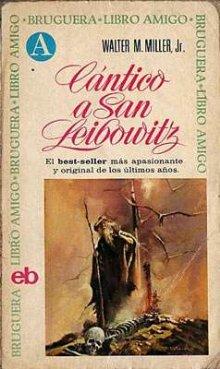
Después de la hecatombe nuclear el Venerable Leibowitz, muerto seiscientos años antes, va a ser canonizado. De la antigua civilización no quedan otros vestigios que los conservados por la Orden Albertiana, cuyos monjes consumen sus vida en la interminable tarea de iluminar e interpretar las obras del Venerable para reconstruir sobre ellas el mundo tal como fue.
Son muchos los misterios que perduran. Por ejemplo, el documento que reza: “Libra de pastrani, lata de kraut, traer a casa para Emma”. Es un enigma. Pero los monjes saben que la luz se hará algún día y que, con ella, la antigua cultura retornará.
¿Ridículo? ¿Grotesco?
Bien, si nuestro civilizado y orgulloso mundo sucumbe un día ante una catástrofe de proporciones millones de veces superiores a las del hundimiento del mundo clásico, ¿qué ocurrirá? ¿Qué quedará de nuestra civilización? ¿Cómo y por quién serán conservados, interpretados y aprovechados los vestigios tecnológicos que heredarán los hombres del mañana?

Walter M. Miller Jr. is best remembered as the author of A Canticle for Leibowitz, universally recognized as one of the greatest novels of modern SF. But as well as writing that deeply felt and eloquent book, he produced many shorter works of fiction of stunning originality and power. His profound interest in religion and his innate literary gifts combined perfectly in the production of such works as ‘The Darfstellar’, for which he won a Hugo in 1955, ‘Conditionally Human’, ‘I, Dreamer’ and ‘The Big Hunger’, all of which are included in this brilliant and essential collection.

Książka Waltera Millera, jr. to kamień milowy literatury SF i zdobywca nagrody Hugo w 1960r. Książka opowiada o losach ludzkości po katastrofie nuklearnej. Rolę przewodnika tych, którzy przetrwali, przejmuje odrodzony Kościół katolicki, a konkretnie mnisi zakonu Leibowitza — konstruktora i wynalazcy, którego osiągnięcia wykorzystano do celów wojny jądrowej. Prześladowany przez społeczeństwo, zrozpaczony po stracie żony, zakłada on pokutne zgromadzenie zakonne pod wezwaniem Alberta Wielkiego z zadaniem przechowywania wiedzy o przeszłości, zbierania książek I dokumentów dla przyszłych pokoleń, gdy ludzkość wyjdzie z okresu barbarzyństwa.
Wkrótce ukaże się też napisana przez Millera po trzydziestu latach kontynuacja tej powieści.