 fb2
fb2Le tombe di Atuan narra la vicenda che renderà famoso Ged in tutto il mondo: la ricerca, nelle terre dell’Impero di Kargad, della metà mancante al mitico anello di Erreth-Akbe, che si trova nel favoloso tesoro nascosto all’interno dell’inaccessibile labirinto delle tombe di Atuan. Ged non cerca l’anello spezzato per la gloria o per la fortuna: lo fa perché, finché l’anello rimarrà diviso, Earthsea non potrà ritrovare la pace e l’unità.
Ma Le tombe di Atuan è anche e soprattutto la storia di Tenar, la bambina consacrata alle Potenze tenebrose della Terra, che viene privata di ogni cosa: casa, famiglia, persino del suo nome, per divenire Arha, la sacerdotessa delle tombe di Atuan, destinata a vivere nella solitudine più profonda del suo regno cupo e oscuro fino all’arrivo di un ladro saggio e audace che la libererà dal suo triste fato di sepolta viva.
Unwilling to accept that his anarchist world must be separated from the rest of the civilized universe, Shevek, a brilliant physicist, risks his life by traveling to the utopian mother planet of Urras.
Won Nebula Award for Best Novel in 1974.
Won Nebula Award for Best Novel in 1975.
Nominated for John W Campbell Memorial Award in 1975.
Unwilling to accept that his anarchist world must be separated from the rest of the civilized universe, Shevek, a brilliant physicist, risks his life by traveling to the utopian mother planet of Urras.
Won Nebula Award for Best Novel in 1974.
Won Nebula Award for Best Novel in 1975.
Nominated for John W Campbell Memorial Award in 1975.
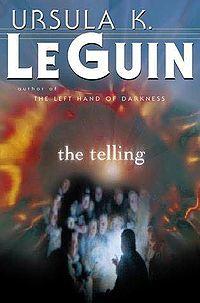
Earthling Sutty has been living a solitary, well-protected life in Dovza City on the planet Aka as an official Observer for the interstellar Ekumen. Insisting on all citizens being pure "producer-consumers," the tightly controlled capitalist government of Aka — the Corporation — is systematically destroying all vestiges of the ancient ways: "The Time of Cleansing" is the chilling term used to describe this era. Books are burned, the old language and calligraphy are outlawed, and those caught trying to keep any part of the past alive are punished and then reeducated. Frustrated in her attempts to study the linguistics and literature of Aka's cultural past, Sutty is sent upriver to the backwoods town of Okzat-Ozkat. Here she is slowly charmed by the old-world mountain people, whose still waters, she gradually realizes, run very deep. But whether their ways constitute a religion, ancient traditions, philosophy, or passive, political resistance, Sutty is not sure. Delving ever deeper into her hosts' culture, Sutty finds herself on a parallel spiritual quest, as well.