 fb2
fb2You hold in your hands a cornucopia of modern cutting-edge fantasy. The first volume of this extraordinary new annual anthology series of fantastic literature explodes on the scene with works that sidestep expectations in beautiful and unsettling ways, that surprise with their settings and startle with the manner in which they cross genre boundaries, that aren’t afraid to experiment with storytelling techniques, and yet seamlessly blend form with meaningful function. The delectable offerings found within these pages come from some of today’s most distinguished contemporary fantasists and brilliant rising newcomers.
Whether it’s a touch of literary erudition, playful whimsy, extravagant style, or mind-blowing philosophical speculation and insight, the reader will be led into unfamiliar territory, there to find shock and delight.
Introducing CLOCKWORK PHOENIX.
Author and editor Allen (Mythic) has compiled a neatly packaged set of short stories that flow cleverly and seamlessly from one inspiration to another. In “The City of Blind Delight” by Catherynne M. Valente, a man inadvertently ends up on a train that takes him to an inescapable city of extraordinary wonders. In “All the Little Gods We Are,” Hugo winner John Grant takes a mind trip to possible parallel universes. Modern topics make an appearance among the whimsy and strangeness: Ekaterina Sedia delves into the misunderstandings that occur between cultures and languages in “There Is a Monster Under Helen’s Bed,” while Tanith Lee gleefully skewers gender politics with “The Woman,” giving the reader a glimpse of what might happen if there was only one fertile woman left in a world of men. Lush descriptions and exotic imagery startle, engross, chill and electrify the reader, and all 19 stories have a strong and delicious taste of weird.
(July)
Copyright © Reed Business Information, a division of Reed Elsevier Inc. All rights reserved.
From Star Trek to Star Wars, from Dune to Foundation, science fiction has a rich history of exploring the idea of vast intergalactic societies, and the challenges facing those living in or trying to manage such societies. The stories in Federations will continue that tradition. What are the social/religious/environmental/technological implications of living in such a vast society? What happens when expansionist tendencies on a galactic scale come into conflict with the indigenous peoples of other planets, of other races? And what of the issue of communicating across such distances, or the problems caused by relativistic travel? These are just some of the questions and issues that the stories in Federations will take on.
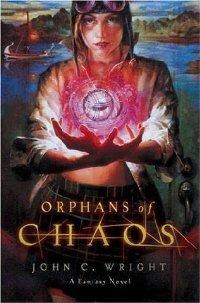
Wright’s new fantasy is a tale about five orphans raised in a strict British boarding school who begin to discover that they may not be human beings. The students at the school do not age, while the world around them does.
The children begin to make sinister discoveries about themselves. Amelia is apparently a fourth-dimensional being; Victor is a synthetic man who can control the molecular arrangement of matter around him; Vanity can find secret passageways through solid walls where none had previously been; Colin is a psychic; Quentin is a warlock. Each power comes from a different paradigm or view of the inexplicable universe: and they should not be able to co-exist under the same laws of nature. Why is it that they can?
The orphans have been kidnapped from their true parents, robbed of their powers, and raised in ignorance by super-beings no more human than they are: pagan gods or fairy-queens, Cyclopes, sea-monsters, witches, or things even stranger than this. The children must experiment with, and learn to control, their strange abilities in order to escape their captors.
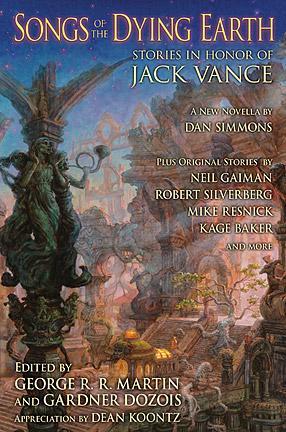
Today, in order to honor the magnificent career of Jack Vance, one unparalleled in achievement and impact, GEORGE R.R. MARTIN and GARDNER DOZOIS, with the full cooperation of Jack Vance, his family, and his agents, suggest a Jack Vance tribute anthology called Songs of the Dying Earth, to encourage the best of today's fantasy writers to return to the unique and evocative milieu of The Dying Earth, from which they and so many others have drawn so much inspiration, to create their own brand-new adventures in the world of Jack Vance s greatest novel.
Half a century ago, Jack Vance created the world of the Dying Earth, and fantasy has never been the same. Now, for the first time ever, Jack has agreed to open this bizarre and darkly beautiful world to other fantasists, to play in as their very own. To say that other fantasy writers are excited by this prospect is a gross understatement; one has told us that he'd crawl through broken glass for the chance to write for the anthology, another that he'd gladly give up his right arm for the privilege that's the kind of regard in which Jack Vance and The Dying Earth are held by generations of his peers.