 fb2
fb2
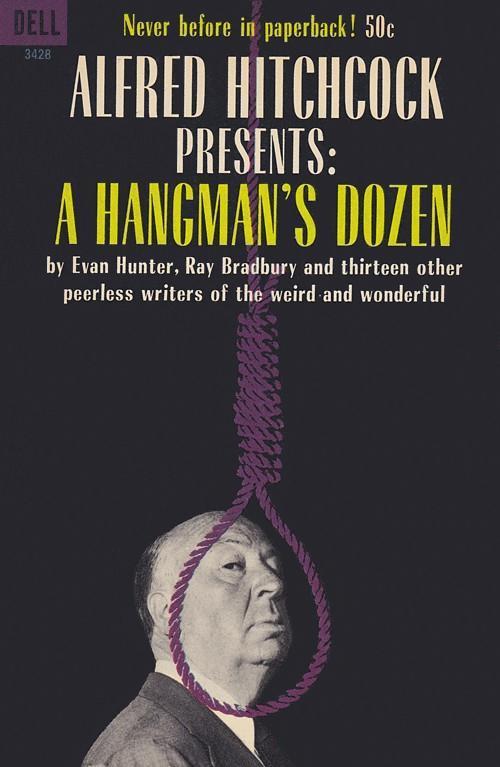
ALFRED HITCHCOCK’S HOW-TO-DO-IT BOOK
Including:
• How to solve your marital problems
—(poison)
• How to dress properly when admitting to first degree murder
—(black tie)
• How to take off a few pounds fast
—(a knife)
• How to ruin a perfect friendship
—(a homemade bomb)
And many, many other helpful hints from such specialists as:
EVAN HUNTER, JOHN CORTEZ, RAY BRADBURY, RICHARD STARK, RICHARD MATHESON, HELEN NIELSON, DONALD WESTLAKE, RICHARD DEMING, JACK RITCHIE, JONATHAN CRAIG, C. B. GILFORD, JAY STREET, ROBERT ARTHUR, FLETCHER FLORA, CHARLES EINSTEIN
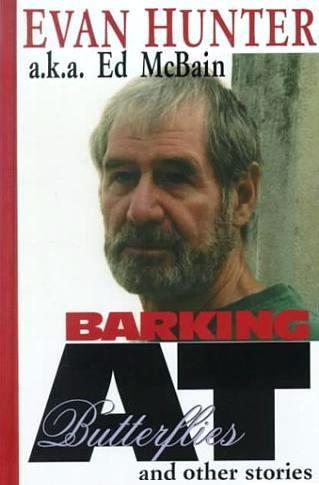
Ed McBain is a pen name of Mystery Writers of America’s Grand Master Evan Hunter, who wrote the screenplays for Alfred Hitchcock’s “The Birds” and “Strangers When We Meet,” and the novel The Blackboard Jungle. As Ed McBain, he has written fifty 87th Precinct novels, the blueprint series for every successful police procedural series.
This original collection of eleven short stories takes you onto the gritty and violent streets of the city, and into the darkest places in the human mind. “First Offense” is narrated from behind bars by a cocky young man who stabbed a storeowner in a robbery attempt. In “To Break the Wall,” a high school teacher has a violent encounter with several punks. And a Kim Novak look-alike blurs the line between fantasy and reality in “The Movie Star.” These and eight more stories showcase the mastery for which the San Diego Union-Tribune dubbed McBain “the unquestioned king.”
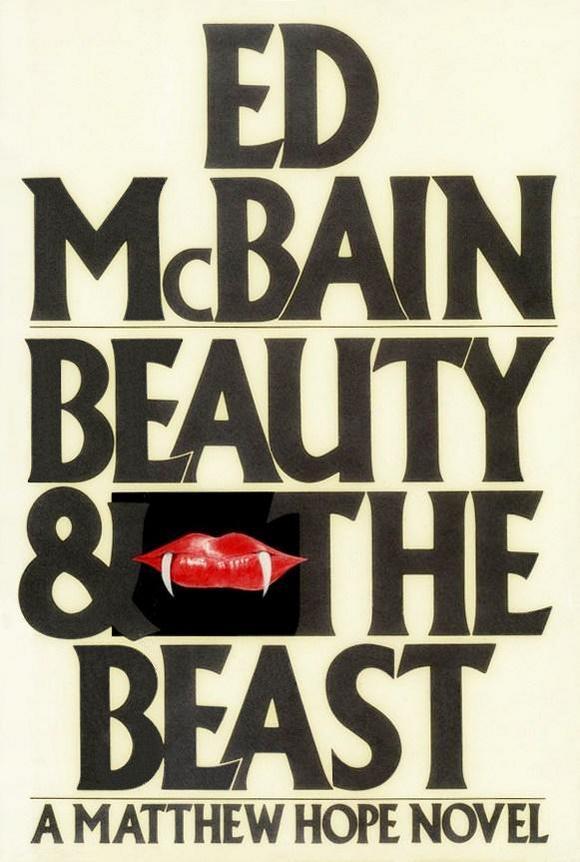
Matthew Hope spotted her on North Sabal Beach, one of those fabulous Gulf Coast keys that yearly draw ever more people to condo life in the Sunshine State. She was spectacular, “carved of alabaster, pale white exquisite face framed by ebony cascades of hair, the flesh of her naked breasts almost translucent, lustrous in the hot rays of the sun. wide hips flaring above the restraining strings of the bikini patch, a shimmering mirage in black and white that came closer and closer, pale gray eyes in that incredibly lovely face, the scent of mimosa as she passed and was gone.” That was on Saturday.
On Monday, Michelle Harper came to Hope as a client. Below the short sleeves of her T-shirt, ugly bruises obliterated the whiteness of her arms. Adhesive was taped across the bridge of her nose and both her eyes were discolored, one puffed almost entirely shut. She wanted Hope’s help in filing a complaint with the police. She wanted her husband arrested and put away.
On Tuesday. Michelle Harper was found dead on Whisper Key Beach. Her hands and legs were bound with wire hangers and she had been burned to death. An empty five-gallon gasoline can lay some ten feet from the body.
By four that afternoon. George Harper had been charged with the brutal murder of his wife.
Big, black, and monstrously ugly, George Harper vociferously denied the charge. And somehow, Hope believed him. But in committing himself to help Harper, Matthew Hope is drawn into a hall of mirrors filled with lies, sexual perversity, and thrill- seeking corruption. The result, says The Sunday Times (London), is “a strictly X- rated fairy tale” and a thoroughly good read.
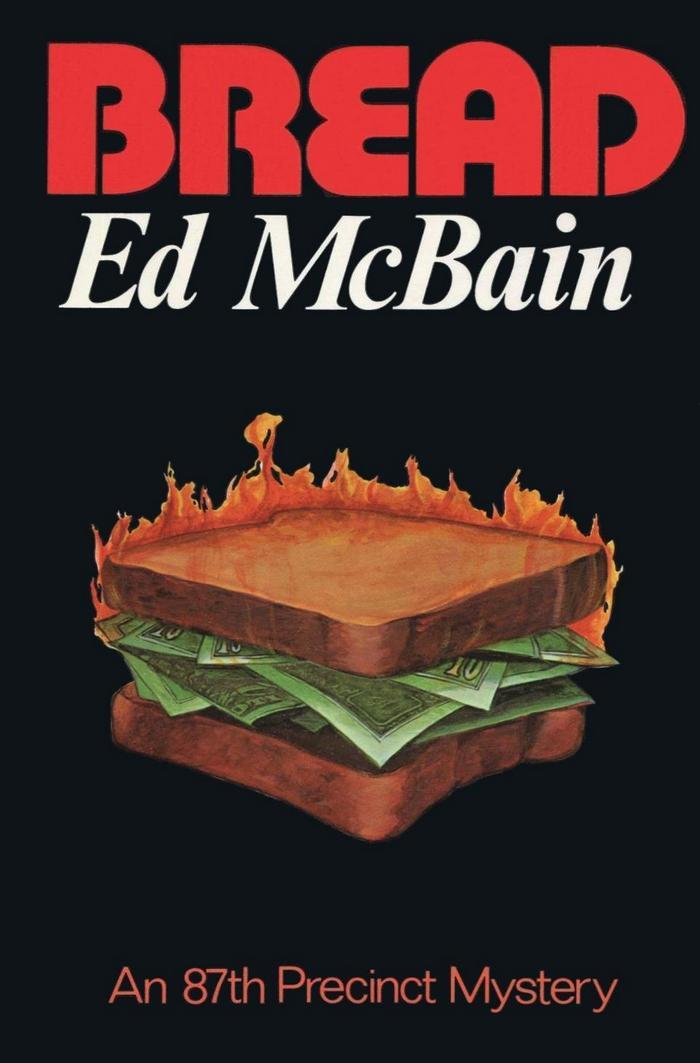
It was a miserable day in August in the 87th Precinct. Detective Steve Carella was hot and tired and his shirt was sticking to his back, and now this dumpy little man named Roger Grimm was sitting across from him in the squadroom demanding to know if they were going to catch the arsonist who had burned down his warehouse.
“We’ll see what we can do,” Carella sighed.
In the next few days Carella and his partner, Cotton Hawes, find themselves in the middle of an astonishing case, one which quickly proves to contain not one, but two arsons — and two murders. Assisted by a rather unfortunate personality named “Fat Ollie” Weeks of the 83rd precinct coarse, bigoted, and given to terrible W.C. Fields imitations, but, they have to admit, first-rate cop — Carella and Hawes roam across the city from the waterfront to the heart of the black ghetto, following a deadly trail of greed and violence. Their path leads them directly to a gallery of very unpleasant suspects and to a most unusual afternoon poker game,complete with high stakes, fast company — and a wild card.
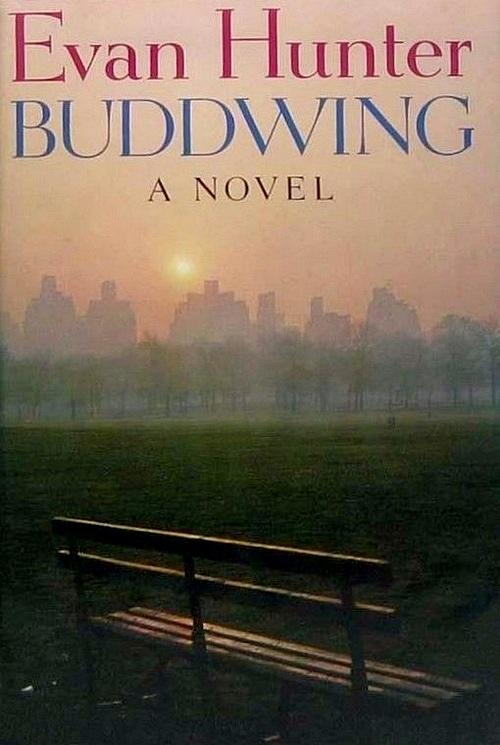
Evan Hunter’s magnificent new novel is the story of a desperate journey of discovery-through a man’s past, through the byways of a great city, through the infinitely more complex labyrinths of the human psyche.
Its nameless protagonist wakes at sunrise in Central Park in New York City, faced with a terrifying riddle: Who am I? Completely without memory, as naked of self-knowledge as a newly born child, he ventures out into the city in search of self, tentatively at first, then with increasing boldness, finally with a headlong fierce compulsion to find and face whatever truth it is that has stripped him of his past.
As he approaches the explosive climax of his quest, the scenes shift in a kaleidoscopic succession of encounters and adventures, fragments of the intermingled past and present: Greenwich Village and the haunting echo from his past awakened by the girl who takes him in; Chinatown and the wild spree with a sailor on shore leave; the Italian all-night wedding feast; the scavenger hunt with the glossy rich woman on an emotional bender; Harlem and the incredibly tense high-stake crap game; the door slammed in his face... and, at the last twirl of the kaleidoscope, the final electrifying revelation.
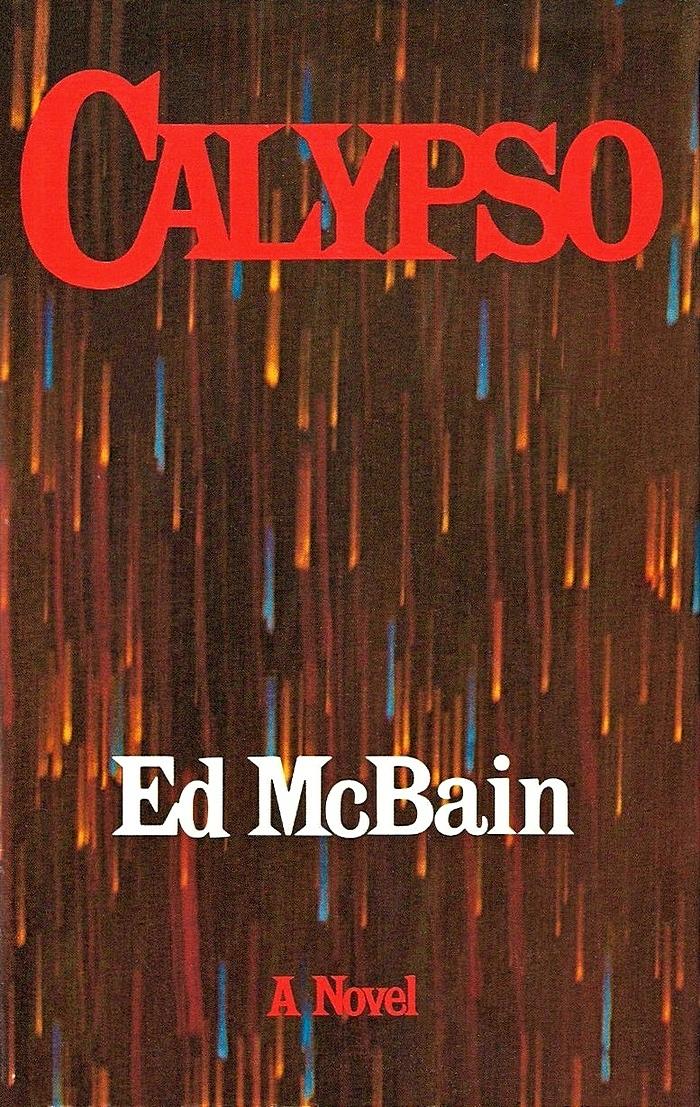
“This is your case,” the manual advised, “stick with the investigation.” Stick with it in the pouring rain where a man lay with his open skull seeping his brains onto the sidewalk, stick with it in a hospital room reeking of antiseptic, stick with it in a tenement apartment at two in the morning, the clock throwing minutes into the empty hours of the night while a woman wept tears for her man who was dead. Search her closet for the clothing the killer wore. Get her to talk about her husband’s possible infidelities. Be a cop.
Being a cop was something Steve Carella of the 87th Precinct knew a lot about. He knew about the careful, painstaking work of tracking down leads that could mean nothing or everything. He knew that cops like continuity even if it takes a couple of corpses to provide it and that right now he and his partner Meyer Meyer had all the continuity they could handle. They had two corpses shot within four hours of each other on the same rainy Friday night with the same .38 Smith & Wesson — one a calypso singer from Trinidad who had just finished a gig the other a hooker named C. J. who had just turned her last trick. Carella knew they had a case that was growing as cold as a slab in the morgue. He knew that they had a killer loose in the city who had killed once, twice, and perhaps would kill again if he and Meyer didn’t follow the leads, didn’t stick with the case, didn’t get there first...
With this breathtakingly suspenseful novel Ed McBain shows us what the police procedural novel is all about. Whether you’re one of the millions of faithful followers of the 87th Precinct or a fan-to-be, from the first terse page of Calypso to an ending that will frighten you out of your skin, you’ll know you are in the hands of a master.

“It almost seemed as if winter had already come.”
Those were the final words of Last Summer. In this, Evan Hunters new novel, winter has indeed arrived — and Sandy, David, and Peter are together again.
Sandy, David, and Peter five years later. The searing summer of Rhoda is far behind them. More stylish and sophisticated than they were as adolescents, each complete in the presence of the other, they form a brilliant trio: handsome, intelligent, witty, humorous, impregnable — and deadly.
Into their dazzling orbit come Foderman and Mary Margaret. What happens to them all, in the days before Christmas, is as chilling as the snow- covered terrain surrounding them, as terror-ridden as the trails they ski.
COME WINTER is an unforgettable exploration into the nature of evil.
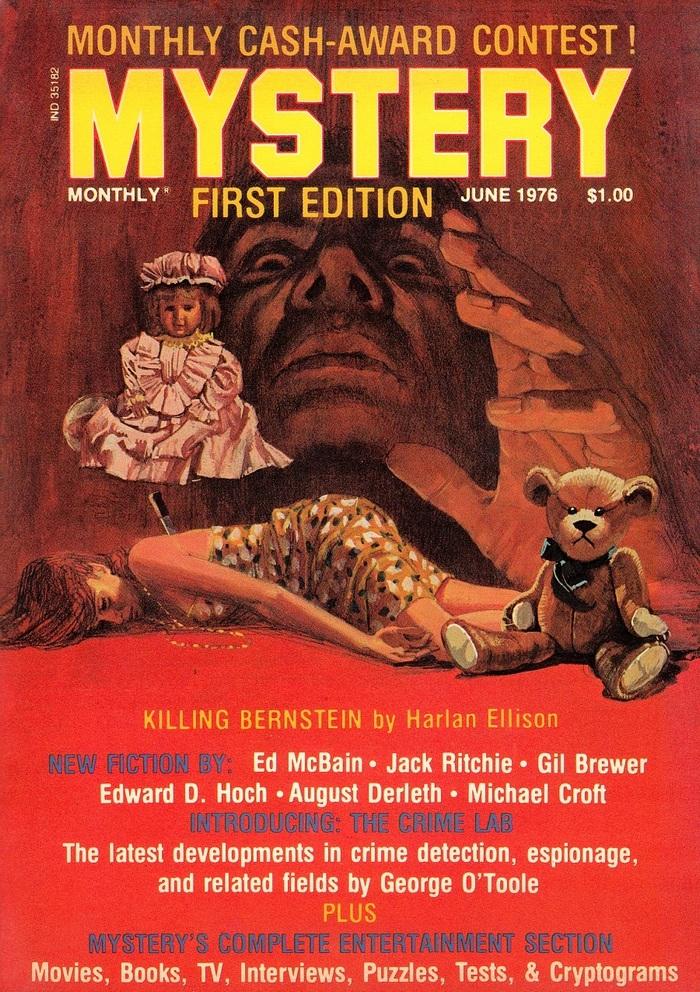
“Consolation,” which appeared in Mystery Monthly, is one of his more recent tales; this powerful, uncompromising, and sexually explicit story of two small-time criminals named Colley and Jocko was later revised and incorporated into the McBain novel Guns, published that same year.
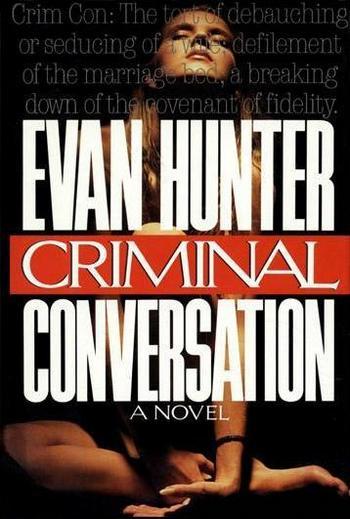
“Just you,” Andrew Farrell says, when Sarah Welles asks him what he wants of her. “Just you.”
But long before she finally gives in to Andrew, long before she walks up those steps into the mysterious world of his wood-paneled office, long before she feels his naked body against hers, Sarah knows she has already chosen to betray her husband and her marriage.
Adultery will be the least of her crimes.
Making forbidden love to Andrew, Sarah has no idea of the dangerous game she has begun. She is about to find out who her lover really is, and Andrew is about to discover how unforgiving and relentless her husband can be.
CRIMINAL CONVERSATION is a gripping novel of sex, passion, and violence, set against a backdrop of a society tattered by criminality. Prom victims to predators, from foot soldiers to kingpins, Evan Hunter spins a masterly tale that no one — not even Ed McBain — could do better: an explosive and erotic novel of psychosexual suspense.
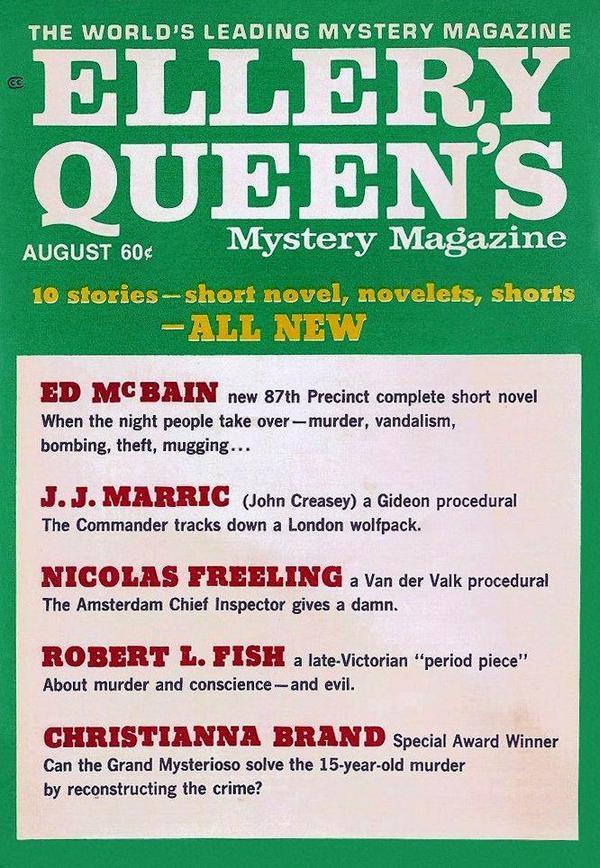
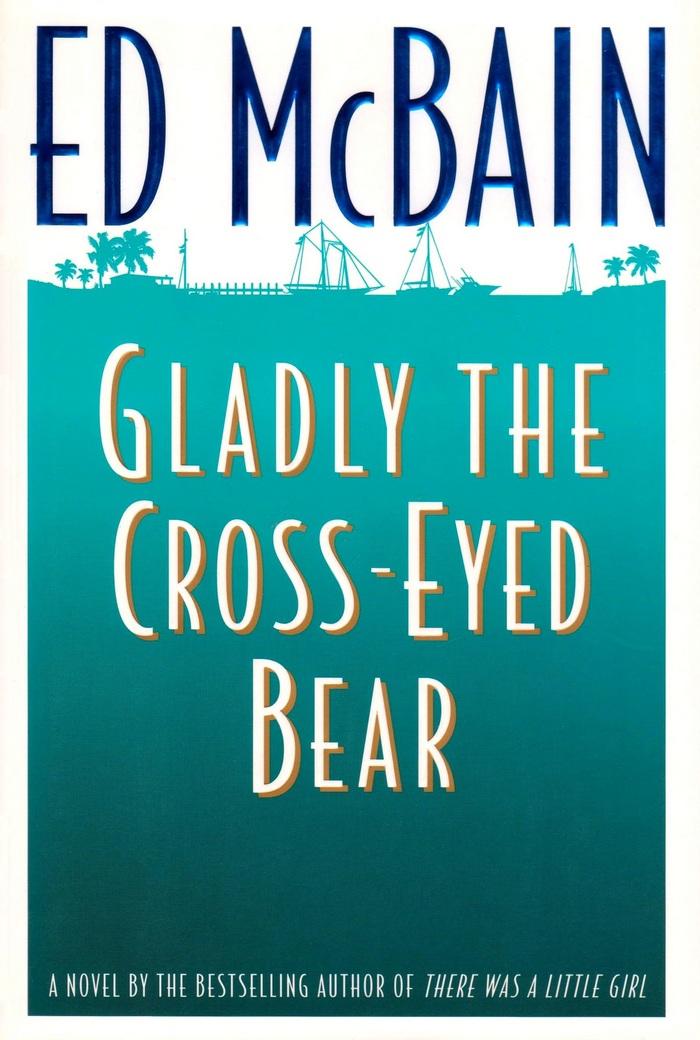
What’s cuddly, cute, and the object of a high-stakes court battle? It’s Gladly, a cross-eyed teddy bear: the brainchild of slightly cross-eyed beauty Lainie Commins, Matthew Hope’s client and the litigant in a trademark dispute with toy company tycoons Etta and Brett Toland. Hope, still recovering from a near-fatal shooting, is certain he can win this case — until someone murders one of the key players.
While Hope is locked in a battle of nerves and legal wits, two of his closest associates have found their way into another of Florida’s favorite people traps. Warren Chambers and Toots Kiley have entered the underworld of drug-smuggling violence from opposite ends — and they can only escape together.

GUNS: A crime novel unlike any you’ve ever read by Ed McBain, a story of fear and obsession — tougher, grittier, even more suspenseful than his famous 87th Precinct series.
GUNS: For months Colley Donato and his partners have been robbing liquor stores in New York — quick cash, easy pickings. But today something is very wrong. The weather is suffocatingly hot, tempers are short — and it is their thirteenth job. Colley doesn’t like it when the others decide to go ahead anyway. He likes it even less when two cops come charging down the aisle with guns in their hands. As if in slow motion, Colley sees his finger pull the trigger — and the back of a cop’s head comes off.
Colley Donato, twenty-nine, has just been promoted. He used to be a small-time robber, hardly worth the trouble. Now he has killed a policeman — and all hell is about to break loose.
GUNS is the story of the next twenty-four hours in Colley’s life as he scrambles for safety — dodging, improvising cons (for which he has surprising talent), using and being used by a bizarre variety of friends and strangers: like Benny, the broad, smiling, benign man who makes a living hooking girls on dope and turning them onto the streets; Jeanine, Colley’s ex-partner’s wife, who shows a terrifyingly unexpected gift for savagery; his brother, Albert, a Buick dealer in Larchmont, who lectures him: “Nick, a man who has to commit robberies is a man with a serious personality disorder.”
With a razor-sharp eye for detail, McBain draws us into the codes and rhythms of Colley’s world, into the flickering scenes inside Colley’s head — the art of growing up in East Harlem; the Orioles “Social and Athletic Club,” where he first makes his mark as “sergeant at arms”; the jobs he pulls; the prisons; above all the exhilaration and glory of holding that first gun at age fifteen, feeling its beauty, its wonderful power...
GUNS: Ed McBain’s abilities for characterization, tight suspense, and hard, clear detail have always been first-rate, but this new novel gives them room to stretch as they never have before. From the opening page to the stunning climax, the result is a superb thriller and a brilliant exploration into the criminal mind.
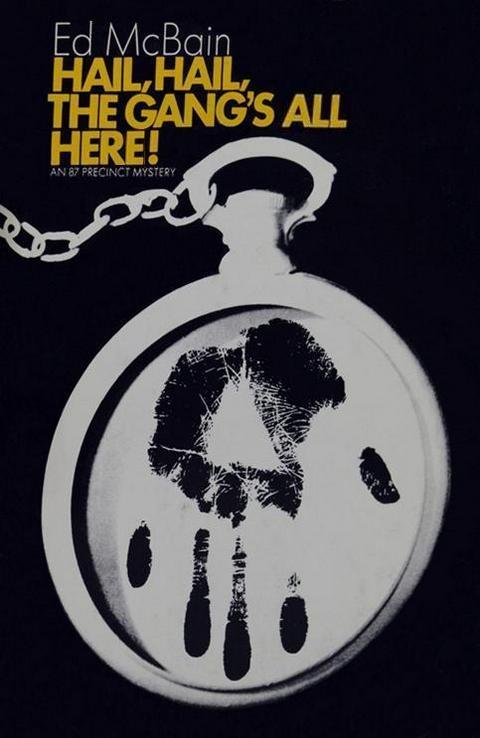
The minute hand on the station-house clock crept past midnight, and another day began — a not untypical October Sunday, bringing the usual assortment of big city crimes to the detectives of the 87th Precinct.
To start the morning hours of the night, there was a gory homicide: a young actress in a controversial play had been stabbed, and Carella and Hawes set out to investigate. Meanwhile, Bert Kling was taking a call about a bombing in the black ghetto, and Meyer found himself talking to an attractive, well-educated woman who had an unlikely complaint: larcenous ghosts.
The day shift was no less eventful. Willis and Genero were investigating the death of a bearded youth who fell or was pushed from a fourth-floor window — stark naked. Alex Delgado took on a nasty beating in the Puerto Rican barrio, while Carl Kapek was looking for a man and woman who specialised in muggings. Andy Parker’s routine assignment took an unexpected twist: a pair of gunmen killed a grocer and shot Parker twice.
And, just to fill in the idle moments, there was the usual parade of malicious punks, youthful runaways. hookers, and small-time burglars.
For the first time, Ed McBain has brought together all the detectives of the 87th Precinct in a single novel — a book filled with his usual precise descriptions of police procedure and an ingenious assortment of interlocking plots — some violent, some touching, some ironic, but all marked by the masterful McBain touch.

It has been almost ten years since Evan Hunter burst upon the literary scene with his first book, The Blackboard Jungle. That best-selling novel, with its important sociological implications, established Hunter immediately as a most exciting topical writer. In the ensuing decade his reputation has grown enormously and become solidified as a result of four other major novels, the most recent of which is Mothers and Daughters.
During this same period, Hunter wrote a number of short stories for magazine publication. This collection presents the best of them and displays the stunning range of the author’s interests and talents. There are gay stories and grim stories; realistic stories and wildly fantastic stories; stories of character and stories of action. Only one thing about the collection is uniform: the intense quality that Hunter puts into everything he writes, which holds the reader spellbound to the page.
Evan Hunter fans will find the two very long stories in the volume of particular interest, for each is a substantial work on its own and represents the author at top form. These are the title story, Happy New Year, Herbie, and the lead-off story, Uncle Jimbo’s Marbles.
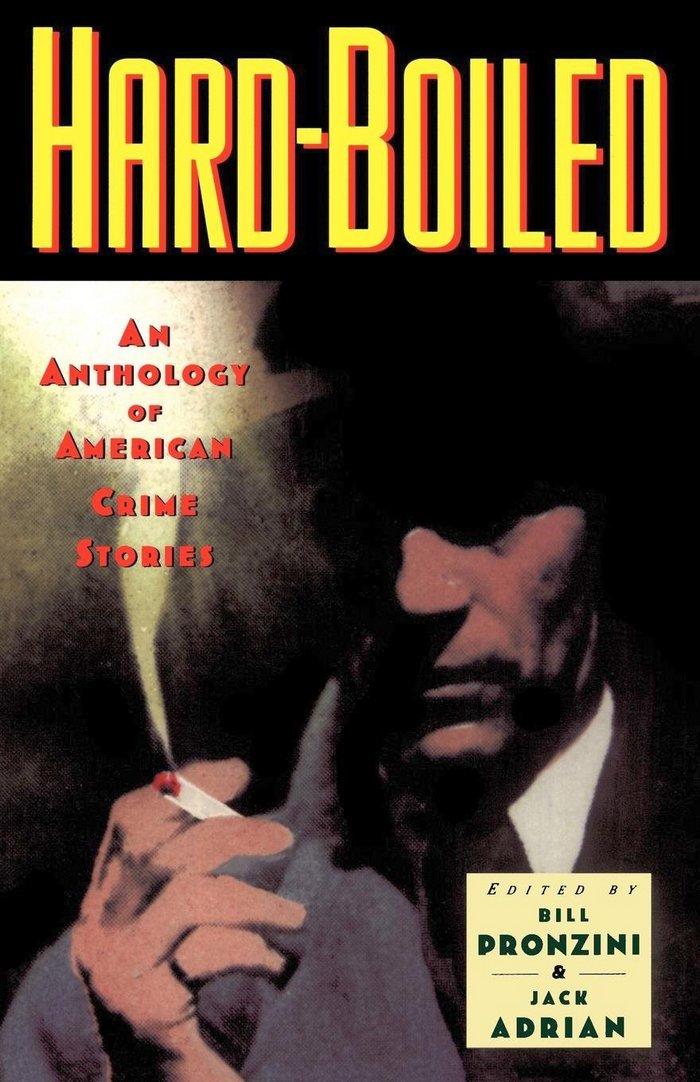
What are the ingredients of a hard-boiled detective story? “Savagery, style, sophistication, sleuthing, and sex,” said Ellery Queen. Often a desperate blond, a jealous husband, and, of course, a tough-but-tender P.I. the likes of Sam Spade or Philip Marlowe. Perhaps Raymond Chandler summed it up best in his description of Dashiell Hammett’s style: “Hammett gave murder back to the kind of people that commit it... He put these people down on paper as they were, and he made them talk and think in the language they customarily used for these purposes.”
Hard-Boiled: An Anthology of American Crime Stories is the largest and most comprehensive collection of its kind, with over half of the stories never published before in book form. Included are thirty-six sublimely suspenseful stories that chronicle the evolution of this quintessentially American art form, from its earliest beginnings during the golden age of the legendary pulp magazine Black Mask in the 1920s, to the arrival of the tough digest Manhunt in the 1950s, and finally leading up to present-day hard-boiled stories by such writers as James Ellroy. Here are eight decades worth of the best writing about betrayal, murder, and mayhem: from Hammett’s 1925 tour de force “The Scorched Face,” in which the disappearance of two sisters leads Hammett’s never-named detective, the Continental Op, straight into a web of sexual blackmail amidst the West Coast elite, to Ed Gorman’s 1992 “The Long Silence After,” a gripping and powerful rendezvous involving a middle class insurance executive, a Chicago streetwalker, and a loaded .38. Other delectable contributions include “Brush Fire” by James M. Cain, author of The Postman Always Rings Twice, Raymond Chandler’s “I’ll Be Waiting,” where, for once, the femme fatale is not blond but a redhead, a Ross Macdonald mystery starring Macdonald’s most famous creator, the cryptic Lew Archer, and “The Screen Test of Mike Hammer” by the one and only Mickey Spillane. The hard-boiled cult has more in common with the legendary lawmen of the Wild West than with the gentleman and lady sleuths of traditional drawing room mysteries, and this direct line of descent is on brilliant display in two of the most subtle and tautly written stories in the collection, Elmore Leonard’s “3:10 to Yuma” and John D. MacDonald’s “Nor Iron Bars.” Other contributors include Evan Hunter (better known as Ed McBain), Jim Thompson, Helen Nielsen, Margaret Maron, Andrew Vachss, Faye Kellerman, and Lawrence Block.
Compellingly and compulsively readable, Hard-Boiled: An Anthology of American Crime Stories is a page-turner no mystery lover will want to be without. Containing many notable rarities, it celebrates a genre that has profoundly shaped not only American literature and film, but how we see our heroes and ourselves.
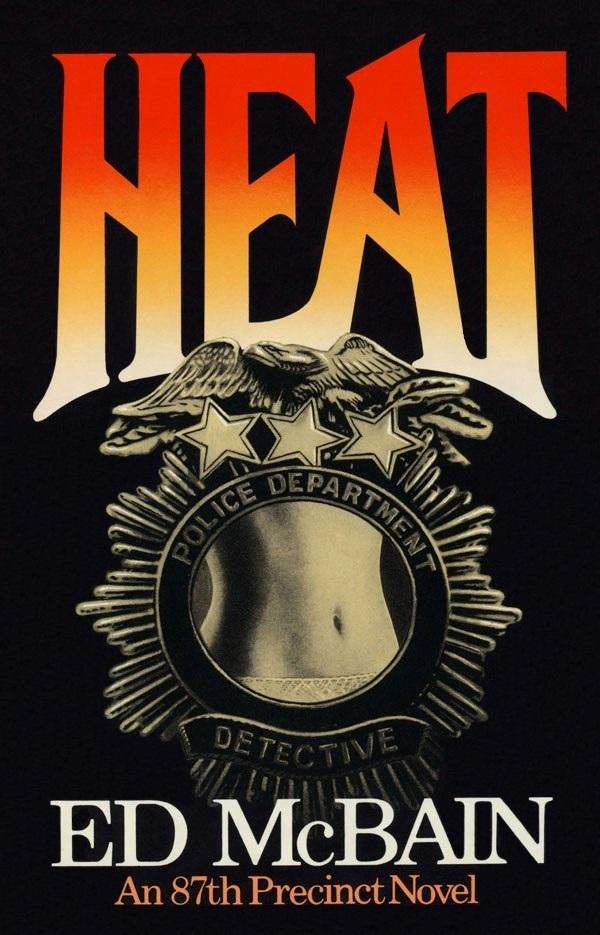
Why would any man, however deranged, take an overdose of sleeping pills and then calmly turn off his air conditioner with the city sweltering through a backbreaking heat wave? This question nags at Detectives Bert Kling and Steve Carella. Kling’s got other problems: his startlingly beautiful wife is almost certainly cheating on him, and he is being stalked by a psychopathic ex-con bent on getting Wing for having sent him up. While Carella scratches away like a terrier at the “suicide,” Kling grows less and less capable of coping.
In a shattering triple climax, the tinderbox elements converge Ed McBain makes it clear that there can be no real winners here, except for the reader.
In this, his thirty-fifth 87th Precinct novel, Ed McBain reaffirms his mastery of the police procedural story.
Here is Ed McBain’s most ambitious and far-reaching novel of the famed 87th Precinct.
But Ice goes beyond the world of the 87th Precinct.
Ice transcends the genre of crime fiction... as Le Carré’s The Spy Who Came in From the Cold did the novel of espionage.
Ice is Ed McBain’s most searching and compelling novel... of justice triumphant over the savage law of the city streets... of men and women who wear the golden detective shield with pride, honor and dedication.
Ed McBain has written his most masterly story of crime and defection, life and sudden death in the chillingly realistic world of the 87th Precinct, and beyond.
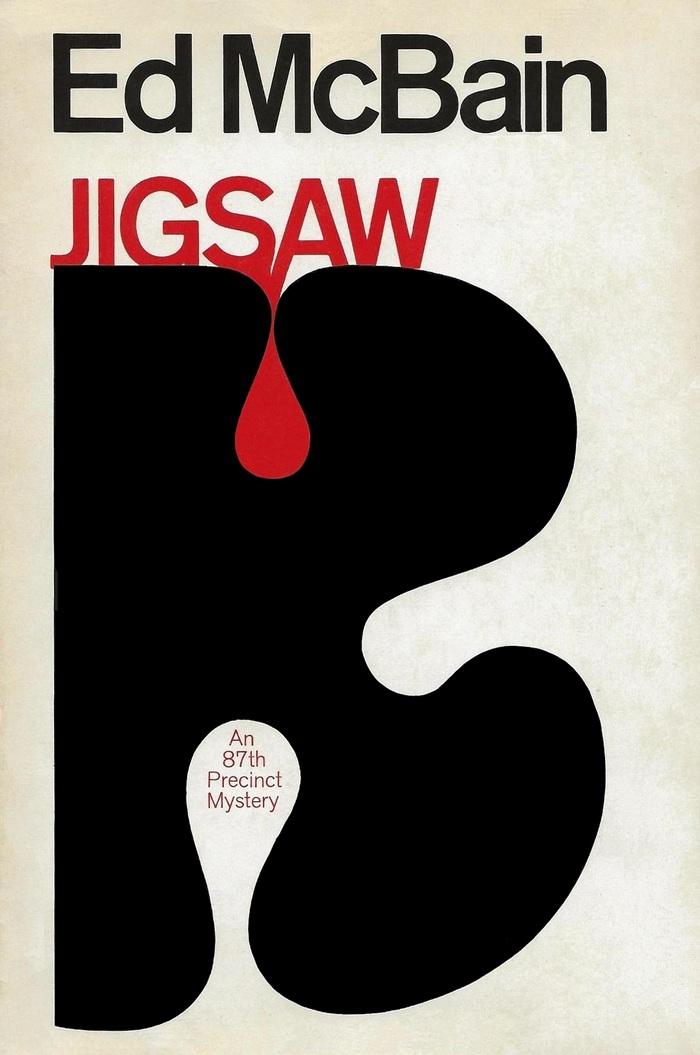
“Nothing can confuse a person (cops included) more than a lot of names and a lot of pieces and a lot of corpses...”
The cops of the 87th Precinct are really confused this time.
When Detective Arthur Brown finds two dead men, it looks like a nice simple double homicide — except for the piece of photograph clutched in one dead hand. The confusion doesn’t start until Irving Krutch, an insurance investigator, turns up at the squad room with another piece of the photograph.
Part of a homemade jigsaw puzzle, according to Krutch. The handiwork of the late Carmine Bonamico. When all the pieces, which had been passed around to friends and relatives of Bonamicos gang, were assembled, they would reveal the hiding place of the§ 750,000 the gang had stolen from a savings and loan association six years ago. Find the missing pieces, find the missing money. The search is on, and it involves Detectives Brown and Carella with people like an art gallery owner, a cheap hoodlum, a middle-aged floozy, a hot-dog vendor and an old Sicilian woman. Detective Meyer gets lucky. He visits a boutique where all the salesgirls wear see-through blouses.
Some of these people have another caller. It turns out that owning a piece of the photograph can be deadly, and it looks like a toss-up as to who will get the puzzle completed first — the police or a very determined murderer.
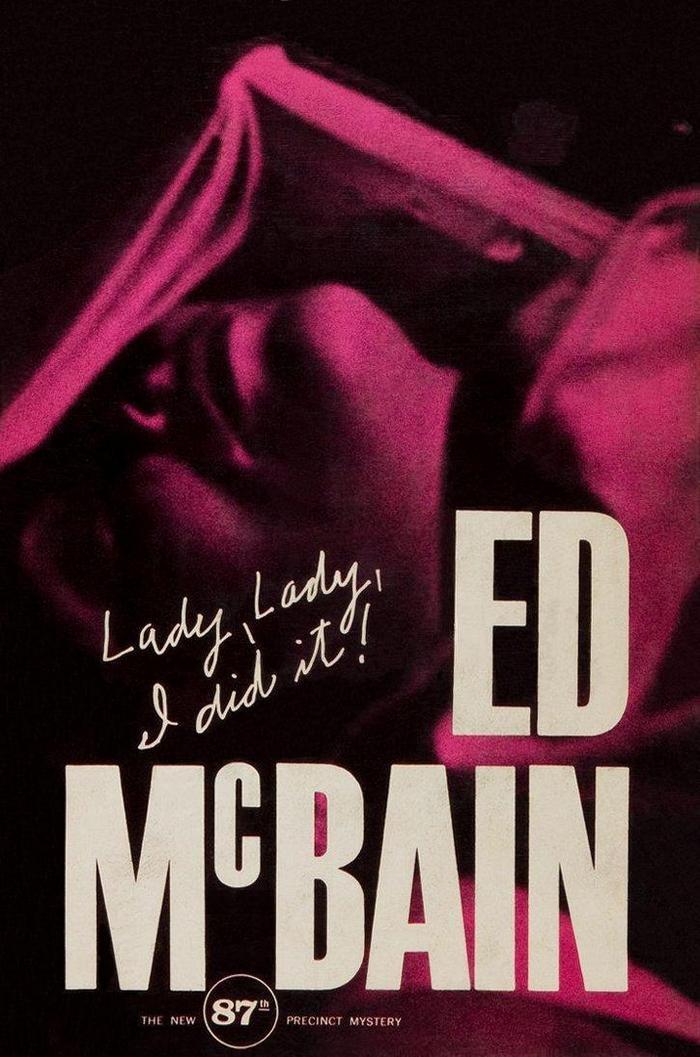
It is late afternoon, Friday, October 13. Detectives Carella, Meyer and Kling of the 87th Squad are waiting for their relief, due at 5:45 P.M. At 5:15, the telephone rings. Meyer answers, listens, jots down a few notes, then says, “Steve, Bert, you want to take this? Some nut just shot up a bookstore on Culver Avenue. There’s three people laying dead on the floor.”
The crowd had already gathered around the bookshop. There were two uniformed cops on the sidewalk, and a squad car was pulled up to the curb across the street. The people pulled back instinctively when they heard the wail of the siren on the police sedan. Carella got out first, slamming the door behind him. He waited for Kling to come around the car, and then both men started for the shop. At the door, the patrolman said, “Lot of dead people in there, sir.”
A routine squeal for the 87th, answered with routine dispatch. But there was nothing routine about it a moment later. What Bert Kling found in the wreckage of the shop very nearly destroyed him. Enraged, embittered, the youngest detective on the squad begins a nightmarish search for a crazed and wanton killer. The hunt is relentless and intensely personal — not only for Kling but for every man on the squad.
Lady, Lady, I Did It! like all 87th Precinct stories, is charged with emotion and moves from the first page with the relentless, driving intensity that is characteristic of Ed McBain.

Last summer was a vacation island, beachgrass and plum, sunshine and sand... Last summer was a million laughs... Last summer a pretty blonde girl and two carefree, suntanned youths nursed an injured seagull back to health... Last summer, too, they befriended Rhoda, a shy young girl with trusting eyes...
Let the reader beware. This is a shocking book — not for its candor and daring but for its cruelty and scorn, its shattering impact, and its terrifying vision of reality. What begins as a vacation idyll gradually turns into a dark parable of modem society, revealing the insensate barbarity of man.
The opening is as bright as summer, as calm as a cobra dozing in the sun. But, as summer and compassion wane, the author strips away the pretense of youth and lays bare the blunt, primeval urge to crush, defile, betray. The tragic, inevitable outcome exposes the depths of moral corruption and the violation of the soul.
In this tale of depravity, Evan Hunter has written a novel that is a work of art. Its theme and portent are inescapable, its insolence cauterizing, its humor outrageous — a brilliant stabbing, altogether unforgettable book.