
 fb2
fb2
This work is both an unrestrained attack on Christianity and a further exposition of Nietzsche’s will-to-power philosophy so dramatically presented in Zarathustra. Christianity, says Nietzsche, represents “everything weak, low, and botched; it has made an ideal out of antagonism towards all the self-preservative instincts of strong life.” By contrast, Nietzsche defines good as: “All that enhances the feeling of power, the Will to Power, and power itself in man. What is bad?–All that proceeds from weakness. What is happiness?–The feeling that power is increasing,–that resistance has been overcome.” In attempting to redefine the basis of Western values by demolishing what Nietzsche saw as the crippling influence of the Judeo-Christian tradition, THE ANTICHRIST has proved to be highly controversial and continuously stimulating to later generations of philosophers.
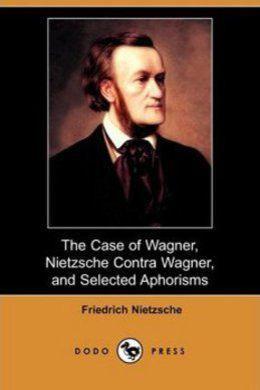
The Case Against Wagner was one Nietzsche’s last books, and his wittiest. In Wagner’s music, in his doctrine, in his whole concept of art, Nietzsche saw the confirmation, the promotion, even the encouragement, of that decadence and degeneration which is now rampant in Europe; and it is for this reason, although to the end of his life he still loved Wagner, the man and the friend, that we find him, on the very eve of his spiritual death, exhorting us to abjure Wagner the musician and the artist.
When Nietzsche called his book The Dawn of Day, he was far from giving it a merely fanciful title to attract the attention of that large section of the public which judges books by their titles rather than by their contents. The Dawn of Day represents, figuratively, the dawn of Nietzsche’s own philosophy. Hitherto he had been considerably influenced in his outlook, if not in his actual thoughts, by Schopenhauer, Wagner, and perhaps also Comte. Human, all-too-Human, belongs to a period of transition. After his rupture with Bayreuth, Nietzsche is, in both parts of that work, trying to stand on his own legs, and to regain his spiritual freedom; he is feeling his way to his own philosophy.
The Dawn of Day, written in 1881 under the invigorating influence of a Genoese spring, is the dawn of this new Nietzsche. “With this book I open my campaign against morality,” he himself said later in his autobiography, the Ecce Homo. Just as in the case of the books written in his prime-The Joyful Wisdom, Zarathustra, Beyond Good and Evil, and The Genealogy of Morals-we cannot fail to be impressed in this work by Nietzsche’s deep psychological insight, the insight that showed him to be a powerful judge of men and things unequalled in the nineteenth or, perhaps, any other century.
Nietzsche’s most controversial, and probably his most important work. The concepts that “God is Dead” and “Eternal Recurrence” with their attendant ramifications are major features of this work. Highly original and inventive, part literature, part philosophy, it parodies both, in its stylistic resemblance to the New Testament and Pre-Socratic Greek writings. Through a fictionalized version the character Zarathustra, the legendary founder of Zoroasterianism, Nietzsche propounds a new and different version of moral philosophy. During the course of the story presented in this loosely structured narrative, Nietzsche develops and presents a contrary view of mankind: as lying somewhere between the apes and the ultimate Superman, or Ubermensch. Ranging from unsupported assumptions to rigorous argument - from exposition to dialog to poetry - Thus Spake Zarathustra is a surprising, engaging and thought provoking look at the condition of mankind. Nietzsche himself considered this to be his most important work. His tragic end, in a state of complete mental breakdown, precluded any possibility that it would be superseded and raised a question of the association between madness and genius.