 fb2
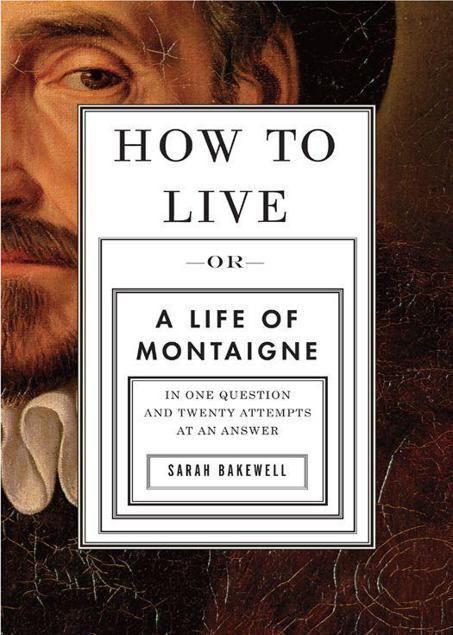
fb2In a wide-ranging intellectual career, Michel de Montaigne found no knowledge so hard to acquire as the knowledge of how to live this life well. By casting her biography of the writer as 20 chapters, each focused on a different answer to the question How to live? Bakewell limns Montaigne’s ceaseless pursuit of this most elusive knowledge. Embedded in the 20 life-knowledge responses, readers will find essential facts — when and where Montaigne was born, how and whom he married, how he became mayor of Bordeaux, how he managed a public life in a time of lethal religious and political passions. But Bakewell keeps the focus on the inner evolution of the acute mind informing Montaigne’s charmingly digressive and tolerantly skeptical essays. Flexible and curious, this was a mind at home contemplating the morality of cannibals, the meaning of his own near-death experience, and the puzzlingly human behavior of animals. And though Montaigne has identified his own personality as his overarching topic, Bakewell marvels at the way Montaigne’s prose has enchanted diverse readers — Hazlitt and Sterne, Woolf and Gide — with their own reflections. Because Montaigne’s capacious mirror still captivates many, this insightful life study will win high praise from both scholars and general readers. -Bryce Christensen
“This charming biography shuffles incidents from Montaigne’s life and essays into twenty thematic chapters… Bakewell clearly relishes the anthropological anecdotes that enliven Montaigne’s work, but she handles equally well both his philosophical influences and the readers and interpreters who have guided the reception of the essays.”
—The New Yorker
“Serious, engaging, and so infectiously in love with its subject that I found myself racing to finish so I could start rereading the Essays themselves… It is hard to imagine a better introduction — or reintroduction — to Montaigne than Bakewell’s book.”
—Lorin Stein, Harper’s Magazine
“Ms. Bakewell’s new book, How to Live, is a biography, but in the form of a delightful conversation across the centuries.”
—The New York Times
“So artful is Bakewell’s account of [Montaigne] that even skeptical readers may well come to share her admiration.”
—The New York Times Book Review
“Extraordinary… a miracle of complex, revelatory organization, for as Bakewell moves along she provides a brilliant demonstration of the alchemy of historical viewpoint.”
—Boston Globe
“Well, How to Live is a superb book, original, engaging, thorough, ambitious, and wise.”
—Nick Hornby, in the November/December 2010 issue of The Believer
“In How to Live, an affectionate introduction to the author, Bakewell argues that, far from being a dusty old philosopher, Montaigne has never been more relevant — a 16th-century blogger, as she would have it — and so must be read, quite simply, ‘in order to live’… Bakewell is a wry and intelligent guide.”
—The Daily Beast
“Witty, unorthodox… How to Live is a history of ideas told entirely on the ground, never divorced from the people thinking them. It hews close to Montaigne’s own preoccupations, especially his playful uncertainty — Bakewell is a stickler for what we can’t know… How to Live is a delight…”
—The Plain Dealer
“This book will have new readers excited to be acquainted to Montaigne’s life and ideas, and may even stir their curiosity to read more about the ancient Greek philosophers who influenced his writing. How to Live is a great companion to Montaigne’s essays, and even a great stand-alone.”
—San Francisco Book Review
“A bright, genial, and generous introduction to the master’s methods.”
—Kirkus Reviews
“[Bakewell reveals] one of literature's enduring figures as an idiosyncratic, humane, and surprisingly modern force.”
—Publisher’s Weekly (starred)
“As described by Sarah Bakewell in her suavely enlightening How to Live, or A Life of Montaigne in One Question and Twenty Attempts at an Answer Montaigne is, with Walt Whitman, among the most congenial of literary giants, inclined to shrug over the inevitability of human failings and the last man to accuse anyone of self-absorption. His great subject, after all, was himself.”
—Laura Miller, Salon.com
“Lively and fascinating… How To Live takes its place as the most enjoyable introduction to Montaigne in the English language.”
—The Times Literary Supplement
“Splendidly conceived and exquisitely written… enormously absorbing.”
—Sunday Times
“How to Live will delight and illuminate.”
—The Independent
“It is ultimately [Montaigne’s] life-loving vivacity that Bakewell succeeds in communicating to her readers.”
—The Observer
“This subtle and surprising book manages the trick of conversing in a frank and friendly manner with its centuries-old literary giant, as with a contemporary, while helpfully placing Montaigne in a historical context. The affection of the author for her subject is palpable and infectious.”
—Phillip Lopate, author of The Art of the Personal Essay
“An intellectually lively treatment of a Renaissance giant and his world.”
—Saturday Telegraph
“Like recent books on Proust, Joyce, and Austen, How to Live skillfully plucks a life-guide from the incessant flux of Montaigne’s prose… A superb, spirited introduction to the master.”
—The Guardian
In a wide-ranging intellectual career, Michel de Montaigne found no knowledge so hard to acquire as the knowledge of how to live this life well. By casting her biography of the writer as 20 chapters, each focused on a different answer to the question How to live? Bakewell limns Montaigne’s ceaseless pursuit of this most elusive knowledge. Embedded in the 20 life-knowledge responses, readers will find essential facts — when and where Montaigne was born, how and whom he married, how he became mayor of Bordeaux, how he managed a public life in a time of lethal religious and political passions. But Bakewell keeps the focus on the inner evolution of the acute mind informing Montaigne’s charmingly digressive and tolerantly skeptical essays. Flexible and curious, this was a mind at home contemplating the morality of cannibals, the meaning of his own near-death experience, and the puzzlingly human behavior of animals. And though Montaigne has identified his own personality as his overarching topic, Bakewell marvels at the way Montaigne’s prose has enchanted diverse readers — Hazlitt and Sterne, Woolf and Gide — with their own reflections. Because Montaigne’s capacious mirror still captivates many, this insightful life study will win high praise from both scholars and general readers. -Bryce Christensen Named one of Library Journal’s Top Ten Best Books of 2010 In a wide-ranging intellectual career, Michel de Montaigne found no knowledge so hard to acquire as the knowledge of how to live this life well. By casting her biography of the writer as 20 chapters, each focused on a different answer to the question How to live? Bakewell limns Montaigne’s ceaseless pursuit of this most elusive knowledge. Embedded in the 20 life-knowledge responses, readers will find essential facts — when and where Montaigne was born, how and whom he married, how he became mayor of Bordeaux, how he managed a public life in a time of lethal religious and political passions. But Bakewell keeps the focus on the inner evolution of the acute mind informing Montaigne’s charmingly digressive and tolerantly skeptical essays. Flexible and curious, this was a mind at home contemplating the morality of cannibals, the meaning of his own near-death experience, and the puzzlingly human behavior of animals. And though Montaigne has identified his own personality as his overarching topic, Bakewell marvels at the way Montaigne’s prose has enchanted diverse readers — Hazlitt and Sterne, Woolf and Gide — with their own reflections. Because Montaigne’s capacious mirror still captivates many, this insightful life study will win high praise from both scholars and general readers.
—Bryce Christensen Named one of Library Journal’s Top Ten Best Books of 2010

Sarah Bakewells Buch ist ein Geniestreich: Auf höchst elegante und unterhaltsame Weise erzählt sie das Leben Montaignes und beantwortet zugleich unsere Fragen nach einem guten Leben. Authentischer und aktueller wurde noch nie über den großen Philosophen und Essayisten geschrieben. Das Buch wurde in den USA mit dem „National Book Critics Circle Award for Biography“ und in Großbritannien mit dem „Duff Cooper Prize for Non-Fiction“ ausgezeichnet und stand auf den Shortlists des „Costa Biographie Award“ und des „Marsh Biography Award“.
Lies viel, vergiss das meiste wieder, und sei schwer von Begriff! — Habe ein Hinterzimmer in deinem Geschäft! — Tu etwas, was noch nie zuvor jemand getan hat! — Mach deinen Job gut, aber nicht zu gut! — Philosophiere nur zufällig! — Bedenke alles, bereue nichts! — Mit diesen und anderen Antworten auf die eine Frage „Wie soll ich leben?“ führt Sarah Bakewell durch das ungewöhnliche Leben des Weingutbesitzers, Liebhabers, Essayisten, Bürgermeisters und Reisenden Michel de Montaigne. Dabei gelingt ihr das Kunststück, ihn ganz im 16. Jahrhundert, im Zeitalter der Religionskriege, zu verorten und gerade dadurch für unsere Zeit verständlich zu machen. Wie soll man Montaigne lesen? Nicht wie ein Kind, um sich zu amüsieren, und nicht wie die Ehrgeizigen, um sich zu belehren. „Nein. Lesen sie ihn, um zu leben!“, empfahl der große Flaubert.
„Eine bezaubernde Einführung in Leben und Denken Montaignes und ein großes Lesevergnügen. Hier ist eine Autorin, deren Liebe zu ihrem Gegenstand ansteckend ist.“ Mark Lilla, The New York Review of Books
„Eine Mischung aus Biographie und Alain-de-Bottonesker Lebensphilosophie, … die erfreulichste Einführung in Montaigne in englischer Sprache, … eine überzeugende Verbindung von Literatur und Leben.“ Timothy Chesters, The Times Literary Supplement
„Montaigne hat hier die Biographie, die er verdient, und hätte seine Freude an ihrem unkonventionellen Aufbau.“ Michael Bywater, The Independent
„Eine wunderbar souveräne und klare Einführung … Man kann Sarah Bakewell nur dazu gratulieren, dass sie den Lesern einen so reizvollen Zugang zu Montaigne eröffnet.“ David Sexton, Evening Standard
„Glänzend konzipiert und vorzüglich geschrieben. … Sarah Bakewell bringt eine neue Generation dazu, sich in Montaigne zu verlieben …, enorm fesselnd …, rühmenswert.“ James McConnachie, Sunday Times
„Das Buch schöpft gekonnt eine Lebenskunst aus dem breiten Strom der Montaigne'schen Prosa. … Eine überragende, begnadete Einführung in den Meister!“ Adam Thorpe, Guardian