Человек, который убил лису
 fb2 fb2
|
|
Человек, который убил лису
fb2
|

Человечество
fb2
|
Черный кот. Три орудия смерти (сборник)
fb2
Гилберт Кит Честертон – английский писатель, поэт, журналист. Наибольшую популярность ему принес цикл новелл об отце Брауне – неприметном священнике-детективе, который способен распутать самые головоломные преступления. Отец Браун составляет нешуточную конкуренцию самому Шерлоку Холмсу, а рассказы о нем вошли в сокровищницу мирового детектива.
|
Чудо 'полумесяца'
fb2
|

Шар и крест
fb2
|

Эссе
fb2
|
All Things Considered
fb2
All Things Considered features more than thirty columns that G. K. Chesterton wrote for the London Daily News in the years before World War I. Covering a variety of themes, each is written with the same high quality that readers have come to expect of Chesterton. In an essay on canvassing, Chesterton ponders some unusual double standards. In another, he writes about daily annoyances. Another covers literature. But regardless of the topic, each of the essays in All Things Considered is the usual Chesterton masterpiece, tempting the reader to track down even more of the 4,000 newspaper columns penned by Chesterton during his career. G. K. Chesterton is well known as a novelist, essayist, storyteller, poet, philosopher, theologian, historian, artist, and critic. He’s less well-known as a journalist these days, yet all evidence indicates that he viewed his work for the various newspapers as his primary raison-de-etre. Therefore anyone interested in exploring the works of this colossal genius should include a sampling of his newspaper columns along with all of his other brilliant books.
|
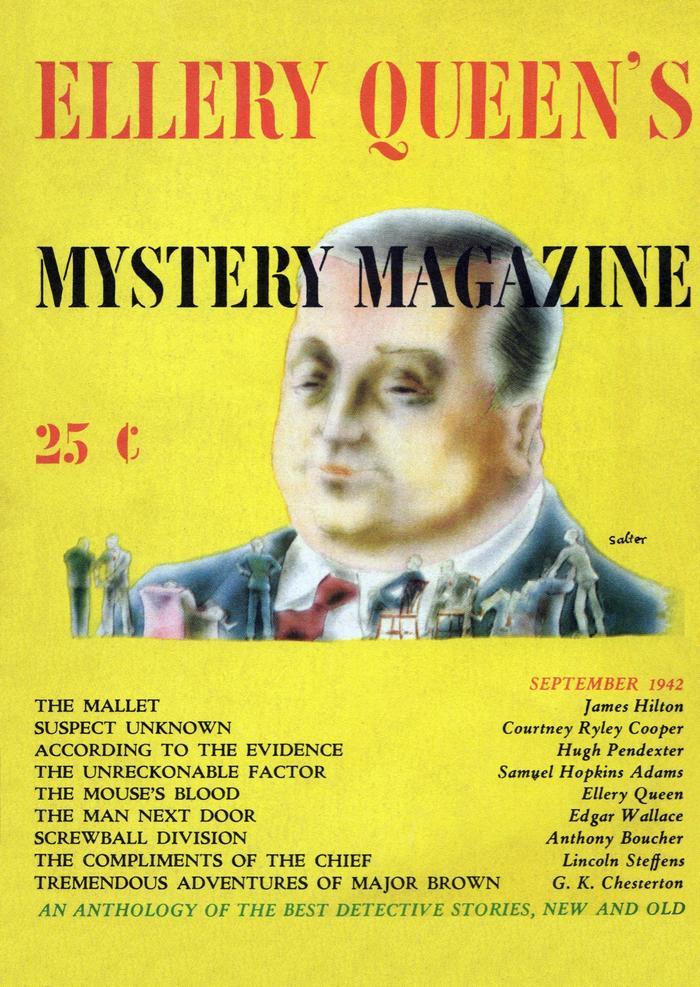
Ellery Queen’s Mystery Magazine. Vol. 3, No. 4, September 1942
fb2
|
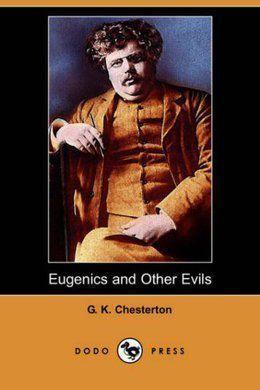
Eugenics and Other Evils
fb2
G. K. Chesterton was an early critic of the philosophy of eugenics, expressing this opinion in his book, Eugenics and Other Evils. Its advocates regarded eugenics as a social philosophy for the improvement of human hereditary traits through various forms of intervention.Today it is widely regarded as a brutal movement which inflicted massive human rights violations on millions of people.HIs criticism of Eugenics expands into a more general criticism of a modern craze for scientific officialism and strict social organization.Chesterton’s writings consistently displayed wit and a sense of humour. He employed paradox, while making serious comments on the world, government, politics, economics, philosophy, theology and many other topics.
|
Heretics
fb2
G. K. Chesterton, the “Prince of Paradox”, is at his witty best in this collection of twenty essays and articles from the turn of the twentieth century. Focusing on “heretics” — those who pride themselves on their superiority to conservative views — Chesterton appraises prominent figures who fall into that category from the literary and art worlds. Luminaries such as Rudyard Kipling, George Bernard Shaw, H. G. Wells, and James McNeill Whistler come under the author’s scrutiny, where they meet with equal measures of his characteristic wisdom and good humor. In addition to incisive assessments of well-known individuals (“Mr. Rudyard Kipling and Making the World Small” and “Mr. H. G. Wells and the Giants”), these essays contain observations on the wider world. On Sandals and Simplicity, Science and the Savages, On Certain Modern Writers and the Institution of the Family, On Smart Novelists and the Smart Set, and Slum Novelists and the Slums, reflect the main themes of Chesterton’s life’s work. Heretics roused the ire of some critics for censuring contemporary philosophies without providing alternatives; the author responded a few years later with a companion volume, Orthodoxy. |
Orthodoxy
fb2
This book is meant to be a companion to “Heretics,” and to put the positive side in addition to the negative. Many critics complained of the book called “Heretics” because it merely criticised current philosophies without offering any alternative philosophy. This book is an attempt to answer the challenge. It is unavoidably affirmative and therefore unavoidably autobiographical. The writer has been driven back upon somewhat the same difficulty as that which beset Newman in writing his Apologia; he has been forced to be egotistical only in order to be sincere. While everything else may be different the motive in both cases is the same. It is the purpose of the writer to attempt an explanation, not of whether the Christian Faith can be believed, but of how he personally has come to believe it. The book is therefore arranged upon the positive principle of a riddle and its answer. It deals first with all the writer’s own solitary and sincere speculations and then with all the startling style in which they were all suddenly satisfied by the Christian Theology. The writer regards it as amounting to a convincing creed. But if it is not that it is at least a repeated and surprising coincidence.
|
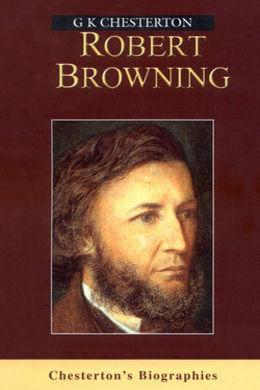
Robert Browning
fb2
Chesterton declares that it is fashionable to boast that one cannot understand Browning but he reveals in this fascinating literary biography how Browning ‘combines the greatest brain with the simplest temperament’. This is a multi-faceted biography and critique of Browning’s work. Chesterton takes us from his early life to his early poems and shows us how his life impacted on his work to produce a biography of great depth and sensitivity.
|
The Ballad of the White Horse
fb2
The Ballad of the White Horse is one of the last great epic poems in the English language. On the one hand it describes King Alfred’s battle against the Danes in 878. On the other hand it is a timeless allegory about the ongoing battle between Christianity and the forces of nihilistic heathenism. Filled with colorful characters, thrilling battles and mystical visions, it is as lively as it is profound. Chesterton incorporates brilliant imagination, atmosphere, moral concern, chronological continuity, wisdom and fancy. He makes his stanzas reverberate with sound, and hurries his readers into the heart of the battle.
|
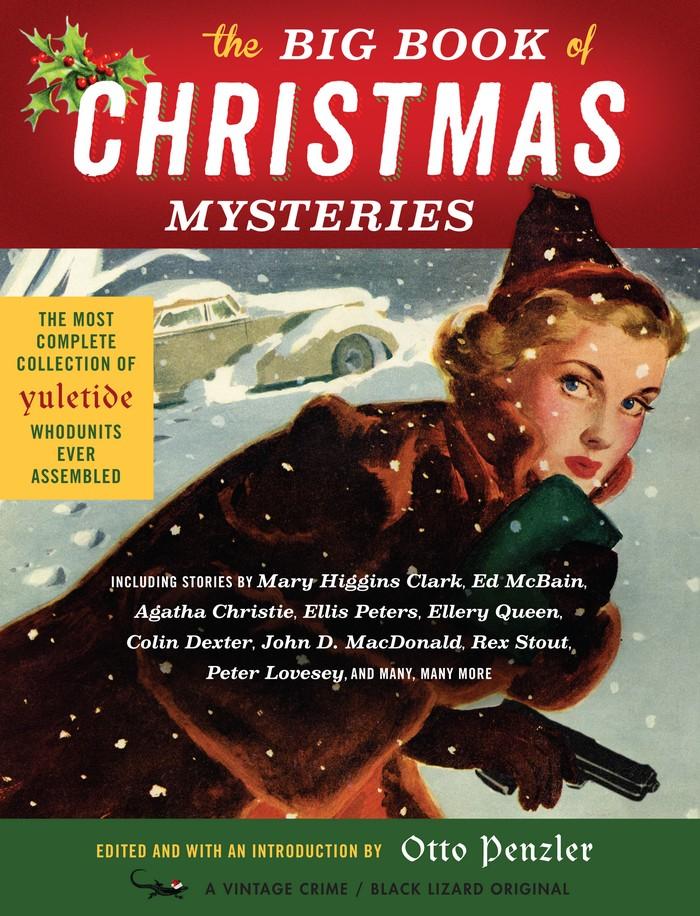
The Big Book of Christmas Mysteries
fb2
Have yourself a crooked little Christmas with The Big Book of Christmas Mysteries. Edgar Award-winning editor Otto Penzler collects sixty of his all-time favorite holiday crime stories — many of which are difficult or nearly impossible to find anywhere else. From classic Victorian tales by Arthur Conan Doyle, Robert Louis Stevenson, and Thomas Hardy, to contemporary stories by Sara Paretsky and Ed McBain, this collection touches on all aspects of the holiday season, and all types of mysteries. They are suspenseful, funny, frightening, and poignant. Included are puzzles by Mary Higgins Clark, Isaac Asimov, and Ngaio Marsh; uncanny tales in the tradition of A Christmas Carol by Peter Lovesey and Max Allan Collins; O. Henry-like stories by Stanley Ellin and Joseph Shearing, stories by pulp icons John D. MacDonald and Damon Runyon; comic gems from Donald E. Westlake and John Mortimer; and many, many more. Almost any kind of mystery you’re in the mood for — suspense, pure detection, humor, cozy, private eye, or police procedural — can be found in these pages. FEATURING: — Unscrupulous Santas — Crimes of Christmases Past and Present — Festive felonies — Deadly puddings — Misdemeanors under the mistletoe — Christmas cases for classic characters including Sherlock Holmes, Brother Cadfael, Miss Marple, Hercule Poirot, Ellery Queen, Rumpole of the Bailey, Inspector Morse, Inspector Ghote, A.J. Raffles, and Nero Wolfe. |