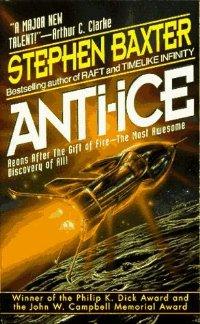
Anti-Ice
The novel can be classified as an alternate history for its portrayal of 19th century Europe and the changes resulting, particularly in Britain, from an explosive scientific discovery made in the 1850s. A new element has been discovered in a hidden vein near the South Pole. Anti-ice is harmless until warmed, when it releases vast energies that promise new wonders and threaten new horrors beyond humankind’s wildest dreams.
|
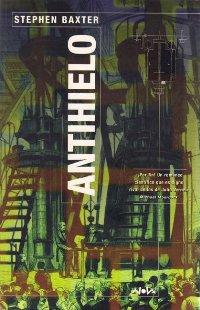
Antihielo
En 1870, cuando el poder del Imperio británico es absoluto, en las remotas tierras de una península antártica al sur del continente australiano se descubre un nueva material: el antihielo. Por el fenómeno que Faraday denominará de «conductancia aumentada», el material libera prodigiosas cantidades de energía cuando su temperatura se eleva. Su potencial energético, casi infinito, va a acelerar la Revolución Industrial de forma insospechada.El antihielo, como no podía ser de otra manera, es empleado en la campaña de Crimea, pero también se revela útil en otras aventuras del espíritu humano que, a priori, parecen menos. sangrientas. En la Nueva Gran Exposición de Manchester de 1870, un joven agregado del Foreing Office descubrirá el inmenso poder del antihielo y, junto al visionario sir Josiah Traveller, tendrá que enfrentarse a un inesperado y decimonónico viaje espacial a la Luna.Stephen Baxter, la nueva y gran estrella de la ciencia ficción británica, es considerado el sucesor de Arthur C. Clarke y un igual de Isaac Asimov y Robert A. Heinlein. Sus homenajes a Herbert G. Wells (Las naves del tiempo) y a Julio Verne (Antihielo) son un verdadero tour de force de la mejor ciencia ficción.
|
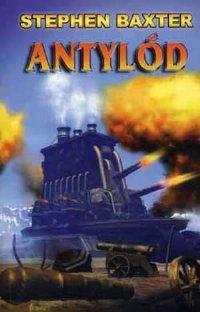
Antylód
S. Baxter z talentem dorównującym najznakomitszym przebłyskom geniuszu J. Verne’a opisuje świat, w którym wielkie mosty spinają Kontynent z Wielką Brytanią, błyszczące jednotorowe koleje przewożą błyskawicznie pasażerów na olbrzymie odległości, a przerażony świat wstrzymuje oddech w przededniu wojny prowadzonej za pomocą substancji o niebywałych właściwościach — antylodu. Autor przechodzi od odległej przyszłości, opisywanej w poprzednich dziełach, do niedawnej przeszłości, nie tracąc nic ze swej pomysłowości i błyskotliwości. Umiejętnie portretuje świat dyplomatycznych zabiegów, romantycznej miłości i gorącej publicznej debaty nad konsekwencjami ludzkiego panowania nad siłami natury.
|
Die letzte Arche
DAS BUCHDie Erde in naher Zukunft: Eine gigantische Flutwelle hat weite Teile der Welt überschwemmt, um das verbleibende Festland werden erbitterte Kriege geführt, und der Meeresspiegel steigt immer weiter an. Um das Fortbestehen der Menschheit zu sichern, entwickeln amerikanische Wissenschaftler einen scheinbar genialen Plan: Eine kleine Gruppe Auserwählter soll sich in einem eigens dafür konstruierten Raumschiff – der »Arche« – auf den Weg machen, um in den Weiten des Universums einen neuen Planeten zu besiedeln. Der Start gelingt, und die neue Heimat rückt immer näher. Doch an ihrem Zielplaneten angekommen, müssen die Auswanderer feststellen, dass die »Erde II« für Menschen unbewohnbar ist. Und so steht die Besatzung der Arche vor einer existenziellen Entscheidung: Kehren sie auf die zerstörte Erde zurück oder setzen sie ihre Reise ins Ungewisse fort?Nach seinem Erfolgsroman Die letzte Flut führt Stephen Baxter in Die letzte Arche auf meisterhafte Weise die Geschichte einer Menschheit fort, die von ihrem eigenen Planeten vertrieben wird.DER AUTORStephen Baxter, 1957 in Liverpool geboren, studierte Mathematik und Astronomie, bevor er sich ganz dem Schreiben widmete. Er zählt zu den international bedeutendsten Autoren wissenschaftlich orientierter Literatur. Etliche seiner Romane wurden mehrfach preisgekrönt und zu internationalen Bestsellern. Baxter lebt und arbeitet im englischen Buckinghamshire.Weitere Informationen zu Autor und Werk erhalten Sie unter:www.stephen-baxter.com
|
Evolution
Evolution is a collection of short stories that work together to form an episodic science fiction novel. It follows 565 million years of human evolution, from shrewlike mammals 65 million years in the past to the ultimate fate of humanity (and its descendants, both biological and non-biological) 500 million years in the future.The primary protagonist in Evolution is evolution itself (although primates as a group constitute another protagonist). The book follows the hero’s course as it shapes surviving pre-humans into tree dwellers, remoulds a group that drifts from Africa to a (then much closer) New World on a raft formed out of debris, and confronting others with a terrible dead end as ice clamps down on Antarctica.The stream of DNA runs on elsewhere, where ape-like creatures in North Africa are forced out of their diminishing forests to come across grasslands where their distant descendants will later run joyously. At one point, hominids become sapient, and go on to develop technology, including a universal constructor machine that goes to Mars and multiplies, and in an act of global ecophagy consumes Mars by converting the planet into its descendants. Human extinction (or the extinction of human culture) also occurs in the book, as well as the end of planet Earth and the rebirth of life on another planet. (The extinction-level event that causes the human extinction is, indirectly, an eruption of the volcano Rabaul, coupled with various actions of humans themselves, some of which are only vaguely referred to, but implied to be a form of genetic engineering which removed the ability to reproduce with non-engineered humans.) Also to be found in Evolution are ponderous Romans, sapient dinosaurs, the last of the wild Neanderthals, a primate who witnesses the extinction of the dinosaurs, symbiotic primate-tree relationships, mole people, and primates who live on a Mars-like Earth.
|
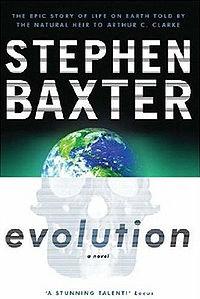
Evolution
Evolution is a collection of short stories that work together to form an episodic science fiction novel. It follows 565 million years of human evolution, from shrewlike mammals 65 million years in the past to the ultimate fate of humanity (and its descendants, both biological and non-biological) 500 million years in the future.The primary protagonist in Evolution is evolution itself (although primates as a group constitute another protagonist). The book follows the hero’s course as it shapes surviving pre-humans into tree dwellers, remoulds a group that drifts from Africa to a (then much closer) New World on a raft formed out of debris, and confronting others with a terrible dead end as ice clamps down on Antarctica.The stream of DNA runs on elsewhere, where ape-like creatures in North Africa are forced out of their diminishing forests to come across grasslands where their distant descendants will later run joyously. At one point, hominids become sapient, and go on to develop technology, including a universal constructor machine that goes to Mars and multiplies, and in an act of global ecophagy consumes Mars by converting the planet into its descendants. Human extinction (or the extinction of human culture) also occurs in the book, as well as the end of planet Earth and the rebirth of life on another planet. (The extinction-level event that causes the human extinction is, indirectly, an eruption of the volcano Rabaul, coupled with various actions of humans themselves, some of which are only vaguely referred to, but implied to be a form of genetic engineering which removed the ability to reproduce with non-engineered humans.) Also to be found in Evolution are ponderous Romans, sapient dinosaurs, the last of the wild Neanderthals, a primate who witnesses the extinction of the dinosaurs, symbiotic primate-tree relationships, mole people, and primates who live on a Mars-like Earth.
|
Evolution
Ihre Geschichte beginnt, als Dinosaurier die Erde beherrschen. Sie überstehen den gnadenlosen Kampf mit anderen Spezies um Nahrung und Territorien. Sie überleben den Einschlag eines gigantischen Asteroiden und erben eine leere Welt. Sie folgen der langsamen Bewegung der Kontinente über die Erde. Sie errichten eine planetenumspannende Zivilisation. Und sie greifen nach den Sternen…In diesem atemberaubenden, hochspannenden Roman folgt Stephen Baxter dem Strom der menschlichen Evolution, der Millionen von Jahren in der Vergangenheit entspringt und sich weit in die Zukunft ergießt. Ein in der Literatur einzigartiges Panorama – die gesamte Geschichte der Menschheit in einem Buch.
|
Evolution
It's the job of a science fiction writer to visualize extrapolations of the future. But there are those who go far beyond, venturing into realms of breathtaking science. That kind of cutting edge talent is as rare as a supernova-and, in its own way, just as powerful. Arthur C. Clarke had it. So did William Gibson. Now, with Evolution, Stephen Baxter delivers what is sure to be one of the most talked-about books of the year-and shows once again why he belongs among the select company of science fiction writers who matter.Stretching from the distant past into the remote future, from primordial Earth to the stars, Evolution is a soaring symphony of struggle, extinction, and survival, a dazzling epic that combines a dozen scientific disciplines and a cast of unforgettable characters to convey the grand drama of evolution in all its awesome majesty and rigorous beauty.Sixty-five million years ago, when dinosaurs ruled the Earth, lived a small mammal, a proto-primate of the species Purgatorius. From this humble beginning, Baxter traces the human lineage forward through time. The adventure that unfolds is a gripping odyssey governed by chance and competition, a perilous journey to an uncertain destination along a route beset by sudden and catastrophic upheavals. It is a route that ends, for most species, in stagnation or extinction. Why should humanity escape this fate?A generation from today, a group of concerned scientists-distant descendants of that primitive Purgatorius-gathers on a remote island to discuss this very question. The ceaseless expansion of human civilization has triggered an urgent environmental crisis that must be solved now if the Earth is to survive as a place hospitable to human life. But just when a peaceful solution seems within reach, two acts of shocking violence set in motion a cataclysmic chain of events that will expose the limitations of human intellect and adaptability in the face of the blind and implacable processes of Darwin's dangerous idea.
|
Firma Szklana Ziemia
|
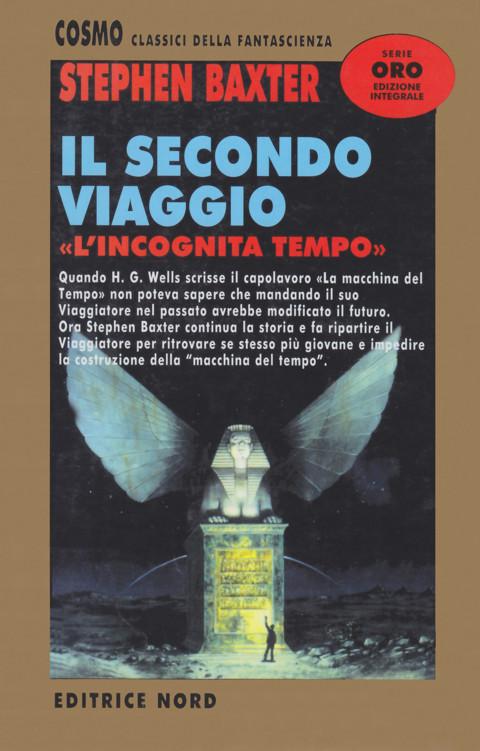
Il secondo viaggio
Il Viaggiatore del Tempo nel grande capolavoro di H.G. Wells “La macchina del tempo” pensa con rimpianto a “come sia stato breve il sogno dell’intelletto umano”. Ma Stephen Baxter sa quello che Wells non poteva sapere, cioè proiettandosi nel tempo il Viaggiatore ha cambiato il futuro e sarà destinato a cambiarlo ancora. Svegliandosi nella sua casa di Richmond, il Viaggiatore non riesce a soffocare i rimorsi. Ha abbandonato la bella e indifesa Weena, del mite popolo degli Eloi, alle brame cannibalesche dei Morlock, la razza umana degenerata da cui è stato costretto a fuggire. Decide cosi di ripartire prontamente per un nuovo viaggio nell’anno 802.701 d.C., ma scopre con sgomento di essere entrato in un altro futuro. Approda infatti nell’anno 657.208 all’interno di una sfera di Dyson costruita da una razza di Morlock infinitamente più evoluta: il suo viaggio ha inevitabilmente innescato ramificazioni temporali che si aprono su nuovi universi paralleli. Non rimane quindi che tornare nel passato, affrontare una versione di se stesso più giovane e impedire l’invenzione della macchina del tempo. Ma non è cosi semplice, perché ecco apparire un’enorme e misterioso congegno, costruito per difendere a tutti i costi la macchina del tempo, che nel frattempo è diventata un’irrinunciabile arma segreta in una guerra futura... Ormai è chiaro, il destino del Viaggiatore non è solo quello di affrontare una sequela di avventure mozzafiato, ma di risolvere una catena di paradossi che si stanno moltiplicando attorno a lui. E soprattutto non ha abbandonato l’idea di ritrovare e salvare la sua Weena. Stephen Baxter reinterpreta le idee di Wells alla luce delle più recenti scoperte sulla natura dello spazio, del tempo e della meccanica quantistica, ma soprattutto, con estrema fedeltà e vigore narrativo, riscopre e rilancia verso nuovi orizzonti l’emozione che La macchina del tempo aveva saputo regalare.
|
Las naves del tiempo
El Viajero del tiempo de H.G. Wells despierta en su casa de Richmond la mañana posterior al retorno de su primera partida al futuro. Apesadumbrado por haber dejado a Weena en manos de los Morlock, decide realizar un segundo viaje al año 802.701 para rescatar a su amiga Eloi. Pero al entrar en un futuro distinto y radicalmente cambiado, el Viajero se ve irremediablemente atado a las paradójicas complejidades del desplazamiento a través del tiempo. Acompañado por un Morlock, se encontrará consigo mismo, para ser detenido después por un grupo de viajeros temporales procedentes de un 1938 en el cual Inglaterra lleva 24 años en guerra con Alemania... Una novela sorprendente, repleta de aventuras y especulaciones que ha pretendido, con éxito, homenajear y reexaminar La máquina del tiempo de H.G. Wells.
|
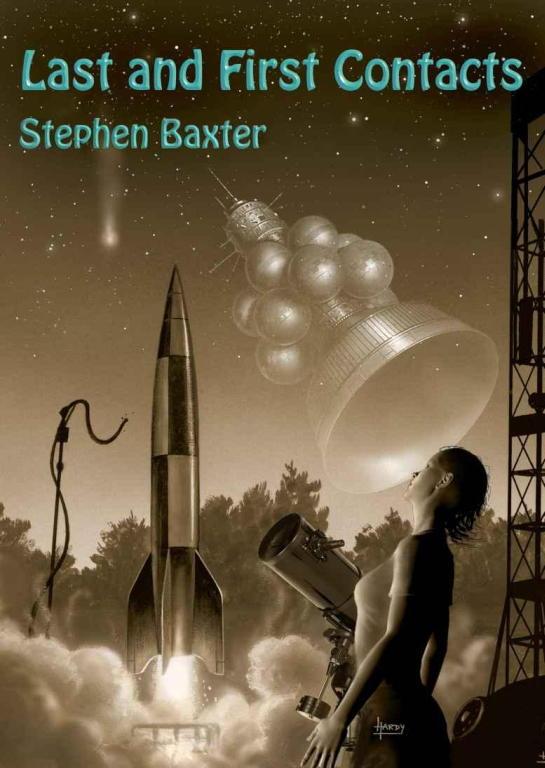
Last and First Contacts
Stephen Baxter is one of preeminent science fiction writers of the current age. This collection showcases his work at its best.Last and First Contacts features ten exceptional stories personally selected by the author, none of which have been collected before and one of which, “Erstkontakt”, is brand new, having been written especially for this book. Also included is “Last Contact”, which was shortlisted for the Hugo Award.
|
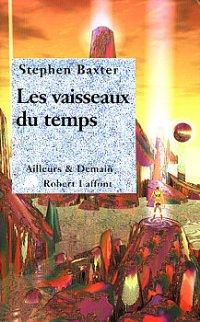
Les vaisseaux du temps
La machine à explorer le temps est le texte fondateur de la science-fiction moderne. Lorsque s’achève le récit de H. G. Wells, le Voyageur se prépare à repartir dans le futur sauver Weena, la charmante Eloï, menacée par les cruels Morlocks…Par une chance extraordinaire, la narration de ce second voyage est parvenue à Stephen Baxter, un siècle exactement après la parution, en 1895, de La machine à explorer le temps.En voici la fidèle et surprenante transcription.Il n’est pas nécessaire pour le goûter d’avoir lu le récit du premier voyage.Reparti dans un lointain avenir, le Voyageur surpris découvre un monde différent de celui qu’il avait exploré, où les Morlocks disposent d’une civilisation technologique avancée et ne ressemblent plus aux barbares qu’il a connus.Flanqué du Morlock Nebogipfel, il s’aventurera sur les Vaisseaux du temps jusqu’aux confins du temps et de l’espace, des univers parallèles et des possibles.Sans jamais perdre l’espoir de retrouver la délicieuse Weena.Les vaisseaux du temps, dans la tradition de la plus haute science-fiction britannique, celle de Wells, de Stapledon, de Brunner, de Ballard, d’Aldiss et de Banks, est à la fois un roman d’aventures et un conte philosophique.C’est sans doute l’un des plus grands textes de science-fiction de la décennie. Il a obtenu le British Science-Fiction Award 1996, le John Campbell Memorial Award 1996 et le Philip K. Dick Award 1997, et il a figuré parmi les cinq finalistes du prix Hugo en 1996.
|
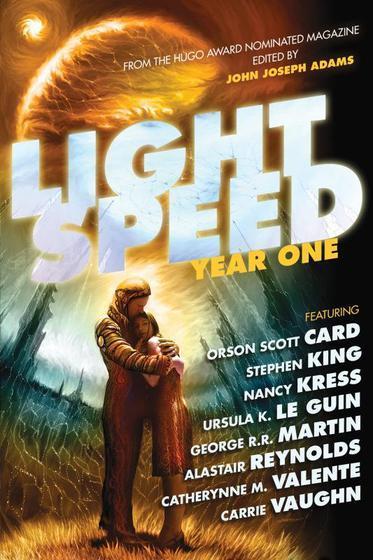
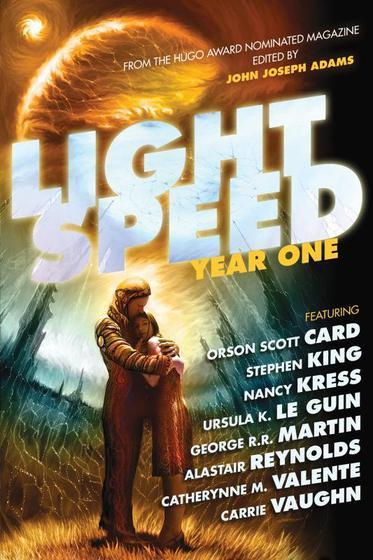
Lightspeed: Year One
Lightspeed (www.lightspeedmagazine.com) is the critically-acclaimed, online science fiction magazine edited by bestselling anthologist John Joseph Adams. Lightspeed publishes all types of science fiction, from near-future, sociological soft sf, to far-future, star-spanning hard sf, and anything and everything in between. Each month, Lightspeed features a mix of originals and reprints, from a variety of authors - from the bestsellers and award-winners you already know to the best new voices you haven''t heard of yet. Now, in Lightspeed: Year One, you will find all of the fiction published in Lightspeed''s first year, from new stories such as Nebula Award finalists, Vylar Kaftan''s "I''m Alive, I Love You, I''ll See You in Reno" and "Arvies" by Adam-Troy Castro, and Carrie Vaughn''s Hugo Award-nominee "Amaryllis," to classic reprints by Stephen King, Ursula K. Le Guin, George R. R. Martin, and more.
|
Lightspeed: Year One
Lightspeed (www.lightspeedmagazine.com) is the critically-acclaimed, online science fiction magazine edited by bestselling anthologist John Joseph Adams. Lightspeed publishes all types of science fiction, from near-future, sociological soft sf, to far-future, star-spanning hard sf, and anything and everything in between. Each month, Lightspeed features a mix of originals and reprints, from a variety of authors—from the bestsellers and award-winners you already know to the best new voices you haven't heard of yet. Now, in Lightspeed: Year One, you will find all of the fiction published in Lightspeed's first year, from new stories such as Nebula Award finalists, Vylar Kaftan’s “I’m Alive, I Love You, I’ll See You in Reno” and “Arvies” by Adam-Troy Castro, and Carrie Vaughn’s Hugo Award-nominee “Amaryllis,” to classic reprints by Stephen King, Ursula K. Le Guin, George R. R. Martin, and more.
|
Luz de otros tiempos
La historia de lo que sucede cuando un brillante industrial aprovecha los beneficios de la física cuántica. Así consigue que cualquier persona pueda ver lo que hace otra desde cualquier sitio en cualquier situación. Las esquinas y paredes ya no son barreras, todo momento de la existencia por muy privado o íntimo que sea queda expuesto a los demás. Esta nueva tecnología supone la súbita abolición de la intimidad humana… para siempre. Mientras que los hombres y mujeres afrontan el trauma de la nueva situación, esta misma tecnología demostrará ser capaz de mirar también en el pasado. Nada puede prepararnos para lo que vendrá después: el descubrimiento de lo que hay de verdad y mentira a lo largo de los miles de años de historia humana tal y como la conocíamos. Como consecuencia de este saber, los gobiernos son derribados, las religiones caen, las bases de la sociedad humana tiemblan desde su propia raíz. Marca un cambio fundamental en la condición humana provocando la desesperación, el caos, y quizás, también la oportunidad de trascender como raza. Luz de otros días es un tour de force, un evento para el próximo milenio y una narración que no olvidarás.
|
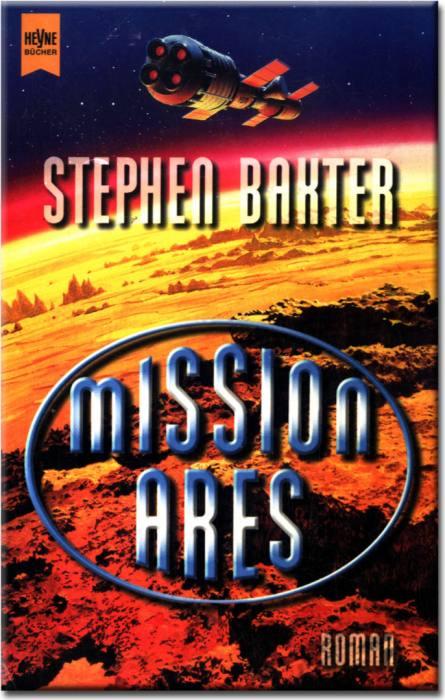
Mission Ares
Wenn die Kugeln von Dallas John F. Kennedy verfehlt hätten, stünde die amerikanische Flagge heute nicht nur auf dem Mond, sondern auch auf dem Mars.Eine atemberaubende Vorstellung - doch der Aufbruch zum Roten Planeten steckt voller Gefahren und Rückschläge...Ein neues aufregendes SF-Abenteuer des gefeierten Autors von »Zeitschiffe« und »Das floß« Titel der englischen Originalausgabe "Voyage"
|
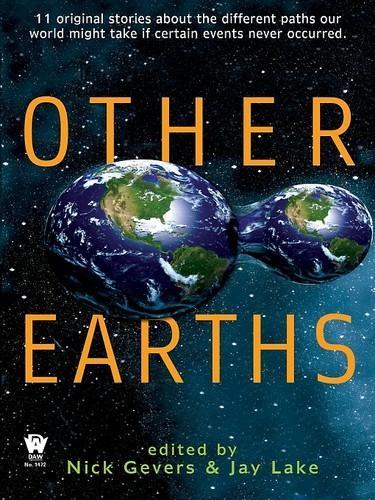
Other Earths
one world among many…eleven stories about them allWhat if Lincoln never became president, and the Civil War never took place? What if Columbus never discovered America, and the Inca developed a massive, technologicallyadvanced empire? What if magic was real and a half-faerie queen ruled England? What if an author discovered a book written by an alternate version of himself?These are just some of the possible pathways that readers can take to explore the Other Earths that may be waiting just one page away.
|
Other Worlds Than These
What if you could not only travel any location in the world, but to any possible world?We can all imagine such “other worlds”—be they worlds just slightly different than our own or worlds full of magic and wonder—but it is only in fiction that we can travel to them. From The Wizard of Oz to The Dark Tower, from Philip Pullman’s The Golden Compass to C. S. Lewis’s The Chronicles of Narnia, there is a rich tradition of this kind of fiction, but never before have the best parallel world stories and portal fantasies been collected in a single volume—until now.Review“Anthologist Adams presents readers with a wide variety of alternate Earths, some only slightly askew and others completely unfamiliar. […] Adams’s selections are mirrors reflecting one other with the best images of alternate realities. Readers will greatly enjoy this exploration of our world's foremost and ascendant speculative authors.”—Publishers Weekly (Starred Review)“Reminds longtime readers of fantasy and sci-fi what we love about the genre, while also and aptly demonstrating to newcomers that these stories are about so much more than dragons and multitentacled monsters. It comes highly recommended to both and all.”—Bookgasm
|
Project Hades
Are you sure this didn’t almost happen?
|