HomeLib
Books without sequence (Burke James Lee)
The Best American Mystery Stories 2009

fb2
In this chilling portrait of America’s Sin City, lady luck is just as likely to dispense cold hard cash as a cold-hearted killing. Akashic Books continues its groundbreaking series of original noir anthologies, launched in 2004 with Brooklyn Noir. Each story is set in a distinct neighborhood or location within the city of the book. Brand-new stories by: John O’Brien, David Corbett, Scott Phillips, Nora Pierce, Tod Goldberg, Bliss Esposito, Felicia Campbell, Jaq Greenspon, José Skinner, Pablo Medina, Christine McKellar, Lori Kozlowski, Vu Tran, Celeste Starr, Preston L. Allen, and Janet Berliner.
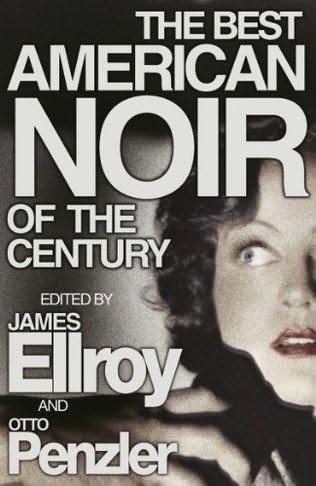
The Best American Noir of the Century

fb2
In his introduction to the The Best American Noir of the Century, James Ellroy writes, 'noir is the most scrutinized offshoot of the hard-boiled school of fiction. It's the long drop off the short pier and the wrong man and the wrong woman in perfect misalliance. It's the nightmare of flawed souls with big dreams and the precise how and why of the all-time sure thing that goes bad.' Offering the best examples of literary sure things gone bad, this collection ensures that nowhere else can readers find a darker, more thorough distillation of American noir fiction.James Ellroy and Otto Penzler, series editor of the annual The Best American Mystery Stories, mined one hundred years of writing - 1910-2010 - to find this treasure trove of thirty-nine stories. From noir's twenties-era infancy come gems like James M. Cain's 'Pastorale,' and its post-war heyday boasts giants like Mickey Spillane and Evan Hunter. Packing an undeniable punch, diverse contemporary incarnations include Elmore Leonard, Patricia Highsmith, Joyce Carol Oates, Dennis Lehane, and William Gay, with many page-turners appearing in the last decade.
The Glass Rainbow

fb2
James Lee Burke's eagerly awaited new novel finds Detective Dave Robicheaux back in New Iberia, Louisiana, and embroiled in the most harrowing and dangerous case of his career. Seven young women in neighboring Jefferson Davis Parish have been brutally murdered. While the crimes have all the telltale signs of a serial killer, the death of Bernadette Latiolais, a high school honor student, doesn't fit: she is not the kind of hapless and marginalized victim psychopaths usually prey upon. Robicheaux and his best friend, Clete Purcel, confront Herman Stanga, a notorious pimp and crack dealer whom both men despise. When Stanga turns up dead shortly after a fierce beating by Purcel, in front of numerous witnesses, the case takes a nasty turn, and Clete's career and life are hanging by threads over the abyss.Adding to Robicheaux's troubles is the matter of his daughter, Alafair, on leave from Stanford Law to put the finishing touches on her novel. Her literary pursuit has led her into the arms of Kermit Abelard, celebrated novelist and scion of a once prominent Louisiana family whose fortunes are slowly sinking into the corruption of Louisiana's subculture. Abelard's association with bestselling ex-convict author Robert Weingart, a man who uses and discards people like Kleenex, causes Robicheaux to fear that Alafair might be destroyed by the man she loves. As his daughter seems to drift away from him, he wonders if he has become a victim of his own paranoia. But as usual, Robicheaux's instincts are proven correct and he finds himself dealing with a level of evil that is greater than any enemy he has confronted in the past.Set against the backdrop of an Edenic paradise threatened by pernicious forces, James Lee Burke's The Glass Rainbow is already being hailed as perhaps the best novel in the Robicheaux series.
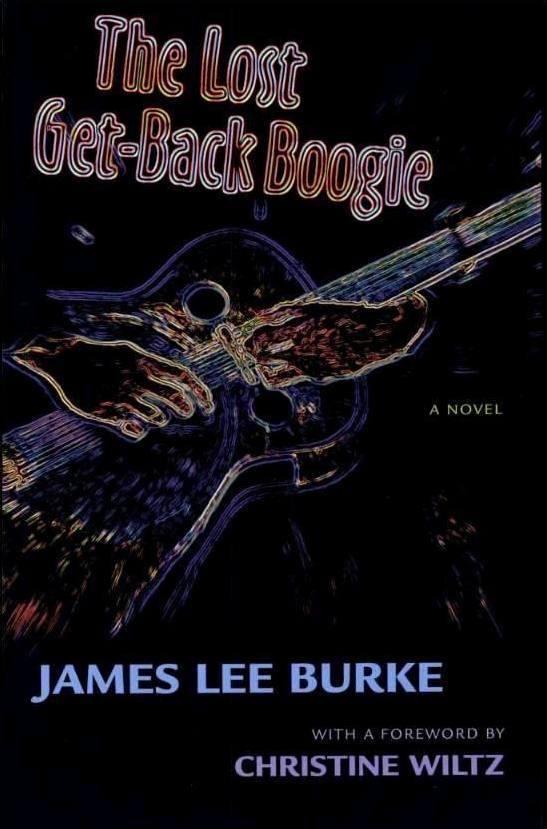
The Lost Get-Back Boogie

fb2
Iry Paret's done his time — two years for manslaughter in Louisiana's Angola State Penitentiary. Now the war vet and blues singer is headed to Montana, where he hopes to live clean working on a ranch owned by the father of his prison pal, Buddy Riordan. In prison, Iry tinkered with a song — “The Lost Get-Back Boogie” — that never came out quite right. Now, the Riordan family's problems hand him a new kind of trouble, with some tragic consequences. And Iry must get the tune right at last, or pay a fateful price.
The Neon Rain

fb2
From Publishers WeeklyBurke's sixth novel pits New Orleans homicide detective Dave Robichaux against the mob, the contras, the Feds and just about all the other cops. The trouble starts when Robichaux insists on investigating the murder of a young prostitute and discovers that it isn't only the crooks who don't want the truth to come out: the police don't want it revealed, either. The underworld and the authorities combine to cobble up a frame against Robichaux, and suddenly he's on the run. Burke's maverick detective and his gritty, realistic dialogue and convoluted plotting are reminiscent of Elmore Leonardwhose latest novel, Bandits, has a contra angle, too. The matter of subterranean government policy running amok suits the world of suspense fiction well, serving it in the 1980s the way Cold War themes fed the genre in earlier decades. With its fine local color and driving action, this novel is both chilling and first-rate entertainment.
The Tin Roof Blowdown

fb2
Tight plotting, Solid FinishBecause he’s a damn good writer James Lee Burke knows how to keep a plot going from start to finish with no loose ends or out-of-the-blue surprises that amateurishly attempt to explain and finish off a narrative. He easily weaves several ancillary situations into the story line of The Tin Roof Blowdown. These are of interest on their own, but more importantly they serve to expand and add often curious layers to the main show that centers around the eye of mayhem left behind by a pair of hurricanes.I bring this up since I just finished reading a book by Jeffrey Deaver titled The Cold Moon. The bad guy, a most interesting sociopath called The Watchmaker who is a brilliant killer with machinations of Machiavellian stature, is the author of a poem about a cold moon, so one would suppose that he would figure prominently in the denouement of the novel. He doesn’t. Not at all. He escapes from the cops and vanishes from the book with nearly one-hundred pages left, obviously setting a not-so-subtle stage for a return in another Deaver effort. This strikes me as venal artifice by a writer who certainly has reached a point of financial and critical security where such shenanigans are unnecessary and beneath him.None of this fakery for Burke. From the first book I read by him years ago, The Neon Rain to others that included Black Cherry Blues, The Lost Get-Back Boogie, Jolie Blon’s Bounce, and now this one, Burke has played it straight telling his stories and making sure loose ends are tied up when the last page is read. And like I said he can write.I said he smiled. That’s not quite right. Jude shined the world on and slipped its worst punches and in a fight knew how to swallow his blood and never let people know he was hurt. He had his Jewish mother’s narrow eyes and chestnut hair, and he combed it straight back in a hum, like a character in a 1930s movie. Somehow he reassured others that the earth was a good place, that the day was a fine one, and that good things were about to happen to all of us.Tight, succinct descriptions like the one above or similarly structured vignettes connect and in doing so glide the reader from scene to scene. None of this is as easy as Burke makes it look. That’s called skill. He’s got it in spades.But this is to be expected of a man who’s written more than twenty-five novels, a man who divides his time between seemingly disparate locations – Missoula, Montana and New Iberia, Louisiana. Living in these two places seems to give him an expanded and sympathetic view of the world and those of us who bump and grind our way through it making his characters and their short comings easily assimilated, allowing the reader to experience sympathy and often empathy.The setting of The Tin Roof Blowdown is largely post-apocalypse Louisiana following the devastation wrought by first Hurricane Katrina then Rita. The landscape has been reduced to a naturally nuked wasteland where murder, rape and theft are the order of the day perpetrated by both punks run amok and many cops. Iberia Parish Sheriff’s Detective Dave Robicheaux is deployed to New Orleans, the once grand city now reduced to a feudal state without electrical power, clean water, food or any sense of societal order. Bloated bodies – humans, cats, dogs – float in flooded streets or lie tangled in downed, shattered trees. In this chaos Robicheaux must locate two serial rapists, a morphine-addicted priest, and a vigilante who quite possibly is more dangerous than the thugs looting the city and shooting at rescue helicopters overhead. Based on past books, just another day at the office for Robicheaux. Burke’s got so much going on here that it would be easy for him to inadvertently confuse the reader, if not himself, beyond salvation allowing the book to devolve into a miasma of none-related tales – a rag-tag collection of short stories pretending to be a novel.Again his skill and also confidence as a writer never allows this to happen. Not even close. Each section and chapter advances the drama logically and without undo cliff hangings. A good example is when a killer stalking the detective’s daughter is spotted outside a cabin.Out among the willows, I saw the solitary fisherman lean down in his boat and pick up something from the bottom. He knocked his hat off his head to give himself better vision and raised the rifle to his shoulder. I could not make out the features of his face, but the moon had started to rise and I saw the light gleam on his bald head inside the shadows.I was already out the screen door and running down the slope when he let off the first round.So many mystery writers would then wander off for a chapter or several on another tangent leaving a person wondering what’s going on back at the bayou. Not Burke. He again displays his confidence by moving directly forward with the above scene in the next chapter. He knows that each element in his books can stand on its own and doesn’t need the tired device of leaving the reader up in the air for pages on end to maintain interest in the overall narrative arc.And Burke slips in sharp, humorous observations on the human condition throughout the book like this one following an argument between Robicheaux and his wife, a former nun.I just went outside and started the truck, my face hot, my ears ringing with the harshness of our exchange. The yard had fallen into shadow and cicadas were droning in the trees, like a bad headache that won’t go away. Just as I was backing into the street, regretting my words, trying to accept Molly’s anger and hurt feelings, she came out on the gallery and waved good-bye.That’s what happens when you marry nuns.For those who’ve not yet read Burke, The Tin Roof Blowdown is a great place to start. For those who are already fans of his, this mystery is merely one more top-notch effort by a most talented author.
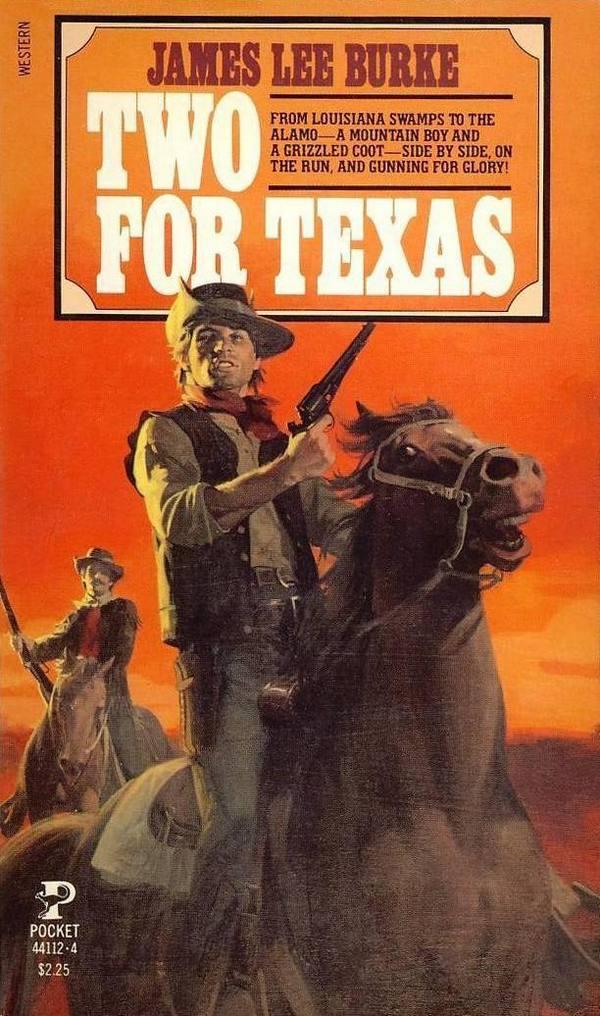
Two for Texas

fb2
Everyone tried to put them under — Indians, French prison guards, bounty hunters — and the whole Mexican army!A narrow escape from a Louisiana penal colony and a hazardous trek south and west made fast friends of young Tennessean Son Holland and Hugh Allison — a tough old mercenary who knew every trick of survival in the wild land and could read a man 200 yards away on horseback.Kicking up dust through the open plains of Texas, they fought, stole, hid out with Choctaws, and killer their way to Sam Houston's army — to rout Santa Anna and his Mexican hordes, and avenge the Alamo!
White Doves at Morning

fb2
'White doves come at morning Where my soldier sleeps in the ground. I placed my ring in his coffin, The trees o'er his grave have all turned brown.' Set mainly in Louisiana during the years 1861 1868, this passionate novel of men, women and war tells the story of the author's ancestor, Confederate soldier Willie Burke. A classic Burke hero, innately moral to the point of lunacy, Willie is soon in conflict with his superiors. As his best friend Jim Stubblefield observes: 'the juncture of Willie Burke and the Confederate Army is akin to the meeting of a wrecking ball and a crystal shop.' The characters who people these pages, many of them based on real historical figures, are as memorable as any Burke has created. Mulatto, Flower Jamison, victim of terrible abuse that never touches her soul, determined to better herself; Quaker abolitionist Abigail Dowling, whose Unionist sympathies put her in constant danger; Colonel Ira Jamison, rotten to his core yet who would rise from a cesspit smelling of roses; these and many others stay powerfully in the mind in this epic tale. Like all the best war novels, WHITE DOVES AT MORNING concentrates not on battles but on the edges of grand events, the detritus that wars create, the human cost, and, in this case, the terrible aftermath.
< 1 2 >