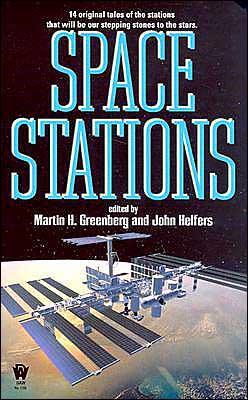
Catopolis
Seventeen original stories about the 'city of cats'Set in a world that exists on the same plane as humans, yet is hidden from us, Catopolis introduces readers to an assortment of cats, ranging from a feline Seer who must take destiny into her own paws to defeat a dictatorial tomcat thug…to a black cat who can call upon the powers of the 'big cats' to wage a war against evil…to a cat who would be king…to the ins and outs of cat politics and the perils of using mice as ballots…to a cat burglar looking for a musical treasure for his 'boss.'
|
Pandora's Closet
Nineteen original tales of the pandora legend-as no one has ever imagine it before.When Pandora's Box was opened, so the ancient tale goes, all the evils that would beset humanity were released into the world. When the box was all but empty, the only thing that remained was hope. Now some of fantasy's finest writers have taken on the task of opening Pandora's closet. It is naturally chock full of an assortment of items, including a ring that can bring its wearer infinite health, a special helmet found in the most unlikely of places, a mysterious box that holds a legendary piece of cloth, and a red hoodie that transforms a woman's world. These stories are of items claimed by people, but only at their own peril. After indulging in these stories, readers will certainly look at their own closets in a whole new light.
|
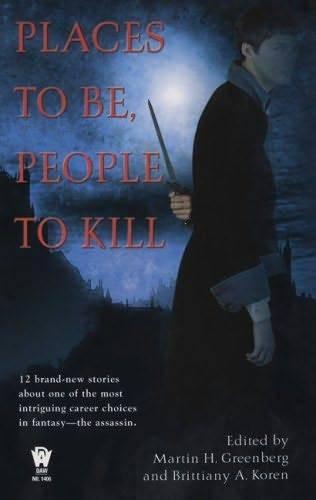
Places To Be, People To Kill
An anthology of stories Martin H Greenberg and Brittany A KorenAssassins-are they born or made? Do they choose this role out of necessity, because they are forced to, or because they enjoy killling? And what do they do in their spare time?These are just a few of the questions answered in this all-original collection of twelve tales by fantasy's finest-focusing on killers of all kinds. From Vree, Tanya Huff's well-known assassin from her Quarters novels, to a woman whose father's vengeful spirit forced her down dark magic's bloody path, to an assassin seeking to escape his Master's death spell, here are spellbinding stories of murder and mayhem, and the shadowy figures who sell death for a living.
|
Space Stations
15 all-new stories of tomorrow from 15 of the best sci-fi writers of todayThe challenge and lure of space exploration has long been fertile ground for some of the finest science fiction stories. Here, fifteen of the best chroniclers of the day after tomorrow present unique tales of space stations both in our own solar system and far beyond.From BooklistThis neat little theme anthology contains a satisfying mixture of old hands’ and newcomers’ stories. In the opener, Timothy Zahn’s “The Battle of Space Fort Jefferson,” a space fort that is crumbling into disrepair as an unpopular tourist destination wins its first battle—finally—though only by means of the vagaries of decaying equipment. In Jean Rabe’s “Auriga’s Streetcar,” a gem of a piece, an old “spacer” finds herself on the way to a distant star in the belly of an even older space observatory towed by unknown aliens. Robert J. Sawyer’s “Mikeys” relates the work of those who go almost to the target and the unexpected event that brings them to the forefront. The closer, Gregory Benford’s “Station Spaces,” is a doozy about what happens when human merges with machine, and the building of human habitation on Luna. Despite, or possibly as a result of, a literally (i.e., spacially) limited topic, these stories cover a lot of ground.Regina Schroeder
|
Space Stations
15 all-new stories of tomorrow from 15 of the best sci-fi writers of todayThe challenge and lure of space exploration has long been fertile ground for some of the finest science fiction stories. Here, fifteen of the best chroniclers of the day after tomorrow present unique tales of space stations both in our own solar system and far beyond.From BooklistThis neat little theme anthology contains a satisfying mixture of old hands' and newcomers' stories. In the opener, Timothy Zahn's “The Battle of Space Fort Jefferson,” a space fort that is crumbling into disrepair as an unpopular tourist destination wins its first battle—finally—though only by means of the vagaries of decaying equipment. In Jean Rabe's “Auriga's Streetcar,” a gem of a piece, an old “spacer” finds herself on the way to a distant star in the belly of an even older space observatory towed by unknown aliens. Robert J. Sawyer's “Mikeys” relates the work of those who go almost to the target and the unexpected event that brings them to the forefront. The closer, Gregory Benford's “Station Spaces,” is a doozy about what happens when human merges with machine, and the building of human habitation on Luna. Despite, or possibly as a result of, a literally (i.e., spacially) limited topic, these stories cover a lot of ground.Regina Schroeder
|