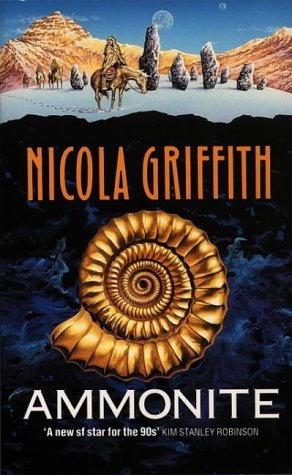
Ammonite
A first novel — winner in 1993 of both the James Tiptree, Jr. Memorial Award & the Lamda Award for lesbian science fiction & fantasy“Ammonite is a marvelous blend of high adventure and mind-boggling social speculation—it marks the arrival of Nicola Griffith as a new sf star for the 90s.”—KIM STANLEY ROBINSONChange or die. The only options available on the Durallium Company-owned planet GP. The planet’s deadly virus had killed most of the original colonists — and changed the rest irrevocably. Centuries after the colony had lost touch with the rest of humanity, the Company returned to exploit GP, and its forces found themselves fighting for their lives. Afraid of spreading the virus, the Company had left its remaining employees in place, afraid and isolated from the natives.Then anthropologist Marghe Taishan arrived on GP, sent to test a new vaccine against the virus. As she risked death to uncover the natives’ biological secret, she found that she, too, was changing, and realized that not only had she found a home on GP — she herself carried the seeds of its destruction. |
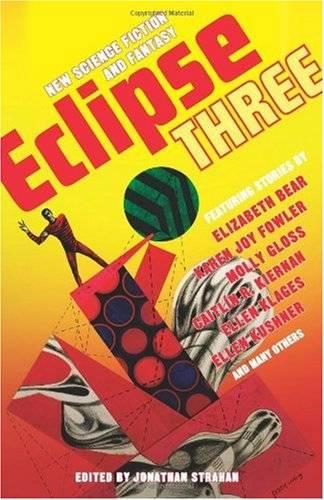
Eclipse Three
In a brilliant, wide-ranging anthology, Strahan presents stories by authors as diverse as Karen Joy Fowler, Elizabeth Bear, and Paul Di Filippo. Ellen Klages contributes “Lotion,“ a story about imaginary numbers and the strange powers of math, in which a young girl discovers the magical potential of pure math. Ellen Kushner’s “Dolce Domum” is, perhaps, not about what its characters think it is. Bear’s “Swell” is a fairy tale about a musician seeking her voice, in which a mermaid’s gift is not as wonderful as at first glance it seems. Molly Gloss’ “The Visited Man” presents a lonely pensioner who lives upstairs from le douanier Rousseau and the relationship that develops after the painter brings the retiree a stray cat. As for the previous Eclipse anthologies, Strahan has picked stories whose authors care about both the craft of storytelling and the stories they tell. Each piece is distinctive and haunting.
|
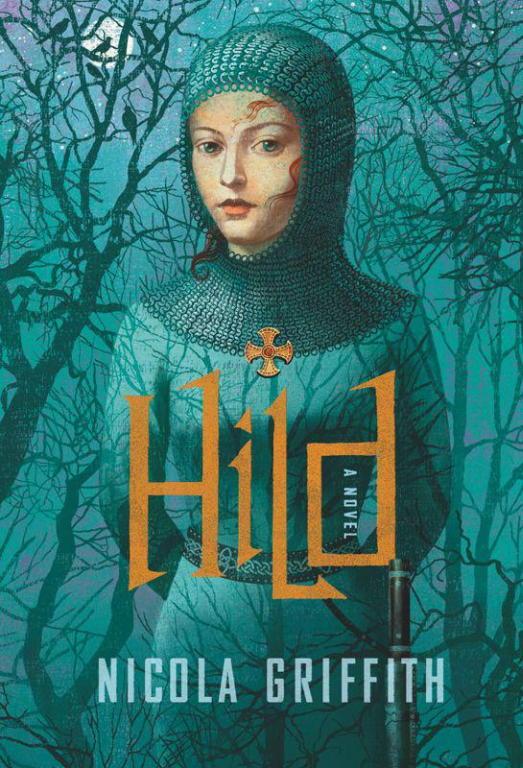
Hild
A brilliant, lush, sweeping historical novel about the rise of the most powerful woman of the Middle Ages: HildIn seventh-century Britain, small kingdoms are merging, frequently and violently. A new religion is coming ashore; the old gods are struggling, their priests worrying. Hild is the king’s youngest niece, and she has a glimmering mind and a natural, noble authority. She will become a fascinating woman and one of the pivotal figures of the Middle Ages: Saint Hilda of Whitby.But now she has only the powerful curiosity of a bright child, a will of adamant, and a way of seeing the world—of studying nature, of matching cause with effect, of observing her surroundings closely and predicting what will happen next—that can seem uncanny, even supernatural, to those around her.Her uncle, Edwin of Northumbria, plots to become overking of the Angles, ruthlessly using every tool at his disposal: blood, bribery, belief. Hild establishes a place for herself at his side as the king’s seer. And she is indispensable—unless she should ever lead the king astray. The stakes are life and death: for Hild, for her family, for her loved ones, and for the increasing numbers who seek the protection of the strange girl who can read the world and see the future.Hild is a young woman at the heart of the violence, subtlety, and mysticism of the early Middle Ages—all of it brilliantly and accurately evoked by Nicola Griffith’s luminous prose. Working from what little historical record is extant, Griffith has brought a beautiful, brutal world—and one of its most fascinating, pivotal figures, the girl who would become St. Hilda of Whitby—to vivid, absorbing life.
|
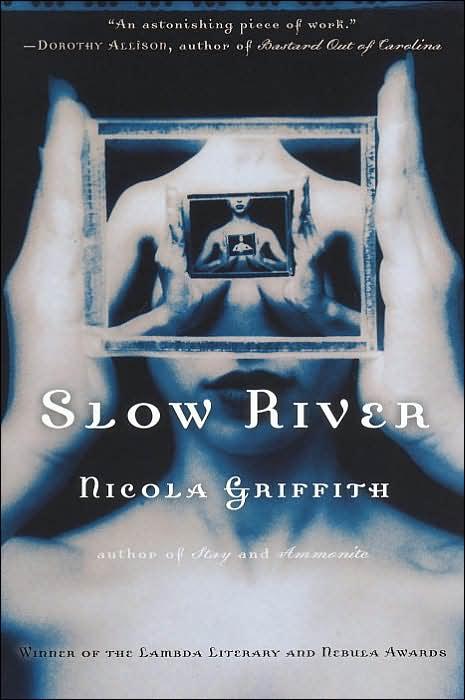
Slow River
The Nebula Award Winner–1996She awoke in an alley to the splash of rain. She was naked, a foot-long gash in her back was still bleeding, and her identity implant was gone. Lore Van Oesterling had been the daughter of one of the world’s most powerful families… and now she was nobody, and she had to hide.Then out of the rain walked Spanner, predator and thief, who took her in, cared for her wound, and taught her how to reinvent herself again and again. No one could find Lore now: not the police, not her family, and not the kidnappers who had left her in that alley to die. She had escaped… but the cost of her newfound freedom was crime and deception, and she paid it over and over again, until she had become someone she loathed.Lore had a choice: She could stay in the shadows, stay with Spanner… and risk losing herself forever. Or she could leave Spanner and find herself again by becoming someone else: stealing the identity implant of a dead woman, taking over her life, and creating a new future.But to start again, Lore required Spanner’s talents—Spanner, who needed her and hated her, and who always had a price. And even as Lore agreed to play Spanner’s game one final time, she found that there was still the price of being a Van Oesterling to be paid. Only by confronting her family, her past, and her own demons could Lore meld together who she had once been, who she had become, and the person she intended to be…
|