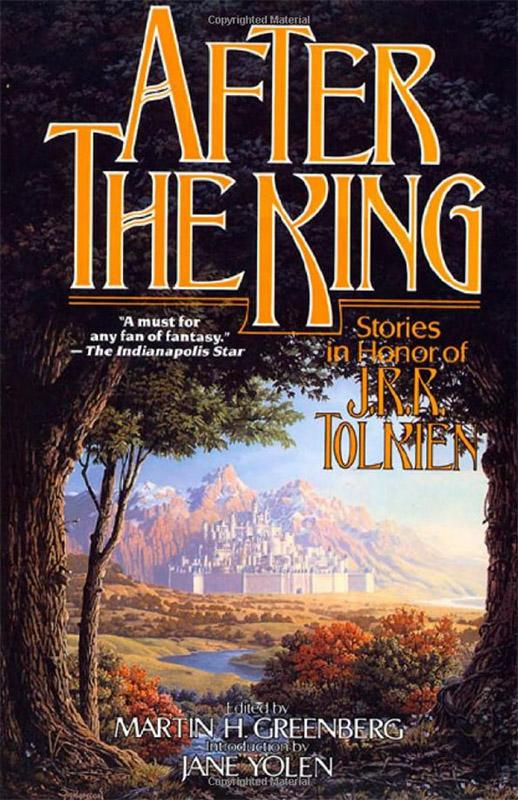
After the King: Stories in Honor of J.R.R. Tolkien
From Library Journal: A cautionary tale by Stephen R. Donaldson ("Reeve the Just"), a whimsical ad venture in miniature by Dennis L. McKiernan ("The Halfling House"), and a tribute to the art of storytelling by Charles de Lint ("The Conjure Man") il lustrate the variety of this collection of 19 stories written to celebrate the centennial of Tolkien's birth. Although fans of Middle Earth may be disappointed that none of these tales draw directly from Tolkien's world, discerning readers will find the unmistakable stamp of the master concealed in the heart of each story. All in all, this solid collection of fantasy belongs in most libraries. For a new edition of The Lord of the Rings and more on Tolkien, see Classic Returns, LJ 11/15/91. Copyright 1991 Reed Business Information, Inc. From Kirkus Reviews: Yet another Festschrift anthology by Greenberg, who has recently edited or coedited tributes to Isaac Asimov, Ray Bradbury, and H.P. Lovecraft, this time to honor the much-imitated author of The Hobbit and The Lord of the Rings. The difficulty with these projects is that the writers must retain the essential flavor of their own work while evoking somehow the style or subject or tone of the revered predecessor, and here--as in the Asimov, Bradbury, and Lovecraft volumes--the quality of the stories varies tremendously. The book leads off with an exceptionally good story by Stephen R. Donaldson, "Reave the Just", in which a legendary hero saves the day in a most unusual fashion. Emma Bull's "Silver or Gold", Peter S. Beagle's "The Naga", Judith Tarr's "Death and the Lady", and Patricia A. McKillip's "The Fellowship of the Dragon'' likewise evoke something of the spirit of Tolkien while offering wonderful, original tales in their authors' own strong voices. Meanwhile, John Brunner, Barry N. Malzberg, and Gregory Benford provide solid stories, but their connection to Tolkien is slight. Much that's unfortunately mediocre, and a few stories (such as Dennis L. McKiernan's "The Halfling House", egregious at 29 pages) that would have made Tolkien himself wince — but, still, the strongest tales here are among the best short-length fantasy of the year. -- Copyright ©1991, Kirkus Associates, LP. All rights reserved.
|
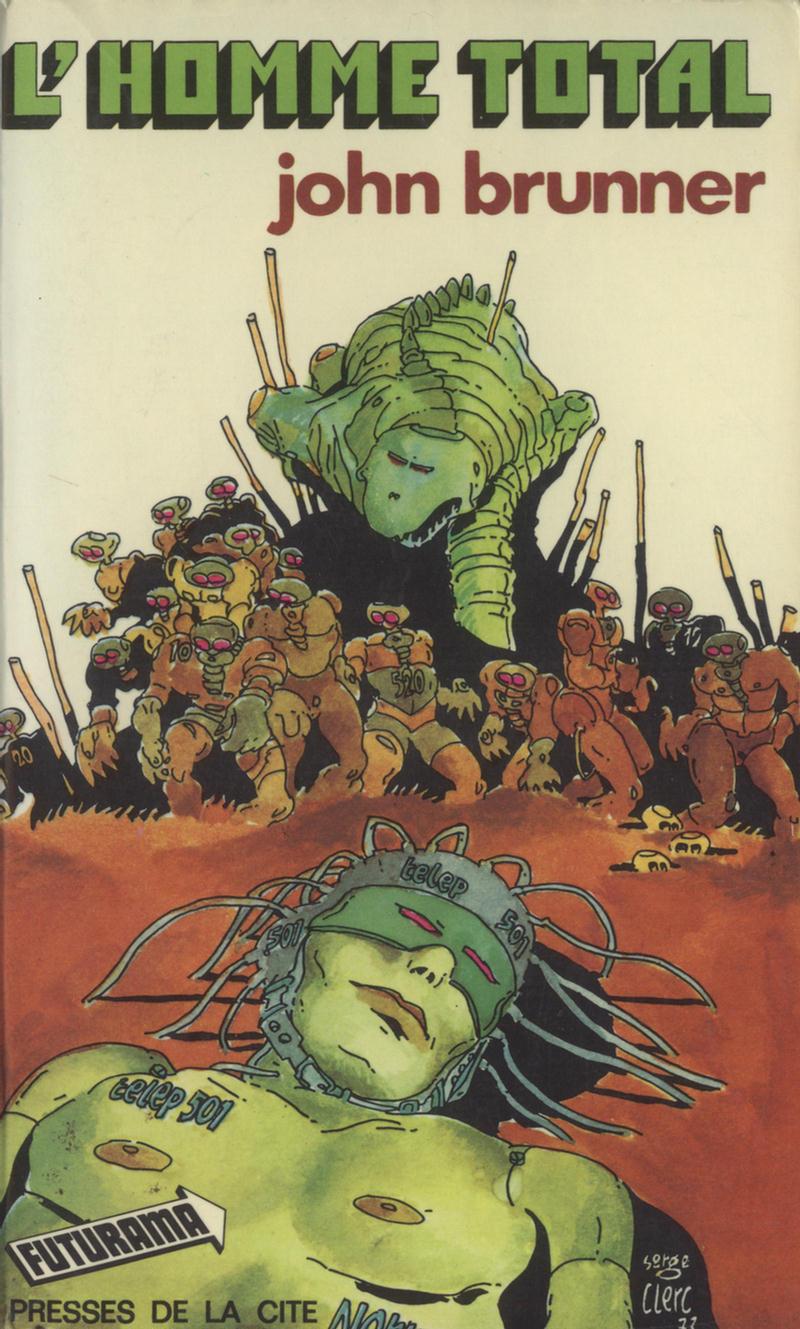
L'homme total
Il s’appelle Gerry Howson. Il est petit, il est laid, il est infirme. Mais il y a dans son esprit une formidable puissance. Elle lui permettra de survivre dans une cité traumatisée par les désordres civils, sillonnée par les forces de l’ONU, et parfois aussi par des gangsters. Elle fera de lui le thérapeute numéro un d’Oulan Bator, où se regroupe l’élite d’une bien surprenante « Organisation Mondiale de la Santé ». Elle sera sa seule arme lorsqu’il s’aventurera dans des contrées où l’on n’accède que par la pensée, et où s’affrontent barbares, tigres, magiciens et dragons. Mais cette puissance est aussi une malédiction, et la tentation perpétuelle de s’abîmer volontairement dans la folie et de mourir immobile, les yeux ouverts, et de la poussière aux lèvres…Sur un thème classique, – la télépathie –, John Brunner, dont on n’a pas oublié Tous à Zanzibar ni le Troupeau aveugle, prouve de nouveau qu’il est au premier rang de la science-fiction contemporaine.
|
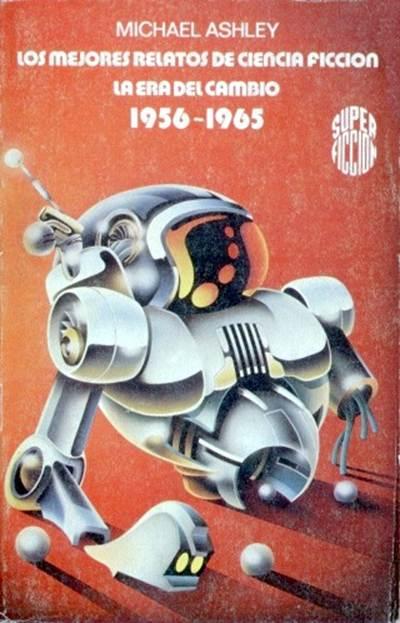
Los mejores relatos de ciencia ficción. La era del cambio 1956-1965
El decenio 1956-1965 marca una época crítica para la ciencia ficción. La reciente respetabilidad del género motivó la atención, muchas veces peligrosa, del cine y la televisión. El inicio de la Era espacial en octubre de 1957 parecía confirmar aquello de que la realidad supera a la ficción.Pero la crisis condujo a la renovación del género: cuantitativa, por la aparición de una pléyade de nuevos autores; cualitativa, por la revolución de la tématica, que abandona de una vez por todas la fascinación por la cacharrería espacial, sentándose nuevas normas de calidad, como demuestra el presente volumen.– Recopilación, Prefacio e Introducción de Michael Ashley
|
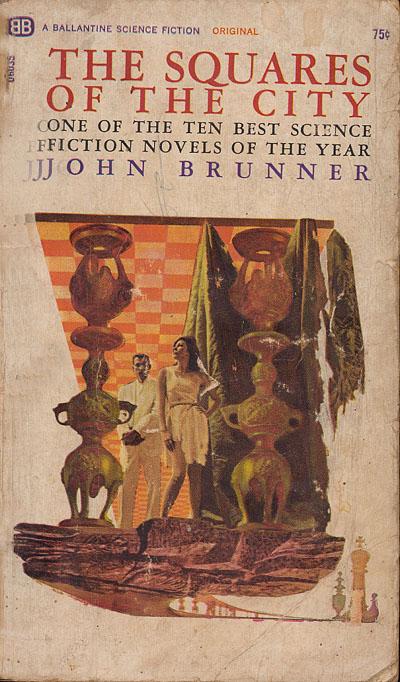
The Squares of the City
“The Squares of the City” is a tour-de-force, a disciplined exercise peopled originally by wooden or ivory or jade figurines, now fleshed and clothed and given dramatic life in a battle as ald as the classic conflict of chess. But these are real people. When heads roll, blood gounts out and drenches the remaining players while they watch in horrified fascination—until their turn comes.For it is a real game.And the players—especially the players—cannot tell the outcome. Even when their lives depend upon it.
|
The Squares of the City
It is a sociological story of urban class warfare and political intrigue, taking place in the fictional South American capital city of Vados. It explores the idea of subliminal messages as political tools, and it is notable for having the structure of the famous 1892 chess game between Wilhelm Steinitz and Mikhail Chigorin. The structure is not coincidental, and plays an important part in the story.Nominated for Hugo Award for Best Novel in 1966.
|
The Whole Man
Gerald Howson was born with a crippled body — but an immensely powerful telepathic mind that could heal the mentally traumatized — or send him into a world of his own creation.Published in UK as Telepathist.Portions of this novel are based on material previously published in substantially different form:City of the Tiger, 1958, Science Fantasy and Fantastic Universe magazines;The Whole Man, 1959, Science Fantasy magazine;Curative Telepath, 1959, Fantastic Universe magazine.Nominated for Hugo Award for Best Novel in 1965.
|
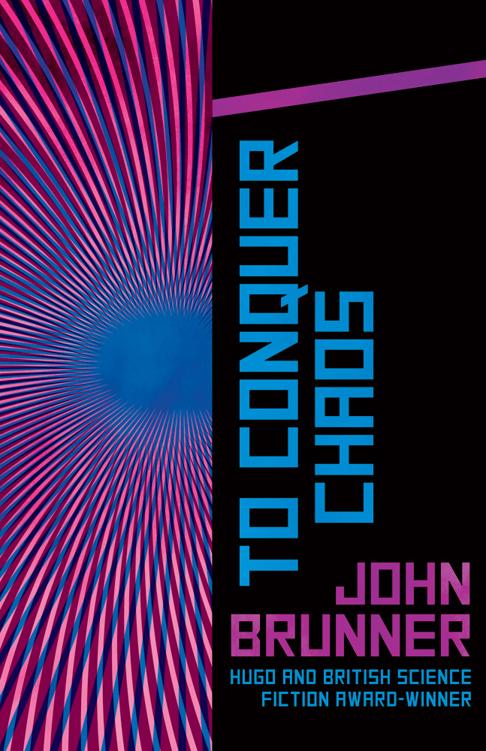
To Conquer Chaos
|