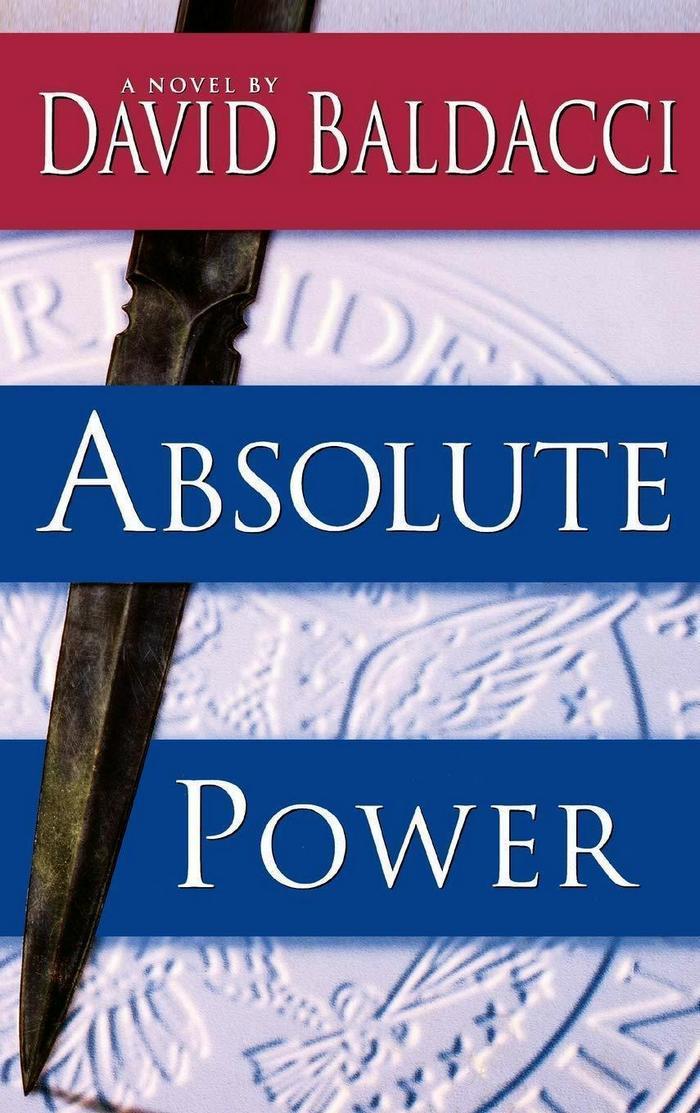
Absolute Power
The security system is state of the art. The carpeting costs a thousand dollars a square foot. It’s the perfect place for a lovers’ tryst between a rich man’s trophy wife and the most powerful man in the world. But someone is watching. And when the lovemaking turns deadly, someone will know the truth — and the full, penetrating reach of... Can the President of the United States get away with murder? The fictional answer to this question has set the literary world on fire and transformed David Baldacci into a household name and overnight success. Going beyond the classic works of John Grisham and Robert Ludlum, ABSOLUTE POWER combines the highest levels of political intrigue with big-money law, cutting-edge forensics, and the riveting search for a truth hidden within the power of the Oval Office. Luther Whitney is a rare combination of thief and honorable man. Now he’s the invisible eyewitness to an event that, if ever revealed, would shake America to its very roots. Inside the walk-in safe of a billionaire’s mansion, through the vault’s one-way-mirrored door, Luther can see everything that happens in the master bedroom just a few feet away. A woman is brutalized, and a cover-up is set in motion by the President’s most trusted aides. And the eyewitness is running for his life. From a million-dollar-a-job assassin to the punishing battles of a legal empire, from White House state dinners to the microscopic evidence unearthed from a string of gruesome murders, ABSOLUTE POWER masterfully plumbs the depths of human greed, power, and corruption. This is truly the reading experience of the year: thrilling, shattering, and as provocative as it is relentlessly suspenseful. |
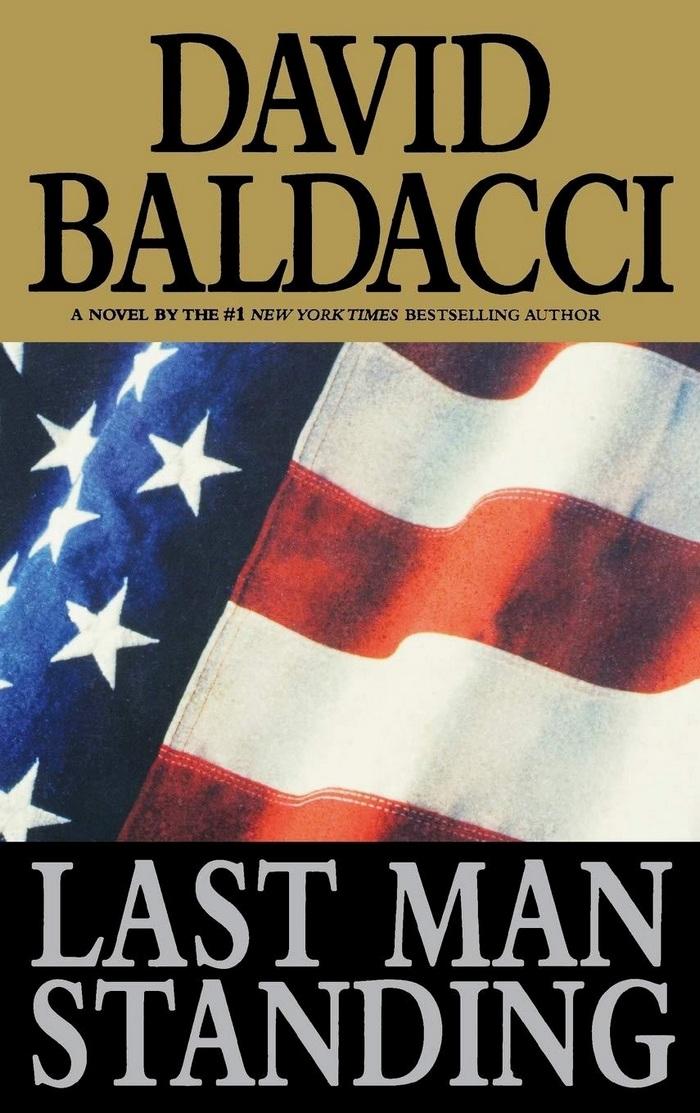
Last Man Standing
Since his astounding debut novel, Absolute Power, David Baldacci has delivered a series of stunning, bestselling thrillers — plunging readers into riveting, fast-paced dramas between the innocent and corrupt, killers and their targets. In his extraordinary new work, Baldacci uses his unsurpassed storytelling skills to explore the essence of survival itself, as a conspiracy of violence surrounds an FBI agent whose fate was to be the... It took ten seconds for Web London to lose everything: his friends, his team, his reputation. Point man of the FBI’s super-elite Hostage Rescue Team, Web roared into a blind alley toward a drug dealer’s lair, only to meet a high-tech, custom-designed ambush that killed everyone around him. Now coping with the blame-filled words of anguished widows and the suspicions of colleagues, Web tries to put his life back together with the help of his psychiatrist, Dr. Claire Daniels. To do so, he must discover why he was the one man who lived through the ambush — and find the only other person who came out of that alley alive... a ten-year-old boy who has since disappeared. |
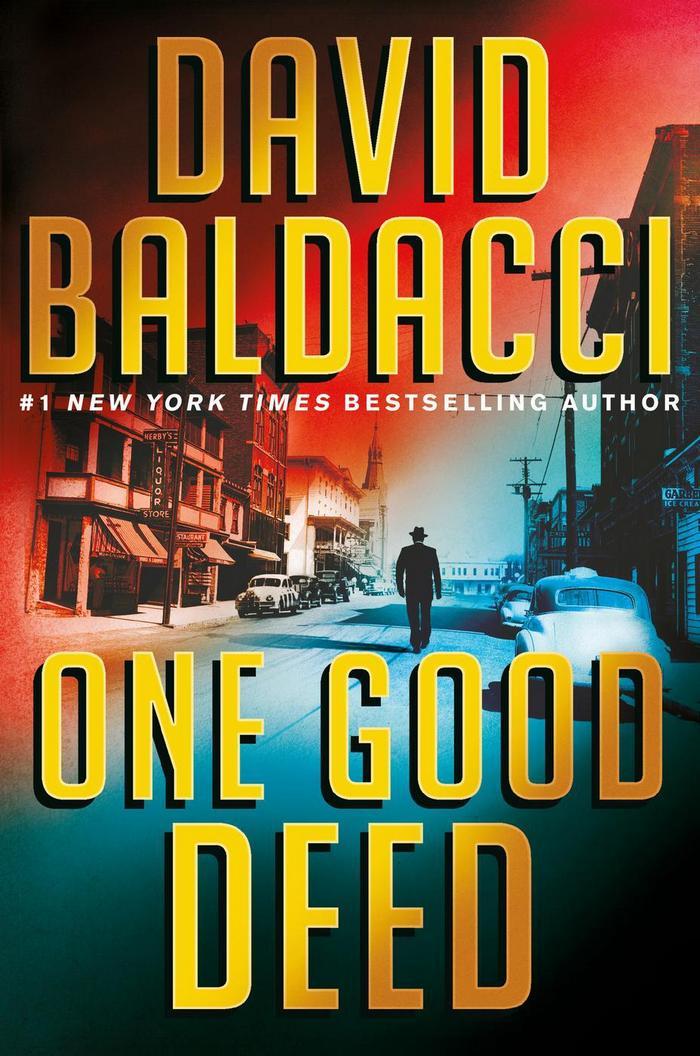
One Good Deed
It’s 1949. When war veteran Aloysius Archer is released from Carderock Prison, he is sent to Poca City on parole with a short list of do’s and a much longer list of don’ts: do report regularly to his parole officer, don’t go to bars, certainly don’t drink alcohol, do get a job — and don’t ever associate with loose women. The small town quickly proves more complicated and dangerous than Archer’s years serving in the war or his time in jail. Within a single night, his search for gainful employment — and a stiff drink — leads him to a local bar, where he is hired for what seems like a simple job: to collect a debt owed to a powerful local businessman, Hank Pittleman. Soon Archer discovers that recovering the debt won’t be so easy. The indebted man has a furious grudge against Hank and refuses to pay; Hank’s clever mistress has her own designs on Archer; and both Hank and Archer’s stern parole officer, Miss Crabtree, are keeping a sharp eye on him. When a murder takes place right under Archer’s nose, police suspicions rise against the ex-convict, and Archer realizes that the crime could send him right back to prison... if he doesn’t use every skill in his arsenal to track down the real killer. |
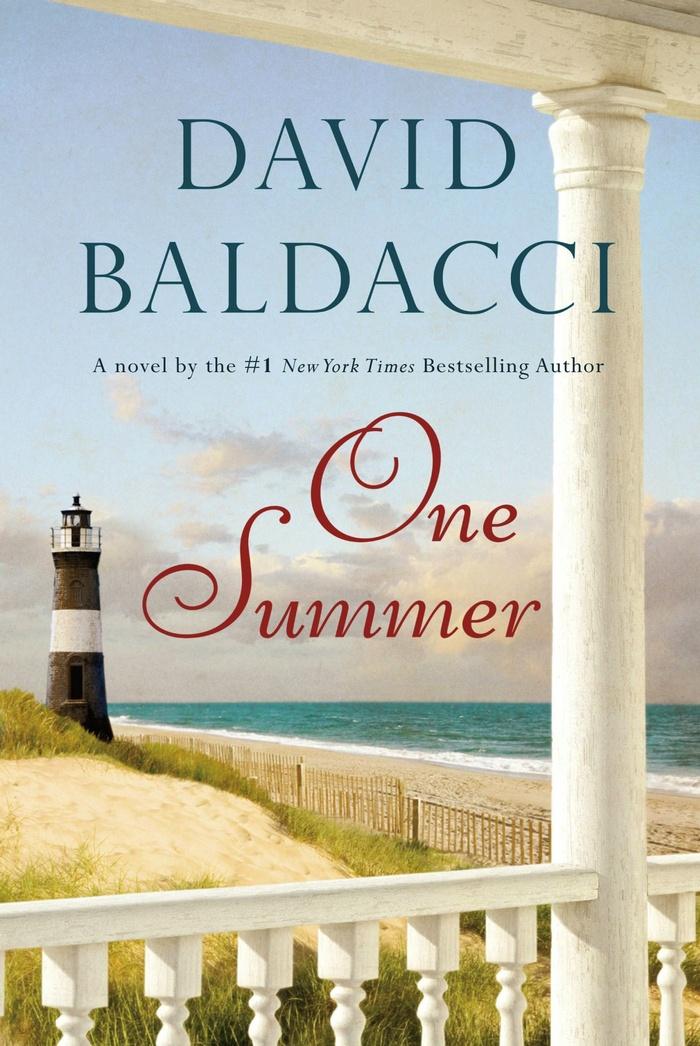
One Summer
It’s almost Christmas, but there is no joy in the house of terminally ill Jack and his family. With only a short time left to live, he spends his last days preparing to say goodbye to his devoted wife, Lizzie, and their three children. Then, unthinkably, tragedy strikes again: Lizzie is killed in a car accident. With no one able to care for them, the children are separated from each other and sent to live with family members around the country. Just when all seems lost, Jack begins to recover in a miraculous turn of events. He rises from what should have been his deathbed, determined to bring his fractured family back together. Struggling to rebuild their lives after Lizzie’s death, he reunites everyone at Lizzie’s childhood home on the oceanfront in South Carolina. And there, over one unforgettable summer, Jack will begin to learn to love again, and he and his children will learn how to become a family once more. |
The 6:20 Man
Every day without fail, Travis Devine puts on a cheap suit, grabs his faux-leather briefcase, and boards the 6:20 commuter train to Manhattan, where he works as an entry-level analyst at the city’s most prestigious investment firm. In the mornings, he gazes out the train window at the lavish homes of the uberwealthy, dreaming about joining their ranks. In the evenings, he listens to the fiscal news on his phone, already preparing for the next grueling day in the cutthroat realm of finance. Then one morning Devine’s tedious routine is shattered by an anonymous email: She is dead. Sara Ewes, Devine’s coworker and former girlfriend, has been found hanging in a storage room of his office building — presumably a suicide, at least for now — prompting the NYPD to come calling on him. If that wasn’t enough, before the day is out, Devine receives another ominous visit, a confrontation that threatens to dredge up grim secrets from his past in the army unless he participates in a clandestine investigation into his firm. This treacherous role will take him from the impossibly glittering lives he once saw only through a train window, to the darkest corners of the country’s economic halls of power... where something rotten lurks. And apart from this high-stakes conspiracy, there’s a killer out there with their own agenda, and Devine is the bull’s-eye. |
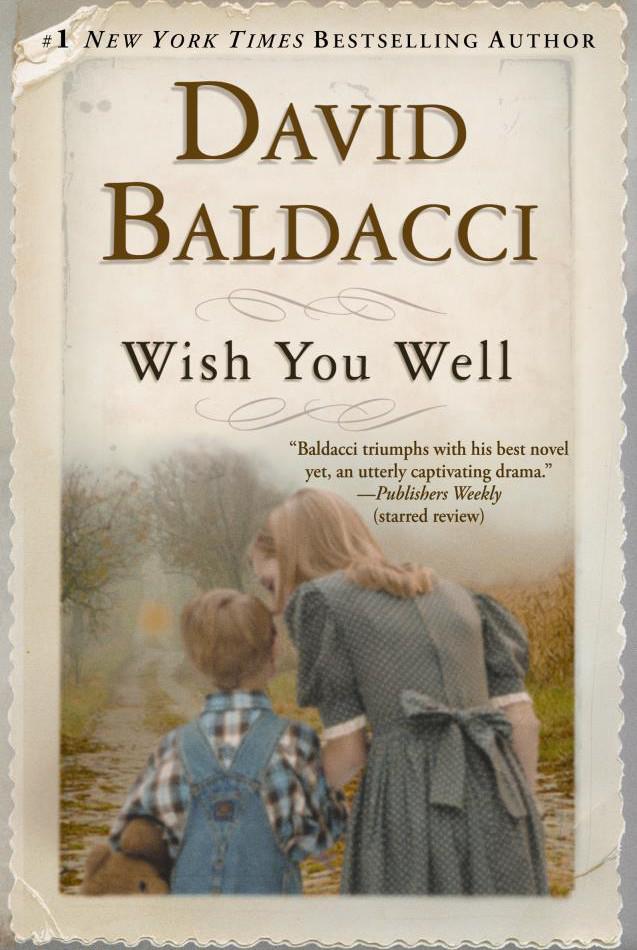
Wish You Well
Precocious 12-year-old Louisa Mae Cardinal lives in the hectic New York City of 1940 with her family. Then tragedy strikes--and Lou and her younger brother, Oz, must go with their invalid mother to live on their great- grandmother's farm in the Virginia mountains. Suddenly Lou finds herself coming of age in a new landscape, making her first true friend, and experiencing adventures tragic, comic, and audacious. But the forces of greed and justice are about to clash over her new home . . . and as their struggle is played out in a crowded Virginia courtroom, it will determine the future of two children, an entire town, and the mountains they love. ### Amazon.com Review David Baldacci has made a name for himself crafting big, burly legal thrillers with larger-than-life plots. However, *Wish You Well* , set in his native Virginia, is a tale of hope and wonder and "something of a miracle" just itching to happen. This shift from contentious urbanites to homespun hill families may come as a surprise to some of Baldacci's fans--but they can rest assured: the author's sense of pacing and exuberant prose have made the leap as well. The year is 1940. After a car accident kills 12-year-old Lou's and 7-year-old Oz's father and leaves their mother Amanda in a catatonic trance, the children find themselves sent from New York City to their great-grandmother Louisa's farm in Virginia. Louisa's hardscrabble existence comes as a profound shock to precocious Lou and her shy brother. Still struggling to absorb their abandonment, they enter gamely into a life that tests them at every turn--and offers unimaginable rewards. For Lou, who dreams of following in her father's literary footsteps, the misty, craggy Appalachians and the equally rugged individuals who make the mountains their home quickly become invested with an almost mythic significance: > They took metal cups from nails on the wall and dipped them in the water, and then sat outside and drank. Louisa picked up the green leaves of a mountain spurge growing next to the springhouse, which revealed beautiful purple blossoms completely hidden underneath. "One of God's little secrets," she explained. Lou sat there, cup cradled between her dimpled knees, watching and listening to her great-grandmother in the pleasant shade... Baldacci switches deftly between lovingly detailed character description (an area in which his debt to Laura Ingalls Wilder and Harper Lee seems evident) and patient development of the novel's central plot. If that plot is a trifle transparent--no one will be surprised by Amanda's miraculous recovery or by the children's eventual battle with the nefarious forces of industry in an attempt to save their great-grandmother's farm--neither reader nor character is the worse for it. After all, nostalgia is about remembering things one already knows. *\--Kelly Flynn* ### From Publishers Weekly Baldacci is writing what? That waspish question buzzed around publishing circles when Warner announced that the bestselling author of The Simple Truth, Absolute Power and other turbo-thrillers—an author generally esteemed more for his plots than for his characters or prose—was trying his hand at mainstream fiction, with a mid-century period novel set in the rural South, no less. Shades of John Grisham and A Painted House. But guess what? Clearly inspired by his subject—his maternal ancestors, he reveals in a foreword, hail from the mountain area he writes about here with such strength—Baldacci triumphs with his best novel yet, an utterly captivating drama centered on the difficult adjustment to rural life faced by two children when their New York City existence shatters in an auto accident. That tragedy, which opens the book with a flourish, sees acclaimed but impecunious riter Jack Cardinal dead, his wife in a coma and their daughter, Lou, 12, and son, Oz, seven, forced to move to the southwestern Virginia farm of their aged great-grandmother, Louisa. Several questions propel the subsequent story with vigor. Will the siblings learn to accept, even to love, their new life? Will their mother regain consciousness? And—in a development that takes the narrative into familiar Baldacci territory for a gripping legal showdown—will Louisa lose her land to industrial interests? Baldacci exults in high melodrama here, and it doesn't always work: the death of one major character will wring tears from the stoniest eyes, but the reappearance of another, though equally hanky-friendly, is outright manipulative. Even so, what the novel offers above all is bone-deep emotional truth, as its myriad characters—each, except for one cartoonish villain, as real as readers' own kin—grapple not just with issues of life and death but with the sufferings and joys of daily existence in a setting detailed with finely attuned attention and a warm sense of wonder. This novel has a huge heart—and millions of readers are going to love it. Agent, Aaron Priest. 600,000 first printing; 3-city author tour; simultaneous Time Warner Audiobook; foreign rights sold in the U.K., Bulgaria, Italy, Germany, Denmark, Norway, Sweden, Holland, Turkey; world Spanish rights sold. (One-day laydown, Oct. 24) Copyright 2000 Reed Business Information, Inc. |