
Юность
 fb2 fb2
|
|
Юность
fb2
|
A Set of Six
fb2
Certain individualities grow into fame through their vices and their virtues, or simply by their actions, which may have a temporary importance; and then they become forgotten. The names of a few leaders alone survive the end of armed strife and are further pre- served in history; so that, vanishing from men’s active memories, they still exist in books.
|
Almayer's Folly
fb2
Lush prose and penetrating psychological insight infuse Conrad’s first novel with the qualities that have made him one of the most popular and most studied writers in English literature. The novel chronicles the tragic decline of a Dutch merchant isolated in 19th-century Borneo, the machinations of his bitter Malayan wife, and the loss of his much loved daughter. Conrad establishes the themes of betrayal, isolation, and colonialism that he would explore throughout the rest of his life and work.
|

Chance
fb2
Chance is narrated by Conrad’s regular narrator, Charles Marlow, but is characterised by a complex, nested narrative in which different narrators take up the story at different points and attempt to interpret various episodes in the life of Miss de Barral, the daughter of a convicted swindler named Smith de Barral (though this character is famous in the world of the novel as a criminal, he may, at least at first, have been merely an incompetent banker). Miss de Barral leads a sheltered life while her father is prosperous, then must rely on the generosity of others, who resent her or have agendas for her, before she escapes by marrying one Captain Anthony. Much of the book involves the musing of the various narrators over what she and the Captain expected from this union, and what they actually got from it. When her father is released from prison, he joins them on ship, and the book heads towards its denouement (source: Wikipedia)
|

Heart of Darkness
fb2
|
Nostromo: A Tale of the Seaboard
fb2
|
Suspense
fb2
Conrad’s unfinished novel that he was working on before his death in 1924, in which he returns to one of his favorite subjects: the French Revolution. Unlike Duel, his character here is a young Englishman named Cosmo Latham, who visits Genoa during the days in which Napoleon was imprisoned on Elba, where a conspiratorial environment of diplomats and spies of all colors pivot around the spectral figure of the exiled emperor. Among the many people that Cosmo meets, there he meets Madame de Montevesso, a liberal aristocrat who has had the misfortune to marry an unscrupulous soldier. Conrad shows the mastery of his craft and the precision and richness of his writing-he considered this novel one of his greatest achievements- Suspense is a work that could have been a masterpiece had it not been for his sudden death.
|
The Mirror of the Sea
fb2
|
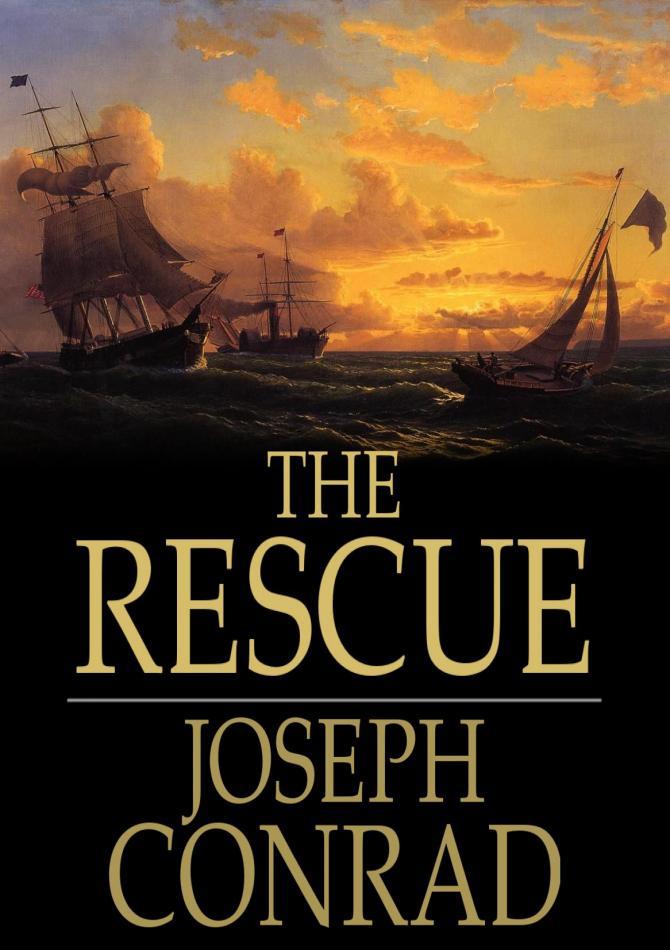
The Rescue: A Romance of the Shallows
fb2
The Rescue was originally published in 1920; it concludes what is sometimes referred to as The Lingard Trilogy, a group of novels based on Conrad's experience as mate on the steamer, Vidar. Although it was the last of the three novels to be published, after Almayer's Folly (1895) and An Outcast of the Islands (1896), the events related in the novel precede those. The Rescue is a tersely written adventure novel with all the power and scope one would expect from Joseph Conrad.
|

The secret agent
fb2
Mr Verloc, the secret agent, keeps a shop in London's Soho where he lives with his wife Winnie, her infirm mother, and her idiot brother, Stevie. When Verloc is reluctantly involved in an anarchist plot to blow up the Greenwich Observatory things go disastrously wrong, and what appears to be "a simple tale" proves to involve politicians, policemen, foreign diplomats and London's fashionable society in the darkest and most surprising interrelations. Based on the text which Conrad's first English readers enjoyed, this new edition includes a full and up-to-date bibliography, a comprehensive chronology and a critical introduction which describes Conrad's great London novel as the realization of a "monstrous town," a place of idiocy, madness, criminality, and butchery. It also discusses contemporary anarchist activity in the UK, imperialism, and Conrad's narrative techniques |
The Shadow Line
fb2
Conrad’s autobiographical novella of a young man in his first command as a sea captain. A series of crises prove incredibly difficult for his new authority, for the sea is curiously becalmed and the crew is weakened by feverish malaria. When the first mate’s fear convinces many that the ship is haunted and cursed by the malevolent spirit of the previous captain, the young man must cope with their superstition as well as the conspicuous absence of much-needed medicine. A suspenseful sea story of a young man in a defining moment of his life, when the indistinct line separating an inexperienced boy from a mature man becomes perfectly clear, “The Shadow-Line” brims with intense existence, straining responsibility, and threatened principles in a probing study of masculinity.
|
Typhoon
fb2
Captain McWhirr is a serious man who runs his steamer, the Nan-Shan, with efficiency and solidity. When a storm appears to be headed in their direction, MacWhirr is not concerned about his ship’s ability to weather it, but, when the storm turns out to be a powerful typhoon which surges in across the Pacific Ocean headed straight for the Nan-Shan, MacWhirr and his crew must work together if they want to survive. This classic sea-faring story is believed to be based on author Joseph Conrad’s real experiences at sea when he sailed aboard the John P. Best steamer under Captain John MacWhirr.
|

Under Western Eyes
fb2
SUMMARY: Under Western Eyes traces the experiences of Razumov, a young Russian student caught up in the aftermath of a terrorist bombing. It deals with topical moral issues such as the defensibility of terrorist resistance to tyranny and the loss of individual privacy in a surveillance society.
|
Victory: An Island Tale
fb2
|