 fb2
fb2He was a son who hadn’t known his father very well. It was a town shaken by a grisly murder – his father’s murder. Johnny Weather was home from a war and wandering. When he found out that his father had been assassinated on a street corner and that his father’s seductive young wife had inherited a fortune, he started knocking on doors. The doors came open, and Johnny stepped into a world of gamblers, whores, drug-dealers, and blackmailers, a place in which his father had once moved freely. Now Johnny Weather was going to solve this murder – by pitting his rage, his courage, and his lost illusions against the brutal underworld that has overtaken his hometown.
On the home front, two wartime lovers reunite under a cloud of paranoiaIn 1937 Munich, an American must be careful when he smokes his pipe. Robert Branch, a careless academic, makes the mistake of lighting up when the Füchrer is about to begin a procession, and nearly gets pummeled for his mistake. Only the timely intervention of Ruth Esch, a flame-haired actress, saves him. So begins a month-long romance between East and West – a torrid affair that ends when the lovers make the mistake of defending a Jew, earning Branch a beating and Esch a trip to a concentration camp. Six years later, Esch escapes to Vichy and makes her way to Detroit. To her surprise, Branch is waiting for her. He is a professor, working for the war effort, and his paranoia about a spy inside the Motor City War Board sours their reunion. Once again, a dangerous net is encircling these lovers – a reminder that, in this war, love always comes second to death.
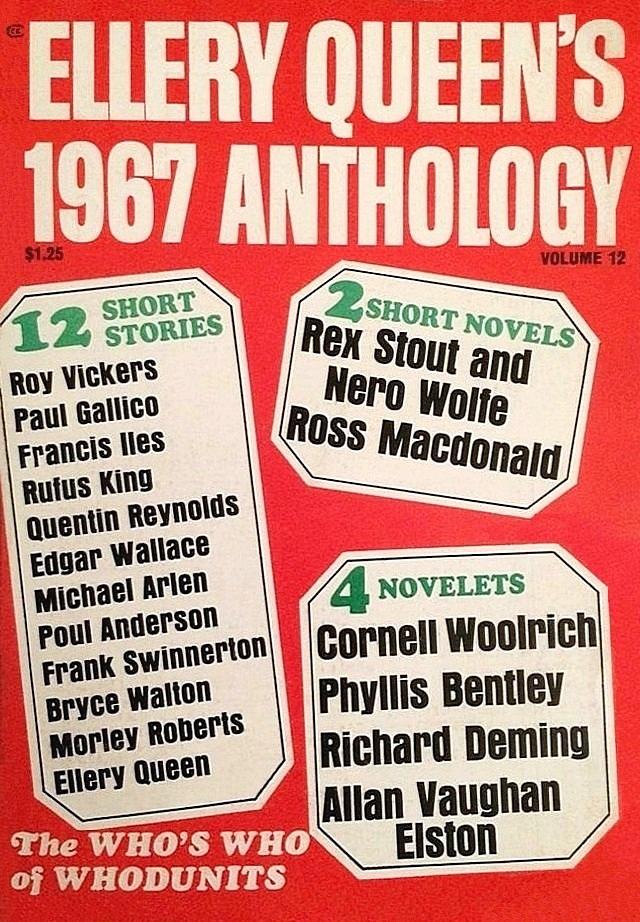
What are the ingredients of a hard-boiled detective story? “Savagery, style, sophistication, sleuthing, and sex,” said Ellery Queen. Often a desperate blond, a jealous husband, and, of course, a tough-but-tender P.I. the likes of Sam Spade or Philip Marlowe. Perhaps Raymond Chandler summed it up best in his description of Dashiell Hammett’s style: “Hammett gave murder back to the kind of people that commit it... He put these people down on paper as they were, and he made them talk and think in the language they customarily used for these purposes.”
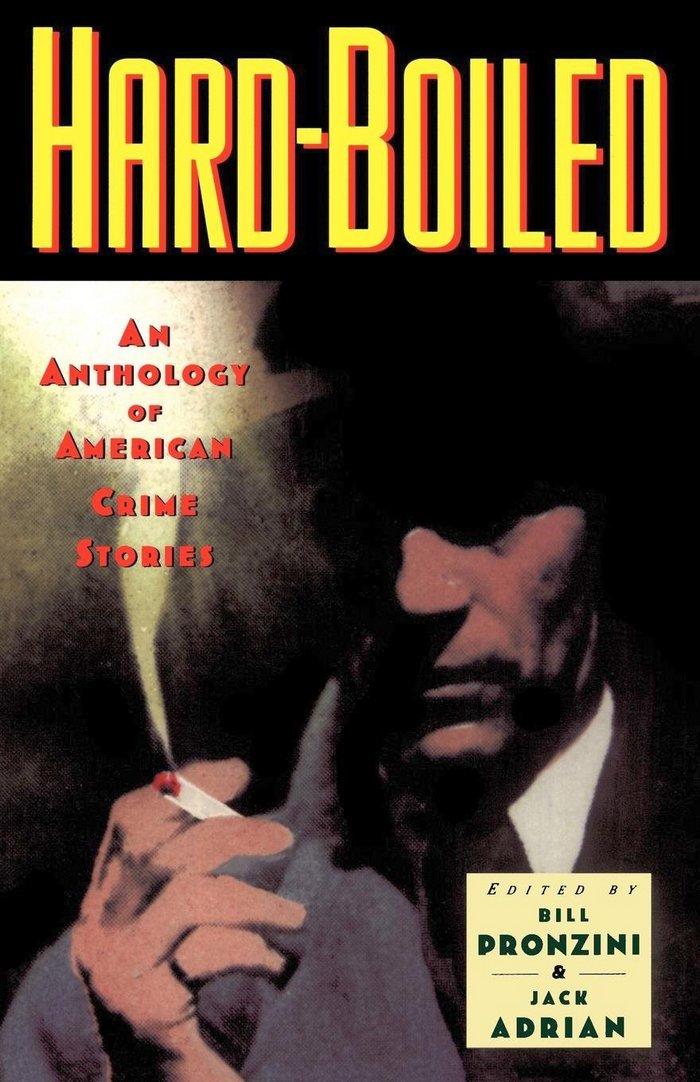
Hard-Boiled: An Anthology of American Crime Stories is the largest and most comprehensive collection of its kind, with over half of the stories never published before in book form. Included are thirty-six sublimely suspenseful stories that chronicle the evolution of this quintessentially American art form, from its earliest beginnings during the golden age of the legendary pulp magazine Black Mask in the 1920s, to the arrival of the tough digest Manhunt in the 1950s, and finally leading up to present-day hard-boiled stories by such writers as James Ellroy. Here are eight decades worth of the best writing about betrayal, murder, and mayhem: from Hammett’s 1925 tour de force “The Scorched Face,” in which the disappearance of two sisters leads Hammett’s never-named detective, the Continental Op, straight into a web of sexual blackmail amidst the West Coast elite, to Ed Gorman’s 1992 “The Long Silence After,” a gripping and powerful rendezvous involving a middle class insurance executive, a Chicago streetwalker, and a loaded .38. Other delectable contributions include “Brush Fire” by James M. Cain, author of The Postman Always Rings Twice, Raymond Chandler’s “I’ll Be Waiting,” where, for once, the femme fatale is not blond but a redhead, a Ross Macdonald mystery starring Macdonald’s most famous creator, the cryptic Lew Archer, and “The Screen Test of Mike Hammer” by the one and only Mickey Spillane. The hard-boiled cult has more in common with the legendary lawmen of the Wild West than with the gentleman and lady sleuths of traditional drawing room mysteries, and this direct line of descent is on brilliant display in two of the most subtle and tautly written stories in the collection, Elmore Leonard’s “3:10 to Yuma” and John D. MacDonald’s “Nor Iron Bars.” Other contributors include Evan Hunter (better known as Ed McBain), Jim Thompson, Helen Nielsen, Margaret Maron, Andrew Vachss, Faye Kellerman, and Lawrence Block.
Compellingly and compulsively readable, Hard-Boiled: An Anthology of American Crime Stories is a page-turner no mystery lover will want to be without. Containing many notable rarities, it celebrates a genre that has profoundly shaped not only American literature and film, but how we see our heroes and ourselves.
Somebody in Pacific Point is guilty of a kidnapping, but what probation officer Howard Cross wants to find most is innocence: in an ex-war hero who has taken a tough manslaughter rap, in a wealthy woman with a heart full of secrets, and in a blue-eyed beauty who has lost her way. The trouble is that the abduction has already turned to murder, and the more Cross pries into the case the further he slips into a pool of violence and evil. Somewhere in the California desert the whole scheme may come down on the wrong man. Somewhere Cross is going to find the last piece of a bloody puzzle – a mystery of blackmail, passion, and hidden identities that might be better left unsolved.
Enter a world of seedy nightclubs, dangerous, dimly-lit street and cool, wisecracking dicks pitting themselves against armies of ruthless gangsters. This is pulp fiction, a genre spawned amid the disillusionment of post-World War I America — and now reaching new heights of popularity.
Writers like Raymond Chandler and Dashiell Hammett turned that unique blend of rapid-fire action, violence and cynical humour into an art form that is being recreated by a fresh wave of young writers whose stories have all the drama and atmosphere of their predecessors’.
This page-turning collection, brought together by a true aficionado of the hardboiled story, includes, of course, Chandler and Hammett, but also Mickey Spillane, Ross MacDonald, Ed McBain and James Hadley Chase from the vintage years and from the current generation James Ellroy, Elmore Leonard and Quentin Tarantino, to name just a few of the twenty great writers featured here. Even Stephen King, doyen of the world of horror, has turned his hand to pulp fiction and is represented in this book.
The world of the hard-drinking, fast-action, apparently indestructible private eye, personified by Chandler’s creation, Philip Marlowe, was never more vibrant. It’s all here, and more, in a book that no fan of the genre can afford to miss.
On the home front, two wartime lovers reunite under a cloud of paranoiaIn 1937 Munich, an American must be careful when he smokes his pipe. Robert Branch, a careless academic, makes the mistake of lighting up when the Füchrer is about to begin a procession, and nearly gets pummeled for his mistake. Only the timely intervention of Ruth Esch, a flame-haired actress, saves him. So begins a month-long romance between East and West – a torrid affair that ends when the lovers make the mistake of defending a Jew, earning Branch a beating and Esch a trip to a concentration camp. Six years later, Esch escapes to Vichy and makes her way to Detroit. To her surprise, Branch is waiting for her. He is a professor, working for the war effort, and his paranoia about a spy inside the Motor City War Board sours their reunion. Once again, a dangerous net is encircling these lovers – a reminder that, in this war, love always comes second to death.
It was a long way from the million-dollar Foothill Club to Pelly Street, where grudges were settled in blood and Spanish and a stolen diamond ring landed a girl in jail. Defense lawyer Bill Gunnarson was making the trip – fast. He already knew a kidnapping at the club was tied to the girl’s hot rock, and he suspected that a missing Hollywood starlet was the key to a busy crime ring. But while Gunnarson made his way through a storm of deception, money, drugs, and passions, he couldn’t guess how some big shots and small-timers would all end up with murder in common...
Silken skin pale against dark hair, red lips provocatively smiling at him – that's how Lieutenant Bret Taylor remembered Lorraine. He was drunk when he married her, stone cold sober when he found her dead. Out on the sunlit streets of L.A. walked the man – her lover, her killer – who had been with her that fatal night. Taylor intended to find him. And when he did, the gun in his pocket would provide the quickest kind of justice. But first Taylor had to find something else: an elusive memory so powerful it drove him down three terrifying roads toward self-destruction – grief, ecstasy, and death.
In the last days of World War II, a sailor discovers a transcontinental conspiracy.
It is February 1945, and the war in the Pacific is nearing its climax. In Hawaii on his way to a new post, US Navy ensign Sam Drake stumbles across the girl of his dreams. Mary is a disc jockey, with a voice that’s famous across the islands for playing late-night jazz that no young lover can resist. Before he can follow this modern siren home, they go to check on Mary’s coworker Sue – but that lovely young lady will never spin another record.
They find her strung up and dangling outside the window of a bathroom, her face twisted into an ugly mask. The police call it suicide, but Sam is not so sure. Few beautiful women, even suicidal ones, are willing to be so hideous in death. Looking into Sue’s past, he finds another corpse – and a dangerous conspiracy that stretches all the way back to his Motor City home.