 fb2
fb2The greater the potential rewards, the greater the risks—but some risks are just too big. Unless you really need a huge reward…
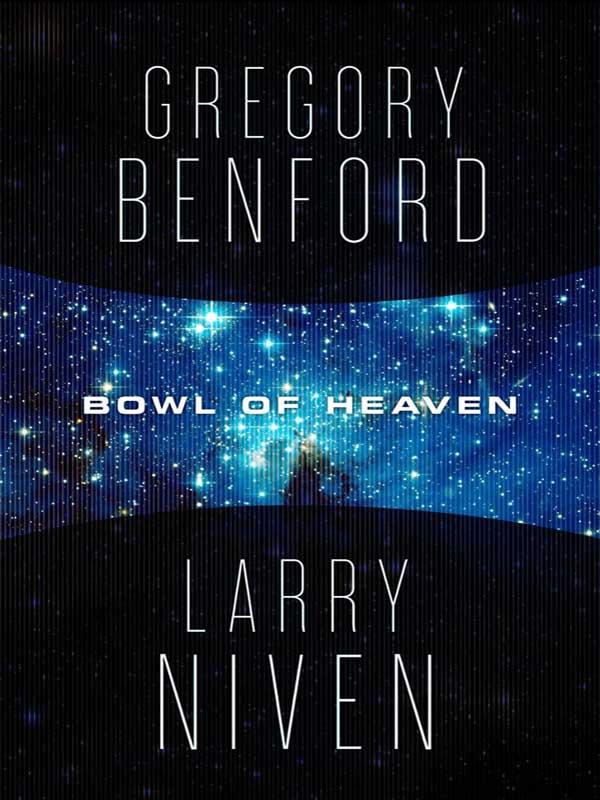
In this first collaboration by science fiction masters Larry Niven (Ringworld) and Gregory Benford (Timescape), the limits of wonder are redrawn once again as a human expedition to another star system is jeopardized by an encounter with an astonishingly immense artifact in interstellar space: a bowl-shaped structure half-englobing a star, with a habitable area equivalent to many millions of Earths…and it’s on a direct path heading for the same system as the human ship.
A landing party is sent to investigate the Bowl, but when the explorers are separated — one group captured by the gigantic structure’s alien inhabitants, the other pursued across its strange and dangerous landscape — the mystery of the Bowl’s origins and purpose propel the human voyagers toward discoveries that will transform their understanding of their place in the universe.
The relationships between generations can change dramatically as time goes on—especially when the generations are very different and time extends to the far future and beyond…
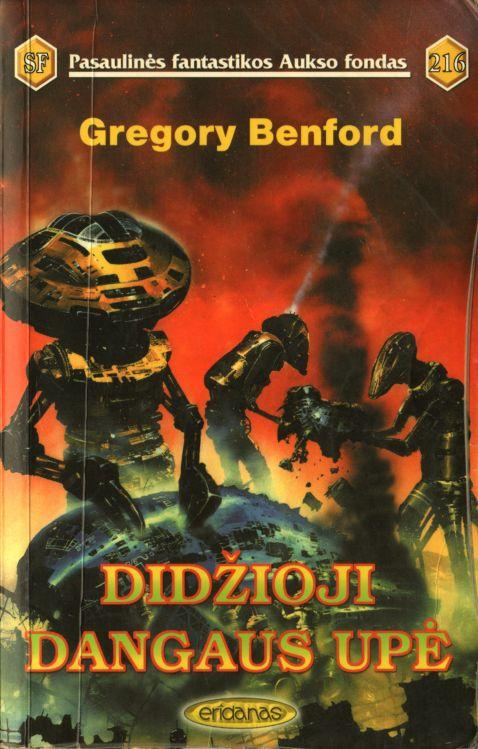
Pasak legendų, neatmenamais laikais žmonijos lopšį Žemę užpuolė mechai, sielą turintys mechaniniai robotai, ir išžudė beveik visus žmones. Tik saujelei laimingųjų pavyko pasprukti link Galaktikos Centro. Atrodo, kad žmonijos tėra likę tik 278 asmenys, kuriuos Čiuožyklos planetoje negailestingai medžioja klastūnai, marodieriai, ietininkai ir kitos mechų padermės…
Ogni 76 anni ritorna uno dei più affascinanti e misteriosi visitatori che l’umanità ricordi: la Cometa di Halley. Il suo passaggio più recente è ancora fresco nella memoria, ma questo straordinario romanzo ci parla del prossimo appuntamento, e della spedizione di un gruppo di scienziati su Halley, non solo per scoprirne i misteri, ma per trasformarla in un luogo adatto alla vita. Tra meraviglie tecnologiche e sforzi sovrumani di adattamento, i segreti sepolti nel cuore della cometa (tutt’altro che priva di forme di vita) trasformano un immane progetto di colonizzazione in una spietata lotta per la sopravvivenza. Tuttavia, le minacce non vengono solo da un ambiente irriducibile, ma anche dagli stessi membri della spedizione, un complesso microcosmo che riproduce tensioni, conflitti e pregiudizi che hanno portato la Terra sull’orlo della catastrofe; ma soprattutto c’è il drammatico confronto tra due “forme” umane, quella naturale degli Orthos, e quella manipolata geneticamente dei Perceli. Uno sfondo da cui emergono tre grandi protagonisti, dai quali dipende il futuro della missione: Carl Osborn, Saul Lintz e, soprattutto, Virginia Kaninamanu Herbert, impegnata ad esplorare le frontiere fra l’intelligenza umana e quella artificiale. E il lungo viaggio della cometa nelle profondità dello spazio procede fra eventi memorabili e tremende avversità, in un alternarsi di trionfi e delusioni. Esperienze però che ogni volta lasciano appena intuire le incredibili prospettive che ancora attendono la colonia di Halley. Un grandioso affresco, che ha pochi eguali per ricchezza d’idee ed efficacia narrativa, dove si ritrovano tutti i più grandi temi della fantascienza.
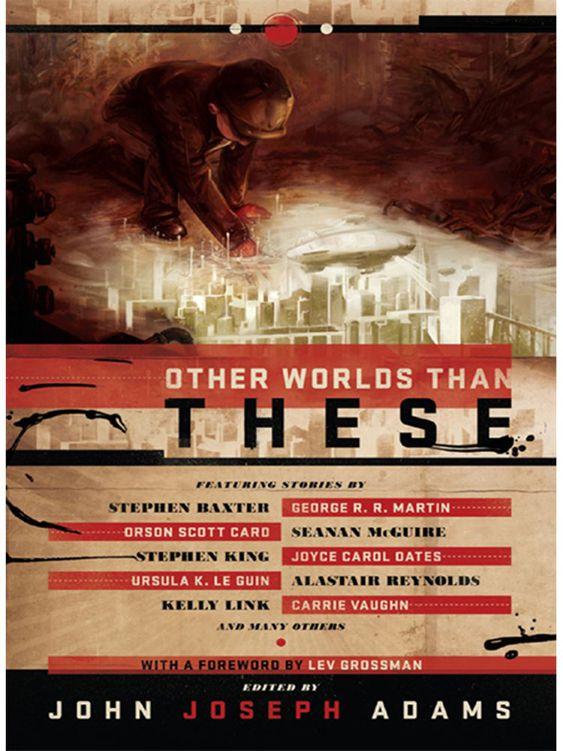
What if you could not only travel any location in the world, but to any possible world?
We can all imagine such “other worlds”—be they worlds just slightly different than our own or worlds full of magic and wonder—but it is only in fiction that we can travel to them. From The Wizard of Oz to The Dark Tower, from Philip Pullman’s The Golden Compass to C. S. Lewis’s The Chronicles of Narnia, there is a rich tradition of this kind of fiction, but never before have the best parallel world stories and portal fantasies been collected in a single volume—until now.
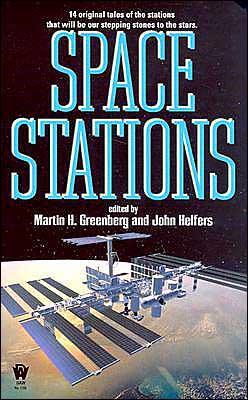
The challenge and lure of space exploration has long been fertile ground for some of the finest science fiction stories. Here, fifteen of the best chroniclers of the day after tomorrow present unique tales of space stations both in our own solar system and far beyond.
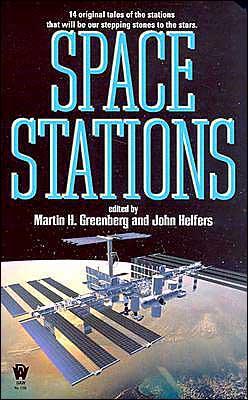
The challenge and lure of space exploration has long been fertile ground for some of the finest science fiction stories. Here, fifteen of the best chroniclers of the day after tomorrow present unique tales of space stations both in our own solar system and far beyond.
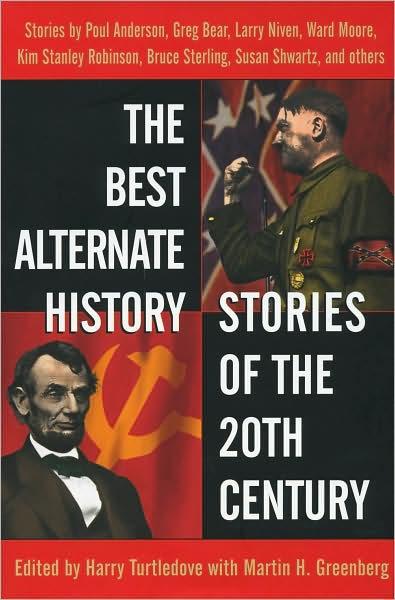
Explore fascinating, often chilling “what if” accounts of the world that could have existed–and still might yet…Science fiction’s most illustrious and visionary authors hold forth the ultimate alternate history collection. Here you’ll experience mind-bending tales that challenge your views of the past, present, and future, including:
• “The Lucky Strike”: When The Lucky Strike is chosen over The Enola Gay to drop the first atomic bomb, fate takes an unexpected turn in Kim Stanley Robinson’s gripping tale.
• “Bring the Jubilee”: Ward Moore’s novella masterpiece offers a rebel victory at Gettysburg which changes the course of the Civil War… and all of American history.
• “Through Road No Wither”: After Hitler’s victory in World War II, two Nazi officers confront their destiny in Greg Bear’s apocalyptic vision of the future.
• “All the Myriad Ways”: Murder or suicide, Ambrose Harmon’s death leads the police down an infinite number of pathways in Larry Niven’s brilliant and defining tale of alternatives and consequences.
• “Mozart in Mirrorshades”: Bruce Sterling and Lewis Shiner explore a terrifying era as the future crashes into the past–with disastrous results.
…as well as works by Poul Anderson • Gregory Benford • Jack L. Chalker • Nicholas A. DiChario • Brad Linaweaver • William Sanders • Susan Shwartz • Allen Steele • and Harry Turtledove himself!
The definitive collection: fourteen seminal alternate history tales drawing readers into a universe of dramatic possibility and endless wonder
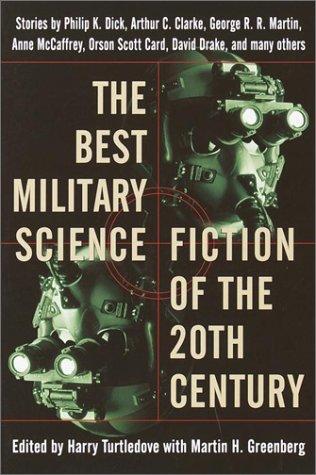
Explosive and provocative battles fought across the boundaries of time and space—and on the frontiers of the human mind.
Science fiction's finest have yielded this definitive collection featuring stories of warfare, victory, conquest, heroism, and overwhelming odds. These are scenarios few have ever dared to contemplate, and they include:
-"Superiority": Arthur C. Clarke presents an intergalactic war in which one side's own advanced weaponry may actually lead to its ultimate defeat.
-"Dragonrider": A tale of Anne McCaffrey's Dragonriders of Pern, in which magic tips the scales of survival.
-"Second Variety": Philip K. Dick, author of the short story that became the movie Blade Runner, reaches new heights of terror with his post apocalyptic vision of the future.
-"The Night of the Vampyres": A chilling ultimatum of atomic proportions begins a countdown to disaster in George R. R. Martin's gripping drama.
-"Hero": Joe Haldeman's short story that led to his classic of interstellar combat, The Forever War.
-"Ender's Game": The short story that gave birth to Orson Scott Card's masterpiece of military science fiction.
. . . as well as stories from Poul Anderson, Gregory Benford, C. J. Cherryh, David Drake, Cordwainer Smith, Harry Turtledove and Walter John Williams.
Guaranteed to spark the imagination and thrill the soul, these thirteen science fiction gems cast a stark light on our dreams and our darkest fears—truly among the finest tales of the 20th century.
An odyssey of discovery, from a shattered society through the solar system with a handful of men and women who ride a cold, hurtling ball of ice to the shaky promise of a distant, unknowable future.
The novel tells the story of an expedition beginning in the year 2061 to capture Comet Halley into a short period orbit so that its resources can be mined. The discovery of life on the comet and the subsequent survival struggle against the indigenous lifeforms and the illnesses and infections they cause leads to a breakdown of the expedition crew and the creation of factions based around political beliefs, nationality and genetic differences between the “percells”—genetically enhanced humans and the “orthos”—unmodified humans. As well as the fighting between these factions, Earth rejects the mission due to fear of contamination from the halleyform life and attempts to destroy the comet and those living upon it. Eventually the mission crew on Halley are forced to accept that they can never return to earth and create a new biosphere within the comet's core and in some cases evolve into symbiotic organisms with the halleyform life.
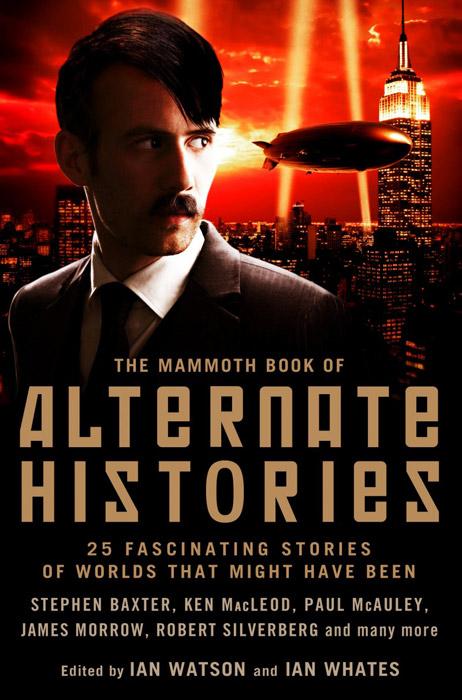
Every short story in this wonderfully varied collection has one thing in common: each features some alteration in history, some divergence from historical reality, which results in a world very different from the one we know today. As well as original stories specially commissioned from bestselling writers such as James Morrow, Stephen Baxter and Ken MacLeod, there are genre classics such as Kim Stanley Robinson’s story of how World War II atomic bomber the Enola Gay, having crashed on a training flight, is replaced by the Lucky Strike with profoundly different consequences.
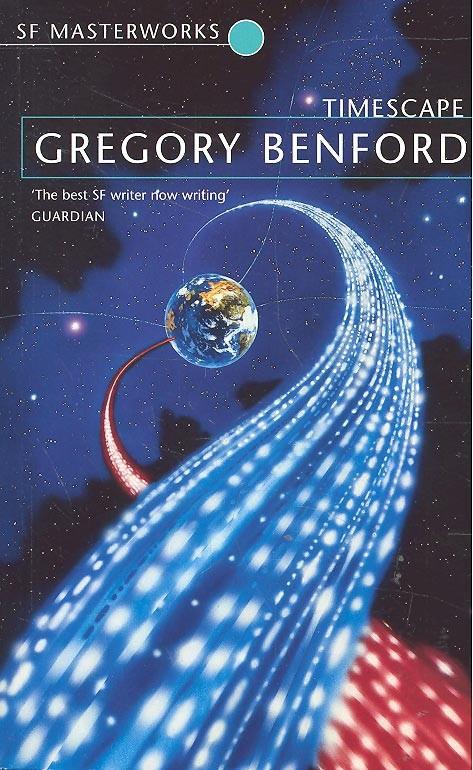
Suspense builds in this novel about scientists, physics, time travel, and saving the Earth. It’s 1998, and a physicist in Cambridge, England, attempts to send a message backward in time. Earth is falling apart, and a government faction supports the project in hopes of diverting or avoiding the environmental disasters beginning to tear at the edges of civilization. It’s 1962, and a physicist in California struggles with his new life on the West Coast, office politics, and the irregularities of data that plague his experiments. The story’s perspective toggles between time lines, physicists, and their communities. Timescape presents the subculture and world of scientists in microcosm: the lab, the loves, the grappling for grants, the pressures from university and government, the rewards and trials of relationships with spouses, the pressures of the scientific race, and the thrill of discovery.
Timescape merits the tag “hard science fiction”; it tells the story of scientists, and readers can't help but learn something about tachyons and physics while reading it. Yet much of the story is about humanity: the men John Renfrew and Gordon Bernstein and their relationships—between husband and wife, lover and lover, English working class and upper class, professor and student, and academician and colleagues.
Winner of the Nebula Award in 1980 and the John W. Clark Award in 1981, Timescape offers readers a great yarn, in terms of both humanity and science.
Detecting strange patterns of interference in a lab experiment, Gordon Bernstein, an assistant researcher at a California university, investigates and begins to uncover something that will change his life forever. Reprint. Nebula Award winner.