 fb2
fb2
From Star Trek to Star Wars, from Dune to Foundation, science fiction has a rich history of exploring the idea of vast intergalactic societies, and the challenges facing those living in or trying to manage such societies. The stories in Federations will continue that tradition. What are the social/religious/environmental/technological implications of living in such a vast society? What happens when expansionist tendencies on a galactic scale come into conflict with the indigenous peoples of other planets, of other races? And what of the issue of communicating across such distances, or the problems caused by relativistic travel? These are just some of the questions and issues that the stories in Federations will take on.
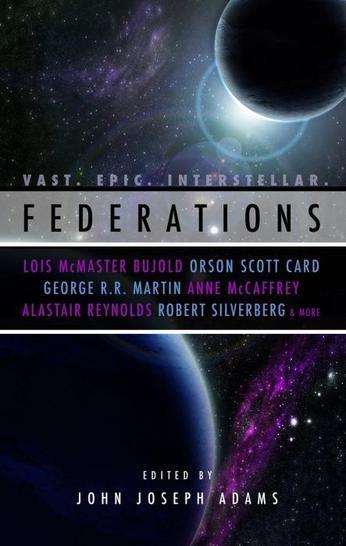
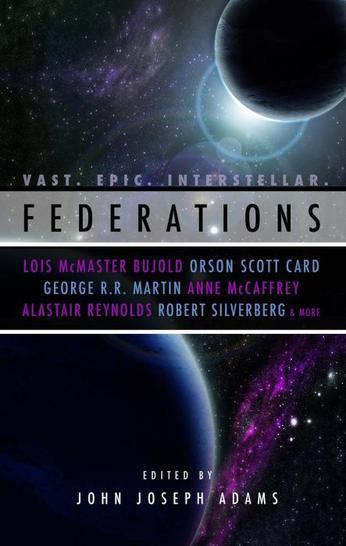
From Star Trek to Star Wars, from Dune to Foundation, science fiction has a rich history of exploring the idea of vast intergalactic societies, and the challenges facing those living in or trying to manage such societies. The stories in Federations will continue that tradition. What are the social/religious/environmental/technological implications of living in such a vast society? What happens when expansionist tendencies on a galactic scale come into conflict with the indigenous peoples of other planets, of other races? And what of the issue of communicating across such distances, or the problems caused by relativistic travel? These are just some of the questions and issues that the stories in Federations will take on.
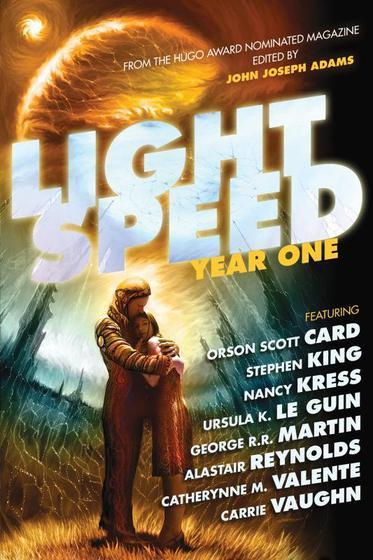
Lightspeed (www.lightspeedmagazine.com) is the critically-acclaimed, online science fiction magazine edited by bestselling anthologist John Joseph Adams. Lightspeed publishes all types of science fiction, from near-future, sociological soft sf, to far-future, star-spanning hard sf, and anything and everything in between. Each month, Lightspeed features a mix of originals and reprints, from a variety of authors—from the bestsellers and award-winners you already know to the best new voices you haven't heard of yet. Now, in Lightspeed: Year One, you will find all of the fiction published in Lightspeed's first year, from new stories such as Nebula Award finalists, Vylar Kaftan’s “I’m Alive, I Love You, I’ll See You in Reno” and “Arvies” by Adam-Troy Castro, and Carrie Vaughn’s Hugo Award-nominee “Amaryllis,” to classic reprints by Stephen King, Ursula K. Le Guin, George R. R. Martin, and more.
Lightspeed (www.lightspeedmagazine.com) is the critically-acclaimed, online science fiction magazine edited by bestselling anthologist John Joseph Adams. Lightspeed publishes all types of science fiction, from near-future, sociological soft sf, to far-future, star-spanning hard sf, and anything and everything in between. Each month, Lightspeed features a mix of originals and reprints, from a variety of authors - from the bestsellers and award-winners you already know to the best new voices you haven''t heard of yet. Now, in Lightspeed: Year One, you will find all of the fiction published in Lightspeed''s first year, from new stories such as Nebula Award finalists, Vylar Kaftan''s "I''m Alive, I Love You, I''ll See You in Reno" and "Arvies" by Adam-Troy Castro, and Carrie Vaughn''s Hugo Award-nominee "Amaryllis," to classic reprints by Stephen King, Ursula K. Le Guin, George R. R. Martin, and more.
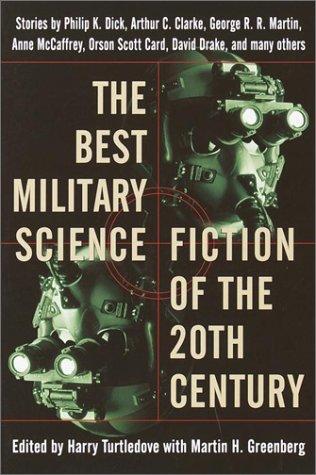
Explosive and provocative battles fought across the boundaries of time and space—and on the frontiers of the human mind.
Science fiction's finest have yielded this definitive collection featuring stories of warfare, victory, conquest, heroism, and overwhelming odds. These are scenarios few have ever dared to contemplate, and they include:
-"Superiority": Arthur C. Clarke presents an intergalactic war in which one side's own advanced weaponry may actually lead to its ultimate defeat.
-"Dragonrider": A tale of Anne McCaffrey's Dragonriders of Pern, in which magic tips the scales of survival.
-"Second Variety": Philip K. Dick, author of the short story that became the movie Blade Runner, reaches new heights of terror with his post apocalyptic vision of the future.
-"The Night of the Vampyres": A chilling ultimatum of atomic proportions begins a countdown to disaster in George R. R. Martin's gripping drama.
-"Hero": Joe Haldeman's short story that led to his classic of interstellar combat, The Forever War.
-"Ender's Game": The short story that gave birth to Orson Scott Card's masterpiece of military science fiction.
. . . as well as stories from Poul Anderson, Gregory Benford, C. J. Cherryh, David Drake, Cordwainer Smith, Harry Turtledove and Walter John Williams.
Guaranteed to spark the imagination and thrill the soul, these thirteen science fiction gems cast a stark light on our dreams and our darkest fears—truly among the finest tales of the 20th century.