
 fb2
fb2
Далекое будущее человечества, где правит бессмертие…
Но ведь так было не всегда. Впрочем, так уж изменились ли люди? И в конце-концов, что придает жизни ее смысл — сама жизнь или смерть?
fantlab.ru © Claviceps P.
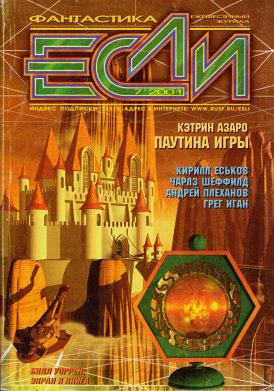
Чтобы понять правила этого состязания, физикам рекомендуем срочно вспомнить курс квантовой механики. А лирикам — пролистать первый десяток страниц…
Our new story from Greg Egan is a stand-alone tale that follows on
the events of “Luminous” (September 1995). It’s also the first story
we’ve seen from Greg since “Oracle” appeared in our July 2000
issue. The author tells us, though, that “after spending a few years
away from writing, trying to assist some of the asylum seekers that
Australia imprisons in remote detention centers, I recently
completed my seventh SF novel, Incandescence, which is due to be
published by Gollancz in the UK in May 2008.” We hope that this
return to writing means we’ll soon be seeing more of his brilliant
fiction.
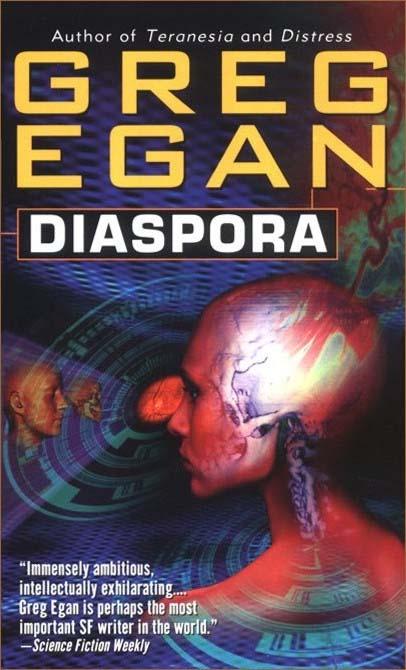


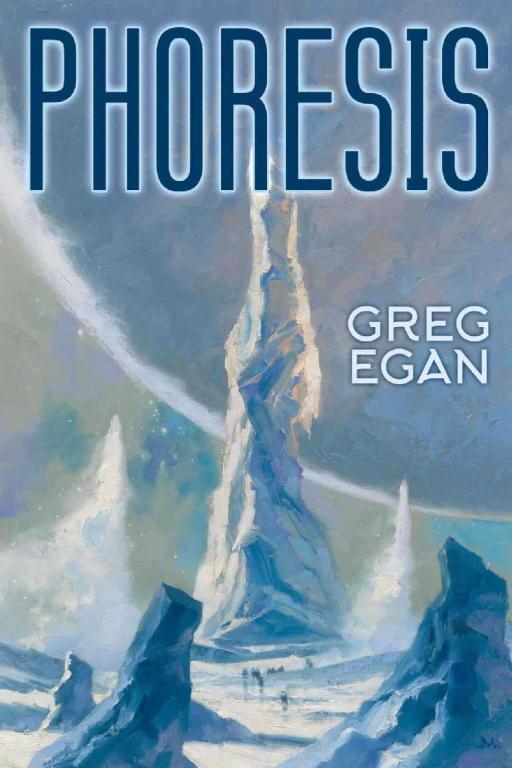
Welcome to Tvíbura and Tvíburi, the richly imagined twin planets that stand at the center of Greg Egan’s extraordinary new novella, Phoresis.
These two planets—one inhabited, one not—exist in extreme proximity to one another. As the narrative begins, Tvíbura, the inhabited planet, faces a grave and imminent threat: the food supply is dwindling, and the conditions necessary for sustaining life are growing more and more erratic. Faced with the prospect of eventual catastrophe, the remarkable women of Tvíbura launch a pair of ambitious, long-term initiatives. The first involves an attempt to reanimate the planet’s increasingly dormant ecosphere. The second concerns the building of a literal “bridge between worlds” that will connect Tvíbura to its (hopefully) habitable sibling.
These initiatives form the core of the narrative, which is divided into three sections and takes place over many generations. The resulting triptych is at once an epic in miniature, a work of hard SF filled with humanist touches, and a compressed, meticulously detailed example of original world building. Most centrally, it is a portrait of people struggling—and sometimes risking everything—to preserve a future they will not live to see. Erudite and entertaining, Phoresis shows us Egan at his formidable best, offering the sort of intense, visionary pleasures only science fiction can provide.
In Schild’s Ladder, humanity has transcended both death and Earth, and
discovered its home world is nearly unique as a cradle of life. As it spreads
throughout the galaxy, humanity enjoys an almost utopian existence — until a
scientist accidentally creates an impenetrable, steadily expanding vacuum that
devours star systems and threatens the entire universe with destruction.
Tchicaya is a Yielder, member of the faction that believes this "novo-vacuum"
deserves study. The opposing Preservationists — among them Mariama, his first
love — seek to save worlds and destroy the novo-vacuum. Discord heats to
terrorist violence; then enmities and alliances are turned upside-down by a
discovery that may mean the novo-vacuum is, instead, a new and very different
universe — and one which may contain life.
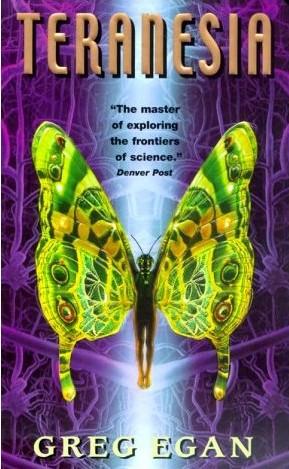
Nine-year-old Prabir Suresh lives alone with his baby sister, Madhusree, and his biologist parents on a tropical Indonesian isle. Teranesia is so small and remote, it's not on the maps, and its strange native species of butterfly remained undiscovered until the 21st century. Prabir never wants to leave, but war forces him to flee with Madhusree. He believes he has saved his sister-until she returns to Indonesia, a grad student seeking to carry on their parents' forgotten work, pursuing reports of strange new plant and animal species. Prabir follows, to discover birds and orchids even stranger than the butterflies: mutants that are evidence of frightfully sped-up evolutionary changes with no discernable cause.
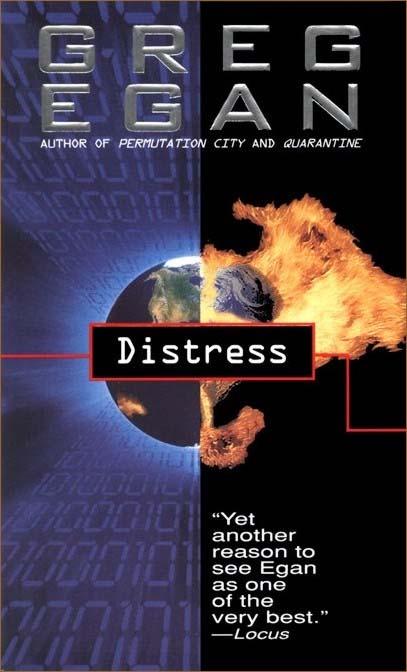
Greg Egan has received the Hugo Award and the John W. Campbell Memorial Award. He was widely considered the best SF author of the '90s, and one publication (Science Fiction Weekly) has named him "perhaps the most important SF writer in the world"-high praise, but not unjustified. For evidence, check out not only Teranesia, but works like Diaspora, Distress, and Quarantine.
The vast and mysterious universe is explored in this reprint anthology from award-winning editor and anthologist Neil Clarke (Clarkesworld magazine, The Best Science Fiction of the Year).
The urge to explore and discover is a natural and universal one, and the edge of the unknown is expanded with each passing year as scientific advancements inch us closer and closer to the outer reaches of our solar system and the galaxies beyond them.
Generations of writers have explored these new frontiers and the endless possibilities they present in great detail. With galaxy-spanning adventures of discovery and adventure, from generations ships to warp drives, exploring new worlds to first contacts, science fiction writers have given readers increasingly new and alien ways to look out into our broad and sprawling universe.
The Final Frontier delivers stories from across this literary spectrum, a reminder that the universe is far large and brimming with possibilities than we could ever imagine, as hard as we may try.
[Contains tables.]
When a detective, a new mother, is assigned to the case of a horrific triple murder, it appears to be a self-contained domestic tragedy, a terrible event but something that doesn’t affect the rest of the community. But it slowly becomes clear that something much darker may be at play, something that spreads out from the scene of the crime to corrode the closest relationships of everyone it touches.
For the first time in a decade, a compilation of the very best in science fiction, from a world authority on the genre.
For decades, the Year’s Best Science Fiction has been the most widely read short science fiction anthology of its kind. Now, after thirty-five annual collections, comes the ultimate in science fiction anthologies. In The Very Best of the Best, legendary editor Gardner Dozois selects the finest short stories for this landmark collection.
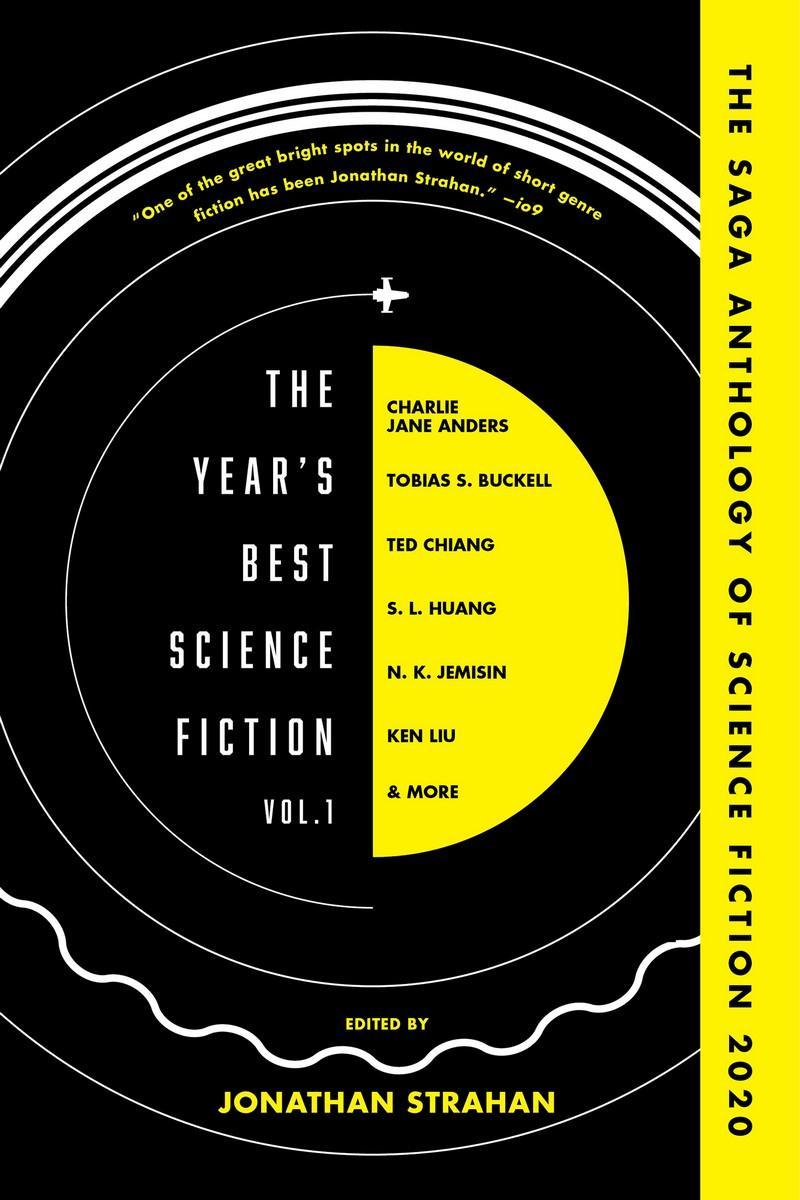
The definitive guide and a must-have collection of the best short science fiction and speculative fiction of 2019, showcasing brilliant talent and examining the cultural moment we live in, compiled by award-winning editor Jonathan Strahan.
With short works from some of the most lauded science fiction authors, as well as rising stars, this collection displays the top talent and the cutting-edge cultural moments that affect our lives, dreams, and stories. The list of authors is truly star-studded, including New York Times bestseller Ted Chiang (author of the short story that inspired the movie Arrival ), N. K. Jemisin, Charlie Jane Anders, and many more incredible talents. An assemblage of future classics, this anthology is a must-read for anyone who enjoys the vast and exciting world of science fiction.
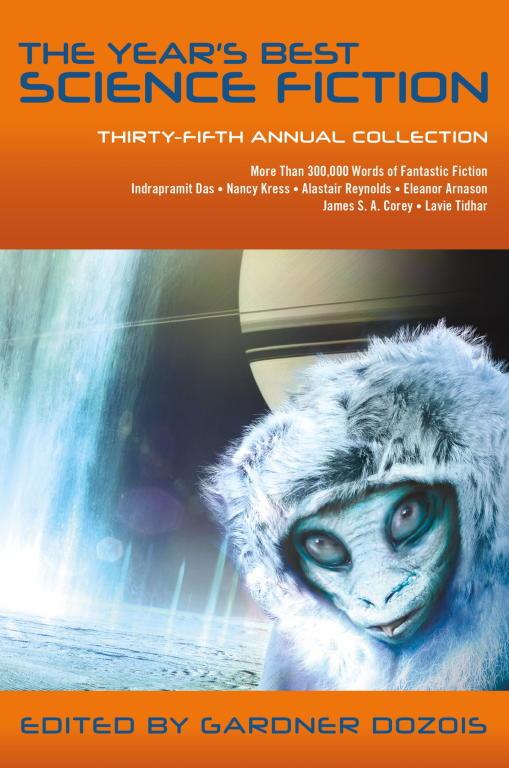
The multiple Locus Award-winning annual collection of the year’s best science fiction stories.
In the new millennium, what secrets lay beyond the far reaches of the universe? What mysteries belie the truths we once held to be self-evident? The world of science fiction has long been a porthole into the realities of tomorrow, blurring the line between life and art. Now, in The Year’s Best Science Fiction: Thirty-Fifth Annual Collection, the very best SF authors explore ideas of a new world. This venerable collection brings together award-winning authors and masters of the field. With an extensive recommended reading guide and a summation of the year in science fiction, this annual compilation has become the definitive must-read anthology for all science fiction fans and readers interested in breaking into the genre.
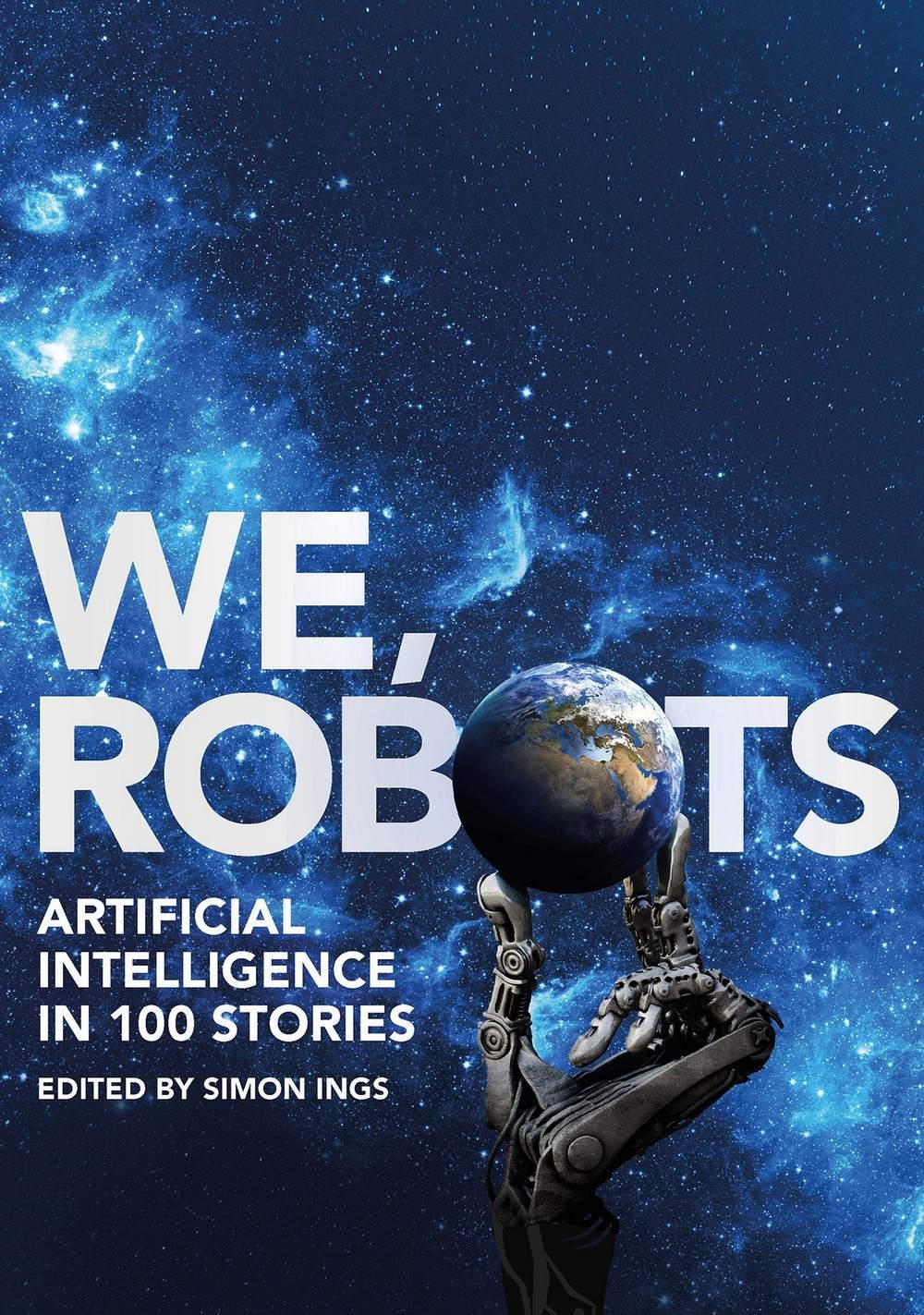
Artificial intelligence in 100 stories.
To ready us for the inevitable, here are 100 of the best short stories ever written--most of them by humans--about robots and artificial minds. Read them while you can, learn from them, and make your preparations... From 1837 through to the present day, from Charles Dickens to Cory Doctorow, this collection contains the most diverse collection of robots ever assembled. Anthropomorphic robots, invertebrate AIs, thuggish metal lumps and wisps of manufactured intelligence so delicate if you blinked you might miss them. The literature of robots and artificial intelligence is so wildly diverse, in both tone and intent, that our stories form six thematic collections.
It's Alive! is about inventors and their creations.
Following the Money drops robots into the day-to-day business of living.
Owners and Servants considers the human potentials and pitfalls of owning and...