 fb2
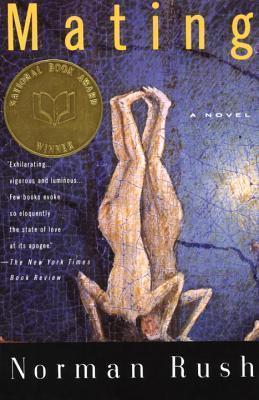
fb2The narrator of this splendidly expansive novel of high intellect and grand passion is an American anthropologist at loose ends in the South African republic of Botswana. She has a noble and exacting mind, a good waist, and a busted thesis project. She also has a yen for Nelson Denoon, a charismatic intellectual who is rumored to have founded a secretive and unorthodox utopian society in a remote corner of the Kalahari — one in which he is virtually the only man. What ensues is both a quest and an exuberant comedy of manners, a book that explores the deepest canyons of eros even as it asks large questions about the good society, the geopolitics of poverty, and the baffling mystery of what men and women really want.
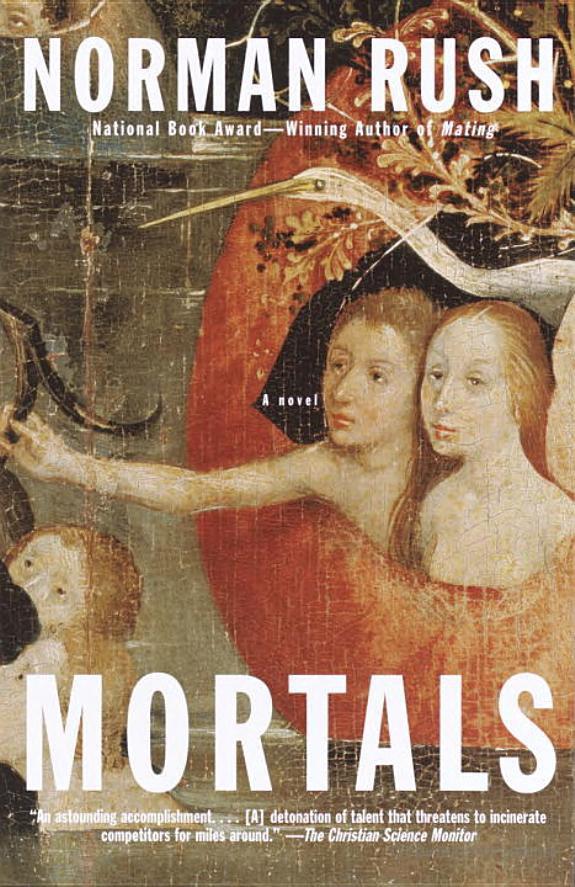
At once a political adventure, a portrait of a passionate but imperiled marriage, and an acrobatic novel of ideas, Mortals marks Norman Rush’s return to the territory he has made his own, the southern African nation of Botswana. Nobody here is entirely what he claims to be. Ray Finch is not just a middle-aged Milton scholar but a CIA agent. His lovely and doted-upon wife Iris is also a possible adulteress. And Davis Morel, the black alternative physician who is treating her-while undertaking a quixotic campaign to de-Christianize Africa — may also be her lover.
As a spy, the compulsively literate Ray ought to have no trouble confirming his suspicions. But there’s the distraction of actual spying. Most of all, there’s the problem of love, which Norman Rush anatomizes in all its hopeless splendor in a novel that would have delighted Milton, Nabokov, and Graham Greene.
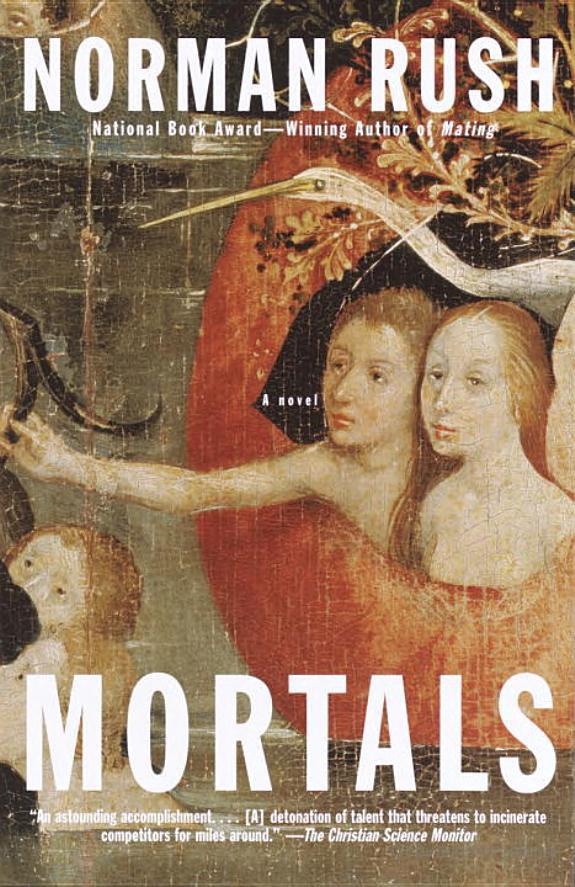
The greatly anticipated new novel by Norman Rush—whose first novel, Mating, won the National Book Award and was everywhere acclaimed—is his richest work yet. It is at once a political adventure, a social comedy, and a passionate triangle. It is set in the 1990s in Botswana—the African country Rush has indelibly made his own fictional territory.
Mortals chronicles the misadventures of three ex-pat Americans: Ray Finch, a contract CIA agent, operating undercover as an English instructor in a private school, who is setting out on perhaps his most difficult assignment; his beautiful but slightly foolish and disaffected wife, Iris, with whom he is obsessively in love; and Davis Morel, an iconoclastic black holistic physician, who is on a personal mission to “lift the yoke of Christian belief from Africa.”
The passions of these three entangle them with a local populist leader, Samuel Kerekang, whose purposes are grotesquely misconstrued by the CIA, fixated as the agency is on the astonishing collapse of world socialism and the simultaneous, paradoxical triumph of radical black nationalism in South Africa, Botswana’s neighbor. And when a small but violent insurrection erupts in the wild northern part of the country, inspired by Kerekang but stoked by the erotic and political intrigues of the American trio—the outcome is explosive and often explosively funny.
Along the way, there are many pleasures. Letters from Ray’s brilliantly hostile brother and Iris’s woebegone sister provide a running commentary on contemporary life in America. Africa and Africans are powerfully evoked, and the expatriate scene is cheerfully skewered.
Through lives lived ardently in an unforgiving land, Mortals examines with wit and insight the dilemmas of power, religion, rebellion, and contending versions of liberation and love. It is a study of a marriage over time, and a man’s struggle to find his way when his private and public worlds are shifting. It is Norman Rush’s most commanding work.

In his long-awaited new novel, Norman Rush, author of three immensely praised books set in Africa, including the best-selling classic and National Book Award-winner Mating, returns home, giving us a sophisticated, often comical, romp through the particular joys and tribulations of marriage, and the dilemmas of friendship, as a group of college friends reunites in upstate New York twenty-some years after graduation.
When Douglas, the ringleader of a clique of self-styled wits of “superior sensibility” dies suddenly, his four remaining friends are summoned to his luxe estate high in the Catskills to memorialize his life and mourn his passing. Responding to an obscure sense of emergency in the call, Ned, our hero, flies in from San Francisco (where he is the main organizer of a march against the impending Iraq war), pursued instantly by his furious wife, Nina: they’re at a critical point in their attempt to get Nina pregnant, and she’s ovulating! It is Nina who gives us a pointed, irreverent commentary as the friends begin to catch up with one another. She is not above poking fun at some of their past exploits and the things they held dear, and she’s particularly hard on the departed Douglas, who she thinks undervalued her Ned. Ned is trying manfully to discern what it was that made this clutch of souls his friends to begin with, before time, sex, work, and the brutal quirks of history shaped them into who they are now — and, simultaneously, to guess at what will come next.
Subtle Bodies is filled with unexpected, funny, telling aperçus, alongside a deeper, moving exploration of the meanings of life. A novel of humor, small pleasures, deep emotions. A novel to enjoy and to ponder.
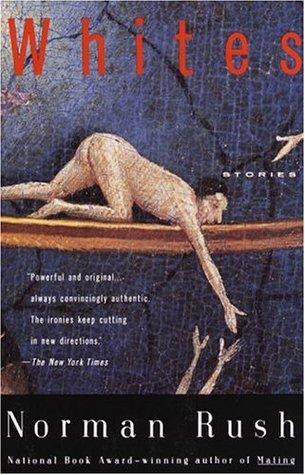
Whether they are Americans, Brits, or a stubborn and suicidally moral Dutchman, Norman Rush's whites are not sure why they are in Botswana. Their uncertainty makes them do odd things. Driven half-mad by the barking of his neighbor's dogs, Carl dips timidly into native witchcraft — only to jump back out at the worst possible moment. Ione briskly pursues a career as a "seducer" ("A seductress was merely someone who was seductive and who might or might not be awarded a victory. But a seducer was a professional"), while her dentist husband fends off the generous advances of an African cook. Funny, sad, and deeply knowing, polished throughout to a diamond glitter, Whites is a magnificent collection of stories.