
 fb2
fb2Collages is Anaïs Nin’s last work of fiction, and is, as the title suggests, a collection of interwoven stories, opening and closing with the passage: “Vienna was the city of statues. They were as numerous as the people who walked the streets. They stood on the top of the highest towers, lay down on stone tombs, sat on horseback, kneeled, prayed, fought animals and wars, danced, drank wine and read books made of stone.”
The central character, Renate, is a sort of “master of ceremonies” for Nin’s modern fairy tales, as she floats through the narrative and communes, in one way or another, with each of the “storytellers.” Among them are: Varda, the artist whose interaction with his daughter causes him to spin story upon story in order to win her over to his artistic way of thinking; Henri the chef, who names each of his dishes after celebrities and has stories for the most interesting of them; Nina, a young woman whose spontaneous musings lead casual observers to believe she is insane; Nobuko, the Japanese actress whose charming commentaries and letters are laden with magical yet incorrect English; Bruce, whose betrayals to Renate with boys are written in story form hidden in Chinese puzzle boxes; Count Laudromat, the exiled royal whose father-in-law is an owner of laudromats; the French Consul and his wife, who are writers with extremely different outlooks on love and passion; John Wilkes, the “millionaire patron of the arts” who is actually a gardener; Dr. Mann, an Israeli with the unusual pastime of meeting and kissing famous women authors; and the enigmatic Judith Sands, who may have actually “written” Collages.
Collages is Nin’s most light-hearted writing, and, in that sense, is perhaps her most entertaining book. As Henry Miller commented, “The best of collages fall apart with time; these will not.”
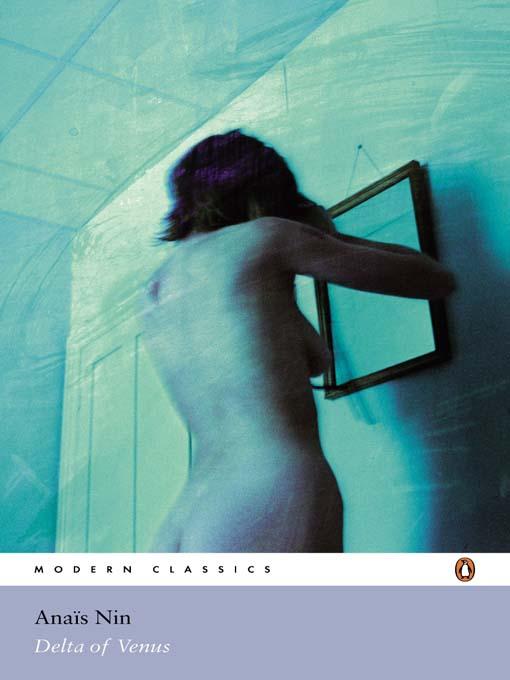
In Delta of Venus Anaïs Nin penned a lush, magical world where the characters of her imagination possess the most universal of desires and exceptional of talents. Among these provocative stories, a Hungarian adventurer seduces wealthy women then vanishes with their money; a veiled woman selects strangers from a chic restaurant for private trysts; and a Parisian hatmaker named Mathilde leaves her husband for the opium dens of Peru. Delta of Venus is an extraordinarily rich and exotic collection from the master of erotic writing.
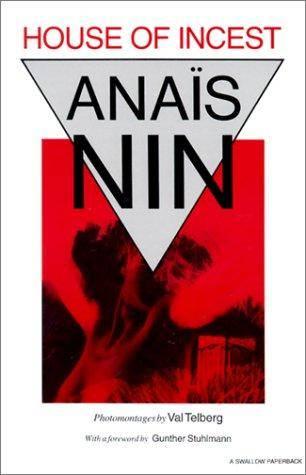
Originally published in 1936, House of Incest is Anaïs Nin’s first work of fiction. The novel is a surrealistic look within the narrator’s subconscious mind as she attempts to escape from a dream in which she is trapped, or in Nin’s words, as she attempts to escape from “the woman’s season in hell.” In the documentary Anaïs Observed, Nin says House of Incest was based on dreams she’d had for more than a year. Nin’s usage of the word incest in this case is metaphorical, not literal. In this book the word incest describes a selfish love where one can appreciate in another only that which is similar to oneself. One is then only loving oneself, shunning all differences. At first, such a self-love can seem ideal because it is without fear and without risk. But eventually it becomes a sterile nightmare.
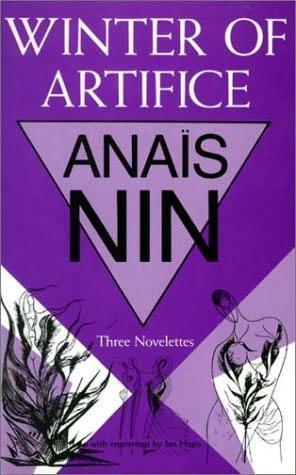
Winter of Artifice is a collection of novelettes: ‘Stella,’ ‘Winter of Artifice,’ and ‘The Voice.’