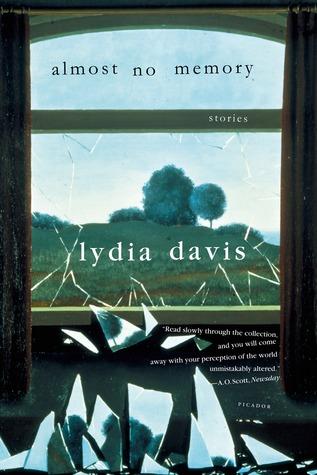
 fb2
fb2Philosophical inquiry, examinations of language, and involuted domestic disputes are the focus of Lydia Davis’s inventive collection of short fiction, Almost No Memory. In each of these stories, Davis reveals an empathic, sometimes shattering understanding of human relationships.
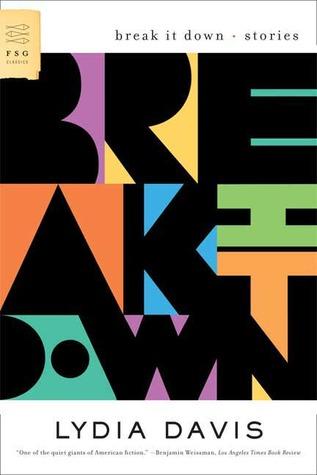
The thirty-four stories in this seminal collection powerfully display what have become Lydia Davis’s trademarks — dexterity, brevity, understatement, and surprise. Although the certainty of her prose suggests a world of almost clinical reason and clarity, her characters show us that life, thought, and language are full of disorder. Break It Down is Davis at her best. In the words of Jonathan Franzen, she is “a magician of self-consciousness.”
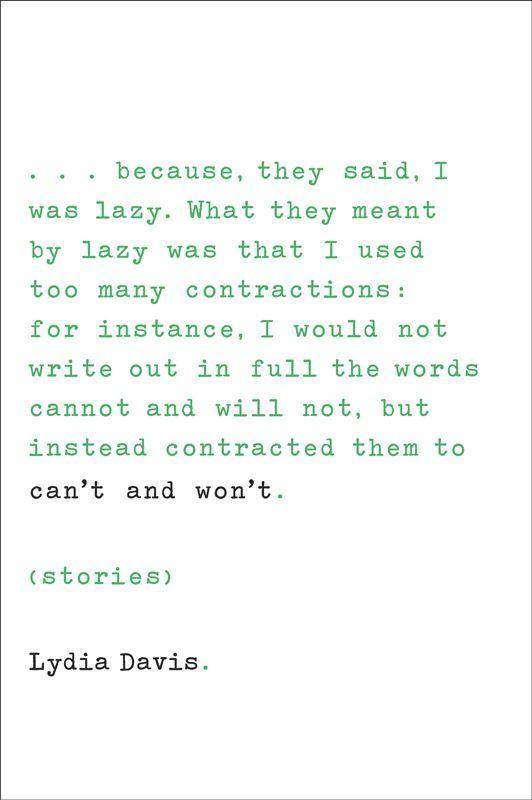
A new collection of short stories from the writer Rick Moody has called “the best prose stylist in America”.
Her stories may be literal one-liners: the entirety of “Bloomington” reads, “Now that I have been here for a little while, I can say with confidence that I have never been here before.” Or they may be lengthier investigations of the havoc wreaked by the most mundane disruptions to routine: in “A Small Story About a Small Box of Chocolates,” a professor receives a gift of thirty-two small chocolates and is paralyzed by the multitude of options she imagines for their consumption. The stories may appear in the form of letters of complaint; they may be extracted from Flaubert’s correspondence; or they may be inspired by the author’s own dreams, or the dreams of friends.
What does not vary throughout Can’t and Won’t, Lydia Davis’s fifth collection of stories, is the power of her finely honed prose. Davis is sharply observant; she is wry or witty or poignant. Above all, she is refreshing. Davis writes with bracing candor and sly humor about the quotidian, revealing the mysterious, the foreign, the alienating, and the pleasurable within the predictable patterns of daily life.
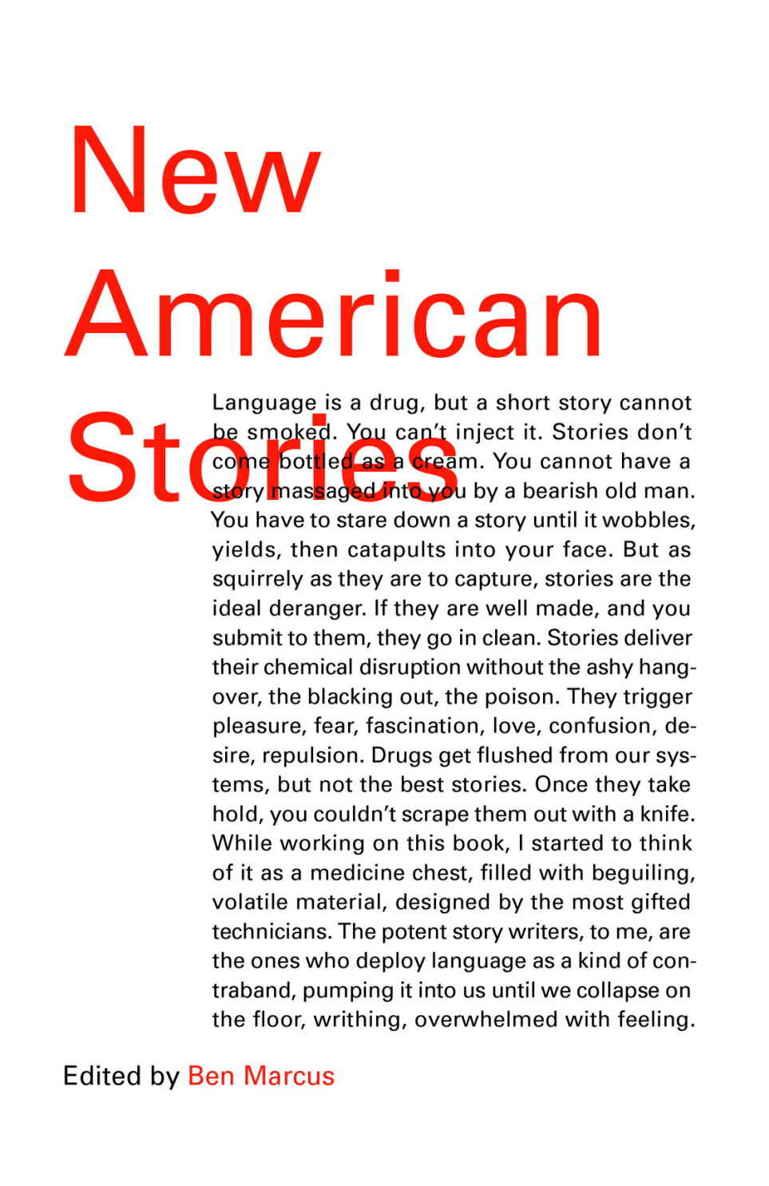
Ben Marcus, one of the most innovative and vital writers of this generation, delivers a stellar anthology of the best short fiction being written today in America.
In New American Stories, the beautiful, the strange, the melancholy, and the sublime all comingle to show the vast range of the American short story. In this remarkable anthology, Ben Marcus has corralled a vital and artistically singular crowd of contemporary fiction writers. Collected here are practitioners of deep realism, mind-blowing experimentalism, and every hybrid in between. Luminaries and cult authors stand side by side with the most compelling new literary voices. Nothing less than the American short story renaissance distilled down to its most relevant, daring, and unforgettable works, New American Stories puts on wide display the true art of an American idiom.
From one of our most imaginative and inventive writers, a crystalline collection of perfectly modulated, sometimes harrowing and often hilarious investigations into the multifaceted ways in which human beings perceive each other and themselves. A couple suspects their friends think them boring; a woman resolves to see herself as nothing but then concludes she's set too high a goal; and a funeral home receives a letter rebuking it for linguistic errors.
Lydia Davis is one of our most original and influential writers. She has been called “an American virtuoso of the short story form” (Salon) and “one of the quiet giants. . of American fiction” (Los Angeles Times Book Review). Now, for the first time, Davis’s short stories will be collected in one volume, from the groundbreaking Break It Down (1986) to the 2007 National Book Award nominee Varieties of Disturbance.
The Collected Stories of Lydia Davis is an event in American letters.
Mislabeled boxes, problems with visiting nurses, confusing notes, an outing to the county fair-such are the obstacles in the way of the unnamed narrator of The End of the Story as she attempts to organize her memories of a love affair into a novel. With compassion, wit, and what appears to be candor, she seeks to determine what she actually knows about herself and her past, but we begin to suspect, along with her, that given the elusiveness of memory and understanding, any tale retrieved from the past must be fiction.
Lydia Davis has been called “one of the quiet giants in the world of American fiction” (Los Angeles Times), “an American virtuoso of the short story form” (Salon), an innovator who attempts “to remake the model of the modern short story” (The New York Times Book Review). Her admirers include Grace Paley, Jonathan Franzen, and Zadie Smith; as Time magazine observed, her stories are “moving. . and somehow inevitable, as if she has written what we were all on the verge of thinking.”
In Varieties of Disturbance, her fourth collection, Davis extends her reach as never before in stories that take every form from sociological studies to concise poems. Her subjects include the five senses, fourth-graders, good taste, and tropical storms. She offers a reinterpretation of insomnia and re-creates the ordeals of Kafka in the kitchen. She questions the lengths to which one should go to save the life of a caterpillar, proposes a clear account of the sexual act, rides the bus, probes the limits of marital fidelity, and unlocks the secret to a long and happy life.
No two of these fictions are alike. And yet in each, Davis rearranges our view of the world by looking beyond our preconceptions to a bizarre truth, a source of delight and surprise.
Varieties of Disturbance is a 2007 National Book Award Finalist for Fiction.