 fb2
fb2Shukshin may be an ordinary truck driver, but his delivery route demands all the poise and determination of a ship’s captain in the vice-grip of a storm. He travels a highway buried in the depths of the Siberian taiga to bring vital supplies to towns before winter swallows the roads and makes them impassable. His task is one of dire necessity and certain peril, confronting the thorny side of both men and nature.
Fortunately, Shukshin is not alone. In his copilot’s seat, Dusha, his faithful dog, joins Shukshin in his adventures through the taiga. But, when a blizzard rages through Siberia, Shukshin finds himself in a desperate scramble for survival. Even Dusha may not be able to save him from the dangers that lie in wait behind ice and darkness.
Shipwrecked in Siberia is a 7,100 word, 29-page story of survival, following a man and his dog as they struggle, side by side, for a chance at life in the unforgiving ocean of the Siberian taiga.
Although Durrell spent much of his life beside the Mediterranean, he wrote relatively little about Italy; it was always somewhere that he was passing through on the way to somewhere else. Sicilian Carousel is his only piece of extended writing on the country and, naturally enough for the islomaniac Durrell, it focuses on one of Italy's islands. Sicilian Carousel came relatively late in Durrell's career, and is based around a slightly fictionalized bus tour of the island.
This heartfelt and revealing account of Paul Theroux's thirty-year friendship with the legendary V. S. Naipaul is an intimate record of a literary mentorship that traces the growth of both writers' careers and explores the unique effect each had on the other. Built around exotic landscapes, anecdotes that are revealing, humorous, and melancholy, and three decades of mutual history, this is a personal account of how one develops as a writer and how a friendship waxes and wanes between two men who have set themselves on the perilous journey of a writing life.

Džeks Londons
Sniega meita
KOPOTI raksti desmit sējumos
SASTĀDĪJUSI TAMARA ZĀLĪTE NO ANGĻU VALODAS TULKOJU'SAS ROTA EZERIŅA UN HELMA LAPIŅA MĀKSLINIEKS ĀDOLFS LIELAIS Tulkojums latviešu valodā, -«Liesma», 1974
Without aiming to be a survival guide, romance or autobiography, Sunbathing in Siberia manages to be all of them and none. Told completely from the Trans-Siberian and a series of Russian jets, this is the story of a young British poet, who, after becoming engaged to his translator over 3500 miles east, embarks on a journey into the very heart of Siberia to marry his fiancée. However, in place of the desolate wasteland he expected to find, Michael discovers the side of Siberia little known outside of Russia. After 30 years of British rain, Michael has finally to learn the art of sunbathing, in the last place on Earth anyone would think to take a pair of flip-flops.
With little knowledge of post-Soviet Russia, or its language; and without any survival skills, Michael has to adapt to the Siberian way of life. As Russia struggles to find its new identity, Michael too is forced to recreate himself, while finding the tools needed to live with parading nuclear missiles, wild bears, and a host of extreme dangers.
Michael Oliver-Semenov served as the first poet in residence for Blown, the magazine of cultural intelligence, and has since been published in a plethora of magazines and journals worldwide, including the Morning Star, Orbis, Mandala Review, and Ink Sweat and Tears. He is a freelance English teacher and occasionally contributes to the Siberian Times.



A grumpy expat sounds off on other expats and foreigners, penis worship, tourists, Bangkok’s bodysnatchers, piracy, backpackers, aphrodisiacs, fast elephants, dangerous elephants, rotten fish, a gay water buffalo, ghosts, scams and cons, shadow wives, sex-change operations and ladyboys, country music, fear and respect, drugs, the beer wars, bi-racial cool, street food, superlatives, denial, eating insects, violence, making movies, Thai time, learning the language, chili peppers, a heart attack, the rubber barons, the King’s music, Thai whisky, sex, and other amazing stuff you’ll never read about in any guide to Thailand.
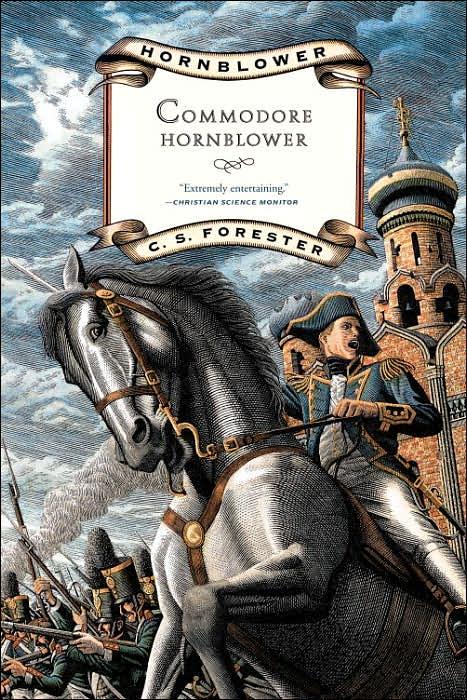
In this ninth installment in the Hornblower series, the incomparable Horatio Hornblower, recently knighted and settled in as squire of the village of Smallbridge, has been designated commodore of his own squadron of ships, led by the two-decker Nonsuch and bound for the Baltic. It is 1812, and Hornblower has been ordered to do anything and everything possible, diplomatically and militarily, to protect the Baltic trade and to stop the spread of Napoleon's empire into Sweden and Russia. Though he has set sail a hero, one misstep may ruin his chances of ever becoming an admiral. Hostile armies, seductive Russian royalty, nautical perils such as ice-bound bays, assassins in the imperial palace—Hornblower must conquer all before he can return home to his beloved new wife and son, as his instructions are to sacrifice every man and ship under his command rather than surrender ground to Napoleon.
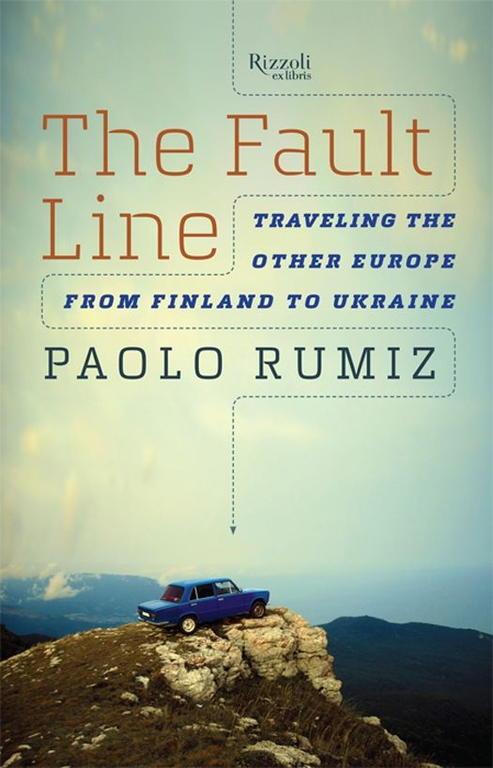
An award-winning writer travels the eastern front of Europe, where the push/pull between old empires and new possibilities has never been more evident. Paolo Rumiz traces the path that has twice cut Europe in two—first by the Iron Curtain and then by the artificial scaffolding of the EU—moving through vibrant cities and abandoned villages, some places still gloomy under the ghost of these imposing borders, some that have sought to erase all memory of it and jump with both feet into the West (if only the West would have them).
In The Fault Line, he is a sublime and lively guide through these unfamiliar landscapes, piecing together an atlas that has been erased by modern states, delighting in the discovery of communities that were once engulfed by geopolitics then all but forgotten, until now.The farther south he goes, the more he feels he is traveling not along some abandoned Eastern frontier, but right in the middle of things: Mitteleuropa wasn’t to be found in Viennese cafés but much farther east, beyond even Budapest and Warsaw. As in Ukraine, these remain places in flux, where the political and cultural values of the East and West have stared each other down for centuries.
Rumiz gives a human face not just to what the Cold War left behind but to the ancient ties of empire and ethnicity that are still at the root of modern politics in flash-point areas such as this.
Paolo Rumiz has been a correspondent for Italy’s La Repubblica since 1986, focusing on the Balkans and Eastern Europe. He was a frontline correspondent during the wars in the former Yugoslavia, Bosnia/Herzegovina, and Afghanistan, and has won many prizes for his journalism and nonfiction.
THE FARTHER ADVENTURES OF ROBINSON CRUSOE;
Being the Second and Last Part OF HIS LIFE, And of the Strange Surprizing Accounts of his Travels Round three Parts of the Globe.
Written by Himself.
THE FARTHER ADVENTURES OF ROBINSON CRUSOE; Being the Second and Last Part OF HIS LIFE, And of the Strange Surprizing Accounts of his Travels Round three Parts of the Globe. Written by Himself.
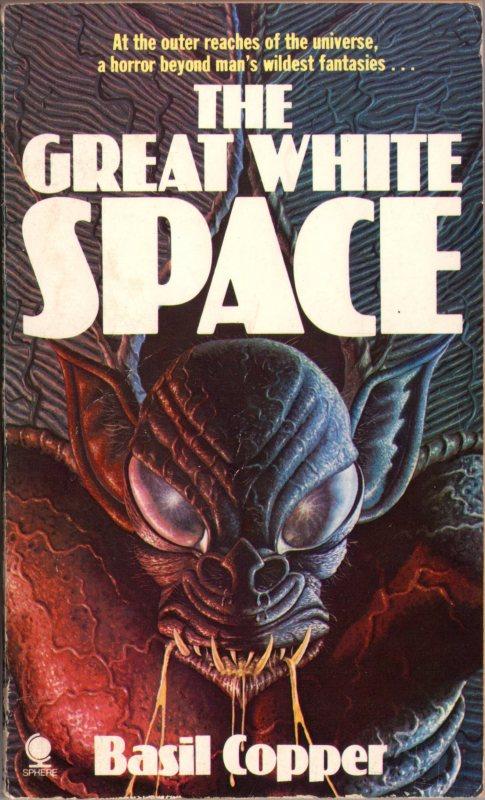
Beyond the hideous Plain of darkness, past the terrifying secret city, deep within earth’s dank uncharted caverns, a monstrous hybrid race stood guard at the entrance to the great white space.
So it was that the Great Northern Expedition ventured into the horrors of a stupendously vast underground terrain, in search of the legendary opening to another universe, peopled by an unimaginable spawn of darkness…
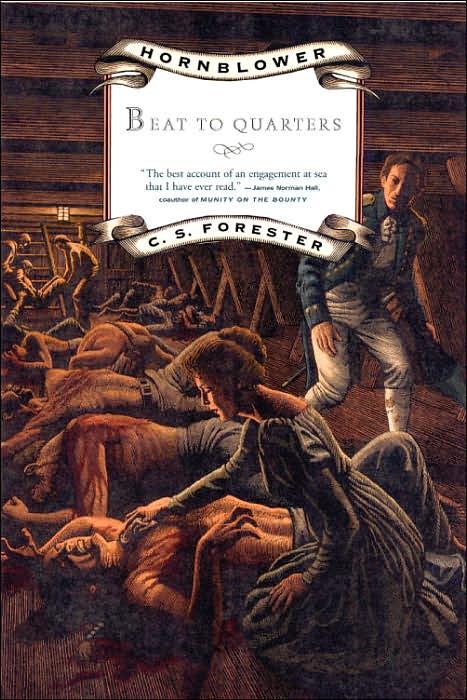
Adventure fiction. June, 1808 – and off the Coast of Nicaragua Captain Horatio Hornblower has his hands full… Now in command of HMS Lydia, a thirty-six-gun frigate, Hornblower has instructions to form an alliance against the Spanish colonies with a mad and messianic revolutionary, El Supremo; to find a water route across the Central American isthmus; and ‘to take, sink, burn or destroy’ the fifty-gun Spanish ship of the line Natividad – or face court-martial. And as if that wasn't hard enough, Hornblower must also contend with the charms of an unwanted passenger: Lady Barbara Wellesley… This is the seventh of eleven books chronicling the adventures of C. S. Forester's inimitable nautical hero, Horatio Hornblower.
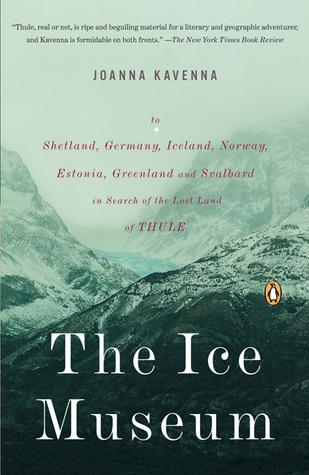
A legend, a land once seen and then lost forever, Thule was a place beyond the edge of the maps, a mystery for thousands of years. And to the Nazis, Thule was an icy Eden, birthplace of Nordic “purity.” In this exquisitely written narrative, Joanna Kavenna wanders in search of Thule, to Shetland, Iceland, Norway, Estonia, Greenland, and Svalbard, unearthing the philosophers, poets, and explorers who claimed Thule for themselves, from Richard Francis Burton to Norwegian explorer Fridtjof Nansen. Marked by breathtaking snowscapes, haunting literature, and the cold specter of past tragedies, this is a wondrous blend of travel writing and detective work that is impossible to set down. RVIEW: Thule, real or not, is ripe and beguiling material for a literary and geographic adventurer, and Kavenna is formidable on both fronts. . . . Highly cerebral, erudite, refreshing. (The New York Times Book Review)
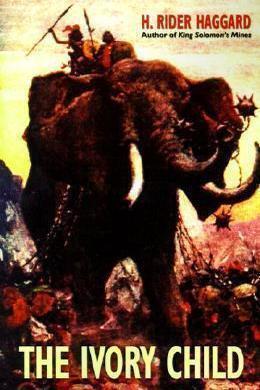
Get set for adventure with this rip-roaring tale from action-fantasy master H. Rider Haggard. The Ivory Child sees intrepid explorer Allan Quatermain venturing into unknown territory to rescue a kidnapping victim. Along the way, he inadvertently stumbles into an array of thorny situations, including a tribal civil war. Will Quatermain triumph and make it back alive?
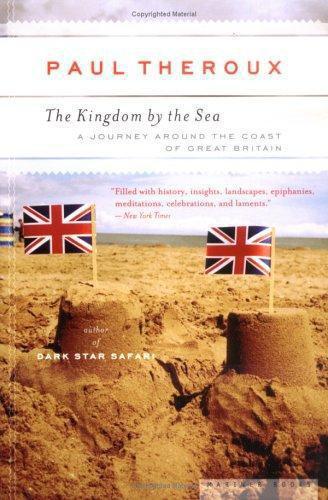
After eleven years as an American living in London, the renowned travel writer Paul Theroux set out to travel clockwise around the coast of Great Britain to find out what the British were really like. The result is this perceptive, hilarious record of the journey. Whether in Cornwall or Wales, Ulster or Scotland, the people he encountered along the way revealed far more of themselves than they perhaps intended to display to a stranger. Theroux captured their rich and varied conversational commentary with caustic wit and penetrating insight.

"The Last Encounter" is a short story by C. S. Forester, the final chapter in the life of his fictional naval hero, Horatio Hornblower. It was published together with the unfinished novel Hornblower and the Crisis and another short story, "Hornblower and the Widow McCool".

Following the success of the acclaimed Ghost Train to the Eastern Star and The Great Railway Bazaar, The Last Train to Zona Verde is an ode to the last African journey of the world's most celebrated travel writer.
“Happy again, back in the kingdom of light,” writes Paul Theroux as he sets out on a new journey through the continent he knows and loves best. Theroux first came to Africa as a twenty-two-year-old Peace Corps volunteer, and the pull of the vast land never left him. Now he returns, after fifty years on the road, to explore the little-traveled territory of western Africa and to take stock both of the place and of himself.
His odyssey takes him northward from Cape Town, through South Africa and Namibia, then on into Angola, wishing to head farther still until he reaches the end of the line. Journeying alone through the greenest continent, Theroux encounters a world increasingly removed from both the itineraries of tourists and the hopes of postcolonial independence movements. Leaving the Cape Town townships, traversing the Namibian bush, passing the browsing cattle of the great sunbaked heartland of the savanna, Theroux crosses “the Red Line” into a different Africa: “the improvised, slapped-together Africa of tumbled fences and cooking fires, of mud and thatch,” of heat and poverty, and of roadblocks, mobs, and anarchy. After 2,500 arduous miles, he comes to the end of his journey in more ways than one, a decision he chronicles with typically unsparing honesty in a chapter called “What Am I Doing Here?”
Vivid, witty, and beautifully evocative, The Last Train to Zona Verde is a fitting final African adventure from the writer whose gimlet eye and effortless prose have brought the world to generations of readers.