 fb2
fb2
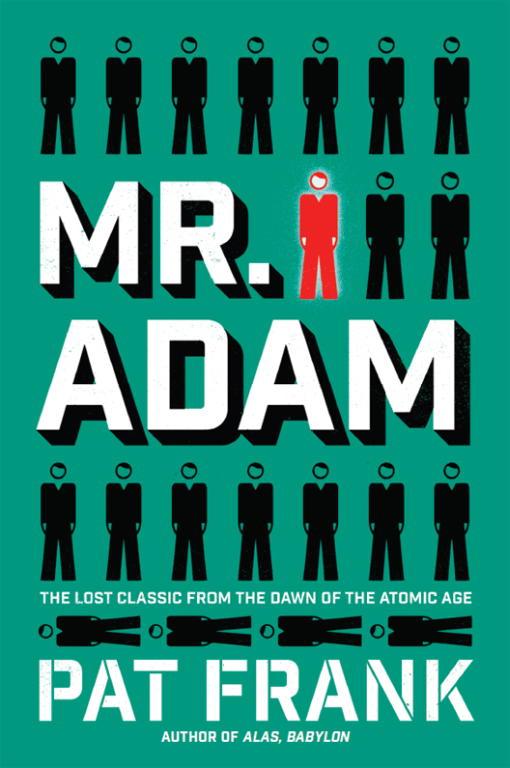
Originally published at the dawn of the Atomic Age, Mr. Adam is a riveting, chilling novel from the author of the post-apocalyptic classic Alas, Babylon, revealing the dangers of nuclear power—and the far greater danger of government bureaucracy.
A young newspaperman accidentally turns up the biggest story of his career: On a certain date in the not-too-distant future, there are no reservations in the maternity wards of any hospitals in New York. When the journalist’s AP office checks other cities, he discovers that this alarming state of affairs is not just in the United States, but in the entire world. A few months earlier, an accidental explosion in an atomic plant in Mississippi released an unknown form of radiation that turned the Earth’s men sterile—with one notable exception.
Mr. Homer Adam, who was at the bottom of a lead mine in Colorado at the moment of the explosion, is the only man unaffected by the atomic rays. Naturally, he is in great demand, and sadly, it’s up to the government to decide what to do with him.
One of literature’s first responses to the atomic bomb, Mr. Adam is an artifact of classic science fiction—an equally biting satire and ominous warning to society—that will resonate deeply with readers today as it did when it was first published in 1946.
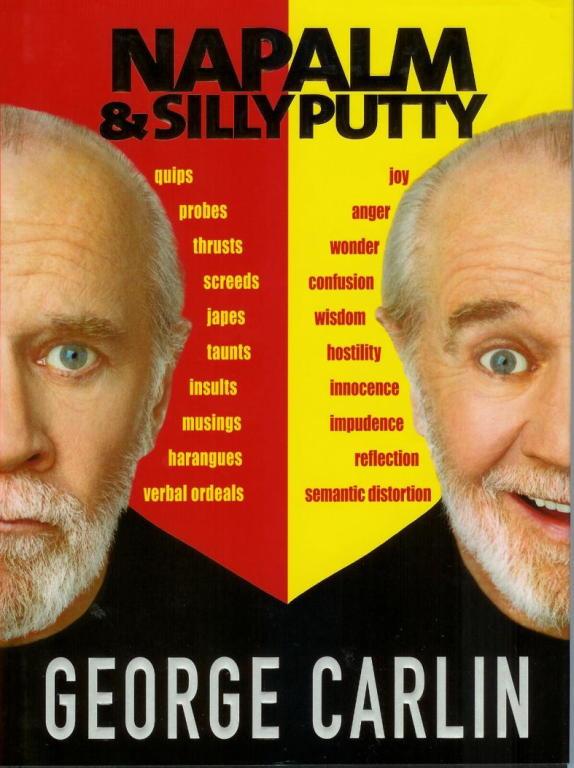
Whether it involves musing on the inevitable and annoying ironies of everyday life, spouting off about anything and everything that gets his goat, or just plain figuring out new and improved ways to be difficult, George Carlin’s comedy is incorrigible and unmistakable. Following the runaway success of Brain Droppings, Carlin now delivers all-new rants, what-ifs, observations, and out-and-out damnations in his cantankerous new collection, Napalm and Silly Putty.
Carlin is at his best taking on the whole world and telling it like it is—or at least how he sees it. From the “Airline Announcements” section (“…here’s a phrase that apparently the airlines simply made up: near miss. Bull****, my friend. It’s a near hit! A collision is a near miss.”) to “Cars and Driving” (“One of the first things they teach you in Driver’s Ed is where to put your hands on the steering wheel. They tell you to put ’em at ten o’clock and two o’clock. Never mind that. I put mine at 9:45 and 2:17. Gives me an extra half hour to get where I’m goin’.”), Carlin takes you on a wild ride through a life you’ll never look at the same way again. He identifies the experience of “vuja de”—“the distinct sense that, somehow, something that just happened has never happened before”—and posits existential questions including, “If there really are multiple universes, what do they call the thing they’re all a part of?” and “If the reason for climbing Mt. Everest is that it’s hard to do, why does everyone go up the easy side?” Of course, it wouldn’t be George Carlin if he didn’t say a whole lot more that we just can’t print here!
Including more lists of things he’s had just about enough of, and hilarious short takes that will put you in stitches, Napalm and Silly Putty is Carlin’s comic opus on life at the dawn of the 21st century. In it, he asks, “Have you ever started a path? No one seems willing to do this. We don’t mind using existing paths, but we rarely start new ones. Do it today. Start a path. Even if it doesn’t lead anywhere.” Carlin has certainly started his own path — read Napalm and Silly Putty and decide for yourself where he’s going. (Elise Vogel)
http://www.youtube.com/watch?v=-sdQgLmZgqs
Whether it involves musing on the inevitable and annoying ironies of everyday life, spouting off about anything and everything that gets his goat, or just plain figuring out new and improved ways to be difficult, George Carlin’s comedy is incorrigible and unmistakable. Following the runaway success of Brain Droppings, Carlin now delivers all-new rants, what-ifs, observations, and out-and-out damnations in his cantankerous new collection, Napalm and Silly Putty.
Carlin is at his best taking on the whole world and telling it like it is—or at least how he sees it. From the “Airline Announcements” section (“…here’s a phrase that apparently the airlines simply made up: near miss. Bull****, my friend. It’s a near hit! A collision is a near miss.”) to “Cars and Driving” (“One of the first things they teach you in Driver’s Ed is where to put your hands on the steering wheel. They tell you to put ’em at ten o’clock and two o’clock. Never mind that. I put mine at 9:45 and 2:17. Gives me an extra half hour to get where I’m goin’.”), Carlin takes you on a wild ride through a life you’ll never look at the same way again. He identifies the experience of “vuja de”—“the distinct sense that, somehow, something that just happened has never happened before”—and posits existential questions including, “If there really are multiple universes, what do they call the thing they’re all a part of?” and “If the reason for climbing Mt. Everest is that it’s hard to do, why does everyone go up the easy side?” Of course, it wouldn’t be George Carlin if he didn’t say a whole lot more that we just can’t print here!
Including more lists of things he’s had just about enough of, and hilarious short takes that will put you in stitches, Napalm and Silly Putty is Carlin’s comic opus on life at the dawn of the 21st century. In it, he asks, “Have you ever started a path? No one seems willing to do this. We don’t mind using existing paths, but we rarely start new ones. Do it today. Start a path. Even if it doesn’t lead anywhere.” Carlin has certainly started his own path—read Napalm and Silly Putty and decide for yourself where he’s going. (Elise Vogel)
http://www.youtube.com/watch?v=-sdQgLmZgqs
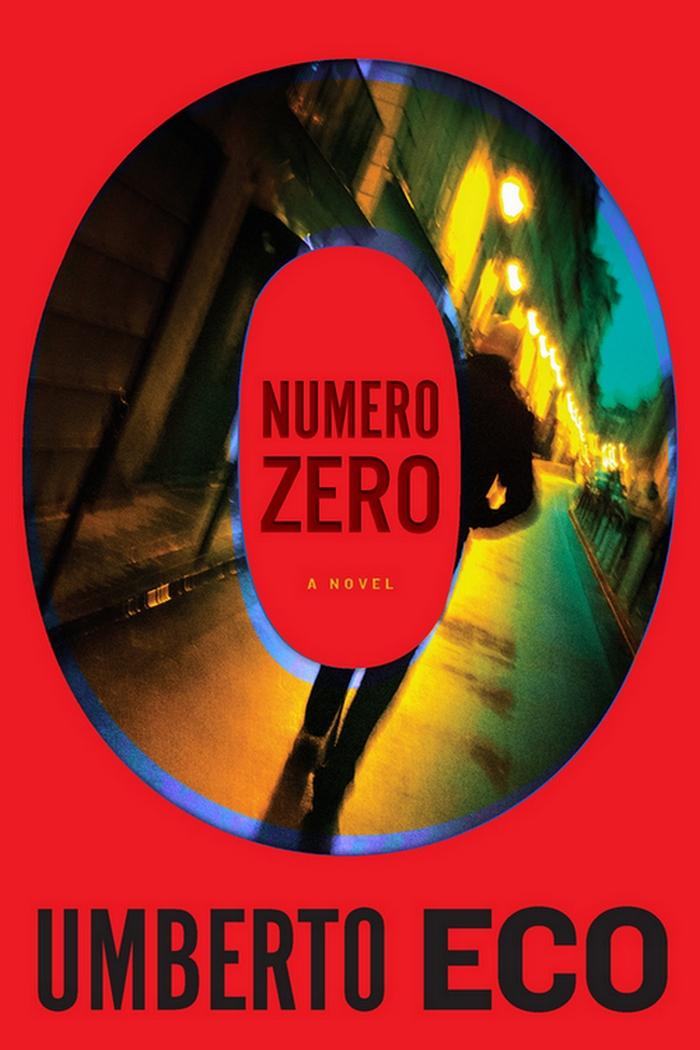
A newspaper committed to blackmail and mud slinging, rather than reporting the news.
A paranoid editor, walking through the streets of Milan, reconstructing fifty years of history against the backdrop of a plot involving the cadaver of Mussolini’s double.
The murder of Pope John Paul I, the CIA, red terrorists handled by secret services, twenty years of bloodshed, and events that seem outlandish until the BBC proves them true.
A fragile love story between two born losers, a failed ghost writer, and a vulnerable girl, who specializes in celebrity gossip yet cries over the second movement of Beethoven’s Seventh. And then a dead body that suddenly appears in a back alley in Milan.
Set in 1992 and foreshadowing the mysteries and follies of the following twenty years, Numero Zero is a scintillating take on our times from the best-selling author of The Name of the Rose and Foucault’s Pendulum.
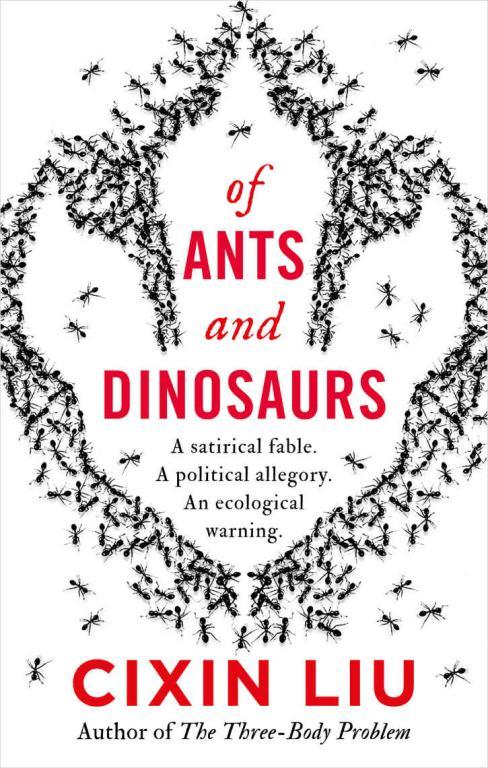
A satirical fable, a political allegory and an ecological warning from the author of The Three-Body Problem.
In a sunlit clearing in central Gondwana, on an otherwise ordinary day in the late Cretaceous, the seeds of Earth’s first and greatest civilization were sown in the grisly aftermath of a Tyrannosaurus’ lunch.
Throughout the universe, intelligence is a rare and fragile commodity – a fleeting glimmer in the long night of cosmic history. That Earth should harbour not just one but two intelligent species at the same time, defies the odds. That these species, so unalike – and yet so complementary – should forge an alliance that kindled a civilization defies logic. But time is endless and everything comes to pass eventually…
The alliance between ants and dinosaurs, was of course, based on dentistry. Yet from such humble beginnings came writing, mathematics, computers, fusion, antimatter and even space travel – a veritable Age of Wonder! But such magnificent industry comes at a price – a price paid first by Earth’s biosphere, and then by all those dependent on it.
And yet the Dinosaurs refused to heed the Ants’ warning of impending ecological collapse, leaving the Ant Federation facing a single dilemma: destroy the dinosaurs, destroy a civilization… or perish alongside them?
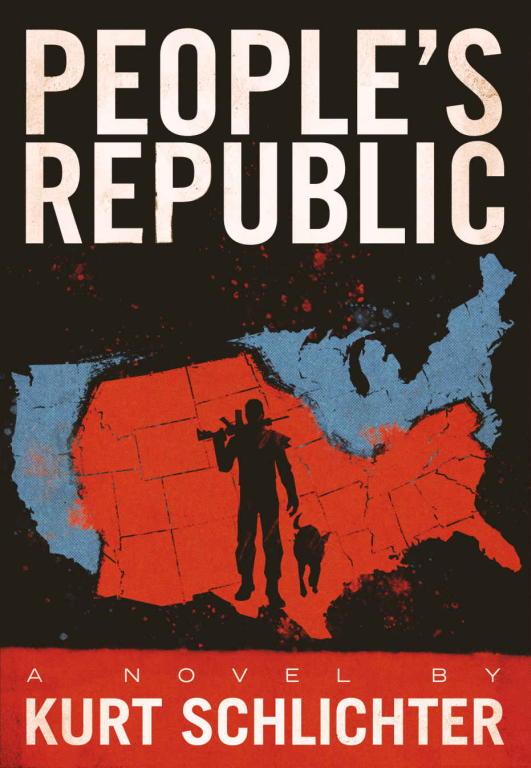
America’s growing political and cultural divisions have finally split the United States apart. Now, as the former blue states begin to collapse under the dead weight of their politically correct tyranny, a lethal operative haunted by his violent past undertakes one last mission to infiltrate and take out his target in the nightmarish city of Los Angeles, deep in the heart of the People’s Republic of North America.
National Review’s Jim Geraghty calls Kurt Schlichter’s “People’s Republic” “a surreal, fast-paced journey through a dramatically different America but less than a generation away.…Violent, imaginative, full of mordant humor and dark, gritty details, you won’t want to live in this People’s Republic… but you’ll feel a chill as you wonder how different our real future will be.” Author and television host Cam Edwards says “Kurt Schlichter's ‘People's Republic’ is a roller coaster ride through a post-election Hellscape that will leave you wanting more.” Radio host Hugh Hewitt say “Schlichter puts a whole flight of Black Swans in the air—each of them plausible—and the result is a riveting, page-turner, and a demand from Schlichter for… more.”
“People’s Republic” is the first novel by Kurt Schlichter, a retired Army infantry colonel, a conservative radio and television commentator on the Fox networks and elsewhere, a Senior Columnist at Townhall.com, and a popular and hilarious Twitter raconteur. He's also a trial lawyer, so he has an intimate understanding of evil and deception.
Radio host and commentator Ben Shapiro calls “People’s Republic “chilling,” and author and columnist David Limbaugh calls it “a thought-provoking action thriller set against the backdrop of a shattered America.”
Fox News contributor and author Katie Pavlich says, “They say conservatives are terrible story tellers, but Kurt Schlichter destroys that stereotype in his new novel People's Republic and issues a dire warning about the future of America.”
As with his prior book “Conservative Insurgency: The Struggle to Take America Back 2013-2041,” “People’s Republic” takes today’s news and projects the trends out into the future. Funny, frightening and action-packed, “People’s Republic” is a thriller that will make you think as well as keep you turning the pages.
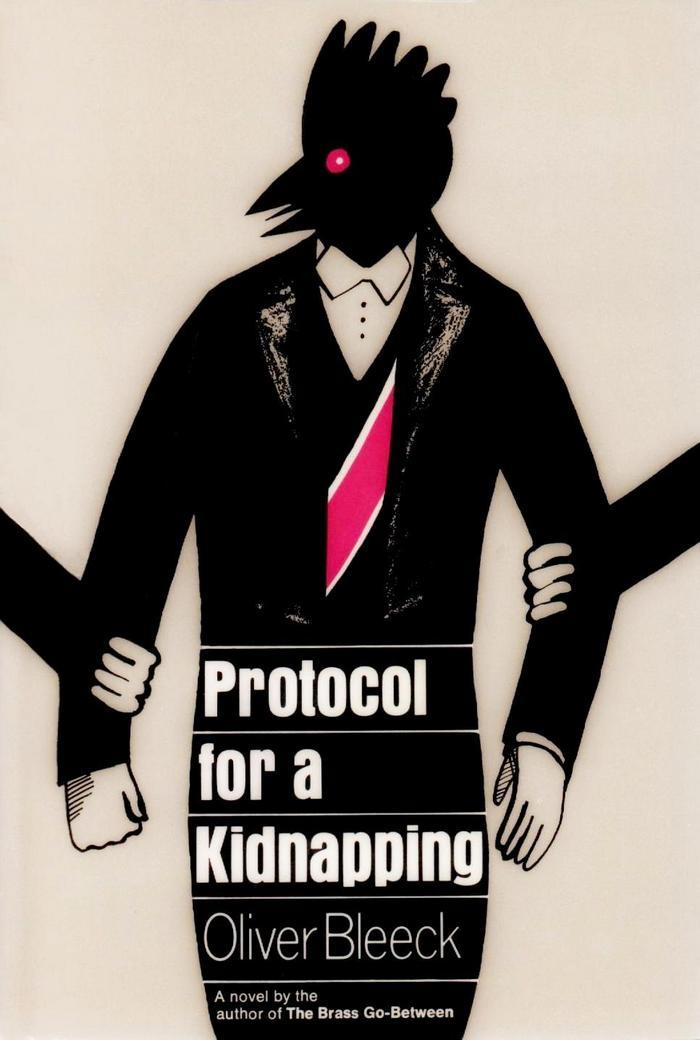
Philip St. Ives, the top professional go-between introduced last year in The Brass Go-Between, is back in action. In this new novel of intrigue, St. Ives is coerced by the Department of State into recovering the U.S. Ambassador to Yugoslavia. The diplomat has been kidnapped and is being held for a ransom of $1,000,000 and the release of a Nobel Prize-winning poet.
It’s a complicated assignment that becomes downright deadly as St. Ives finds himself involved with a Broadway actor, a 30-year-old millionaire, the poet’s breathtakingly beautiful daughter, and a sexy CIA agent.
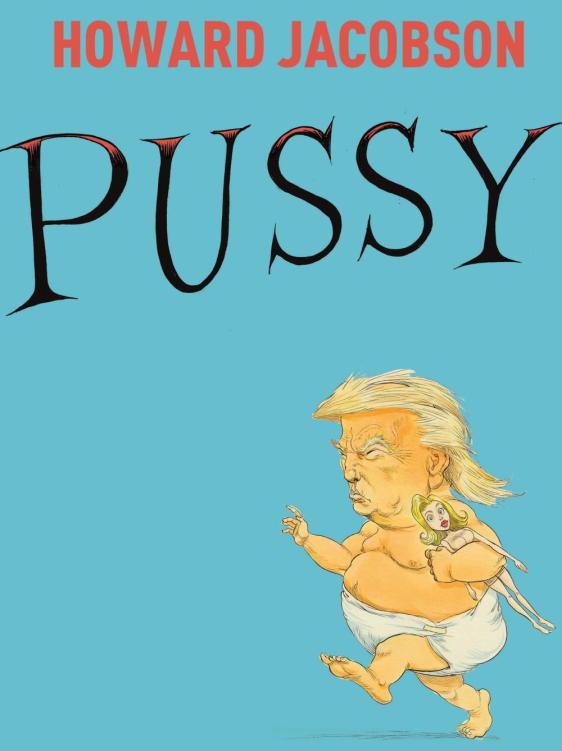
Pussy is the story of Prince Fracassus, heir presumptive to the Duchy of Origen, famed for its golden-gated skyscrapers and casinos, who passes his boyhood watching reality shows on TV, imagining himself to be the Roman Emperor Nero, and fantasizing about hookers. He is idle, boastful, thin-skinned and egotistic; has no manners, no curiosity, no knowledge, no idea and no words in which to express them. Could he, in that case, be the very leader to make the country great again?
The rolling strip across the bottom of the screen shouts the news:
BESTSELLING NOVELIST JOHN HOUSTON’S WIFE FOUND MURDERED AT THEIR LUXURY APARTMENT IN MONACO.
Houston is the richest writer in the world, a book factory publishing many bestsellers a year — so many that he can’t possibly write them himself. He has a team that feeds off his talent; ghost writers, agents, publishers. So when he decides to take a year out to write something of quality, a novel that will win prizes and critical acclaim, a lot of people stand to lose their livelihoods.
Now Houston, the prime suspect in his wife’s murder, has disappeared. He owns a boat and has a pilot’s licence — he could be anywhere and there are many who’d like to find him.
First there’s the police. If he’s innocent, why did he flee? Then again, maybe he was set up by one of his enemies. The scenario reads like the plot of one of Houston’s million-copy-selling thrillers...
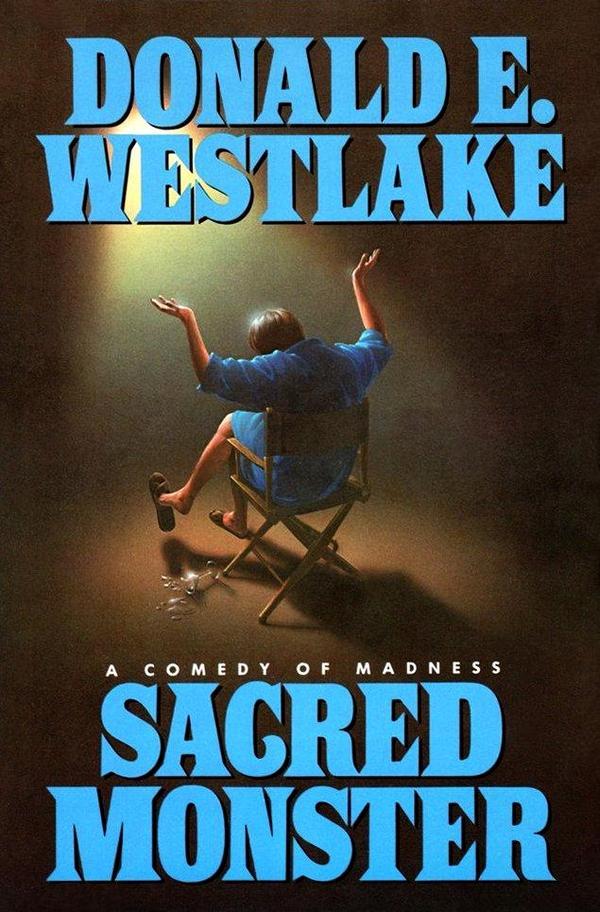
Jack Pine was born to be a Hollywood star. He has no morals, no scruples; he will not hesitate to do anything or love anyone if it might advance his career, get him the best roles, or project him ever more firmly into the spotlight.
And success does come, beyond the imagination of Jack’s agents and co-stars — even beyond the hopes of his boyhood friend Buddy Pal, a man who carries with the dark secrets of Jack’s past.
Buddy stands apart, aloof: he alone truly benefits from Jack’s careening ambition and his artful, charming conniving. Others who depend on Jack may fall by the wayside, but how can the affable star be blamed?
In fact, Jack Pine can be excused anything — until he carries out the final sin, for which there can be no pardon.

WINNER OF THE DINAANE DEBUT FICTION AWARD FOR 2016
Compared to the likes of Clockwork Orange by Anthony Burgess, Lauren Beukes’ Zoo City and Andrew Miller’s Dub Steps, Selling LipService is a daring novel. Selling LipService introduces its reader to a strange assortment of new vocabulary, and through this touches on the familiar danger of the commercialisation of language. Through a linguistically brilliant text, Tammy Baikie has created a world that exposes a society that has been swallowed up by the ad men.
At last a new book: a baker’s dozen of stories all with Helen DeWitt’s razor-sharp genius
For sheer unpredictable brilliance, Gogol may come to mind, but no author alive today takes a reader as far as Helen DeWitt into the funniest, most yonder dimensions of possibility. Her jumping-off points might be statistics, romance, the art world’s piranha tank, games of chance and games of skill, the travails of publishing, or success. “Look,” a character begins to explain, laying out some gambit reasonably enough, even if facing a world of boomeranging counterfactuals, situations spinning out to their utmost logical extremes, and Rube Goldberg-like moving parts, where things prove “more complicated than they had first appeared” and “at 3 a.m. the circumstances seem to attenuate.”
In various ways, each tale carries DeWitt’s signature poker-face lament regarding the near-impossibility of the life of the mind when one is made to pay to have the time for it, in a world so sadly “taken up with all sorts of paraphernalia superfluous, not to say impedimental, to ratiocination.”
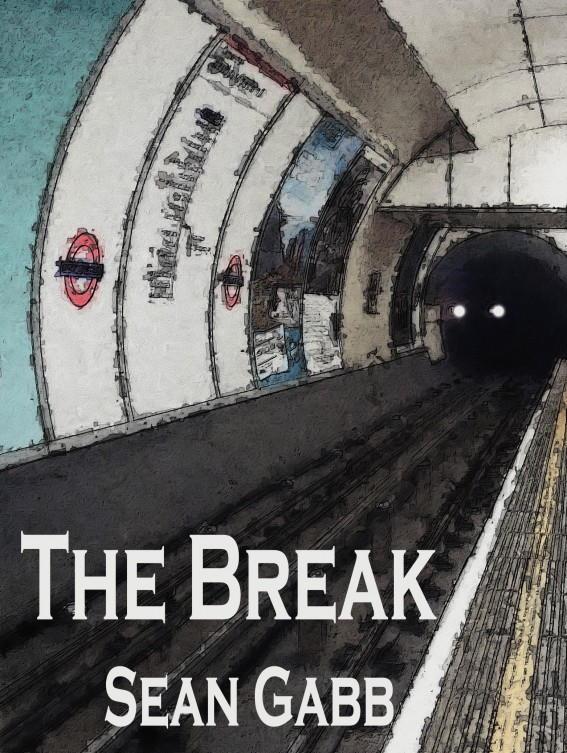
The Break is an adventure story in which the Byzantine Empire and the Catholic Church take on the British State. Which side wins?
No one knows what caused The Break eleven months ago, but there’s no sign of its end.
England is settling into its new future as a reindustrialising concentration camp. The rest of the world is watching… waiting… curious…
It’s Wednesday the 7th March 2018—in the mainland UK. Everywhere else, it’s some time in June 1065.
Jennifer thinks her family survived The Hunger because of their smuggling business—tampons and paracetamol to France, silver back to England. Little does she know what game her father was really playing, as she recrosses the Channel from an impromptu mission of her own. Little can she know how her life has already been torn apart.
Who has taken Jennifer’s parents? Where are they? What is the Home Secretary up to with the Americans? Why is she so desperate to lay hands on Michael? Will Jesus Christ return to Earth above Oxford Circus? When will the “Doomsday Project” go live?
Can the Byzantine Empire and the Catholic Church take on the British State, and win?
All will be answered—if Jennifer can stay alive in a post-apocalyptic London terrorised by cannibals, by thugs in uniform, and by motorbike gangs of Islamic suicide bombers.
When Inspector Peter Glebsky arrives at a remote ski chalet, he intends to ski, drink brandy, and loaf around in blissful solitude. But the chalet’s other vacationers—a famous hypnotist, a physicist with a penchant for gymnastic feats, and a large handful of others—are a nuisance, and so is the avalanche that soon cuts the inn off from civilization. And then there’s the dead body, which may not even be human…
In this genre-bending novel, the Strugatskys gleefully upend the plot of many a Hercule Poirot mystery, and the result is much funnier, and much stranger, than anything ever written by Agatha Christie.
The funny and moving story of the apocalypse – as seen from one small village in England
In the traditions of Victor Pelevin and Vladimir Sorokin, German Sadulaev’s follow-up to his acclaimed I am a Chechen! is set in a twenty-first century Russia, phantasmagorical and violent.
A bitingly funny twenty-first century satire, The Maya Pill tells the story of a mid-level manager at a frozen-food import company who comes upon a box of psychotropic pills that’s accidentally been slipped into a shipment. He takes one, and disappears down the rabbit hole: entering the mind of a Chinese colleague; dreaming that he is one of the rulers of an ancient kingdom; even beleiving he is in negotiations with the devil.
A mind-expanding companion to the great Russian classics, The Maya Pill is strange, savage, bizarre, and uproarious.
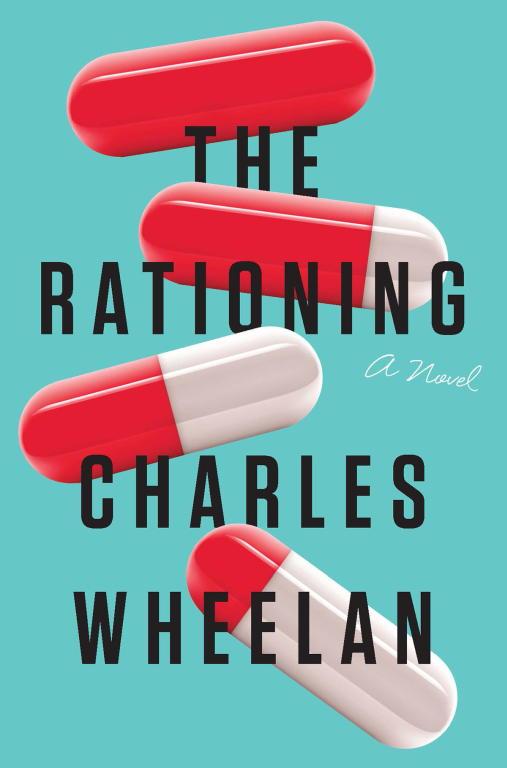
Political backstabbing, rank hypocrisy, and dastardly deception reign in this delightfully entertaining political satire, sure to lift one’s spirits far above the national stage.
America is in trouble—at the mercy of a puzzling pathogen. That ordinarily wouldn’t lead to catastrophe, thanks to modern medicine, but there’s just one problem: the government supply of Dormigen, the silver bullet of pharmaceuticals, has been depleted just as demand begins to spike.
Set in the near future, The Rationing centers around a White House struggling to quell the crisis—and control the narrative. Working together, just barely, are a savvy but preoccupied president; a Speaker more interested in jockeying for position—and a potential presidential bid—than attending to the minutiae of disease control; a patriotic majority leader unable to differentiate a virus from a bacterium; a strategist with brilliant analytical abilities but abominable people skills; and, improbably, our narrator, a low-level scientist with the National Institutes of Health who happens to be the world’s leading expert in lurking viruses.
Little goes according to plan during the three weeks necessary to replenish the stocks of Dormigen. Some Americans will get the life-saving drug and others will not, and nations with their own supply soon offer aid—but for a price. China senses blood and a geopolitical victory, presenting a laundry list of demands that ranges from complete domination of the South China Sea to additional parking spaces at the UN, while India claims it can save the day for the U.S.
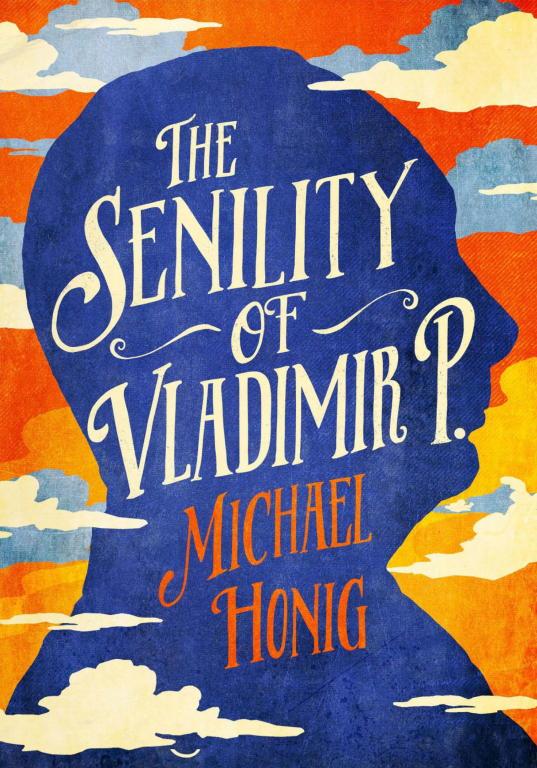
A vodka-soaked tragicomedy of bribes, backhanders and a certain ex-president of Russia going catastrophically awry.
Former Russian president, Vladimir P, is going senile, marooned in a world of memories from his years in power. To get him out of the way, he has been exiled to his luxury dacha, where he is served by a coterie of bickering house staff. Only Sheremetev, the guileless nurse charged with Vladimir’s round-the-clock care, is unaware that everyone else is busily using every means at their disposal to skim money from their employer’s inexhaustible riches. But when the nurse suddenly needs to find cash for a bribe or see his nephew rot in jail, the dacha’s chef lets him in on the secret world of ‘commissions’ going on all around him. Yet surely Sheremetev wouldn’t think to steal from his ailing patient? And surely, in the upstanding modern Russia that Vladimir P created, no one would actually let him…
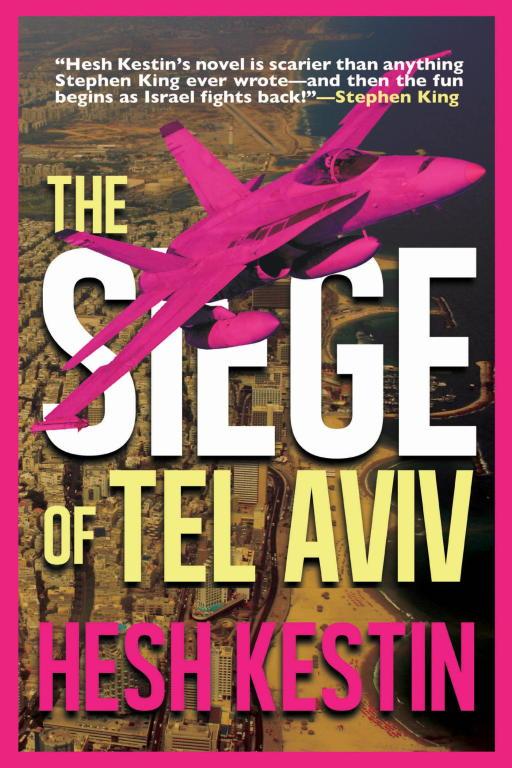
Stephen King calls Hesh Kestin’s The Siege of Ghetto Tel Aviv “scarier than anything Stephen King ever wrote.”
Iran leads five Arab armies in a brutal victory over Israel, which ceases to exist. Within hours, its leaders are rounded up and murdered, the IDF is routed, and the country’s six million Jews concentrated in Tel Aviv, which becomes a starving ghetto. While the US and the West sit by, the Moslem armies—taking a page from the Nazi playbook—prepare to kill off the entire population.
On the eve of genocide, Ghetto Tel Aviv makes one last attempt to save itself, as an Israeli businessman, a gangster, and a cross-dressing fighter pilot put together a daring plan to counterattack. Will it succeed?
The Siege of Ghetto Tel Aviv is as as bizarrely funny as it is fast-paced. In the words of Stephen King: “An irrepressible sense of humor runs through it. It’s not satire I’m talking about—it’s stuff like the cross-dressing pilot (my favorite character) and any number of deliciously absurd situations (the pink jets). It’s the inevitable result of an eye that sees the funny side, even in horror. So few writers have that. This novel will cause talk and controversy. Most of all, it will be read.”