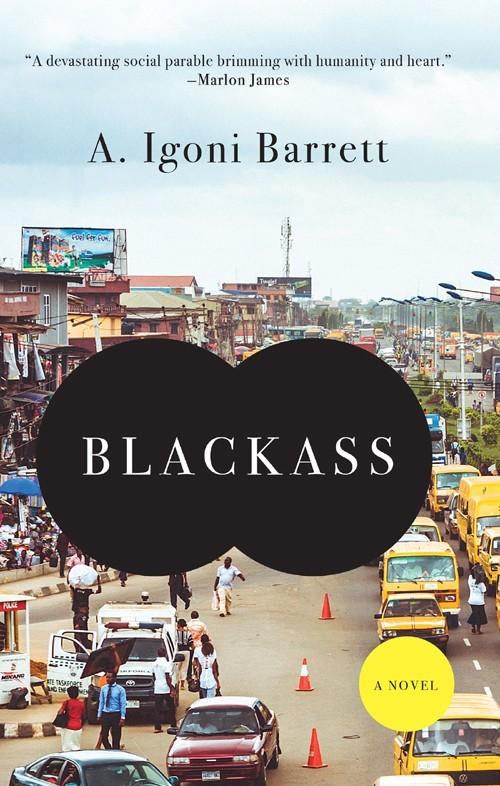
 fb2
fb2Furo Wariboko, a young Nigerian, awakes the morning before a job interview to find that he's been transformed into a white man. In this condition he plunges into the bustle of Lagos to make his fortune. With his red hair, green eyes, and pale skin, it seems he's been completely changed. Well, almost. There is the matter of his family, his accent, his name. Oh, and his black ass. Furo must quickly learn to navigate a world made unfamiliar and deal with those who would use him for their own purposes. Taken in by a young woman called Syreeta and pursued by a writer named Igoni, Furo lands his first-ever job, adopts a new name, and soon finds himself evolving in unanticipated ways.
A. Igoni Barrett's Blackass is a fierce comic satire that touches on everything from race to social media while at the same time questioning the values society places on us simply by virtue of the way we look. As he did in Love Is Power, or Something Like That, Barrett brilliantly depicts life in contemporary Nigeria and details the double-dealing and code-switching that are implicit in everyday business. But it's Furo's search for an identity-one deeper than skin-that leads to the final unraveling of his own carefully constructed story.
‘A lively and original talent’ – Sunday Times
‘Harris is at her best when detailing the sensual pleasures of taste and smell. As chocoholics stand advised to stock up on some of their favourite bars before biting into Chocolat, so boozers everywhere should get a couple of bottles in before opening Blackberry Wine’ – Helen Falconer, Guardian
‘Joanne Harris has the gift of conveying her delight in the sensuous pleasures of food, wine, scent and plants… [Blackberry Wine] has all the appeal of a velvety scented glass of vintage wine’ – Lizzie Buchan, Daily Mail
‘If Joanne Harris didn’t exist, someone would have to invent her, she’s such a welcome antidote to the modern preoccupation with the spare, pared down and non-fattening. Not for her the doubtful merits of an elegant and expensive sparkling water or an undressed rocket salad. In her previous novel, Chocolat, she invoked the scent and the flavour of rich, dark, sweet self-indulgence. In Blackberry Wine she celebrates the sensuous energy that can leap from a bottle after years of fermentation… Harris bombards the senses with the smells and tastes of times past… Harris’s talent lies in her own grasp of the quality she ascribes to wine, “layman’s alchemy, the magic of everyday things.” She is fanciful and grounded at the same time – one moment shrouded in mystery, the next firmly planted in earth. Above all, she has wit’ – -Jenni Murray, Sunday Express
***
Jay Mackintosh's memories are revived by the delivery of a bottle of home-brewed wine from a long-vanished friend. Jay, disillusioned by adulthood, escapes to a derelict farmhouse in France. There he faces old demons and the beautiful Marise, a woman who hides a terrible secret.
En esta extraordinaria novela, Ricardo Piglia se confirma, incontestablemente, como uno de los escritores mayores en lengua española de nuestro tiempo.
Tony Durán, un extraño forastero, nacido en Puerto Rico, educado como un americano en Nueva Jersey, fue asesinado a comienzos de los años setenta en un pueblo de la provincia de Buenos Aires. Antes de morir, Tony ha sido el centro de la atención de todos, el admirado, vigilado, diferente pero también el fascinante. Había llegado siguiendo a las bellas hermanas Belladona, las gemelas Ada y Sofía, hijas de una de las principales familias del lugar. Las conoció en Atlantic City y urdieron un feliz trío sexual y sentimental hasta que una de ellas, Sofía, «quizá la más débil o la más sensible», desertó del juego de los casinos y de los cuerpos. Tony Durán continuó con Ada y la siguió cuando ella volvió a la Argentina, donde encontró su muerte. A partir del crimen, esta novela policíaca muta, crece, y se transforma en un relato que se abre y anuda en arqueologías y dinastías familiares, que va y viene en una combinatoria de veloz novela de género y espléndida construcción literaria. El centro luminoso del libro, cuyo título remite a la cacería nocturna, es Luca Belladona, constructor de una fábrica fantasmal perdida en medio del campo que persigue con obstinación un proyecto demencial. La aparición de Emilio Renzi, el tradicional personaje de Piglia, le da a la historia una conclusión irónica y conmovedora.
Situada en el impasible paisaje de la llanura argentina, esta novela poblada de personajes memorables tiene una trama a la vez directa y compleja: traiciones y negociados, un falso culpable y un culpable verdadero, pasiones y trampas. Blanco nocturno narra la vida de un pueblo y el infierno de las relaciones familiares.
Jason Wilson escribió en The Independent: «Ricardo Piglia ocupa un lugar muy alto en la literatura. Ha heredado la desconfiada inteligencia de Borges, su incansable y gozosa exploración de la literatura y su atracción por los oscuros bajos fondos. Las ficciones de Piglia son inventivas parábolas sobre las pesadillas recientes y pasadas de la historia de su país».

Sherman Alexie’s stature as a writer of stories, poems, and novels has soared over the course of his twenty-book, twenty-year career. His wide-ranging, acclaimed stories from the last two decades, from The Lone Ranger and Tonto Fistfight in Heaven to his most recent PEN/Faulkner award-winning War Dances, have established him as a star in modern literature.
A bold and irreverent observer of life among Native Americans in the Pacific Northwest, the daring, versatile, funny, and outrageous Alexie showcases all his talents in his newest collection, Blasphemy, where he unites fifteen beloved classics with fifteen new stories in one sweeping anthology for devoted fans and first-time readers.
Included here are some of his most esteemed tales, including "What You Pawn I Will Redeem," "This is What it Means to Say Phoenix, Arizona,” "The Toughest Indian in the World,” and "War Dances.” Alexie’s new stories are fresh and quintessential — about donkey basketball leagues, lethal wind turbines, the reservation, marriage, and all species of contemporary American warriors.
An indispensable collection of new and classic stories, Blasphemy reminds us, on every thrilling page, why Sherman Alexie is one of our greatest contemporary writers and a true master of the short story.
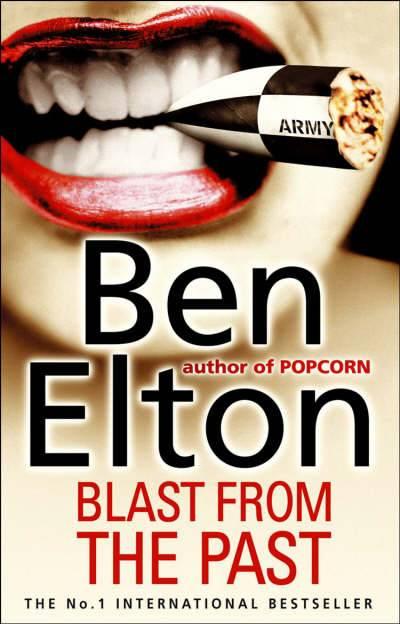
It's 2:15 A.M. and the phone is ringing. Jolted awake, Polly stares wide-eyed at it. She is certain it must be bad news because no one with good news calls at that hour. A wrong number, maybe. But more likely it's the Bug, the stalker who has been harassing her for ages. But as Polly reaches for the phone, the one thing she cannot imagine, the one thing she doesn't remotely expect, is the voice on the other end of the line. Her very own blast from the past… "Don't freak out," the voice says. "It's Jack." And so begins a steamy two-in-the-morning stroll down memory lane. Sixteen years ago Polly Slade collided with an American knight-in-shining-armor at a roadside restaurant, when she wore a T-shirt with a cruise missile on it and he fell in love like a man without a parachute. For one summer the coolly polished American soldier and his red-hot anarchist British lover shared hotel rooms and noisy sex in the kind of burning-furnace love that can only happen once in any lifetime. Then Jack went back to America and his oh-so-promising career in the U.S. military. And Polly went on to her demonstrations, an unsatisfactory string of lovers, a dismal apartment, and, of course, the Bug… "Now Jack is a four-star general. And the Bug is a menace with a knife, standing outside Polly's building as the American makes his dashing return.
Andrew Taylor has written over 25 crime novels, and won many awards for his books. His best selling historical crime novel THE AMERICAN BOY was selected by Richard and Judy's book club. This new story is set in Bleeding Heart Square in the 1930s. In case you were wondering, there is no 'Bleeding Heart Square' in London, but there is a 'Bleeding Heart Yard'. It is apparently named after Elizabeth Hatton, a 17th century society beauty who was murdered one night in 1626 after a ball, and her body found in the Yard torn limb from limb and with her heart still bleeding on the cobblestones, a story that is used in this book to describe the origins of Bleeding Heart Square.
At the start of the book, Lydia has a violent argument with her husband, Marcus. She decides to leave him and her life of privilege to take refuge with her father in his rooms at 7 Bleeding Heart Square, to live in much reduced circumstances. She does not know her father well, as her mother divorced him when she was young. But she is determined to stay with him, and not to give in to her mother (re-married and now Lady Cassington) and return to live with Marcus, to keep up appearances. The current owner of the house is a shady character called Serridge. Narton, a policeman, suspects Serridge of murdering the previous owner, Phillipa Penhow, about four years ago. Ms Penhow, a rich spinster, had become smitten with Serridge. He persuaded her to buy a remote farmhouse in Essex, and to move there to live with him, until she disappeared shortly afterwards. When questioned, Serridge claimed that she met an old boyfriend and moved away to America with him, but no-one has heard from her since. Narton recruits Rory, a young man he sees hanging about the square, to help him find evidence that Serridge is to blame. Rory wants to find out what happened to Ms Penhow, because she is the aunt of his girlfriend Fenella. It also turns out that Lydia's father is somehow connected to Serridge, not only through their time together in the army during the First World War, but also because he used to own the farm in Essex that Serridge persuaded Ms Penhow to buy.
The main mystery to be solved in the book is whether Serridge murdered Ms Penhow for her money, or whether she really did move to America. However, in true Dickensian fashion, there is a whole host of characters, and many subplots that contribute to the main story. Ms Penhow's infatuation with Serridge, and the consequences of that, are gradually revealed through excerpts from her diary, read by an unknown person, who has somehow acquired the diary. These convey her initial optimism and subsequent slide into despair, and raise the hope that perhaps she did just run away after all. Meanwhile, with the help of Narton, Rory starts to find out what really happened to Ms Penhow, while gradually realising that Fenella no longer wants to marry him, and struggling to find himself a job as a journalist. A third subplot describes how Lydia starts to make a new life for herself, her growing friendship with Rory after he also moves into 7 Bleeding Heart Square, and her own part in discovering what happened to Ms Penhow.
The book evokes the period partly through its descriptions of the British Fascist movement, and Marcus's involvement in it, and through the stark differences between the lives of the wealthy and those of the poor. It is a hugely enjoyable book, in which the many different threads, and rich detail, are skilfully woven together. It was an exciting read, and I had to restrain myself from turning to the ending to find out what happened before finishing the book. But, I'm afraid when I finally did get there, I was a bit underwhelmed by the final unveiling of the fate of Ms Penhow, and I don't think this was just because I hadn't been paying enough attention to the clues dotted through the story. Despite this, and because the story of Ms Penhow is in some ways almost incidental, mostly serving as a means to throw the various characters together, one can just about forgive the ending, and simply enjoy the rest of the book. One to recommend, but I don't think it's going to make my top five of the year.
Mick is on his way to the Smoke from the provinces. He's got six guys to find with only their names to go on and no more help than the phone book and an A-Z. Stuart is determined to walk each of the capital's roads, streets and alleyways. But what will he do when there's nothing left of his A-Z but blacked out pages? Judy is set on creating her own unique map of each of the metropolis' boroughs…an A-Z of sex in the city. Three strangers in search of London's heart and soul, mapping out their stories from Acton to Hackney, Chelsea Harbour to Woolwich, in a comic dance of sex and death.
From the New York Times best-selling author Paul Theroux, Blinding Light is a slyly satirical novel of manners and mind expansion. Slade Steadman, a writer who has lost his chops, sets out for the Ecuadorian jungle with his ex-girlfriend in search of inspiration and a rare hallucinogen. The drug, once found, heightens both his powers of perception and his libido, but it also leaves him with an unfortunate side effect: periodic blindness. Unable to resist the insights that enable him to write again, Steadman spends the next year of his life in thrall to his psychedelic muse and his erotic fantasies, with consequences that are both ecstatic and disastrous.
Part visceral dream-memoir, part fictive journey through a hallucinatory Bucharest, Mircea Cărtărescu’s Blinding was one of the most widely heralded literary sensations in contemporary Romania, and a bestseller from the day of its release. Riddled with hidden passageways, mesmerizing tapestries, and whispering butterflies, Blinding takes us on a mystical trip into the protagonist’s childhood, his memories of hospitalization as a teenager, the prehistory of his family, a traveling circus, secret police, zombie armies, American fighter pilots, the underground jazz scene of New Orleans, and the installation of the communist regime. This kaleidoscopic world is both eerily familiar and profoundly new. Readers of Blinding will emerge from this strange pilgrimage shaken, and entirely transformed.

Without warning, a driver waiting at traffic lights goes blind.A good samaritan takes pity on him, and drives him home to his wife. The next morning, the wife takes her husband to see an optician, who is baffled. That afternoon, the wife goes blind. So does the samaritan. The following morning, the doctor goes blind. Later that day, one by one, the doctor's patients go blind.The contagion spreads through the city. Panicked, the government sets up internment camps, and rounds up the blind. The camps are undermanned and underprovisioned. Thereafter, the situation deteriorates.Standard SF plot, right? Reminiscent of John Wyndham, in fact: total breakdown of society in the face of inexorable disaster. Except the novel I'm describing is Blindness, written by Jose Saramago, 1998 winner of the Nobel Prize for Literature. I first saw Blindness mentioned a couple of years ago, in one of Robert Silverberg's columns for Asimov's. I meant to get hold of a copy – Nobel Prize-winning speculative fiction seeming too good a chance to pass up – but somehow forgot and it was only when a customer came in before christmas to request a copy that I remembered it.There's something more, though, something I haven't told you about the novel. It's the writing style. Saramago uses only commas and periods to punctuate his sentences. That means no hyphens, no semicolons – and no quotation marks, either. Speech runs on in a sprawling mess, How does that work, By separating each statement with a comma and a capital, Oh I see, It takes a while to get used to. I initially thought it was clever; none of the characters are named, either, merely referred to by their position – the first man, the doctor's wife, the man with the black eye-patch, and so on – and the combination of the two is intensely claustrophobic. You never quite feel you can see what's going on, you feel that your viewpoint is constrained – in fact, you feel partially blind. I was somewhat disappointed when I opened one of Saramago's other novels to find exactly the same style; apparently, his books are experiments in timbre and rhythm and pace, and he merely feels that punctuation gets in the way.That aside, the novel is very good, both as a novel and as science fiction. The breakdown of order, the process of the progression of the blindness – the inevitability of it – is the main thrust of the novel, with the characters doing what they must to survive. In places, the novel is bleak, and brutal; in places, as you might expect from a novel employing a metaphor of such grand power and conception, it is genuinely enlightening. It is never boring, though, even when Saramago is describing the minutiae of life in one of the blind camps, and even when you're struggling through a particularly dense page of exposition and authorial asides directed squarely at the reader. Recommended.
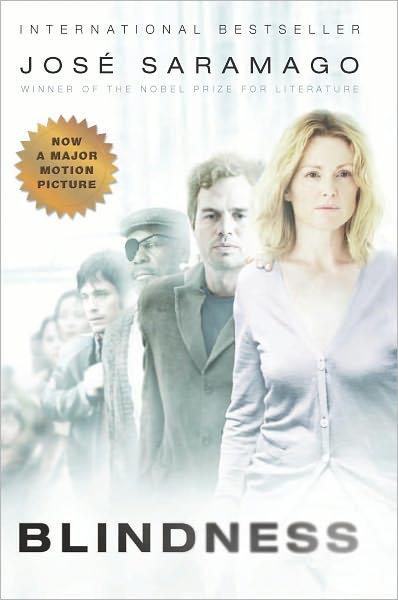
Winner of the 1998 Nobel Prize for Literature. A city is hit by an epidemic of 'white blindness.' The blindness spreads, sparing no one. Authorities confine the blind to a vacant mental hospital secured by armed guards. Inside, the criminal element among the blind hold the rest captive: food rations are stolen, women are raped. There is one eyewitness to this nightmare who guides seven strangers through the barren streets. The developments within this oddly anonymous group -- the first blind man, the old man with the black eye patch, the girl with dark glasses, the boy with no mother, and the dog of tears -- are as uncanny as the surrounding chaos is harrowing.
A parable of loss and disorientation, of man's worst appetities and hopeless weaknesses,Blindnessis one of the most challenging, thought-provoking, and ultimately exhilarating novels published in any language in recent years.
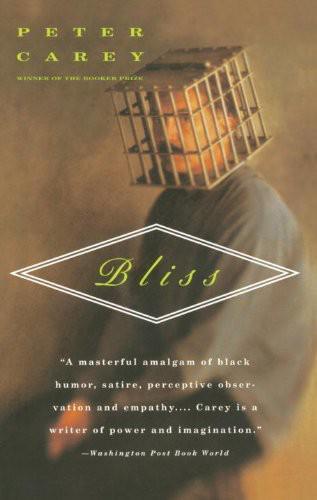
"Bliss" was Peter Carey's astonishing first novel, originally published in 1981 - a fast-moving extravaganza, both funny and gripping, about a man who, recovering from death, is convinced that he is in Hell. For the first time in his life, Harry Joy sees the world as it really is and takes up a notebook to explore and notate the true nature of the Underworld. As in his stories and some of his later novels, it is Peter Carey's achievement in "Bliss" to create a brilliant but totally believable fusion of ordinary experience with the crazier fantasies of the mind. This powerful and original novel is a love story about a man who misunderstands the world so totally that he almost gets it right.
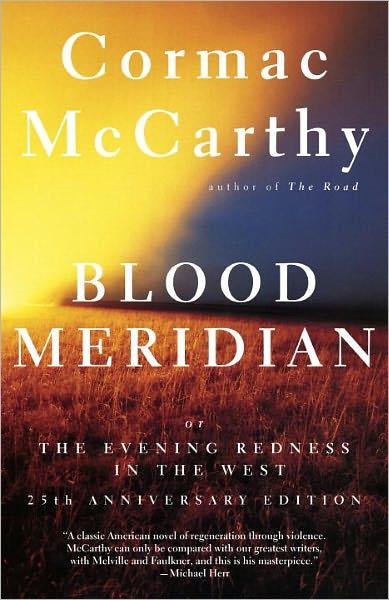
"The fulfilled renown of Moby-Dick and of As I Lay Dying is augmented by Blood Meridian, since Cormac McCarthy is the worthy disciple both of Melville and Faulkner," writes esteemed literary scholar Harold Bloom in his Introduction to the Modern Library edition. "I venture that no other living American novelist, not even Pynchon, has given us a book as strong and memorable."
Cormac McCarthy's masterwork, Blood Meridian, chronicles the brutal world of the Texas-Mexico borderlands in the mid-nineteenth century. Its wounded hero, the teenage Kid, must confront the extraordinary violence of the Glanton gang, a murderous cadre on an official mission to scalp Indians and sell those scalps. Loosely based on fact, the novel represents a genius vision of the historical West, one so fiercely realized that since its initial publication in 1985 the canon of American literature has welcomed Blood Meridian to its shelf.
"A classic American novel of regeneration through violence," declares Michael Herr. "McCarthy can only be compared to our greatest writers."
Cormac McCarthy is the author of The Orchard Keeper, Outer Dark, Child of God, Suttree, Blood Meridian, and All the Pretty Horses, which won the National Book Award and the National Book Critics Circle Award.
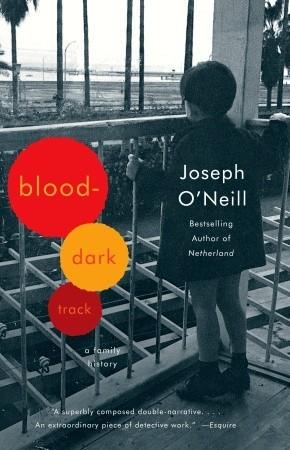
From the bestselling and PEN/Faulkner Award-winning author of Netherland, a fascinating, personal, and beautifully crafted family history.
Joseph O'Neill's grandfathers-one Turkish, one Irish-were both imprisoned for suspected subversion during the Second World War. The Irish grandfather, a handsome rogue from a family of small farmers, was an active member of the IRA. O'Neill's other grandfather, a debonair hotelier from the tiny and threatened Turkish Christian minority, was interned by the British in Palestine on suspicion of being an Axis spy.
With intellect, compassion, and grace, O'Neill sets the stories of these individuals against the history of the last century's most inhuman events.
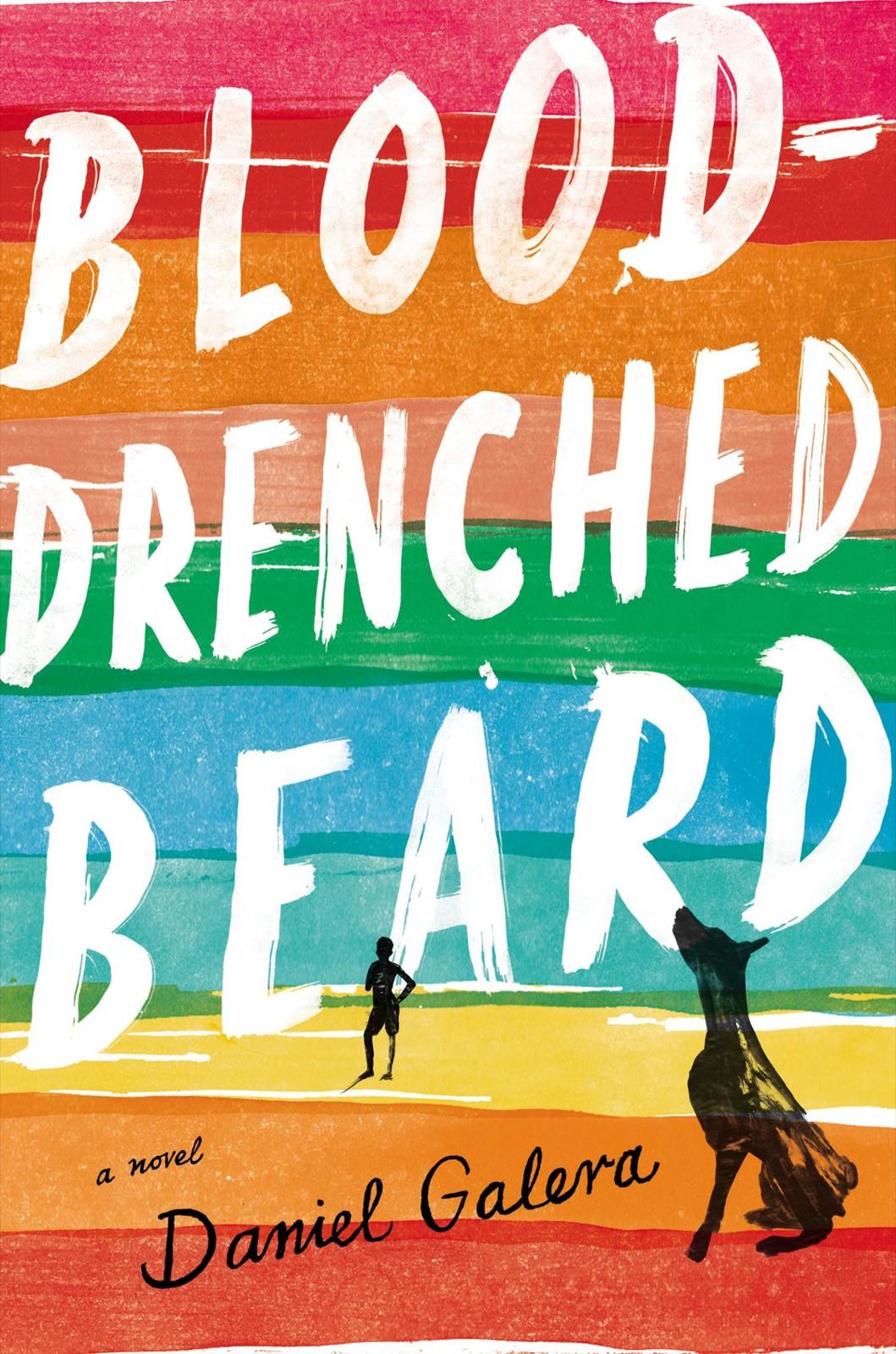
From Brazil’s most acclaimed young novelist, the mesmerizing story of how a troubled young man’s restorative journey to the seaside becomes a violent struggle with his family’s past
— So why did they kill him?
— I’m getting there. Patience, tchê. I wanted to give you the context. Because it’s a good story, isn’t it?
A young man’s father, close to death, reveals to his son the true story of his grandfather’s death, or at least the truth as he knows it. The mean old gaucho was murdered by some fellow villagers in Garopaba, a sleepy town on the Atlantic now famous for its surfing and fishing. It was almost an execution, vigilante style. Or so the story goes.
It is almost as if his father has given the young man a deathbed challenge. He has no strong ties to home, he is ready for a change, and he loves the seaside and is a great ocean swimmer, so he strikes out for Garopaba, without even being quite sure why. He finds an apartment by the water and builds a simple new life, taking his father’s old dog as a companion. He swims in the sea every day, makes a few friends, enters into a relationship, begins to make inquiries.
But information doesn’t come easily. A rare neurological condition means that he doesn’t recognize the faces of people he’s met, leading frequently to awkwardness and occasionally to hostility. And the people who know about his grandfather seem fearful, even haunted. Life becomes complicated in Garopaba until it becomes downright dangerous.
Steeped in a very special atmosphere, both languid and tense, and soaked in the sultry allure of south Brazil, Daniel Galera’s masterfully spare and powerful prose unfolds a story of discovery that feels almost archetypal — a display of storytelling sorcery that builds with oceanic force and announces one of Brazil’s greatest young writers to the English-speaking world.
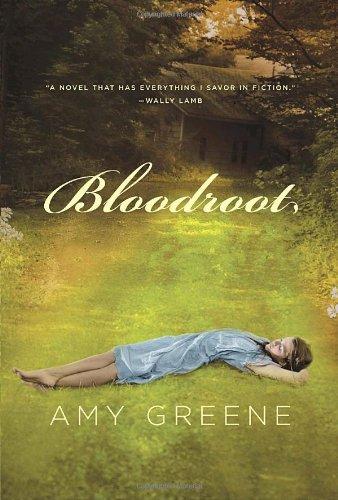
Named for a flower whose blood-red sap possesses the power both to heal and poison, Bloodroot is a stunning fiction debut about the legacies — of magic and madness, faith and secrets, passion and loss — that haunt one family across the generations, from the Great Depression to today.
The novel is told in a kaleidoscope of seamlessly woven voices and centers around an incendiary romance that consumes everyone in its path: Myra Lamb, a wild young girl with mysterious, haint blue eyes who grows up on remote Bloodroot Mountain; her grandmother Byrdie Lamb, who protects Myra fiercely and passes down “the touch” that bewitches people and animals alike; the neighbor boy who longs for Myra yet is destined never to have her; the twin children Myra is forced to abandon but who never forget their mother’s deep love; and John Odom, the man who tries to tame Myra and meets with shocking, violent disaster. Against the backdrop of a beautiful but often unforgiving country, these lives come together — only to be torn apart — as a dark, riveting mystery unfolds.
With grace and unflinching verisimilitude, Amy Greene brings her native Appalachia — and the faith and fury of its people — to rich and vivid life. Here is a spellbinding tour de force that announces a dazzlingly fresh, natural-born storyteller in our midst.
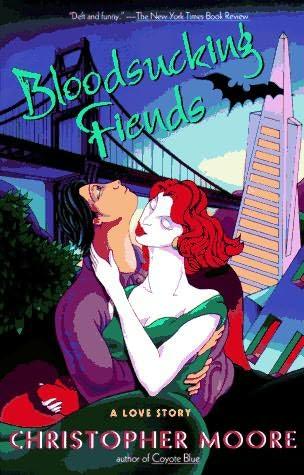
Jody never asked to become a vampire. But when she wakes up under an alley dumpster with a badly burned arm, an aching neck, superhuman strength, and a distinctly Nosferatuan thirst, she realizes the decision has been made for her. Making the transition from the nine-to-five grind to an eternity of nocturnal prowlings is going to take some doing, however, and that's where C. Thomas Flood fits in. A would-be Kerouac from Incontinence, Indiana, Tommy (to his friends) is biding his time night-clerking and frozen turkey bowling in a San Francisco Safeway. But all that changes when a beautiful, undead redhead walks through the door… and proceeds to rock Tommy's life — and afterlife — in ways he never imagined possible.
A wildly original story of romance, lust, bloodlust, and blood loss — from the author of Coyote Blue and Practical Demonkeeping.
"Goofy grotesqueries… wonderful… delicious… bloody funny… like a hip and youthful 'Abbott and Costello Meet the Lugosis. " — San Francisco Chronicle
"Delightful… highly recommended… filled with oddball characters, clever dialogue and hilarious situations." — Library Journal
"Moore's storytelling style is reminiscent of Vonnegut and Douglas Adams." — Philadelphia Inquirer
"A series of bizarre misadventures that take place at breakneck speed in a variety of interesting locales. The dialogue is sharp and from the hip, the pace frenetic, and the situations tinged with a healthy dose of the supernatural… Moore is one of those rare writers who is laugh-out-loud funny." — Santa Barbara Independent
A new novel from the award-winning, internationally acclaimed Israeli writer ("One of the greatest writers of the age" —The Guardian), a haunting, heartbreaking story of love and loss.
The ghetto in which the Jews have been confined is being liquidated by the Nazis, and eleven-year-old Hugo is brought by his mother to the local brothel, where one of the prostitutes has agreed to hide him. Mariana is a bitterly unhappy woman who hates what she has done to her life, and night after night Hugo sits in her closet and listens uncomprehendingly as she rages at the Nazi soldiers who come and go. When she's not mired in self-loathing, Mariana is fiercely protective of the bewildered, painfully polite young boy. And Hugo becomes protective of Mariana, too, trying to make her laugh when she is depressed, soothing her physical and mental agony with cold compresses. As the memories of his family and friends grow dim, Hugo falls in love with Mariana. And as her life spirals downward, Mariana reaches out for consolation to the adoring boy who is on the cusp of manhood.
The arrival of the Russian army sends the prostitutes fleeing. But Mariana is too well known, and she is arrested as a Nazi collaborator for having slept with the Germans. As the novel moves toward its heartrending conclusion, Aharon Appelfeld once again crafts out of the depths of unfathomable tragedy a renewal of life and a deeper understanding of what it means to be human.
**Winner of the 2012 Independent Foreign Fiction Prize**
Sir Giles Lynchwood, millionaire property developer and Tory MP, is determined to see a motorway driven through the ancestral home of his spouse, Lady Maud. As local opposition grows, the MP is devoured by lions, and Lady Maud marries her gardener, Blott.