
 fb2
fb2
El 26 de octubre de 1949 el reportero Gabriel García Márquez fue enviado al antiguo convento de Santa Clara, que iba a ser demolido para edificar sobre él un hotel de cinco estrellas, a presenciar el vaciado de las criptas funerarias y a cubrir la noticia.
Se exhumaron los restos de un virrey del Perú y su amante secreta, un obispo, varias abadesas, un bachiller de artes y una marquesa. Pero la sorpresa saltó al destapar la tercera hornacina del altar mayor: se desparramó una cabellera de color cobre, perteneciente a una niña. En la lápida apenas se leía el nombre: Sierva María de Todos los Ángeles.
"Extendida en el suelo, la cabellera espléndida medía veintidós metros con once centímetros.El maestro de obra me explicó sin asombro que el cabello humano crecía un centímetro por mes hasta después de la muerte, y veintidós metros le parecieron un buen promedio para doscientos años. A mí, en cambio, no me pareció tan trivial, porque mi abuela me contaba de niño la leyenda de una marquesita de doce años cuya cabellera le arrastraba como una cola de novia, que había muerto del mal de rabia por el mordisco de un perro, y era venerada en los pueblos del Caribe por sus muchos milagros. La idea de que esa tumba pudiera ser la suya fue mi noticia de aquel día, y el origen de este libro." G. García Márquez

Para el autor recorrer Marruecos es hacer realidad un sueño de infancia y, a la vez, adentrarse en el impresionante escenario de la aventura bélica de su abuelo, combatiente a pie en la llamada guerra de Africa. A lo largo de ocho jornadas, y con la compañía de su hermano y un amigo, el escritor explora el interior del país para descubrir la áspera región del Rif y la zona no menos agreste del Yebala, y de paso lugares como Melilla, Annual, Alhucemas, Xauen, Larache, Alcazarseguer, Tánger, Fez, la antigua ciudad romana de Volúbilis o Rabat. El viaje desvela el Marruecos presente y lo anuda a la historia de la guerra pasada, que acude a estas páginas con la enfebrecida claridad del espejismo: combates reducidos a cacerías, al heroísmo inútil, el desdén de los gobernantes, el horror.

Стася работает бардонавткой, кем-то вроде почтальона между нашим миром и Бардо — так учёные назвали случайно открытое измерение, куда на некоторое время после смерти попадает сознание умерших людей.
Стася хорошо себя чувствует среди мёртвых, а вот в мире живых у неё полно проблем: письма и слежка бывшего парня, постоянные разговоры отца о её никчёмности…
Но всего этого как будто недостаточно, и в её жизни появляется ещё один преследователь — невидимый.

Esta es una de las novelas más apasionantes de Vázquez-Figueroa. Ambientada en el mundo submarino, narra una historia sorprendente que, como han demostrado los acontecimientos, adquiere súbita vigencia hoy en día y se convierte en un nuevo vaticinio acertado de un autor que, como pocos, ha sabido prever el futuro en muchos de sus libros. En este caso se trata del turbio mundo de los traficantes de droga, quienes, acosados por las autoridades, se procuran medios cada vez más insólitos como la utilización de submarinos. Naturalmente, estos siniestros mercaderes de la muerte no tienen en cuenta las terribles consecuencias que ello depara en el comportamiento de los delfines…

In "Sir Fleeting," a Midwestern farm girl on her honeymoon in Argentina falls into lifelong lust for a French playboy. In "Blythe," an attorney who has become a stay-at-home mother takes a night class in poetry and meets another full-time mother, one whose charismatic brilliance changes everything. In "The Wife of the Dictator," that eponymous wife ("brought back. . from [the dictator's] last visit to America") grows more desperately, menacingly isolated every day. In "Delicate Edible Birds," a group of war correspondents-a lone, high-spirited woman among them-falls sudden prey to a brutal farmer while fleeing Nazis in the French countryside. In "Lucky Chow Fun," Groff returns us to Templeton, the setting of her first book, for revelations about the darkness within even that idyllic small town.
In some of these stories, enormous changes happen in an instant. In others, transformations occur across a lifetime-or several lifetimes.
Throughout the collection, Groff displays particular and vivid preoccupations. Crime is a motif-sex crimes, a possible murder, crimes of the heart. Love troubles recur-they're in every story-love in alcoholism, in adultery, in a flood, even in the great flu epidemic of 1918. Some of the love has depths, which are understood too late; some of the love is shallow, and also understood too late. And mastery is a theme-Groff's women swim and baton twirl, become poets, or try and try again to achieve the inner strength to exercise personal freedom.
Overall, these stories announce a notable new literary master. Dazzlingly original and confident, Delicate Edible Birds further solidifies Groff's reputation as one of the foremost talents of her generation.

Darlene, a young widow and mother devastated by the death of her husband, turns to drugs to erase the trauma. In this fog of grief, she is lured with the promise of a great job to a mysterious farm run by a shady company, with disastrous consequences for both her and her eleven-year-old son, Eddie-left behind in a panic-stricken search for her.
DELICIOUS FOODS tells the gripping story of three unforgettable characters: a mother, her son, and the drug that threatens to destroy them. In Darlene's haunted struggle to reunite with Eddie, and in the efforts of both to triumph over those who would enslave them, Hannaham's daring and shape-shifting prose not only infuses their desperate circumstances with grace and humor, but also wrestles with timeless questions of love and freedom.

In this remarkably nuanced novel, both a gripping detective story and a passionate, devastating tale of eros and insanity in Colombia, internationally acclaimed author Laura Restrepo delves into the minds of four characters. There's Agustina, a beautiful woman from an upper-class family who is caught in the throes of madness; her husband Aguilar, a man passionately in love with his wife and determined to rescue her from insanity; Agustina's former lover Midas, a drug-trafficker and money-launderer; and Nicolás, Agustina's grandfather. Through the blend of these distinct voices, Restrepo creates a searing portrait of a society battered by war and corruption, as well as an intimate look at the daily lives of people struggling to stay sane in an unstable reality.

Et vous, quel est le truc le plus idiot que vous ayez fait de votre vie ?
Comme tout le monde, Julie a fait beaucoup de trucs stupides. Elle pourrait raconter la fois ou elle a enfilé un pull en dévalant des escaliers, celle ou elle a tenté de réparer une prise électrique en tenant les fils entre ses dents, ou encore son obsession pour le nouveau voisin qu'elle n'a pourtant jamais vu — obsession qui lui a valu de se coincer la main dans sa boîte aux lettres en espionnant un mystérieux courrier…
Mais tout cela n'est rien, absolument rien, à côté des choses insensées qu'elle va tenter pour approcher cet homme dont elle veut désormais percer le secret. Poussée par une inventivité débridée, à la fois intriguée et attirée par cet inconnu à côté duquel elle vit mais dont elle ignore tout, Julie va prendre des risques toujours plus délirants, jusqu'à pouvoir enfin trouver la réponse à cette question qui révèle tellement : pour qui avons-nous fait le truc le plus idiot de notre vie ?
Avec cette première comédie, Gilles Legardinier — déjà remarqué pour ses deux thrillers L'Exil des Anges et Nous étions les hommes — révèle une nouvelle facette d'une imagination qui n'a pas fini de surprendre. Drôle, percutant, terriblement touchant, son nouveau roman confirme ce que tous ceux qui ont lu un de ses livres savent déjà : Gilles a le don de raconter des histoires originales qui nous entraînent ailleurs tout en faisant résonner notre nature la plus intime. Voici un livre qui fait du bien !
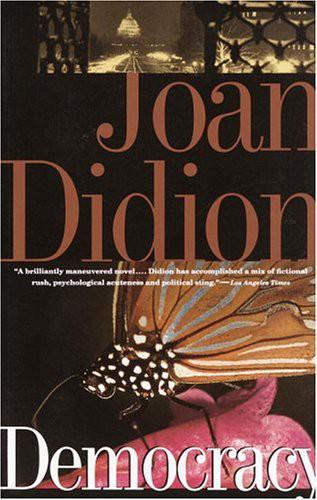
Inez Victor knows that the major casualty of the political life is memory. But the people around Inez have made careers out of losing track. Her senator husband wants to forget the failure of his last bid for the presidency. Her husband's handler would like the press to forget that Inez's father is a murderer. And, in 1975, the year in which much of this bitterly funny novel is set, America is doing its best to lose track of its one-time client, the lethally hemorrhaging republic of South Vietnam.As conceived by Joan Didion, these personages and events constitute the terminal fallout of democracy, a fallout that also includes fact-finding junkets, senatorial groupies, the international arms market, and the Orwellian newspeak of the political class. Moving deftly from Honolulu to Jakarta, between romance, farce, and tragedy, Democracy is a tour de force from a writer who can dissect an entire society with a single phrase.

From Publishers Weekly
The central theme running through this collection of stories (many of which seem to be primarily nonfiction with elements of fiction thrown in) by the author of One Flew Over the Cuckoo's Nest is the struggle to come to terms with the legacy of the 1960s. Kesey draws largely on his own experiences after returning to his Oregon farm following a brief stint in prison on drug charges. A series of tales, apparently sections from a novel in progress, star an alter-ego named Devlin Deboree: his relatively tranquil post-jail farm existence is disturbed both by memories of now-dead companions and the seemingly extinct passions of the '60s, and by burned-out refugees from that era who intermittently arrive on his doorstep, hoping for some sort of help from the most famous survivor of the psychedelic wars. Pieces on visiting Egypt and covering a Chinese marathon examine the complex relationship between Americans and people from other cultures. Kesey's distinctive gift with language and tough sense of humor unify this somewhat disorganized collection, and his elegy for the passing of the mad energy of the '60s will strike a responsive chord with all those who lived through those dangerous, liberating years. 30,000 first printing; BOMC and QPBC alternates.
From Library Journal
Kesey fans have waited long for his latest offering, a collection of experiences, stories, and poetry. Most of the tales concern the life and times of "Devlin E. Deboree," a counterculture author who serves time in Mexico on a narcotics charge and later returns to his family farm in Oregon. Though he gives himself an alias, Kesey usually identifies his friends, including Jack Kerouac, Larry McMurtry, Hunter Thompson, and a Rolling Stone reporter who accompanies him to the great pyramids. The collection fluctuates in mood, ranging from warm "farm" pieces such as "Abdul Ebenezer" (concerning a bull and a cow) to pieces dealing with loss of friends and a common cause that reflect a nostalgia for the Sixties. These more personal pieces, especially the title essay, are particularly strong. Susan Avallone, "Library Journal"
***
"Here's good news for pundits and pranksters everywhere: Ken Kesey can still write… Those metaphoric tales illuminate our lives and make us laugh and cry." – San Francisco Chronicle
Ken Kesey: legendary writer, counterculture folk hero – chief trickster of the sixties' tuned-in, turned-on generation. Now, kesey comes to terms with his own legend, as he reveals his fascinating passage from the psychedelic sixties to the contradictory eighties.
Assuming the guise of Devlin Deboree (pronounced debris), Kesey begins with his release from prison and his return to an unusual domestic life; recounts various foreign excursions (to Egypt to visit the Sphinx, and to China to cover the Bejing Marathon); relates lively stories of farm and family and, in the voice of his grandmother, a tall tale and a narrative prayer. Most poignantly, Kesey looks at the hard lessons to be found in the deaths of Neal Cassady and John Lennon.
As always, Kesey challenges public and private demons with sure, subtle strokes – and with the brave and deceptive embrace of the wrestler.
"In these forceful, engaging, sometimes touching pieces, Kesey shows that he remains a concerned, sometimes vitrolic, but ultimately responsible observer of American society and and the human condition." – The Philidelphia Inquirer

Among the swirl of ethnic weddings at a marriage mill in Connecticut, grief-stricken employee Andrew Wakefield plans an evil revenge against his dead sister's fiancé that involves a chicken mask and human ashes. Andrew, the central character in "The Mansion on the Hill," is just one of the many offbeat and troubled characters who populate Demonology, the second short story collection by Rick Moody, the author of the acclaimed novels The Ice StormPurple America. In this brilliant, satirical collection framed by the deaths of two sisters, Moody uses his acerbic wit and perceptive eye to address our futile attempts to find meaning and catharsis in our suffering.
Moody's stories navigate long, winding roads over which the author capably propels his readers toward certain intended epiphanies. In "The Carnival Tradition," he plays with the chronology of two aspiring bohemians in Hoboken, New Jersey, in 1985, then brings them back to when they met as teenagers ten years earlier on Halloween. What begins as a send-up of scrambling and pretentious artists evolves into a comedy of manners about rich and awkward adolescents, finally becoming a devastating meditation on the loss of love and the death of youthful dreams. The story's maimed protagonist is left alone and isolated.
Moody further displays his penchant for breaking short story conventions when he uses a newly discovered cassette collection to tell of the downward spiral of an upper-class ne'er-do-well. In "Wilkie Fahnstock: The Boxed Set," notes on the cassette tapes record the rock hits through the 1970s and '80s, as well as the young scion's inability to hold down jobs, stay out of drug rehab, stay in graduate programs, or to develop a meaningful life.
In "Surplus Value Books, Catalogue #13," Moody re-creates the book list of a mentally ill man selling his library. Each title he is selling refers in some way to his obsession with a female graduate student he will never kiss. As the list goes on, the increasing book values and outrageous liner notes become a vehicle for expression of the madman's hysteria.
In the title story, which ends the collection, Moody weaves a compelling ode to a sister who dies suddenly. With the orange flames of Halloween licking the edges of the story, Moody chronicles the sister's difficult but not entirely meaningless life while she takes her kids trick-or-treating. The grief of the narrator is unflinching.
Moody is on firmest ground in Demonology when he takes apart life in suburban America and examines the pieces with his biting humor. His mockeries of social conventions illuminate the raw human feelings of hurt and loneliness in his characters. Demonology proves once again that Moody is a master storyteller who weaves elaborate tales, bringing readers right where the writer wants us: looking into a mirror that reflects our naked emotions.

Dept. of Speculation is a portrait of a marriage. It is also a beguiling rumination on the mysteries of intimacy, trust, faith, knowledge, and the condition of universal shipwreck that unites us all.
Jenny Offill’s heroine, referred to in these pages as simply “the wife,” once exchanged love letters with her husband, postmarked Dept. of Speculation, their code name for all the uncertainty that inheres in life and in the strangely fluid confines of a long relationship. As they confront an array of common catastrophes — a colicky baby, bedbugs, a faltering marriage, stalled ambitions — the wife analyzes her predicament, invoking everything from Keats and Kafka to the thought experiments of the Stoics to the lessons of doomed Russian cosmonauts. She muses on the consuming, capacious experience of maternal love, and the near total destruction of the self that ensues from it, as she confronts the friction between domestic life and the seductions and demands of art.
With cool precision, in language that shimmers with rage and wit and fierce longing, Jenny Offill has crafted an exquisitely suspenseful love story that has the velocity of a train hurtling through the night at top speed. Exceptionally lean and compact, Dept. of Speculation can be read in a single sitting, but there are enough bracing emotional insights in these pages to fill a much longer novel.

Bademeister ist Sixten Braun erst auf dem zweiten Bildungsweg geworden. Dazu brauchte es zwei beinahe tödliche Unfälle, eine große Liebe und eine lieblose Ehe. Aber all das musste wohl sein, damit er werden konnte, was er werden sollte — nämlich der Vater eines ganz und gar fremden Kindes…
Sixten Brauns vollkommen normales Managerleben implodiert, als in Taiwan ein Wal explodiert, und Sixten von irgendeinem Teil des Wal-Innenlebens k.o. geschlagen wird. Kaum aus dem Krankenhaus entlassen, stürzt er mit dem nächstbesten Flugzeug ab — und überlebt abermals. Aber nicht ohne zwischendurch die große Liebe erlebt zu haben. Und so kommt er Jahre später — Sixten hat sich längst vom Manager zum Bademeister gewandelt — zu einem Kind, das auf gar keinen Fall sein eigenes sein kann, es dann aber doch plötzlich ist … Ein frisch verwaister Junge namens Simon. Ein Junge, der nicht spricht, außer in seiner eigenen, nur ihm selbst verständlichen Sprache. Ein Junge, der sich dann als ganz ungewöhnlich talentiert in ganz ungewöhnlichen Bereichen erweist: Er kann klettern wie eine Gemse und zeichnen wie Leonardo da Vinci. Auch liegt es an Simon, dass sich so manche Gerade in Sixtens Leben zum Kreis schließt…



Holden ist ein ganz normaler amerikanischer Jugendlicher, der Schulstreß hat und schließlich vom Internat fliegt. Nebenbei liest er gerne Bücher und macht die ersten Erfahrungen mit der Liebe.
Ein amüsant zu lesender Roman über das Erwachsenwerden.
Originaltitel «The Catcher in The Rye» Rowohlt Erscheinungsdatum: 1966

Das Feuer der grünen Steine wird ihnen zum Schicksal. Guaqueros: Das sind jene von Gott und den Menschen verlassenen Desperados, die in den aufgegebenen Minen von Kolumbien nach Smaragden suchen. Obwohl die ehemaligen Minenfelder streng bewacht werden, strömen dennoch immer wieder tausende verzweifelter Abenteurer in die unzugängliche, tödliche Wildnis. Sie leben unter entwürdigenden Umständen, hausen in finsteren Höhlen, haben kaum zu essen und zu trinken und wühlen Tag um Tag die Erde mit ihren bloßen Händen auf — getrieben von der unstillbaren Gier nach Geld, nach raschem Reichtum, nach schnellem Gewinn. Auf Bitten seines Freundes Ewald Fachtmann geht der Hamburger Arzt Dr. Peter Mohr nach Kolumbien. Im Auftrag des einflußreichen Smaragdhändlers Alfonso Camargo soll er in den Schürfgebieten ein Hospital errichten, und — er soll Spitzeldienste für Camargo leisten. Aber Pedro Morero, wie Dr. Mohr von den Guaqueros genannt wird, läßt sich nicht mißbrauchen. Er ist Arzt aus Leidenschaft; er will helfen, will heilen, ohne Ansehen der Person, ohne auf Rangunterschiede zu achten. Diese seine Berufung muß ihn in krassen Gegensatz zu den Herrschenden, den Reichen und Mächtigen, bringen. Aber Dr. Mohr geht den erbitterten Auseinandersetzungen nicht aus dem Weg. Vor allem, als er Margarita Pebas kennenlernt — die Tochter eines armseligen, in den Bergen hausenden Smaragdschürfers — und sich leidenschaftlich in sie verliebt. Die große Liebe läßt ihn alle Gefahren und Entsagungen auf sich nehmen.
Da bricht eines Tages ein Regensturm bisher nie gekannten Ausmaßes los, der das gesamte Land unter Wasser setzt und die zahllosen Schürfstellen zum Einsturz bringt. In den Schlammströmen warten Tausende auf Rettung. Wird Dr. Mohr seine große Bewährungsprobe bestehen…?

In einem Straßencafé in Lahore kreuzen sich die Wege des Pakistani Changez und eines schweigsamen Amerikaners. Die beiden Männer könnten nicht unterschiedlicher sein, und doch scheint sie etwas zu verbinden. Als langsam die Nacht hereinbricht, enthüllt Changez seine Lebensgeschichte und erzählt, wie er als junger, ehrgeiziger Gaststudent nach Princeton kommt und wie er den »amerikanischen Traum« par excellence erlebt. Noch wähnt er sich auf der Seite der Gewinner. Aber nach dem 11. September gerät sein Weltbild ins Wanken und plötzlich erscheint ihm die Bindung an seine Heimat wichtiger als Geld, Macht und Erfolg. Während sich allmählich Changez’ Lebensweg mit all seinen Konsequenzen abzeichnet, wird die Atmosphäre zwischen dem Pakistani und dem Amerikaner immer beunruhigender. Allein im Spiegel des Erzählers zeichnet sich ab, dass der grausame Höhepunkt der Geschichte kurz bevorsteht.

Paulo Coelho versetzt uns 3000 Jahre zurück ins Jahr 870 v. Chr. und erzählt in einfacher, moderner Sprache die Geschichte des Propheten Elia. Wir hören, wie der junge Rebell und Prophet wider Willen vor den Häschern der Heidenprinzessin Isebel nach Phönizien flieht, wo er als Fremder ausgeschlossen und zum Sündenbock für alles Unheil wird. Elia kämpft ums Überleben, für seinen Glauben und für seine neue Heimat. Und aus diesem Kampf wird immer mehr ein Ringen um Selbstbestimmung, ein Ringen mit Gott.