 fb2
fb2A haunting, enigmatic novel about a woman who is given a second chance — and isn’t sure whether she really wants it.
Elisa Brown is driving back from her annual, somber visit to her son Silas’s grave when something changes. Actually, everything changes: her body is more voluptuous; she’s wearing different clothes and driving a new car. When she arrives home, her life is familiar — but different. There is her house, her husband. But in the world she now inhabits, Silas is no longer dead, and his brother is disturbingly changed. Elisa has a new job, and her marriage seems sturdier, and stranger, than she remembers. She finds herself faking her way through a life she is convinced is not her own. Has she had a psychotic break? Or has she entered a parallel universe? Elisa believed that Silas was doomed from the start, but now that he is alive, what can she do to repair her strained relations with her children? She soon discovers that these questions hinge on being able to see herself as she really is — something that might be impossible for Elisa, or for anyone. In Familiar, J. Robert Lennon continues his profound and exhilarating exploration of the surreal undercurrents of contemporary American life.
Known for his "cunning, dismaying and beautifully conceived" fiction (New York Times), Akhil Sharma delivers a story of astonishing intensity and emotional precision.
Growing up in Delhi in 1978, eight-year-old Ajay Mishra and his older brother Birju play cricket on the streets, eagerly waiting for the day they can join their father in America. America to the Mishras is, indeed, everything they could have imagined and more until tragedy strikes. Young Ajay prays to a God he envisions as Superman, searching for direction amid the ruins of his family's new life. Heart-wrenching and darkly funny, Family Life is a universal story of a boy torn between duty and his own survival."
"Karan Mahajan is a natural-a masterful storyteller, an assured stylist, and a gentle satirist whose unblinking vision is ultimately tempered by compassion. Family Planning is an incredibly accomplished debut. More than a fine first novel, it's one of the best comic novels I've read in years." — Jay Mclnerney, author of Bright Lights, Big City
Rakesh Ahuja, a Government Minister in New Delhi, is beset by problems: thirteen children and another on the way; a wife who mourns the loss of her favorite TV star; and a teenaged son with some really strong opinions about family planning.
To make matters worse, looming over this comical farrago are secrets-both personal and political-that threaten to push the Ahuja household into disastrous turmoil. Following father and son as they blunder their way across the troubled landscape of New Delhi, Karen Mahajan brilliantly captures the frenetic pace of India's capital city to create a searing portrait of modern family life.
"Sharply written, bracingly funny, and unexpectedly moving-Karan Mahajan combines 'take no prisoners' satire with haunting insights into the human condition." — Manil Suri, author of The Death of Vishnu
"It's hard to believe the author of this classic family saga is only twenty-four. Harder still to believe this is his first book. I've never seen a debut like this. Family Planning is the full band announcement of a major talent." — Stephen Elliott, author of Happy Baby
John Collier's edgy, sardonic tales are works of rare wit, curious insight, and scary implication. They stand out as one of the pinnacles in the critically neglected but perennially popular tradition of weird writing that includes E.T.A. Hoffmann and Charles Dickens as well as more recent masters like Jorge Luis Borges and Roald Dahl. With a cast of characters that ranges from man-eating flora to disgruntled devils and suburban salarymen (not that it's always easy to tell one from another), Collier's dazzling stories explore the implacable logic of lunacy, revealing a surreal landscape whose unstable surface is depth-charged with surprise.
Some of the stories in this book have been printed in The New Yorker, Harper's Bazaar, The Atlantic Monthly, Esquire, and Harper's Magazine; some of them have previously been gathered into a volume called Presenting Moonshine (published by the Viking Press, New York, 1941), and a volume called The Devil and All (published by the Nonesuch Press, London, 1934). Witch's Money was published as a separate volume, for private distribution, in December 1940. The Touch of Nutmeg, copyright, 1943, by The Readers Club. "Gavin O'Leary," copyright, 1945, by H. Allen Smith
Jeremy Marsh es un periodista especializado en desenmascarar fraudes con apariencia de hechos sobrenaturales. Allí donde parece darse un caso extraño que escapa a toda explicación lógica, él se empeña en demostrar que para encontrarla sólo hace falta investigar el caso a fondo y seguir en todo momento los dictámenes de la razón. Hasta ahora nunca se ha equivocado, y con esa determinación viaja a Boone Creek, una pequeña localidad de Carolina del Norte, en busca de la causa real que se esconde detrás de unas apariciones fantasmagóricas en el cementerio del pueblo. La leyenda local habla de una maldición y de almas que vagan con sed de venganza, pero ¿cuánto de verdad y cuánto de fábula hay en esa leyenda, como en todas las demás?
Sin embargo, Jeremy ha de enfrentarse a algo verdaderamente inesperado, para lo que esta vez su razón no tiene respuesta: el encuentro con Lexie Darnell, la nieta de la vidente del pueblo. Y es que Jeremy podía prever que Lexie lo ayudaría en sus pesquisas gracias a su trabajo como bibliotecaria, pero no que él acabaría enamorándose perdidamente de ella. El dilema no tardará en surgir: si la joven pareja quiere empezar a construir un futuro en común, Jeremy deberá arriesgarse a otorgar un voto de confianza a la fe ciega, en la que nunca había creído…
On passe à côté d’eux, souvent sans leur jeter un regard. Sans leur donner même quelques poussières de temps. Exclus, fugueuses, errants, immigrés sans racines, passants désemparés, foule mécanique, les voici saisis par un œil immobile qui les observe et les suit parfois jusqu’au tréfonds de leur âme blessée. Cette pupille dilatée sur l’obscurité du monde, c’est la caméra de surveillance, sentinelle immobile rendant « magnifiquement visibles » les fantômes des villes.
En exclusivité pour ELLE, J.M.G. Le Clézio a écrit ce petit chef-d’œuvre d’humanité. Une nouvelle bouleversante.
J.M.G. Le Clézio est considéré comme l’un des plus grands écrivains français contemporains. Il publiera en janvier, chez Gallimard, un recueil de nouvelles.
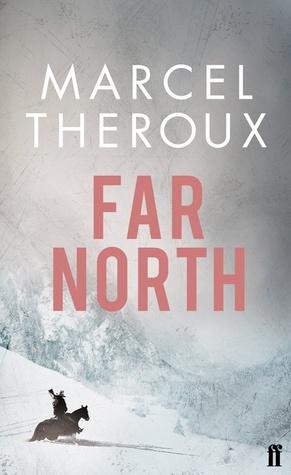
Far North is a 2009 National Book Award Finalist for Fiction.
My father had an expression for a thing that turned out bad. He’d say it had gone west. But going west always sounded pretty good to me. After all, westwards is the path of the sun. And through as much history as I know of, people have moved west to settle and find freedom. But our world had gone north, truly gone north, and just how far north I was beginning to learn.
Out on the frontier of a failed state, Makepeace — sheriff and perhaps last citizen — patrols a city’s ruins, salvaging books but keeping the guns in good repair.
Into this cold land comes shocking evidence that life might be flourishing elsewhere: a refugee emerges from the vast emptiness of forest, whose existence inspires Makepeace to reconnect with human society and take to the road, armed with rough humor and an unlikely ration of optimism.
What Makepeace finds is a world unraveling: stockaded villages enforcing an uncertain justice and hidden work camps laboring to harness the little-understood technologies of a vanished civilization. But Makepeace’s journey — rife with danger — also leads to an unexpected redemption.
Far North takes the reader on a quest through an unforgettable arctic landscape, from humanity’s origins to its possible end. Haunting, spare, yet stubbornly hopeful, the novel is suffused with an ecstatic awareness of the world’s fragility and beauty, and its ability to recover from our worst trespasses.
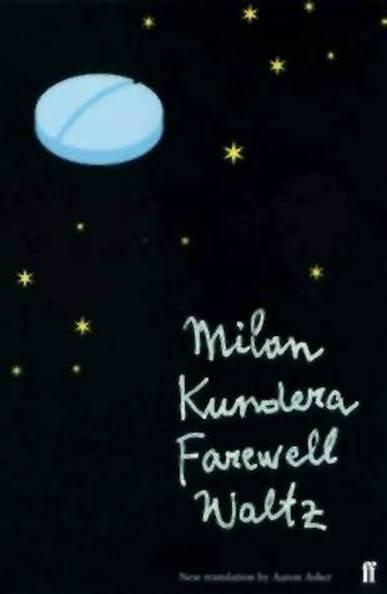
"It is hard to imagine anything more chilling and profound than Kundera’s apparent lightheartedness." – Elizabeth Pochoda
IN this dark farce of a novel, set in an old-fashioned Central Euroepean spa town, eight characters are swept up in an accelerating dance: a pretty nurse and her repairman boyfriend; an oddball gynecologist; a rich Amrican (at once saint and Don Juan); a popular trumpeter and his beautiful, obsessively jealous wife; an unillusioned former political prisoner about to leave his country and his young woman ward.Perhaps the most brilliantly plotted and sheerly entertaining of Milan Kundera’s novels, Farewell Waltz poses the most serious questions with a blasphemous lightness that makes us see that the modern world has deprived us even of the right to tragedy.Written in Bohemia in 1969-70, this book was first published (in 1976) in France under the title La valse aux adieux (Farewell Waltz), and later in thirty-four other countries. This beautiful new translation, made from the French text prepared by the novelist himself, fully reflects his own tone and intentions. As such it offers an opportunity for both the discovery and the rediscovery of one of the very best of a great writer’s works."Kundera remains faithful to this subtle, wily, devious talent for a fiction of 'erotic possibilities. ”New York Times Book Review"Farewell Waltz shocks. Black humor. Farcical ferocity. Admirably tender portraits of women." “Le Point (Paris)" After Farewell Waltz there cannot be any doubt. Kundera is a master of contemporary literature. This novel is both an example of virtuosity and a descent into the human soul."
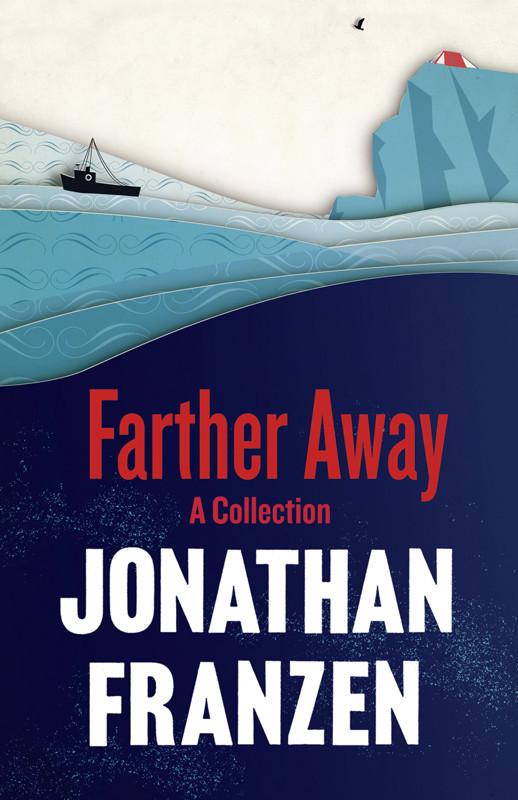
Jonathan Franzen’s Freedom was the runaway most-discussed novel of 2010, an ambitious and searching engagement with life in America in the twenty-first century. In The New York Times Book Review, Sam Tanenhaus proclaimed it “a masterpiece of American fiction” and lauded its illumination, “through the steady radiance of its author’s profound moral intelligence, [of] the world we thought we knew.”
In Farther Away, which gathers together essays and speeches written mostly in the past five years, Franzen returns with renewed vigor to the themes, both human and literary, that have long preoccupied him. Whether recounting his violent encounter with bird poachers in Cyprus, examining his mixed feelings about the suicide of his friend and rival David Foster Wallace, or offering a moving and witty take on the ways that technology has changed how people express their love, these pieces deliver on Franzen’s implicit promise to conceal nothing. On a trip to China to see first-hand the environmental devastation there, he doesn’t omit mention of his excitement and awe at the pace of China’s economic development; the trip becomes a journey out of his own prejudice and moral condemnation. Taken together, these essays trace the progress of unique and mature mind wrestling with itself, with literature, and with some of the most important issues of our day. Farther Away is remarkable, provocative, and necessary.
Praise for Farther Away:
“[Franzen’s] new collection takes the reader on a closely guided tour of his private concerns… the miscorrelation between merit and fame, the breakdown of a marriage, birds, the waning relevance of the novel in popular culture… Franzen rewards the reader with extended meditations on common phenomena we might otherwise consider unremarkable… the observations [he] makes regarding subjects like cell phone etiquette, the ever-evolving face of modern love and technology are trenchant… With Farther Away, Mr. Franzen demonstrates his ability to dissect the kinds of quotidian concerns that so often evade scrutiny… It may be eight years before he releases his next shimmering novel; in the meantime Mr. Franzen seems intent on keeping the conversation going. Farther Away at least achieves that.”
—Alex Fankuchen, The New York Observer
“Throughout the book, Franzen suggests that storytelling is a way to interpret and relieve our collective suffering — a vehicle for social connection — and that apathy can be challenged with Molotov cocktails of ‘bottomless empathy, born out of the heart’s revelation that another person is every bit as real as you are’… Combining personal history with cultural events and the minutiae of daily life, Franzen evokes Joan Didion’s tone of rigorous self-examination, and [David Foster] Wallace’s wit and philosophical prowess. Whether he is writing about technologies’ assault on sincerity or analyzing Alice Munro’s short stories, what emerges are works of literary theory and cultural critique that are ambitious, brooding and charmingly funny… The essays in Farther Away are rigorous, artful devotions navigating morally complex topics. At the heart of this collection are the ways ‘engagement with something you love compels you to face up to who you really are.’ Collectively, they are a source of authenticity and refuge — a way out of loneliness.”
—Kathryn Savage, Minneapolis Star Tribune
“Together, the short pieces take a deep, often tangled look at the relationship between writing and self… [Franzen’s] persistent questioning rings genuine and honest… Part of the joy in reading these essays is in their variety: Franzen has thrown together a buffet of essays, speeches, lectures, bits of memoir and journalism, and a few oddballs, like an extended fictional interview with New York State and her entourage (publicist, attorney, historian, geologist)… Each finds a home in the collection because, in the end, each informs Franzen’s capabilities as a writer… The material all fits together as an eclectic mix of Franzen’s fiction-style prose — that plain language rendered rich by its novel construction and telling detail — and a candid, earnest investigation of what makes for great writing. It’s inspiring on two levels: the quality of the writing, and the content about the quality of writing… a collection of thought-provoking, potent essays that rouse a renewed desire to read good books in a culture that is, as Franzen says, marked by its ‘saturation in entertainment.’ The texts are both a testament to and an illustration of what attracts people to books — a delicate play between writer, text, character, and reader that prompts excellent questions and provides surprising answers.”
—Emily Withrow, The A.V. Club
“Farther Away is, from beginning to end, a celebration of love: what provokes it and what endangers it, what joys it brings and what terrors it produces… Farther Away takes its title from the New Yorker essay in which Franzen first discussed the suicide of his friend the novelist David Foster Wallace… art elegy, part literary criticism, part travelogue… “Farther Away” is one of the strangest, most powerful documents of mourning that I’ve ever read. Farther Away reveals a kinder Franzen, a writer who has no truck with sentimentality but is a clear-eyed defender of sentiment. At one point, Franzen lists the many things that he is against: ‘weak narrative, overly lyrical prose, solipsism, self-indulgence…’ The list goes on. But Farther Away is such a wonderful collection because of the things Franzen is for — the ennobling effects of love and imaginative experience, our need to escape from the isolated self and journey farther away, toward other places and other people. Like the best fiction, Farther Away charts a way out of loneliness.”
—Anthony Domestico, Christian Science Monitor
“Franzen captivates readers whether ranting about such everyday concerns as bad cellphone manners or lamenting the diminishing relevance of the novel or examining the talented, troubled life and suicide of his close friend and literary brother, David Foster Wallace… At his best, Franzen exposes himself. He does so often and unapologetically, with understated humor, level-headed alienation and rare insight, typically at the nexus of self-analysis and self-indulgence.”
—Don Oldenburg, USA Today
“[Franzen’s] essays are riddled with aphorisms (‘One half of a passion is obsession, the other half is love’) and, surprisingly, humour (theory and sex prove incompatible bedfellows when his wife-to-be declares: ‘You can’t deconstruct and undress at the same time’). A multifaceted and revealing collection, Farther Away actually brings the reader closer to the author.”
—The Economist
“[Franzen is] after something more elusive: identity, we might call it, which he understands to be not fixed but fluid, a set of reactions or impressions in evolution, a constant variation on the self. ‘[W]hat this means, in practice,’ he notes in the text of a lecture called ‘On Autobiographical Fiction,’ ‘is that you have to become a different person to write the next book. The person you already are already wrote the best book you could. There’s no way to move forward without changing yourself. Without, in other words, working on the story of your own life. Which is to say: your autobiography.’
This is an essential point, the heart of everything, made all the more so because Franzen’s fiction is not autobiographical in any overt way. And yet, what else could it be when literature is, must be, the result of ‘a personal struggle, a direct and total engagement with the author's story of his or her own life’? Such an intention runs throughout these essays, whether critical (takes on Paula Fox, Christina Snead, Donald Antrim, Dostoevsky) or experiential (an account of bird preservation efforts in the Mediterranean, a tirade about the effect of cellphones on urban life)… On the surface, these pieces have nothing to do with each other, yet what is either one about if not authenticity? Again and again, that's the question Franzen raises in this collection… What Franzen is getting at is the concept of being ‘islanded,’ the notion that — no matter what — we are on our own, all the time… In that sense, all of it — from the kid in that car to the teenager wandering New York to the birder on Robinson Crusoe's island — is of a piece with David Foster Wallace and even Neil Armstrong: isolated dots of consciousness in a capricious universe, trying to find a point of real connection before time runs out.”
—David Ulin, Los Angeles Times
“This book of essays by Jonathan Franzen covers various subjects but the unifying theme is truthfulness. He stands for lucidity of expression, which is not the same thing as ease. The lesson of Franzen is that honesty and excellence come from blood, sweat and tears… This is Franzen at his finest… Narcissism must never be confused with love. This is Franzen’s distilled wisdom… He is unflinching about the price of empathy… This is a book for those interested in how to live as well as how to write.”
—Sarah Sands, London Evening Standard
“Farther Away, Jonathan Franzen’s recent collection of essays, proves to be a deeply personal portrait of a contemporary writer at work… Many of Farther Away’s features explore creativity and craftsmanship: their tensions and intersections and how those forces can be used together to create a beautiful object… The book, while full of intellect, is also full of puns, anecdotes, and self-effacing jokes about being a cranky, old-fashioned Luddite. In other words, Jonathan Franzen knows what some people think about him, and he couldn’t care less, an attitude in keeping with his public personality. Because, despite the fiery exchanges that can erupt around him, Franzen usually appears untouched by the conflagration, reacting with detached humor or insightful observation… The most personal moments in Farther Away come in the essays about Franzen’s passions… These essays have sentiment but also clear-eyed pragmatism. Franzen relates the situations he encounters with the objective eye of a scientist, even though you can clearly feel his emotion just under the surface… With Farther Away, Jonathan Franzen has proved once again why his intelligence, empathy, and humor have earned him widespread acclaim — and also why, whether you love him or hate him, we need his voice as a catalyst for literary conversations in the 21st century.”
—Ben Pfeiffer, The Rumpus
“Ultimately, Farther Away is a meditation on the obscure other half of a world right in front of our faces — the private horror of a public figure struggling with depression, the unspoken loneliness of an individual living in a world of people perpetually turned off because their devices are turned on, the perils of a bird i…
Jonathan Franzen is the author of four novels (Freedom, The Corrections, Strong Motion, and The Twenty-Seventh City), a collection of essays (How to Be Alone), a personal history (The Discomfort Zone), and a translation of Frank Wedekind's Spring Awakening, all published by FSG. He lives in New York City and Santa Cruz, California.
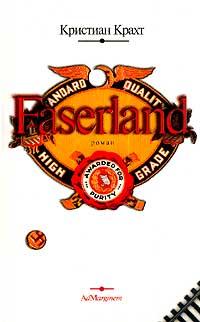
Из беседы с Виктором Кирхмайером на Deutsche Welle radio:
Роман Кристиана Крахта «Фазерланд» – важнейший немецкий роман 90-х – уже стал каноническим. В 50-х немецкий философ-неомарксист Теодор Адорно сказал: «После Освенцима нельзя писать стихов». И вот пришло поколение, которое взялось бытописать свое время и свою жизнь. С появлением романа «Фазерланд» Кристиана Крахта в 95-ом году часы идут по-другому. Без этой книги, без этого нового климата было бы невозможно появление новой немецкой литературы.
Кристиан Крахт – второй член «поп-культурного квинтета» молодых немецких писателей. Обладает всеми качествами, которые противопоказаны «настоящему» писателю: высокомерен, подчеркнуто хорошо одет, ездит на небесного цвета «Порше». На вопрос: почему никогда не дает интервью, – отвечает: «Я очень богат». «Фазерланд» – первый роман Крахта. Главный герой романа путешествует по Германии или, как он сам говорит, «прощается с этой безобразной страной, населенной уродливыми и глупыми людьми». Главы романа – это череда вагонов первого класса и бесконечных вечеринок с кокаином, сексом и алкоголем. Литературные критики восприняли роман как наглую провокацию. Мартин Хильшер думает иначе:
Жест провокатора основан на том, что он знает или думает, что знает, что правильно, куда надо идти. У него есть «образ врага». Крахт, который пьет шампанское и ездит на «Порше» на самом деле полон сомнений. Весь его организм протестует против этого бессмысленного существования. В свои 28 он уже переживает экзистенциальный кризис, который обычно настигает мужчин между 40 и 50-ю. И постоянная рвота – не что иное, как саботаж. В конце романа у героя возникает идея покончить жизнь самоубийством, но он отказывается от своего замысла только потому, что не воспринимает этот мир всерьез. В прошлом году в Германии была опубликована антология 16-ти молодых немецких писателей под названием «Месопотамия», составителем которой был Кристиан Крахт. Ее эпиграф гласит: «Конец иронии». Члены «поп-культурного квинтета» всерьез ищутизбавления от скуки и безразличия. Любой ценой: вплоть до «уничтожения этого благополучия, чтобы начать все сначала». «Мы не попадем в ад. Мы давно уже живем в нем» – говорит Кристиан Крахт. Это ад мира масс-медиа, где войны и катастрофы показывают ровностолько, чтобы не наскучить зрителю, который может переключить телевизор на другую программу.
Sobrevivir en una revista femenina puede ser una lucha a muerte. Sobre todo, cuando tu jefa es una tirana.
Vig Morgan por fin ha conseguido dejar de ser la ayudante de la dictatorial y repelente directora, solo para verse metida en un mar de conspiradores. Pero Vig no es como las demás editoras en la super cool Fashionista. Para empezar, a ella le da igual qué diseñador viste a las estrellas del momento. Es inteligente, astuta y tan ambiciosa como cualquier persona inteligente y mal pagada, pero nunca tomaría parte en un complot para defenestrar a su jefa. ¿O sí?
Salta con Vig a las turbulentas aguas -conspiraciones, puñaladas por la espalda, libertad de expresión, coqueteos y alta costura- a las que se enfrenta cuando decide unirse a un compló de lacayos que quieren cargarse a la abeja reina, con inesperados -pero no necesariamente decepcionantes- resultados.
Fat City is a vivid novel of allegiance and defeat, of the potent promise of the good life and the desperation and drink that waylay those whom it eludes. Stockton, California, is the setting: the Lido Gym, the Hotel Coma, Main Street lunchrooms and dingy bars, days like long twilights in houses obscured by untrimmed shrubs and black walnut trees. When two men meet in the ring — the retired boxer Billy Tully and the newcomer Ernie Munger — their brief bout sets into motion their hidden fates, initiating young Munger into the company of men and luring Tully back into training. In a dispassionate and composed voice, Leonard Gardner narrates their swings of fortune, and the stubborn optimism of their manager, Ruben Luna, as he watches the most promising boys one by one succumb to some undefined weakness; still, “There was always someone who wanted to fight.”
Two bombs over Japan. Two shells. One called Little Boy, one called Fat Man. Three days apart. The one implicit in the other. Brothers.
Winner of the 2013 Horatio Nelson Fiction Prize. In this striking debut novel, the atomic bombs dropped on Japan are personified as Fat Man and Little Boy. This small measure of humanity is a cruelty the bombs must suffer. Given life from death, the brothers’ journey is one of surreal and unsettling discovery, transforming these symbols of mass destruction into beacons of longing and hope.
Named one of “the year’s most impressive debut novelists” by the 2014 Brooklyn Book Festival
At the age of 14 Georg Koves is plucked from his home in a Jewish section of Budapest and without any particular malice, placed on a train to Auschwitz. He does not understand the reason for his fate. He doesn’t particularly think of himself as Jewish. And his fellow prisoners, who decry his lack of Yiddish, keep telling him, “You are no Jew.” In the lowest circle of the Holocaust, Georg remains an outsider.
The genius of Imre Kertesz’s unblinking novel lies in its refusal to mitigate the strangeness of its events, not least of which is Georg’s dogmatic insistence on making sense of what he witnesses — or pretending that what he witnesses makes sense. Haunting, evocative, and all the more horrifying for its rigorous avoidance of sentiment, Fatelessness is a masterpiece in the traditions of Primo Levi, Elie Wiesel, and Tadeusz Borowski.

Fates and Furies is a literary masterpiece that defies expectation. A dazzling examination of a marriage, it is also a portrait of creative partnership written by one of the best writers of her generation.
Every story has two sides. Every relationship has two perspectives. And sometimes, it turns out, the key to a great marriage is not its truths but its secrets. At the core of this rich, expansive, layered novel, Lauren Groff presents the story of one such marriage over the course of twenty-four years.
At age twenty-two, Lotto and Mathilde are tall, glamorous, madly in love, and destined for greatness. A decade later, their marriage is still the envy of their friends, but with an electric thrill we understand that things are even more complicated and remarkable than they have seemed. With stunning revelations and multiple threads, and in prose that is vibrantly alive and original, Groff delivers a deeply satisfying novel about love, art, creativity, and power that is unlike anything that has come before it. Profound, surprising, propulsive, and emotionally riveting, it stirs both the mind and the heart.
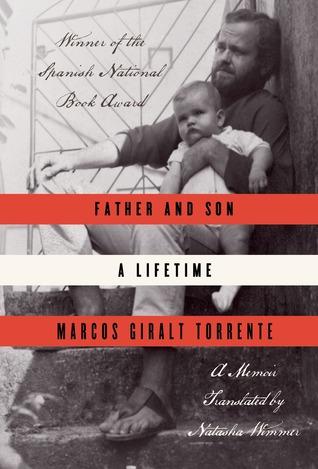
"This is a story about two people, but I’m the only one telling it."Many authors have wrestled with the death of a father in their writing, but few have grappled with the subject as fiercely, or as powerfully, as the brilliant Spanish writer Marcos Giralt Torrente does in Father and Son, the mesmerizing and discomfiting memoir that won him Spain’s highest literary award, the Spanish National Book Award. Giralt Torrente is best known for his fiction, but it is in this often savage memoir that he demonstrates the full measure of his gifts.In the months following his father’s death from cancer, Giralt Torrente could not write — until he began to write about his father. In many ways, they were strangers to each other; after his parents’ relationship ended, when he was quite young, Giralt Torrente’s father remained in contact with him but held himself at a distance. Silences began to linger, prompted by Giralt Torrente’s anger at his father’s lies and absences and perpetuated by their inability to speak about the sources of the conflicts between them. But despite their differences, they had a strong bond, and in the months leading up to his father’s death from cancer, they groped toward reconciliation. Here the author commits to exploring it all, sparing neither his father nor himself, conscious of their flaws but also understanding of them. Weaving together history and personal narrative, Giralt Torrente crafts a startlingly honest account of a complex relationship, and an indelible portrait of both father and son.Beautifully translated by Natasha Wimmer, the award-winning translator of Roberto Bolaño, and as lyrical and clear-eyed on mourning as Joan Didion’s The Year of Magical Thinking, Father and Son is an uncommonly gripping memoir by an uncommonly talented writer.
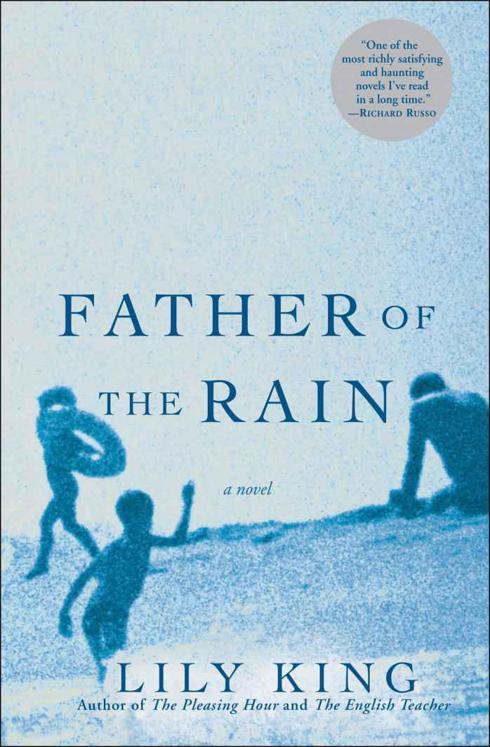
Prize-winning author Lily King’s masterful new novel spans three decades of a volatile relationship between a charismatic, alcoholic father and the daughter who loves him.
Gardiner Amory is a New England WASP who's beginning to feel the cracks in his empire. Nixon is being impeached, his wife is leaving him, and his worldview is rapidly becoming outdated. His daughter, Daley, has spent the first eleven years of her life negotiating her parents’ conflicting worlds: the liberal, socially committed realm of her mother and the conservative, decadent, liquor-soaked life of her father. But when they divorce, and Gardiner’s basest impulses are unleashed, the chasm quickly widens and Daley is stretched thinly across it.
As she reaches adulthood, Daley rejects the narrow world that nourished her father’s fears and prejudices, and embarks on her own separate life — until he hits rock bottom. Lured home by the dream of getting her father sober, Daley risks everything she's found beyond him, including her new love, Jonathan, in an attempt to repair a trust broken years ago.
A provocative story of one woman's lifelong loyalty to her father, Father of the Rain is a spellbinding journey into the emotional complexities and magnetic pull of family.