
 fb2
fb2Viaje irónico, viaje sentimental, esta novela de Saer concentra en su peripecia los núcleos básicos de su escritura: sus ideas acerca del tiempo, el espacio, la historia y la poca fiabilidad de los instrumentos con que contamos -conciencia y memoria- para aprehender la realidad. Las nubes narra la historia de un joven psiquiatra que conduce a cinco locos hacia una clínica, viajando desde Santa Fe hasta Buenos Aires. Con él van treinta y seis personajes: locos, una escolta de soldados, baquianos y prostitutas, que atraviesan la pampa sorteando todo tipo de obstáculos. Allí se encuentran con Josecito, un cacique alzado, que toca el violín y ante quien uno de los locos predica la unidad de la raza americana. Esta falsa epopeya -tanto como la historia de nuestro país- transcurre en 1804, antes de las Invasiones Inglesas y de la Revolución de Mayo, un momento de nuestra historia en el cual no hay imagen del país ni nada está constituido.

El verano de 1816 en Villa Diodati parece promisorio. Los personajes no pueden ser más ilustres: Lord Byron, Percy y Mary Shelley, Claire Clairmont y el Dr. Polidori, secretario privado de Byron. Polidori es quien resulta clave para Las Piadosas. ¿Por qué? Alguien se ha fijado en él para confiarle un terrible secreto. El enigma quedará revelado por la prosa envolvente y seductora de Federico Andahazi, el autor de El Anatomista. Andahazi descubre regiones insospechadas, turbadoras de la sexualidad y construye la intriga de una verdadera novela gótica moderna en torno a personajes y situaciones que difícilmente se olvidarán

Visión trágica y dura de un pueblo castellano, Las ratas -galardonada con el Premio de la Crítica 1962- es uno de los libros en que mejor ha reflejado Delibes el drama de la Castilla rural. En la novela, el medio geográfico y social parece determinar de modo decisivo el ser y el existir de sus criaturas, el destino parece jugar con esos personajes, pobres lugareños aferrados al terruño, vivos y elementales, que defienden rabiosamente su libertad. Entre ellos surge poderosamente la figura del Ratero, y sobre todo la del Nini, que intenta rebelarse contra la sordidez que le rodea, pero su rebeldía es callada, dulce, sin vanidad, y le levanta a la altura de símbolo: el bien contra el mal, el candor contra la astucia…

Un joven estudiante iraquí, mientras aguarda en el bullicioso Beirut el momento para saldar sus cuentas con el mundo, recuerda cómo la guerra le obligó a dejar sus estudios en Bagdad y regresar a su pueblo, Kafr Karam, un apacible lugar al que sólo las discusiones de café perturbaban el tedio cotidiano hasta que la guerra llamó a sus puertas. La muerte de un discapacitado mental, un misil que cae fatídicamente en los festejos de una boda y la humillación que sufre su padre durante el registro de su hogar por tropas norteamericanas impulsan al joven estudiante a vengar el deshonor. En Bagdad, deambula por una capital sumida en la ruina, la corrupción y una inseguridad ciudadana que no perdona ni a las mezquitas.

20.04.2009 Книга, подаренная лидером Венесуэлы Уго Чавесом президенту США Бараку Обаме, стала бестселлером, сообщает AFP. Чавес преподнес Обаме книгу уругвайского писателя Эдуардо Галеано "Вскрытые вены Латинской Америки" (Las Venas Abiertas de America Latina) 18 апреля на саммите стран Америки, проходившем в Тринидаде и Тобаго. Уже 19 апреля, книга Галеано, переведенная на английский язык, поднялась в списке лидеров продаж интернет-магазина Amazon.com с 734-го на 2-е место. "Открытые вены Латинской Америки" на языке оригинала продемонстрировали еще более впечатляющий рост популярности, переместившись в течение суток с 47468-го месте на 283-е. Книга известного публициста Эдуардо Галеано, рассказывающая об истории разграбления Латинской Америки от конкистадоров до глобальных корпораций, впервые вышла в свет в 1971 году. На русском языке произведение Галеано было опубликовано в 1986 году. На книге Галеано, преподнесенной Чавесом Обаме, президент Венесуэлы оставил дарственную надпись: "Обаме, с любовью" (For Obama, with affection). Президент США назвал подарок Чавеса "приятным жестом". На саммите стран Америки Чавес также пообещал восстановить дипломатические отношения между Венесуэлой и США, прерванные в сентябре 2008 года по инициативе Каракаса. На пост посла Венесуэлы в США Чавес предложил кандидатуру Роя Чэйдертона – представителя Венесуэлы в Организации американских государств. Госсекретарь США Хиллари Клинтон поддержала идею восстановления двусторонних дипломатических отношений, однако пока не сообщила, кто займет пост посла США в Венесуэле.
***
Escrita en 1970, y revisada en 1978, `Las Venas…` no ha perdido la más mínima actualidad. Se trata de un libro de Historia Contemporánea, en el que se relata el devenir del subcontinente latinoamericano, desde su conquista por los europeos, hasta la actualidad. Y no es una historia fáctica, es decir, de hechos y batallitas. Todo lo contrario, es la historia del expolio, la injusticia y la destrucción y sometimiento que este continente ha sufrido desde el siglo XVI hasta el XX a manos de los `civilizadores` occidentales.
La atención principal se dedica a los hechos económicos, y se estudia desde el comercio del oro y el azúcar de los primeros tiempos de la conquista, hasta las modernas formas de despojo de las materias primas como café, petróleo, cacao, etc. Ello haciendo un brillante estudio de cómo actualmente las economías de los países emancipados pertenecen del todo (y no ha podido ser de otra manera) a sus antiguos colonizadores. Por supuesto se estudian concienzudamente las causas y el desarrollo histórico de estos hechos (el libro cuenta con un amplio índice analítico).
Y si a todo ello sumamos que está escrito con un estilo made in Galeano, rápido, directo, agudo, sin artificios, lleno de ejemplos ilustrativos, podremos concluir que estamos ante una obra maestra, que se lee con vivo interés y sin caer en el menor sopor o aburrimiento.

Sin embargo, esto es como querer apresar el viento. La esencia de los suicidios no era la tristeza ni el misterio, sino simplemente el egoísmo. Las hermanas Lisbon quisieron hacerse cargo de decisiones que conviene dejar en manos de Dios. Se convirtieron en criaturas demasiado poderosas para vivir con nosotros, demasiado ególatras, demasiado visionarias, demasiado ciegas. Lo que persistía detrás de ellas no era la vida, que supera siempre a la muerte natural, sino la lista más trivial de hechos mundanos que pueda imaginarse: el tictac de un reloj de un pared, las sombras de una habitación a mediodía y la atrocidad de un ser humano que sólo piensa en sí mismo. Su cerebro se hizo opaco a todo y sólo fulguró en puntos precisos de dolor, daños personales, sueños perdidos. Todos amábamos a alguna, pero iba empequeñeciéndose en un inmenso témpano de hielo, que se encogía hasta convertirse en un punto negro y agitaba unos brazos diminutos sin que oyéramos su voz. Después ya fue la cuerda alrededor de la viga, la píldora somnífera en la palma de la mano con una larga línea de la vida, la ventana abierta de par en par, el horno de gas, lo que fuera. Nos hacían partícipes de su locura, porque no podíamos hacer otra cosa que seguir sus pasos, repensar sus pensamientos, comprobar que ninguno confluía en nosotros. No nos cabía en la cabeza aquel vacío que podía sentir un ser capaz de segarse las venas de las muñecas, aquel vacío y aquella calma tan grandes. Teníamos que embadurnarnos la boca con sus últimas huellas, las marcas de barro en el suelo, las maletas apartadas de un puntapié, teníamos que respirar una y otra vez el aire de las habitaciones donde se habían matado. A fin de cuentas, daba igual que la edad que tuviesen, el que fueran tan jóvenes, lo único que importaba era que las habíamos amado y que no nos habían oído cuando las llamábamos, que seguían sin oírnos ahora, aquí arriba, en la casa del árbol, con nuestro escaso cabello y nuestra barriga, llamándolas para que salgan de aquellas habitaciones donde se habían quedado solas para siempre, solas en su suicidio, más profundo que la muerte, y en las que ya nunca encontraremos las piezas que podrían servir para volver a unirlas.
Detrás de las paredes perimetrales, más allá de los portones reforzados por barreras y flanqueados por garitas de vigilancia, se encuentra Altos de la Cascada.
Afuera, la ruta, la barriada popular de Santa María de los Tigrecitos, la autopista, la ciudad, el resto del mundo.
En Altos de la Cascada viven familias que llevan un mismo estilo de vida y que quieren mantenerlo cueste lo que cueste.
Allí, en el country, un grupo de amigos se reúne semanalmente lejos de las miradas de sus hijos, sus empleadas domésticas y sus esposas, quienes, excluidas del encuentro varonil, se autodenominan, bromeando, "las viudas de los jueves".
Pero una noche de rutina se quiebra y ese hecho permite descubrir, en un país que se desmorona, el lado oscuro de una vida "perfecta".
"Una novela ágil, escrita en un lenguaje perfectamente adecuado al tema, un análisis implacable de un microcosmos social en acelerado proceso de decadencia." José Saramago
"Una novela coral, sólida y solvente, con un agudísimo retrato psicológico y social, no sólo de la Argentina de hoy sino del mundo acomodado occidental." Rosa Montero
"Una historia atrapante, de ritmo cinematográfico, sobre una clase social a la cual desnuda sin piedad, con la contundencia de un impacto en el estómago."

LAS VOCES DE MARRAKESH Elias Canetti traducción y prólogo de José Francisco Yvars En 1954 Elias Canetti viajó a Marrakesh; de sus incursiones por los barrios árabe y judío de la ciudad recogió voces, olores, gestos e imágenes, que bosquejó justo tras su regreso a Londres. Todo esto se convirtió en algo más que en un mero libro de viaje. Canetti describe situaciones y personajes con gran precisión y los examina escrupulosamente. Trata de descubrir cuanto acontece a esta extraña gente, e indaga acerca de su postura sobre la muerte. Canetti nos brinda aquí sus notas de viaje, auténticas impresiones personales que exponen el proceso arduo de apropiación de un mundo diferente.
Elias Canetti (1905-1994) nació en el seno de una familia hispanohablante de judíos sefardíes en Rustchuk (Bulgaria). En 1911 la familia se trasladó a Inglaterra; posteriormente a Viena, 1916, y a Frankfurt. En 1924 regresó a Viena, donde se doctoró en Química en 1929. Se estableció en Inglaterra en 1938. Su primer libro, y su única novela, fue AUTO DE FE (1936), concebida como la primera de una serie. Tuvo mucha más repercusión en la Europa continental que en Estados Unidos e Inglaterra, donde no alcanzó un reconocimiento general hasta la edición corregida y aumentada de 1965. A partir de esta novela, Canetti se centró en la historia, la literatura de viajes, el teatro, la crítica literaria y la escritura de sus memorias. MASA Y PODER (1962) se abre con la afirmación: "No hay nada que el hombre tema más que el toque de lo desconocido", frase que capta el estilo aforístico de Canetti y también una de sus mayores preocupaciones, la influencia de las emociones en las inclinaciones racionales. Sus tres volúmenes de memorias, LA LENGUA ABSUELTA (1977), LA ANTORCHA AL OÍDO (1980) y EL TESTIGO ESCUCHADOR (1985), abarcan su vida antes de la II Guerra Mundial, describiendo su existencia peripatética y un mundo centroeuropeo que se desvanecía. Le fue concedido el Premio Nobel de Literatura en 1981.

The long-awaited second collection of stories from a writer whose first was hailed as "one of the best story collections of the last decade" (Kevin Brockmeier).
In LAST CAR OVER THE SAGAMORE BRIDGE, Peter Orner presents a kaleidoscope of individual lives viewed in intimate close-up. A woman's husband dies before their divorce is finalized; a man runs for governor and loses much more than the election; two brothers play beneath the infamous bridge at Chappaquiddick; a father and daughter outrun a hurricane-all are vivid and memorable occasions as seen through Orner's eyes. LAST CAR OVER THE SAGAMORE BRIDGE is also a return to the form Orner loves best. As he has written, "The difference between a short story and a novel is the difference between a pang in your heart and the tragedy of your whole life. Read a great story and there it is-right now-in your gut."
On Valentine’s Day 2008, Steve Kazmierczak killed five and wounded eighteen at Northern Illinois University, then killed himself. But he was an A student, a Deans’ Award winner. How could this happen?
CNN could not get the story. The Chicago Tribune, Washington Post, and all others came up empty because Steve’s friends and professors knew very little. He had reinvented himself in his final five years. But David Vann, investigating for Esquire, went back to Steve’s high school and junior high friends, found a life perfectly shaped for mass murder, and gained full access to the entire 1,500 pages of the police files. The result: the most complete portrait we have of any school shooter. But Vann doesn’t stop there. He recounts his own history with guns, contemplating a school shooting. This book is terrifying and true, a story you’ll never forget.
Winner of the Sue Kaufman Prize for First Fiction from the Academy of Arts and Letters and the Great Lakes Colleges Association New Writers Award. In each of these "weird and wonderful stories" (Boston Globe), Brad Watson writes about people and dogs: dogs as companions, as accomplices, and as unwitting victims of human passions; and people responding to dogs as missing parts of themselves. "Elegant and elegiac, beautifully pitched to the human ear, yet resoundingly felt in our animal hearts" (New York Newsday), Watson's vibrant prose captures the animal crannies of the human personality — yearning for freedom, mourning the loss of something wild, drawn to human connection but also to thoughtless abandon and savagery without judgment. Pinckney Benedict praises Watson's writing as "crisp as a morning in deer season, rife with spirited good humor and high intelligence," and Fred Chappell calls his stories "strong and true to the place they come from." This powerful debut collection marks Brad Watson's introduction into "a distinguished [Southern] literary heritage, from Faulkner to Larry Brown to Barry Hannah to Richard Ford" (The State, Columbia, South Carolina).
"The melancholy folklore of exile," as Roberto Bolaño once put it, pervades these fourteen haunting stories. Bolaño's narrators are usually writers grappling with private (and generally unlucky) quests, who typically speak in the first person, as if giving a deposition, like witnesses to a crime. These protagonists tend to take detours and to narrate unresolved efforts. They are characters living in the margins, often coming to pieces, and sometimes, as in a nightmare, in constant flight from something horrid.
In the short story Silva the Eye, Bolaño writes in the opening sentence: "It's strange how things happen, Mauricio Silva, known as The Eye, always tried to escape violence, even at the risk of being considered a coward, but the violence, the real violence, can't be escaped, at least not by us, born in Latin America in the 1950s, those of us who were around 20 years old when Salvador Allende died."
Set in the Chilean exile diaspora of Latin America and Europe, and peopled by Bolano's beloved "failed generation," the stories of Last Evenings on Earth have appeared in The New Yorker and Grand Street.
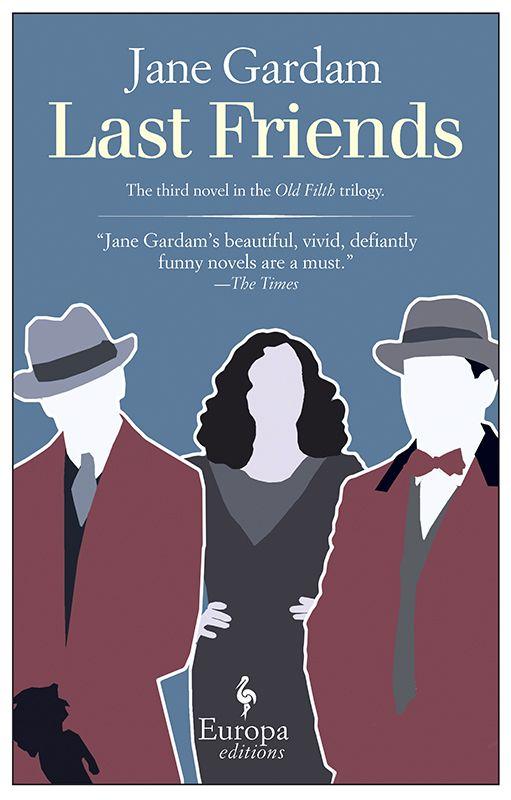
The third installment in the Old Filth trilogy, Last Friends will surprise and delight Gardam fans and appeal to new readers as it concludes a portrait of a marriage equal to any in the English language.
Of Edward Feathers, a.k.a. Old Filth, the New York Times wrote, “he belongs in the Dickensian pantheon of memorable characters.” Filth, which stands for Failed in London Try Hong Kong, is a successful barrister who has spent most of his career practicing law in Southeast Asia. He met his wife, Betty, after she was released from an internment camp at the close of World War II. The first two books in this series — Old Filth and The Man in the Wooden Hat— told the story of their life together first from Edward's perspective, and then from Betty's. Last Friends is Edward's longtime nemesis and Betty's sometime lover, Terry Veneering's turn and with its telling a magnificent and deeply moving story comes to its satisfying final pages.
As the Washington Post commented, these “absolutely wonderful” books give us “an astute, subtle depiction of marriage.” With this third revealing view of Betty and Edward's life together the depiction is completed as readers renew their connection to this remarkable, unforgettable couple.

A tale of one man refusing to leave his home in the face of property development. Tower A is a relic from a co-operative housing society established in the 1950s. When a property developer offers to buy out the residents for eye-watering sums, the principled yet arrogant teacher is the only one to refuse the offer, determined not to surrender his sentimental attachment to his home and his right to live in it, in the name of greed. His neighbours gradually relinquish any similar qualms they might have and, in a typically blunt satirical premise take matters into their own hands, determined to seize their slice of the new Mumbai as it transforms from stinky slum to silvery skyscrapers at dizzying, almost gravity-defying speed.
Last Night is a spellbinding collection of stories about passion — by turns fiery and subdued, destructive and redemptive, alluring and devastating. These ten powerful stories portray men and women in their most intimate moments. A lover of poetry is asked by his wife to give up what may be his most treasured relationship. A book dealer is forced to face the truth about his life. And in the title story, a translator assists his wife’s suicide, even as he performs a last act of betrayal. James Salter’ s assured style and emotional insight make him one of our most essential writers.
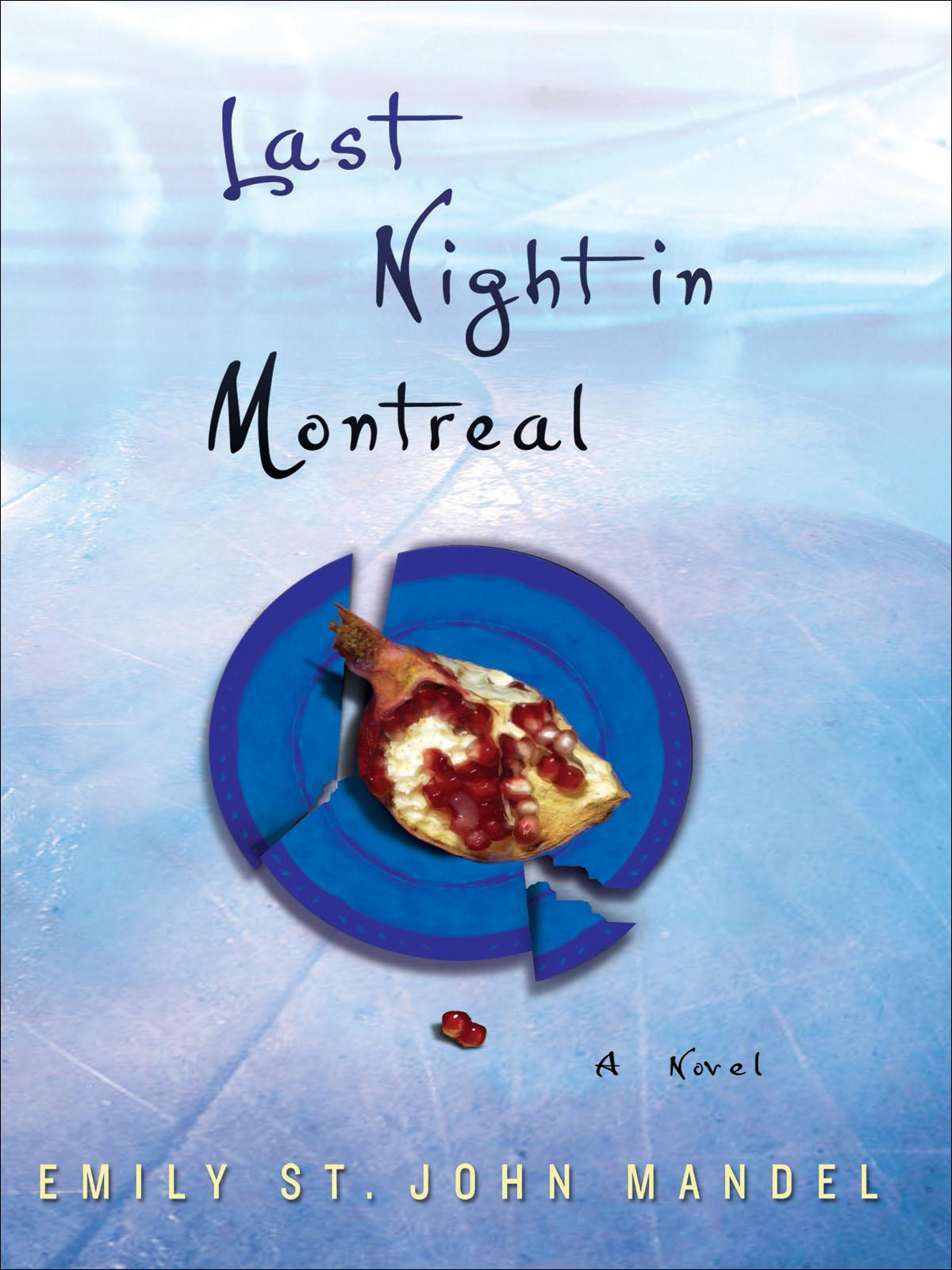
Last Night in Montreal is a story of love, amnesia, compulsive travel, the depths and the limits of family bonds, and the nature of obsession. In this extraordinary debut, Emily St. John Mandel casts a powerful spell that captures the reader in a gritty, youthful world — charged with an atmosphere of mystery, promise and foreboding — where small revelations continuously change our understanding of the truth and lead to desperate consequences. Mandel's characters will resonate with you long after the final page is turned.
Lilia Albert has been leaving people behind her entire life. She spends her childhood and adolescence traveling constantly and changing identities. In adulthood, she finds it impossible to stop. Haunted by an inability to remember her early childhood, she moves restlessly from city to city, abandoning lovers along the way, possibly still followed by a private detective who has pursued her for years. Then her latest lover follows her from New York to Montreal, determined to learn her secrets and make sure she's safe.
A taut yet lyrical tale of loss and love, of sacrifice and abandonment, and of finding a way home, Last Night in Montreal is a dazzling read, filled with rich characters and shocking twists. It marks the beginning of a wonderful career.
From the author of A Widow for One Year, A Prayer for Owen Meany and other acclaimed novels, comes a story of a father and a son – fugitives in 20th-century North America.
In 1954, in the cookhouse of a logging and sawmill settlement in northern New Hampshire, a twelve-year-old boy mistakes the local constable's girlfriend for a bear. Both the twelve-year-old and his father become fugitives, pursued by the constable. Their lone protector is a fiercely libertarian logger, once a river driver, who befriends them.
In a story spanning five decades, Last Night in Twisted River – John Irving's twelfth novel – depicts the recent half-century in the United States as a world 'where lethal hatreds were generally permitted to run their course.' From the novel's taut opening sentence – 'The young Canadian, who could not have been more than fifteen, had hesitated too long.' – to its elegiac final chapter, what distinguishes Last Night in Twisted River is the author's unmistakable voice, the inimitable voice of an accomplished storyteller.
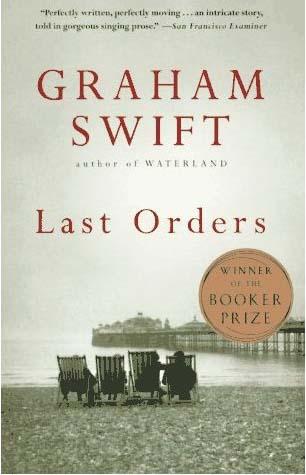
The Man Booker Prize Winner—1996
The author of the internationally acclaimed Waterland gives us a beautifully crafted and astonishingly moving novel that is at once a vision of a changing England and a testament to the powers of friendship, memory, and fate.
Four men—friends, most of them, for half a lifetime—gather in a London pub. They have taken it upon themselves to carry out the “last orders” of Jack Dodds, master butcher, and carry his ashes to the sea. And as they drive to the coast in the Mercedes that Jack's adopted son Vince has borrowed from his car dealership, their errand becomes an epic journey into their collective and individual pasts.
Braiding these men's voices—and that of Jack's mysteriously absent widow—into a choir of secret sorrow and resentment, passion and regret, Graham Swift creates a work that is at once intricate and honest, tender and profanely funny; in short, Last Orders is a triumph.
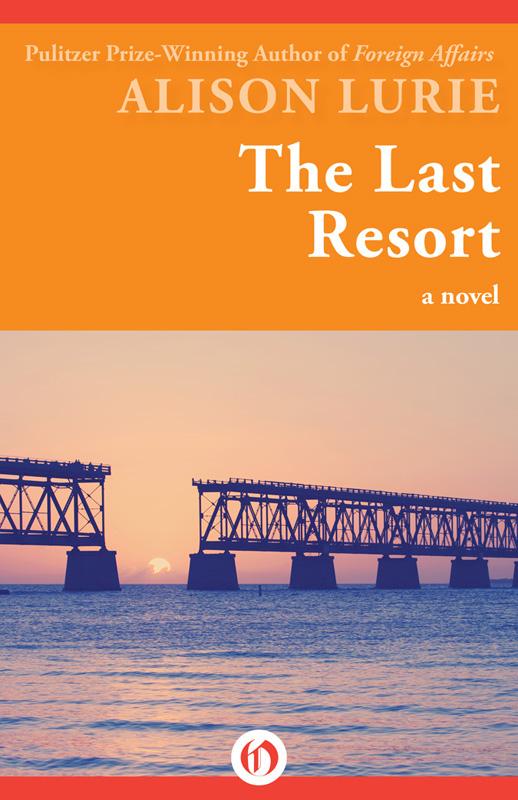
At the end of his tether, a writer travels to Key West with his wife. She's hoping to cheer him up, but he's hoping for something more fatal . . .
Every schoolboy in America knows the work of Wilkie Walker. A pioneering naturalist, he won fame and fortune with his accessible nature books. But by the time he turns seventy, his renown is nearly gone. Late at night, he sits up torturing himself with fears that his career was a waste, his talent is gone, and his body is shot through with cancer. His wife, Jenny, twenty-five years younger than Wilkie, can tell only that he is out of sorts. She has no idea her husband is on the verge of giving up on life.
When Jenny suggests spending the winter in Key West, Wilkie goes along with it. After all, if you need to plan a fatal "accident," Florida is a perfectly good place to do so. And when they touch down in the sunshine state, the Walkers find it's not too late to live life—or end it—however they damn well please.
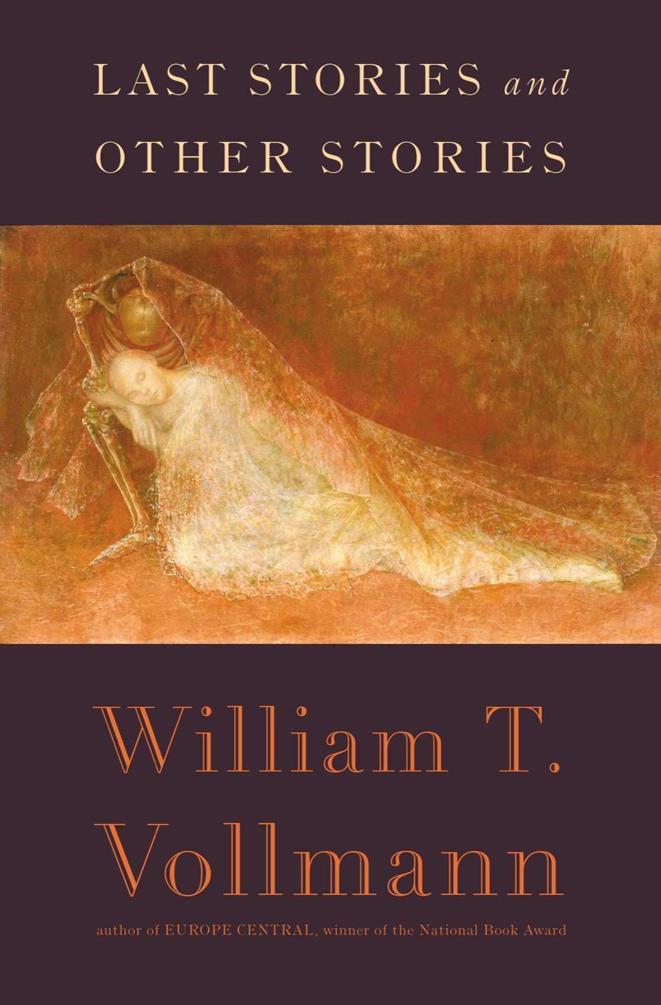
Supernaturally tinged stories from William T. Vollmann, author of the National Book Award winner Europe Central.
In this magnificent new work of fiction, his first in nine years, celebrated author William T. Vollmann offers a collection of ghost stories linked by themes of love, death, and the erotic.
A Bohemian farmer’s dead wife returns to him, and their love endures, but at a gruesome price. A geisha prolongs her life by turning into a cherry tree. A journalist, haunted by the half-forgotten killing of a Bosnian couple, watches their story, and his own wartime tragedy, slip away from him. A dying American romances the ghost of his high school sweetheart while a homeless salaryman in Tokyo animates paper cutouts of ancient heroes.
Are ghosts memories, fantasies, or monsters? Is there life in death? Vollmann has always operated in the shadowy borderland between categories, and these eerie tales, however far-flung their settings, all focus on the attempts of the living to avoid, control, or even seduce death. Vollmann’s stories will transport readers to a fantastical world where love and lust make anything possible.