
 fb2
fb2A collection of interwoven stories, this is a portrait of two worlds — a small Alpine village bound to the earth and by tradition, and the restless, future-driven culture that will invade it — at their moment of collision. The instrument of entrapment is love. Lives are lost and hearts broken.
A novel of love and growing up by Andreï Makine, whose bestselling Dreams of My Russian Summerswas hailed by the Los Angeles Timesas one of the "best autobiographical books of the century."
In the immense virgin pine forests of Siberia, where the snows of winter are vast and endless, sits the little village of Svetlaya. In the early years of the century the village had been larger, more prosperous, but time and the pendulum of history had reduced it by the 1970s to no more than a cluster of izbas. As wars and revolution had succeeded one another, the men had gone away, never to return, the women reduced to dressing in black.
But for three young men-the handsome young Alyosha, the crippled Utkin, and the older, dashing Samurai-little is needed to construct their own special universe. Despite the harshness of the environment and their meager resources, the three adolescents form a tight band of friendship and dream of another life, a world of passion and love. The warm lights of the Transsiberian train passing through give them fleeting glimpses of that other world. And when they learn one day that a Western film is being shown at the Red October Theatre in the closest real city, Nerlug, twenty miles away on the mighty Amur River, they trek for hours on snowshoes to see it. Through that film, starring the French actor Jean-Paul Belmondo and replete with gorgeous women whom he succeeds in seducing one after the other with consummate ease, the boys' lives are changed forever. Over the next several months they travel seventeen times to see their hero. And when that film is replaced by another that is equally daring and seductive, their obsession only grows.
Written from the perspective of twenty years after these youthful events, Once Upon the River Lovefollows the destinies of these three young idealists up to the present day, to the boardwalks of Brighton Beach and the jungles of Central America.
With the same mastery of plot and prose that marked the author's Dreams of My Russian Summers,this novel demonstrates Andreï Makine's remarkable ability to recreate the past with such precision and beauty that the present becomes all the more poignant and moving.
Once Upon the River Loveoffers further proof that Andreï Makine is one of the major literary talents of our time.
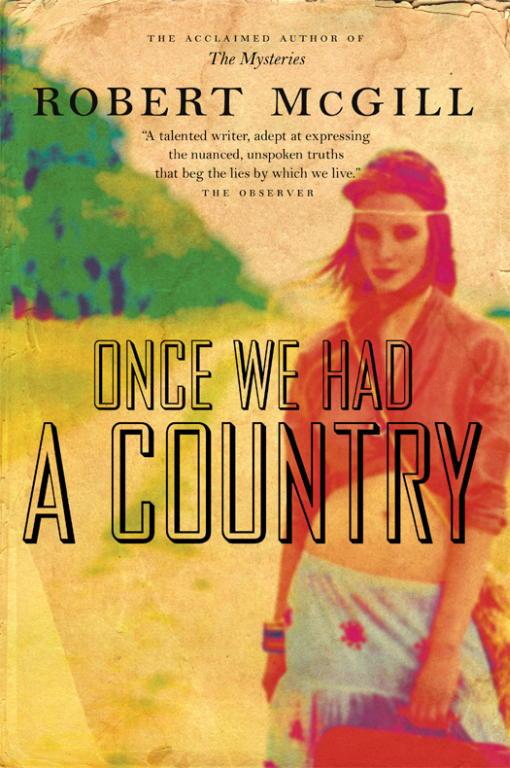
A richly textured novel of idealism and romance, Once We Had a Country re-imagines the impact of the Vietnam War by way of the women and children who fled with the draft dodgers.
It’s the summer of 1972. Maggie, a young schoolteacher, leaves the United States to settle with her boyfriend, Fletcher, on a farm near Niagara Falls. Fletcher is avoiding the Vietnam draft, but they’ve also come to Harroway with a loftier aim: to start a commune, work the land and create a new model for society. Hopes are high for life at Harroway; equally so for Maggie and Fletcher’s budding relationship, heady as it is with passion, jealousy and uncertainty. As the summer passes, more people come to the farm—just not who Maggie and Fletcher expected. Then the US government announces the end of the draft, and Fletcher faces increasing pressure from his family to return home. At the same time, Maggie must deal with the recent disappearance of her father, a missionary, in the jungle of Laos. What happened in those days before her father vanished, and how will his life and actions affect Maggie’s future? Once We Had a Country is a literary work of the highest order, a novel that re-imagines an era we thought we knew, and that compels us to consider our own belief systems and levels of tolerance.
"Divakaruni is a brilliant storyteller; she illuminates the world with her artistry; and shakes the reader with her love." – Junot Diaz
Late afternoon sun sneaks through the windows of a passport and visa office in an unnamed American city. Most customers and even most office workers have come and gone, but nine people remain. A punky teenager with an unexpected gift. An upper-class Caucasian couple whose relationship is disintegrating. A young Muslim-American man struggling with the fallout of 9/11. A graduate student haunted by a question about love. An African-American ex-soldier searching for redemption. A Chinese grandmother with a secret past. And two visa office workers on the verge of an adulterous affair.
When an earthquake rips through the afternoon lull, trapping these nine characters together, their focus first jolts to their collective struggle to survive. There's little food. The office begins to flood. Then, at a moment when the psychological and emotional stress seems nearly too much for them to bear, the young graduate student suggests that each tell a personal tale, "one amazing thing" from their lives, which they have never told anyone before. And as their surprising stories of romance, marriage, family, political upheaval, and self-discovery unfold against the urgency of their life-or-death circumstances, the novel proves the transcendent power of stories and the meaningfulness of human expression itself. From Chitra Divakaruni, author of such finely wrought, bestselling novels as Sister of My Heart, The Palace of Illusions, and The Mistress of Spices, comes her most compelling and transporting story to date. One Amazing Thing is a passionate creation about survival-and about the reasons to survive.
Chief Bromden, half American-Indian, whom the authorities believe is deaf and dumb, tells the story of a mental institution ruled by Big Nurse on behalf of the all-powerful Combine. Into this terrifying grey world comes McMurphy, a brawling gambling man, who wages total war on behalf of his cowed fellow-inmates. What follows is at once hilarious and heroic, tragic and ultimately liberating. Since its first publication in 1962, Ken Kesey’s astonishing first novel has achieved the status of a contemporary classic. “Kesey can be funny, he can be lyrical, he can do dialogue, and he can write a muscular narrative. In fact there's not much better come out of America in the sixties… If you haven’t already read this book, do so. If you have, read it again” – Douglas Eadie, “Scotsman”.
New novel about men, love and relationships by the author of the Book of the Year, Man and Boy. Alfie Budd found the perfect woman with whom to spend the rest of his life, and then lost her. He doesn't believe you get a second chance at love. Returning to the England he left behind during the brief, idyllic time of his marriage, Alfie finds the rest of his world collapsing around him. He takes comfort in a string of pointless, transient affairs with his students at Churchill's Language School, and he tries to learn Tai Chi from an old Chinese man, George Chang. Will Alfie ever find a family life as strong as the Changs'? Can he give up meaningless sex for a meaningful relationship? And how do you play it when the woman you like has a difficult child who is infatuated with a TV wrestler known as The Slab? Like his runaway bestseller, Man and Boy, Tony Parsons's new novel is full of laughter and tears, biting social comment and overwhelming emotion.

Journalist Kitty Logan's career is being destroyed by scandal - and now she faces losing the woman who guided and taught her everything she knew. At her terminally ill friend's bedside, Kitty asks - what is the one story she always wanted to write? The answer lies in a file buried in Constance's office: a list of one hundred names. There is no synopsis, nothing to explain what the story is or who these people are. The list is simply a mystery. But before Kitty can talk to her friend, it is too late. With everything to prove, Kitty is assigned the most important task of her life: to write the story her mentor never had the opportunity to. Kitty not only has to track down and meet the people on the list, but find out what connects them. And, in the process of hearing ordinary people's stories, she starts to understand her own.
One of Publishers Weekly's Best Summer Books 2016.
"Formally dazzling, playful and affecting, a new Oulipian classic." — Lauren Elkin, author of Flâneuse and The End of Oulipo?
This debut novel by mathematician and Oulipo member Michèle Audin retraces the lives of French mathematicians over several generations through World Wars I and II. The narrative oscillates stylistically from chapter to chapter — at times a novel, fable, historical research, or a diary — locking and unlocking codes, culminating in a captivating, original reading experience.
Michèle Audin is the author of several works of mathematical theory and history and also published a work on her anticolonialist father's torture, disappearance, and execution by the French during the Battle of Algiers.

One Man's Bible is the second novel by Nobel Prize-winning author Gao Xingjian to appear in English. Following on the heels of his highly praised Soul Mountain , this later work is as candid as the first, and written with the same grace and beauty.
In a Hong Kong hotel room in 1996, Gao Xingjian's lover, Marguerite, stirs up his memories of childhood and early adult life under the shadow of Mao Zedong and the Cultural Revolution. Gao has been living in self-imposed exile in France and has traveled to this Western-influenced Chinese city-state, so close to his homeland, for the staging of one of his plays.
What follows is a fictionalized account of Gao Xingjian's life under the Communist regime. Whether in "beehive" offices in Beijing or in isolated rural towns, daily life is riddled with paranoia and fear, as revolutionaries, counterrevolutionaries, reactionaries, counterreactionaries, and government propaganda turn citizens against one another. It is a place where a single sentence spoken ten years earlier can make one an enemy of the state. Gao evokes the spiritual torture of political and intellectual repression in graphic detail, including the heartbreaking betrayals he suffers in his relationships with women and men alike.
One Man's Bible is a profound meditation on the essence of writing, on exile, on the effects of political oppression on the human spirit, and on how the human spirit can triumph.
***
One Man's Bible belongs to that sad class of books sold on the strength of their authors having won a prize. But a prize is rather a thin argument for reading it, especially in a wooden English translation. Does one want to know more about Gao Xingjian than his first novel translated into English, Soul Mountain, told? That book had just enough exotic colour to survive its translation; from its portentous title onwards, One Man's Bible has much less going for it. It needs more story, structure, people, situations, atmosphere, ideas – anything strong enough to come through the obscuring veil of alien words.
When, in 2001, Gao became the first Chinese writer to win a Nobel prize for literature, it came as a surprise. The Chinese literary bureaucrats – today's counterparts of the strange Soviet creatures in Bulgakov's The Master and Margarita – had long been pushing for one of their trusties to win. Gao was certainly not one of those, but neither was he prominent in any of the exiled literary cliques. Since being driven to leave China in the 1980s he had been living in France, writing supposedly experimental, sub-Beckettian plays with Chinese characteristics that some critics in the Chinese-speaking world thought worth discussing. These plays also suited small, subsidised European theatre companies in search of uncommercial exotica full of the timeless wisdom of the east. While still in China, Gao was best known for Bus Stop, a one-acter about people waiting for a bus that never came. What delighted audiences and infuriated the authorities when the play appeared some 20 years ago was its apparent implied message: the never-arriving bus was the wonderful future that the regime promised but could not deliver.
Soul Mountain was fiction in the form of an autobiography (or vice versa) that told a fragmented tale of a writer on the run in the wilder reaches of the Yangtze valley. The background chimed with Gao's own flight from the thought police, as well as being a celebration of "authentic" China surviving 40 years of the party state in remote and picturesque areas. There was quite a lot of sex, too.
One Man's Bible also invites us to read its central character, again an author, as an alter ego of Gao's. As he looks back from cosmopolitan exile in the present – the book was written in the late 1990s – on his life in China, this author makes much of feeling uncomfortable, and wallows in sententiousness. The book starts with a bourgeois childhood before the Communists seized power in 1949 (when the real Gao was eight or nine), moving on to his family's and his own troubles in the unending series of political campaigns that ran through the Mao era and its aftermath. Much of it deals with the cultural revolution, with our hero as participant as well as victim in a hellish process, and with how all this made him what he is now. Between the earlier life and the recent past there is a gap where Soul Mountain might fit.
Like Gao, the central figure in One Man's Bible is an exile based in France who writes fiction and drama in his own language. He enjoys the freedom not to be caught up in politics, and wonders how he came to be what he is. Invitations to events on the international cultural circuit give us scenes in Hong Kong, Sydney, New York, Perpignan and elsewhere, all of which are much the same. None of it seems to matter very much in comparison with the seriously deranged political movements of his youth which, though hindsight tells him they were wrong, he savours the discomfort of remembering.
If Soul Mountain explored China and Chineseness, One Man's Bible is all about enjoying feeling guilty, but not too guilty. It is about not being at home anywhere, not even in your own skin, and making the best of it; about the middle-aged worry over what you were when you were younger. As the central figure looks back over his life, he tries to accept the great realisation that it hasn't meant anything. Yet for all his attempts to be sophisticated, he can't help but feel disappointed at the pointlessness of life. He has not got over the Maoist urge to preach, though it is now a different sermon.
In the past 20 years, having a hard time under the Communist party dictatorship has been the stuff of a commercially flourishing genre of autobiographical writing in English by people, especially women, who have got out. Gao is not into that sort of soppy stuff. His fiction has rather more in common with a newer popular sub-genre of Chinese fiction for foreign readers: unillusioned fucklit, by younger women writers. The China his central character has left was an awful place, but one that gave him access to plenty of women's bodies. The west has given him freedom and more women for his bed, but not happiness or meaning. It has allowed him to hold forth on life and art, even if what he has to say is banal.
As a self-conscious follower of European modernism, Gao does not give us this fictional life in a chronological sequence. He assumes that readers can find their way through the cut-up narrative of the cultural revolution, picking up references as Chinese people of his generation will be able to. Yet most foreigners will simply be confused. They are more likely to follow the novel through the unending couplings with which its subject tries to fill the voids in his past and present lives. We start with a German-Jewish woman in Hong Kong, where one of his plays is being staged. There is another in France, and others collected elsewhere on his travels, as well as the various sexual partners in his earlier life in China. But on the whole, the bodies do not seem to have brains.
The ideas in One Man's Bible are commonplace, its characters are ciphers, and it is not redeemed by wit, grace or self-mockery. Its solipsism is banal. I hope we will not have to endure a third novel in this series on the splendours and miseries of being a Nobel prize-winner.
WJF Jenner is a translator and expert on Chinese writing.

One Man's Bible is the second novel by Nobel Prize-winning author Gao Xingjian to appear in English. Following on the heels of his highly praised Soul Mountain , this later work is as candid as the first, and written with the same grace and beauty.\
In a Hong Kong hotel room in 1996, Gao Xingjian's lover, Marguerite, stirs up his memories of childhood and early adult life under the shadow of Mao Zedong and the Cultural Revolution. Gao has been living in self-imposed exile in France and has traveled to this Western-influenced Chinese city-state, so close to his homeland, for the staging of one of his plays.
What follows is a fictionalized account of Gao Xingjian's life under the Communist regime. Whether in "beehive" offices in Beijing or in isolated rural towns, daily life is riddled with paranoia and fear, as revolutionaries, counterrevolutionaries, reactionaries, counterreactionaries, and government propaganda turn citizens against one another. It is a place where a single sentence spoken ten years earlier can make one an enemy of the state. Gao evokes the spiritual torture of political and intellectual repression in graphic detail, including the heartbreaking betrayals he suffers in his relationships with women and men alike.
One Man's Bible is a profound meditation on the essence of writing, on exile, on the effects of political oppression on the human spirit, and on how the human spirit can triumph.
***
"Admirable dramatic intensity… valuable for its vivid piecemeal picture of 20th-century China 's culture of revisionist egoism, paranoia and repression."
– Kirkus Reviews
"Unforgettable… One Man's Bible burns with a powerfully individualistic fire of intelligence and depth of feeling."
– New York Times
"A remarkable achievement."
– Christian Science Monitor
"One Man's Bible… has come to claim its place as a powerful narrative… of the Cultural Revolution's insidious, corrosive terror."
– New York Times Book Review
"Captivating… a beautifully stirring account of life in an era of political oppression…[One Man's Bible] is an important book,"
– Fort Worth Star-Telegram
"[Gao] paints a stark, unforgiving picture of the results of Mao's regime and of the Cultural Revolution."
– Denver Post
"If the hallmark of a good novel is its ability to transport the reader, willing or not, into unfamiliar or uncomfortable territory, then this novel is a success."
– Denver Post
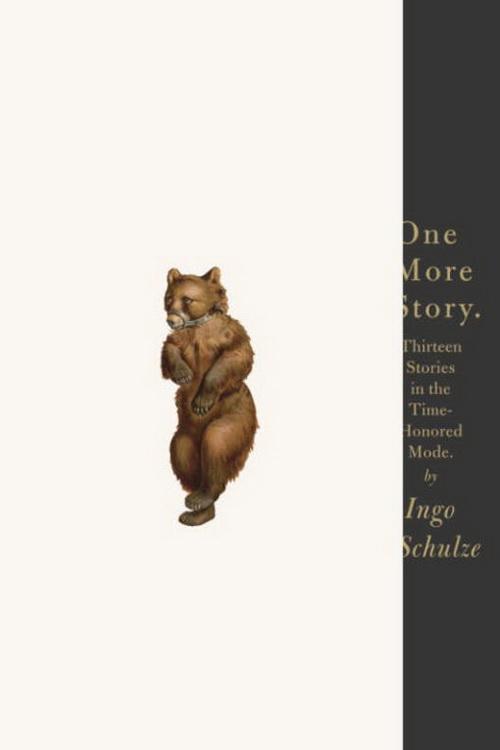
“A literary event” (Frankfurter Allgemeine Zeitung): thirteen new stories from one of Germany’s finest writers.
New Year’s Eve 1999, Berlin. At a party to kick off the twenty-first century, Frank Reichert meets Julia, his lost love. Since their separation in the fall of 1989, he’s drifted through life like an exile, remaining apathetic toward the copy-shop business he started even as it flourishes apace. Nothing has the power to move him now: his whole life lies under the shadow of Julia, of the idea that things could have worked out differently. But as night draws on to day, the promised end becomes an unexpected new beginning.
Ingo Schulze introduces us to characters as they stray outside the confines of East Germany into other, newer lives — into Egypt, where the betrayal of a lover turns an innocent vacation into a nightmare; into Vienna, where life starts to mimic art; into Estonia, where we meet a retired circus bear in an absurd (and absurdly hilarious) dilemma — or as they simply stay put, struggling to maintain their sense of themselves as the world around them changes.
Mixed in with these tragicomic tales are some of the most beautiful love stories ever to feature cell phones. And throughout, Schulze’s masterfully controlled style conceals an understated, but finally breathtaking, intricacy.
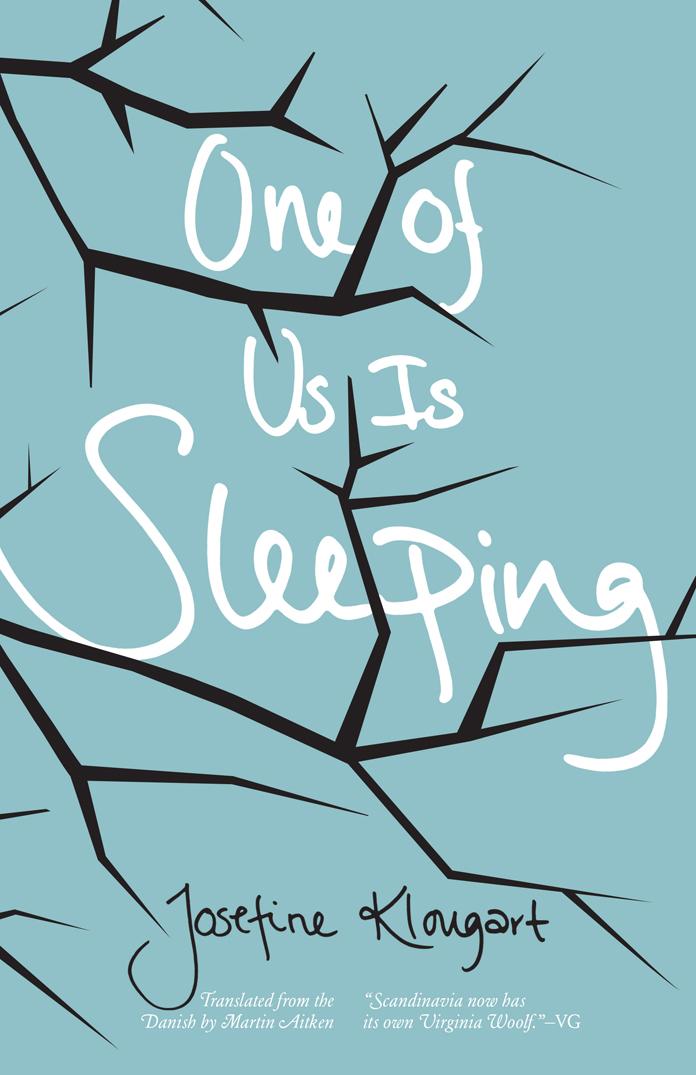
"Scandinavia now has its own Virginia Woolf. Few get as close to the human mind as Klougart" — Mari Nymoen Nilsen, VG
The English-language debut from one of Denmark's most exciting, celebrated young writers, One of Us Is Sleeping is a haunting novel about loss in all its forms.
Working in the vein of Anne Carson, Josefine Klougart's novel is both true-to-life and incredibly poetic in its relating of a brief, intense love affair and the grief and disillusionment that follow its end. While she recounts the time with her lover, the narrator is also heading back home, where her mother is dying of cancer. This contrast between recollection and the belief that certain things will always be present in your life — your parents, your childhood home, your love — and the fact that life is a continual series of endings runs throughout the book, underpinning the striking imagery and magnificent prose.
A powerful novel that earned Klougart numerous accolades and several award nominations — including the Readers Book Award—One of Us Is Sleeping marks the launch of a major new voice in world literature.
Josefine Klougart has been hailed as one of Denmark's greatest contemporary writers. She is the first Danish author ever to have two of her first three books nominated for the Nordic Council Literature Prize. She's been compared to a range of authors, including Joan Didion, Anne Carson, and Virginia Woolf.
Martin Aitken has translated dozens of books from the Danish, including works by Dorthe Nors, Jussi Adler-Olsen, Peter Høeg, and Kim Leine, among others.
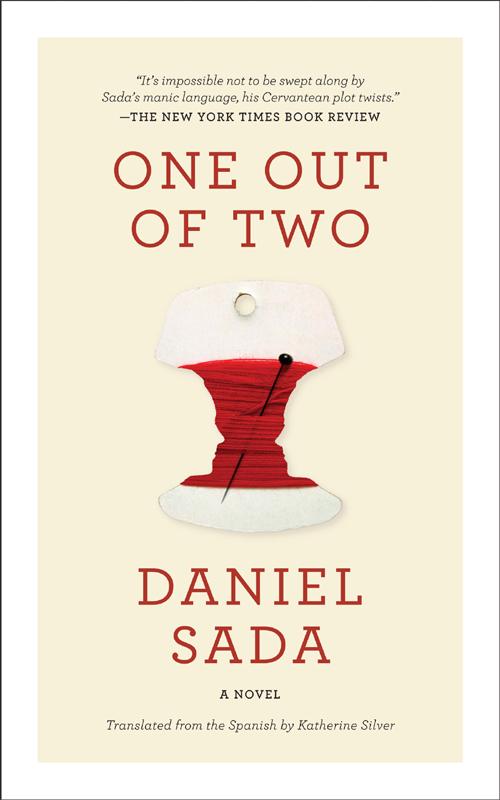
“A literary titan of his time, one of the most innovative novelists in contemporary Latin American letters.” —The Washington Post
The most distinctive thing about the Gamal sisters is that they are, essentially, indistinguishable (except for a modest mole). The twin spinsters spend their time trying to mask any perceptible differences they have while working hard at their thriving tailoring business in a small town in rural northern Mexico. When? Thirty years ago? Fifty years ago? Who can say — the world seems not to intrude on Ocampo very much.
Gloria and Constitution take an almost perverse delight in confusing people about which one is which. But then a suitor enters the picture, and one of the sisters decides that she doesn't want to live a life without romance and all the good things that come with it. The ensuing competition between the sisters brings their relationship to the breaking point until they come up with an ingenious solution that carries this buoyant farce to its tender and even liberating conclusion.
Suffused with the tension between our desire for union and our desire for independence, Daniel Sada's One Out of Two is a giddy and comic fable by one of the giants of contemporary Latin American literature.
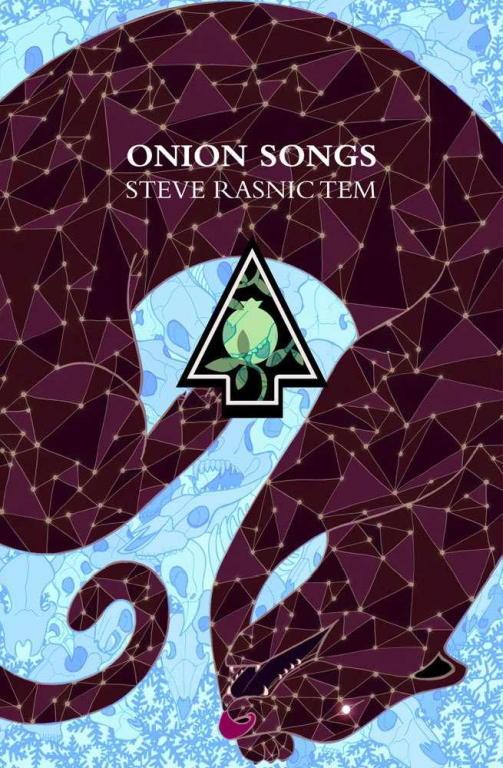
Onion Songs is a collection of 42 short stories spanning the writing career of Steve Rasnic Tem, with an emphasis on the bizarre, the off-beat and the meditative. Here Tem confronts the big questions of human experience (ageing, death, identity, relationships) like a collector digging deep in the clutter of an attic and pulling out only the most unexpected and most telling finds.
His style tersely poetic, Tem is able to give fine reproductions of the texture of everyday life while writing with all the invention of unrestrained nightmare. The mindscapes contained here, where circus clowns cling to meaningless office jobs, skeletons fall like snow, ‘true unicorns’ rummage in garbage piles, and fires are liable to break out at any moment, first engage us deeply where things ache most, then compel us to keep reading with a beauty that, for all its strangeness, we finally recognise as human.
From Publishers Weekly
In 1948, a 12-year-old boy named Fintan is sailing to Africa with his Italian mother to live with the British father he doesn't remember. At times, this French novel paints too precious a picture of the young Fintan and his mother, who occasionally writes down poetic bits like "In my hands I hold the prey of silence." The ship's voyage can drag, too, with too many hints about the characters' previous lives (upon learning that Fintan has contracted scabies, his mother cries out "A barnyard disease!"). But once the pair arrive in Onitsha, in Nigeria, Fintan's views of the colonial situation and the different ways that Europeans adapt to their surroundings prove fresh and valuable, though suffused with the unworldly morality of the innocent. He befriends Bony, the son of a fisherman, who teaches him a new way of seeing nature. The relationship between Fintan's parents crackles with difficulty as they attempt to readjust to each another after their long separation and as his mother strains against local customs. At a dinner party hosted by a man who has commissioned prisoners to dig a swimming pool, Fintan's mother insists that the chained prisoners be allowed something to eat and drink. Her request is met, but she is then ostracized by polite society. Eventually, Fintan's father loses his job with the United Africa Company and moves the family first to London, then to the south of France. Overall, this novel is choppy, but it generates waves that startle and surprise, and that push the reader from one page to the next.
From Library Journal
Often, looking through youthful eyes focuses readers directly on the brutal truths of such unsavory issues as racism. In this latest translation of a work by noted French author Le Clezio (following The Prospector, Godine, 1993), young Fintan realizes the horrors of racist, colonial society as he journeys with his much-beloved mother to Africa in 1948 to join his father, an agent for a trading company. Even before their ship has arrived, Fintan is becoming aware of Western intolerance of African people, beliefs, and language. The novel offers a compelling contrast between white mistreatment of Africans and the occasionally dangerous natural beauty surrounding the village of Onitsha on the banks of the Niger River. Fintan never forgets the harsh facts of his childhood years, and readers will not forget this novel.
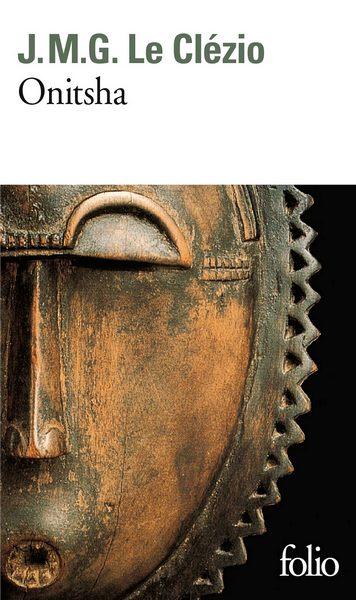
Fintan, Maou, Geoffroy : trois rêves, trois révoltes. Et une même soif.
Fintan Allen a douze ans lorsque, le 14 mars 1948, il embarque pour l'Afrique avec sa mère, Maou. Geoffroy Allen, qui avait laissé en France sa femme et son fils, leur a enfin demandé de venir le rejoindre à Onitsha, petit port fluvial où il travaille pour la United Africa. Fintan ne connaît ni son père, ni l'Afrique.
Maou, elle, rêve d'une Afrique idyllique où elle pourra vivre près de l'homme qu'elle aime, à l'abri des préjugés familiaux qui condamnaient en lui le rêveur sans le sou, et anglais de surcroît. C'est une Afrique bien différente qu'elle va découvrir, dévorante, insaisissable. Et un conformisme plus oppressant encore : celui du milieu colonial, fait de haines, de mesquineries, d'échecs inavouables.
« L'Afrique brûle comme un secret, comme une fièvre. Geoffroy Allen ne peut pas détacher son regard, un seul instant, il ne peut pas rêver d'autres rêves. »
Ce livre est pareil à l'Afrique. S'il s'en dégage malgré sa violence un tel sentiment de sérénité, c'est que, chez Le Clézio, même la fièvre, même la révolte, même la défaite sont les couleurs de la paix.
It’s 2019 and America is ruled over by a billionaire reality TV star. Its media is owned by a transnational class of the shameless and the depraved. And its people have been silently robbed of their wealth, their dignity and their democracy.
In this brave new world, going to see a superhero movie counts as activism, and arguing with the other serfs on social media is political engagement. BUT EVERYTHING’S FINE – as long as you never, ever ask yourself who makes money from the ticket sales and the ratings, or who owns Twitter.
It’s 2019 and Jarett Kobek has done the only thing a dissident American novelist can do in those circumstances: he’s joined the party and written fantasy novel about an immortal fairy queen and a shadowy billionaire philanthropist sheikh called Dennis.
Hilarious, provocative and unmissable, Only Americans Burn in Hell is the only novel for our certifiably insane times.
The critically acclaimed novel from a master of contemporary American fiction — now available as an ebook
A loving satire of new parenthood and its attendant joys and blunders
The Golds and the Hummels live in the same wealthy Manhattan neighborhood, but as both couples prepare for the arrival of their first child, they share little in terms of parenting philosophy. The Golds plunge into natural birth without bothering to first set up a nursery. The Hummels schedule a C-section and fill out hospital admissions paperwork weeks in advance. Both couples, however, are grappling with the transformations they know parenthood will immediately bring.
Set in a milieu of material excess and limitless ambition, Only Children skewers new parents who expect perfect lives, but also offers an intimate look at the trials all new parents face as they learn how to nurture.
This ebook features a new illustrated biography of Rafael Yglesias, including rare photos and never-before-seen documents from the author’s personal collection.
With insight and candor, Yglesias recounts five years in the lives of two yuppie couples, to whom parenthood occasions typical tribulations and discouraging self-assessments. Byron’s birth exacerbates the problems between Diane and Peter Hummel (she’s a Yale-educated corporate lawyer, he’s a wealthy fundraiser for the arts). While she foolishly tries to be super-mom, wife and professional, she also puts pressure on Byron to excel, attempting to enroll him in an elite school and forcing him to play the violin. Peter withdraws from them both after Byron’s presence activates long-dormant memories of his icily aloof mother. Investment counselor Eric Gold, obsessed by the humiliation of his father’s business failures, frantically pushes himself to produce substantial earnings for his wife Nina and their son Luke. Her imagined inadequacies torment Nina, especially when she cannot soothe Luke, whose colic makes him infuriatingly uncontrollable. This is a vivid description of how rearing a first child can conjure up neurotic fears, which must be resolved before parents can nurture their offspring. Yglesias has abandoned the cynicism that infused Hot Properties; this new novel is deeply felt and thought-provoking. $75,000 ad/promo; Doubleday Book Club main selection; Literary Guild featured alternate.
Copyright 1988 Reed Business Information, Inc.
"The joys of Motherhood. Are they all one great lie?" In carefully orchestrated, parallel stories of two New York couples and their sons from birth through age five, Yglesias explores this and other contemporary parenting issues. The story moves carefully between the Golds and the Hummels in a sort of literary counterpoint that becomes more staccato in the second half of the book. Educated professionals with good incomes, both sets of parents have excellent intentions but are crippled by emotional "baggage": they are adult children ("only children") themselves. The children are unusually bright, but their development, like their parents’, is impeded by complex psychological issues. Yglesias writes with insight, showing how true adulthood comes with self-awareness, pain, and understanding. Definitely recommended.Ellen R. Cohen, Rockville, Md.
Copyright 1988 Reed Business Information, Inc.
The "Clifton Chronicles" is Jeffrey Archer's most ambitious work in four decades as an international bestselling author. The epic tale of Harry Clifton's life begins in 1920, with the chilling words, 'I was told that my father was killed in the war'. But it will be another twenty years before Harry discovers how his father really died, which will only lead him to question: who was his father? Is he the son of Arthur Clifton, a stevedore who worked in Bristol docks, or the first born son of a scion of West Country society, whose family owns a shipping line? "Only Time Will Tell" covers the years from 1920 to 1940, and includes a cast of memorable characters that "The Times" has compared to "The Forsyte Saga". Volume one takes us from the ravages of the Great War to the outbreak of the Second World War, when Harry must decide whether to take up a place at Oxford, or join the navy and go to war with Hitler's Germany. In Jeffrey Archer's masterful hands, the reader is taken on a journey that they won't want to end, and when you turn the last page of this unforgettable yarn, you will be faced with a dilemma that neither you, nor Harry Clifton could have anticipated.