 fb2
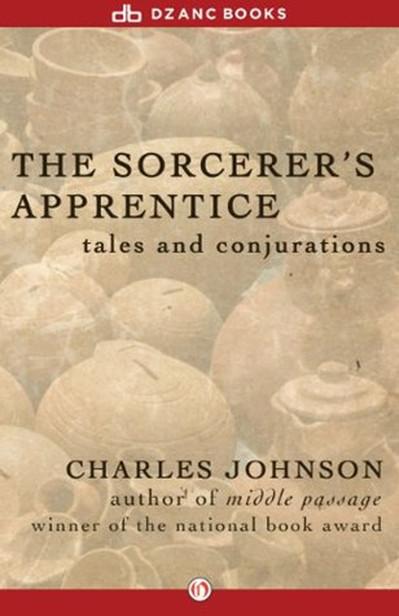
fb2Interweaving the real and the surreal, Charles Johnson spins eight fantastic tales of transformations and metamorphoses. An Illinois farmer teaches a young slave everything he knows — yielding fatal consequences. A young boy growing to manhood as a country sorcerer’s apprentice learns the difference between power and strength. These stories capture human experiences in a new and startling light.
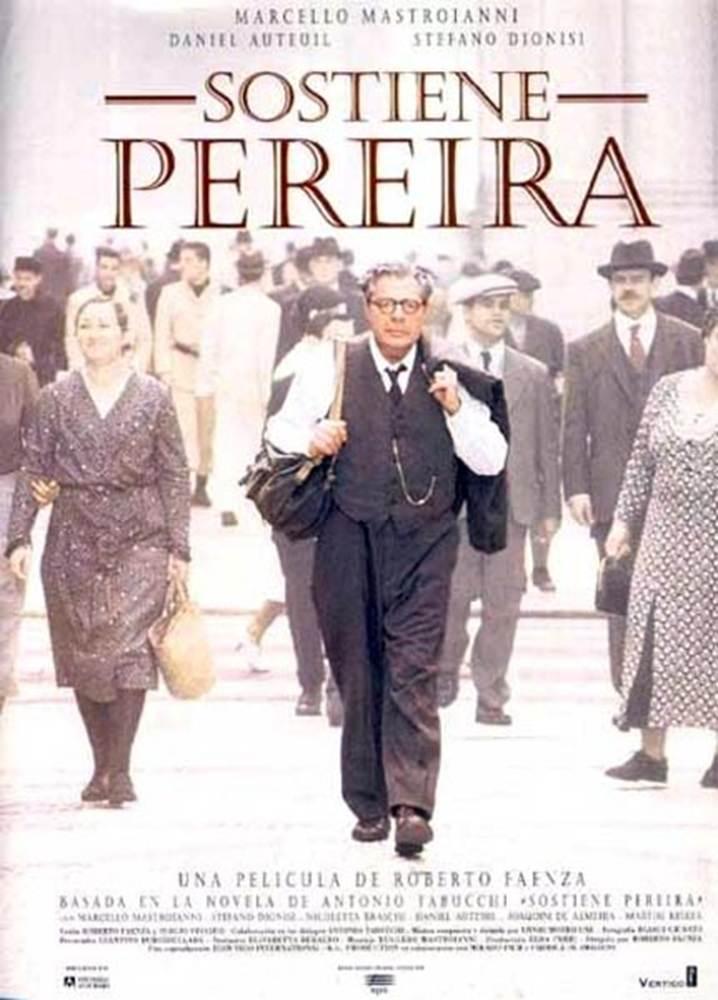
Lisboa, 1938. La opresiva dictadura de Salazar, el furor de la guerra civil española llamando a la puerta, al fondo el fascismo italiano. En esta Europa recorrida por el virulento fantasma de los totalitarismos, Pereira, un periodista dedicado durante toda su vida a la sección de sucesos, recibe el encargo de dirigir la página cultural de un mediocre periódico, el Lisboa.
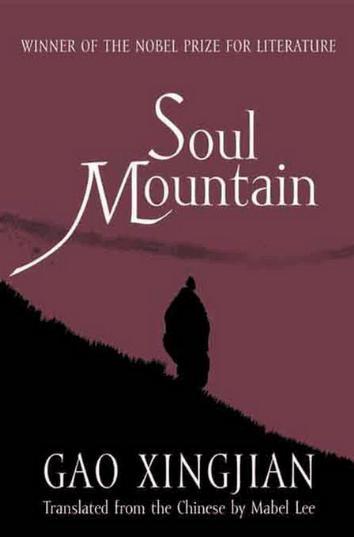
In 1983, Chinese playwright, critic, fiction writer, and painter Gao Xingjian was diagnosed with lung cancer and faced imminent death.B ut six weeks later, a second examination revealed there was no cancer — he had won "a second reprieve from death." Faced with a repressive cultural environment and the threat of a spell in a prison farm, Gao fled Beijing and began a journey of 15,000 kilometers into the remote mountains and ancient forests of Sichuan in southwest China. The result of this epic voyage of discovery is Soul Mountain.
Bold, lyrical, and prodigious, Soul Moutain probes the human soul with an uncommon directness and candor and delights in the freedom of the imagination to expand the notion of the individual self.
“Chinese literature [of the future] will have to contend with the creative energy and the daring of Gao Xingjian.”
—Le Monde
“It is a relief to come to a book that celebrates the pleasures of literature with such gusto and knowingness.”
— Courier-Mail [Australia]
“His largest and perhaps most personal work…Gao has created a sui generis work, one that, in combining story, reminiscence, meditation and journalism, warily comes to terms with the shocks of both Maoism and capitalism.”
— Publishers Weekly
"Soul Mountain is one of those singular literary creations that seem impossible to compare with anything but themselves… In the writing of Gao Xingjian literature is born anew from the struggle of the individual to survive the history of the masses."
– from the citation of the Nobel Prize committee of the Swedish Academy
When this year's Nobel Prize for Literature was awarded to Chinese expatriate novelist and playwright Gao Xingjian, few in the English-speaking West were familiar with his work. Gao's masterpiece, SOUL MOUNTAIN (PerfectBound, an e-book from HarperCollins; February 20, 2001; $19.95), is a dazzling kaleidoscope of fiction, philosophy, history and fable. Elegantly translated by Australian sinologist Mabel Lee, this richly textured autobiographical novel recounts a dual journey-a literal journey into the heart of China and a spiritual journey of the self.
When Gao was 43, he was incorrectly diagnosed with lung cancer. Resigned to death by the same means that had claimed his father just a few years before, Gao spent six weeks indulging his appetites and reading philosophy. The spot on Gao's lung mysteriously disappeared, but a new threat arose when rumors began to circulate that he was to be sent to a prison farm because of his controversial writings. No longer facing imminent death, the writer quickly left Beijing and disappeared into the remote forest regions of Sichuan, then spent five months wandering along the Yangtze River from its source down to the coast. Gao's 15,000 kilometer sojourn forms the geographic parameters of the fictional journey in SOUL MOUNTAIN.
While on a train at the start of his trip, the writer protagonist meets another traveler who says he is going to Lingshan, "soul mountain," which can be found by the remote source of the You River. The writer has never heard of such a place, and he resolves to go there, but his fellow traveler can give him none but the vaguest directions. Thus begins a metaphoric odyssey into the hinterlands of China and the outlying Qiang, Miao and Yi districts that dangle on the fringes of Han Chinese civilization.
The writer is in search of the traditions that are hidden in rural China, and as he travels he encounters a parade of unforgettable characters who embody both vestiges of the past-Daoist masters, Buddhist monks, ancient calligraphers-and the modern culture that has surfaced since the revolution: small town communist cadres, budding entrepreneurs, independent young girls grappling with parochial repression. The two worlds exist uneasily as one, with stories and customs from centuries past colliding with a world of televisions, automobiles, and technology. All is permeated by the dark legacy of the Cultural Revolution, the encroachment of ecological damage, and the harsh monetary realities of everyday life in contemporary China.
SOUL MOUNTAIN is a dazzling work of the imagination, where classic fables merge with tales of modern cruelty and ancient philosophy does battle with existentialism. But Gao goes deeper still as he explores notions of the devastation of the self at the hands of social expectations. He continually shifts his narrative voice as the "I" of the writer becomes the "you" of an imagined companion, then the "she" of a woman companion. Yet all reflects back on the protagonist, who craves these two seemingly contradictory ends-the solitude necessary for nurturing the self and the anxiety-provoking warmth of human society.
Gao began this novel in the mid-eighties, then carried the manuscript with him when he fled China in 1987. Now living in Paris, he completed the book there in 1989. His writings continue to be banned in his native country. As Gao's work at last gains the public's attention here in the West, SOUL MOUNTAIN provides a dazzling introduction to the achievement of one of contemporary literature's acknowledged masters.
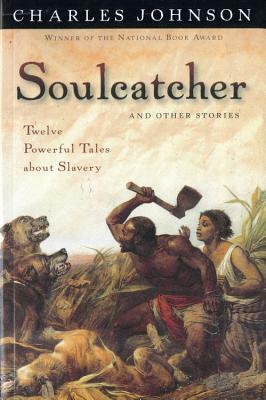
Twelve stories about the African experience of slavery in America, by the National Book Award-winning novelist.
Nothing has had as profound an effect on American life as slavery. For blacks and whites alike, the experience has left us with a conflicted and contradictory history. Now, famed novelist Charles Johnson, whose Middle Passage won the National Book Award, presents a dozen tales of the effects and experience of slavery, each based on historical fact, and each about those Africans who arrived on our shores in shackles. From Martha Washington's management of her slaves, bequeathed to her at the death of the first president, to a boy chained in the bowels of a ship plying the infamous passage from Africa to the South laden with human cargo, from a lynching in Indiana to a hunter of escaped slaves searching the Boston market for his quarry, from an early Quaker meeting exploring resettlement in Africa to the day after Emancipation-the voices, terrors, and savagery of slavery come vividly and unforgettably to life.
These stories, told by a master storyteller, transcend history even as they present it, and retell the mythic proportions of a historical period with astounding realism and beauty, power, and emotion.
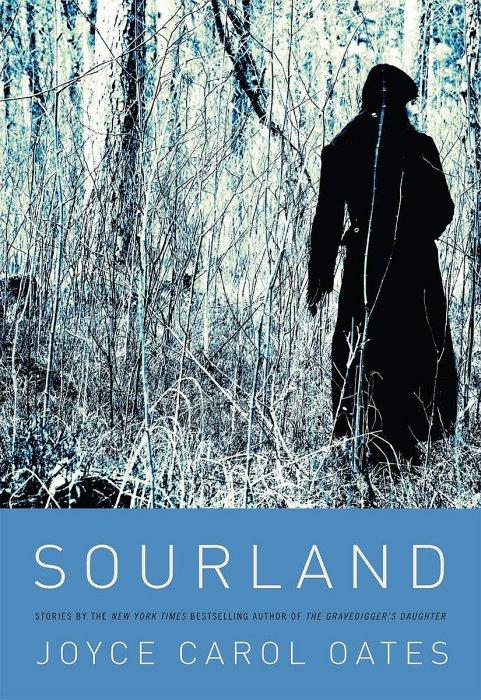
Oates's latest collection explores certain favorite Oatesian themes, primary among them violence, loss, and privilege. Three of the stories feature white, upper-class, educated widows whose sheltered married lives have left them unprepared for life alone. In «Pumpkin-Head» and «Sourland», the widows-Hadley in the first story, Sophie in the second-encounter a class of Oatesian male: predatory, needy lurkers just out of prosperity's reach. In the first story, our lurker is Anton Kruppe, a Central European immigrant and vague acquaintance of Hadley whose frustrations boil over in a disastrous way. In the second story, Sophie is contacted by Jeremiah, an old friend of her late husband, and eventually visits him in middle-of-nowhere northern Minnesota, where she discovers, too late, his true intentions. The third widow story, «Probate», concerns Adrienne Myer's surreal visit to the courthouse to register her late husband's will, but Oates has other plans for Adrienne, who is soon lost in a warped bureaucratic funhouse worthy of Kafka. Oates's fiction has the curious, morbid draw of a flaming car wreck. It's a testament to Oates's talent that she can nearly always force the reader to look.
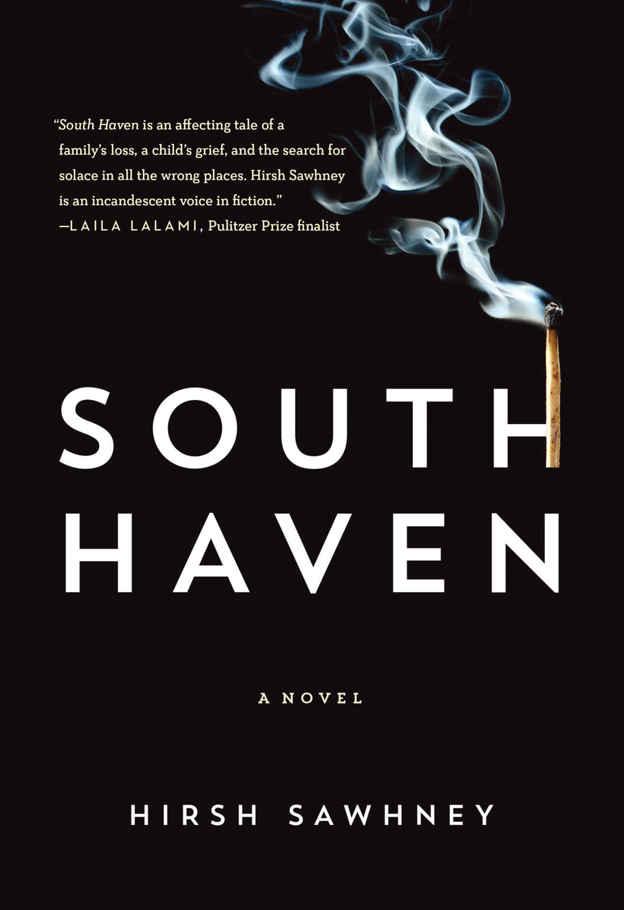
"[T]his luminous debut…captures precisely the heartache of growing up."
— Library Journal, Top Spring Indie Fiction
"A powerful story…a universal look at the complexity of how people wrestle with guilt and blame amid tragic loss."
— New Haven Independent
Included in John Reed's list of Most Anticipated Small Press Books of 2016 at Big Other
"A son of Hindu immigrants from India grows up in a New England suburb, where he struggles to find his way after his mother dies, while his father becomes immersed in anti-Muslim fundamentalism."
— World Wide Work
"South Haven is an affecting tale of a family's loss, a child's grief, and the search for solace in all the wrong places. Hirsh Sawhney is an incandescent voice in fiction."
— Laila Lalami, author of The Moor's Account
"It's no secret that grief makes us vulnerable, but Hirsh Sawhney's perceptively rendered South Haven presents a volatile mix of second-generation migration, sadness, and cruelty in suburban America. South Haven is bold, accessible, funny, and heartbreaking."
— Jayne Anne Phillips, author of Quiet Dell
"Hirsh Sawhney writes with wit and tenderness about a harsh childhood. And such is his power of insight that this novel, set in a New England suburb, manages to illuminate a larger landscape of cruelty and torment."
— Pankaj Mishra, author of From the Ruins of Empire
"Hirsh Sawhney has produced an intelligent and beautiful novel. It is about America and India, fathers and children, families and loss. The world is changing and here is a new map of belonging."
— Nadeem Aslam, author of The Blind Man’s Garden
"A lyrical yet disturbing look at the grim realities of migration and American suburban life, South Haven manages to be both witty and unnerving at the same time. It is a novel that resonates long in the memory."
— Caryl Phillips, author of The Lost Child
Siddharth Arora lives an ordinary life in the New England suburb of South Haven, but his childhood comes to a grinding halt when his mother dies in a car accident. Siddharth soon gravitates toward a group of adolescent bullies, drinking and smoking instead of drawing and swimming. He takes great pains to care for his depressive father, Mohan Lal, an immigrant who finds solace in the hateful Hindu fundamentalism of his homeland and cheers on Indian fanatics who murder innocent Muslims. When a new woman enters their lives, Siddharth and his father have a chance at a fresh start. They form a new family, hoping to leave their pain behind them.
South Haven is no simple coming-of-age tale or hero's journey, blurring the line between victim and victimizer and asking readers to contend with the lies we tell ourselves as we grieve and survive. Following in the tradition of narratives by Edwidge Danticat and Junot Díaz, Sawhney draws upon the measured lyricism of postcolonial writers like Michael Ondaatje but brings to his subjects distinctly American irreverence and humor.

Born in 1951 in an affluent Tokyo suburb, Hajime—beginning in Japanese—has arrived at middle age wanting for almost nothing. The postwar years have brought him a fine marriage, two daughters, and an enviable career as the proprietor of two jazz clubs. Yet a nagging sense of inauthenticity about his success threatens Hajime’s happiness. And a boyhood memory of a wise, lonely girl named Shimamoto clouds his heart.

Over the course of a season, Boga and the old man work side by side on the sandbanks of the Paraná Delta, cutting reeds to sell to local basketweavers. But when the old man falls sick and dies, Boga abandons himself entirely to the river and the life of solitary drifting he has long yearned for.
Echoes of John Berger sound throughout the evocative prose of this great Argentian writer. A twentieth-century classic, Southeaster is a central work in Haroldo Conti’s oeuvre.
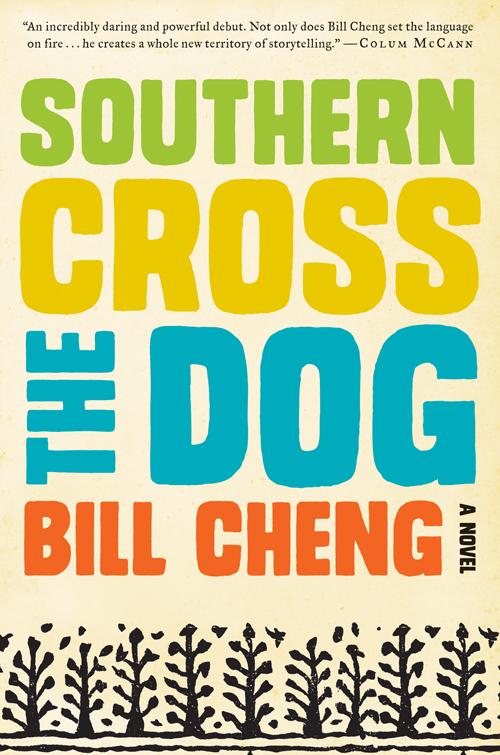
An epic odyssey in which a young man must choose between the lure of the future and the claims of the past.
With clouds looming ominously on the horizon, a group of children play among the roots of the gnarled Bone Tree. Their games will be interrupted by a merciless storm — bringing with it the Great Flood of 1927–but not before Robert Chatham shares his first kiss with the beautiful young Dora. The flood destroys their homes, disperses their families, and wrecks their innocence. But for Robert, a boy whose family has already survived unspeakable pain, that single kiss will sustain him for years to come.
Losing virtually everything in the storm's aftermath, Robert embarks on a journey through the Mississippi hinterland — from a desperate refugee camp to the fiery brothel Hotel Beau-Miel and into the state's fearsome swamp, meeting piano-playing hustlers, well-intentioned whores, and a family of fierce and wild fur trappers along the way. But trouble follows close on his heels, fueling Robert's conviction that he's marked by the devil and nearly destroying his will to survive. And just when he seems to shake off his demons, he's forced to make an impossible choice that will test him as never before.
Teeming with language that voices both the savage beauty and the complex humanity of the American South, Southern Cross the Dog is a tour de force of literary imagination that heralds the arrival of a major new voice in fiction.

Winner of the 1989 National Book Award.
A classic tale of a man, a boat, and a storm, Spartina is the lyrical and compassionate story of Dick Pierce, a commercial fisherman along the shores of Rhode Island's Narragansett Bay. A kind, sensitive, family man, he is also prone to irascible outbursts against the people he must work for, now that he can no longer make his living from the sea.
Pierce's one great passion, a fifty-foot fishing boat called Spartina, lies unfinished in his back yard. Determined to get the funds he needs to buy her engine, he finds himself taking a foolish, dangerous risk. But his real test comes when he must weather a storm at sea in order to keep his dream alive. Moving and poetic, Spartina is a masterly story of one man's ongoing struggle to find his place in the world
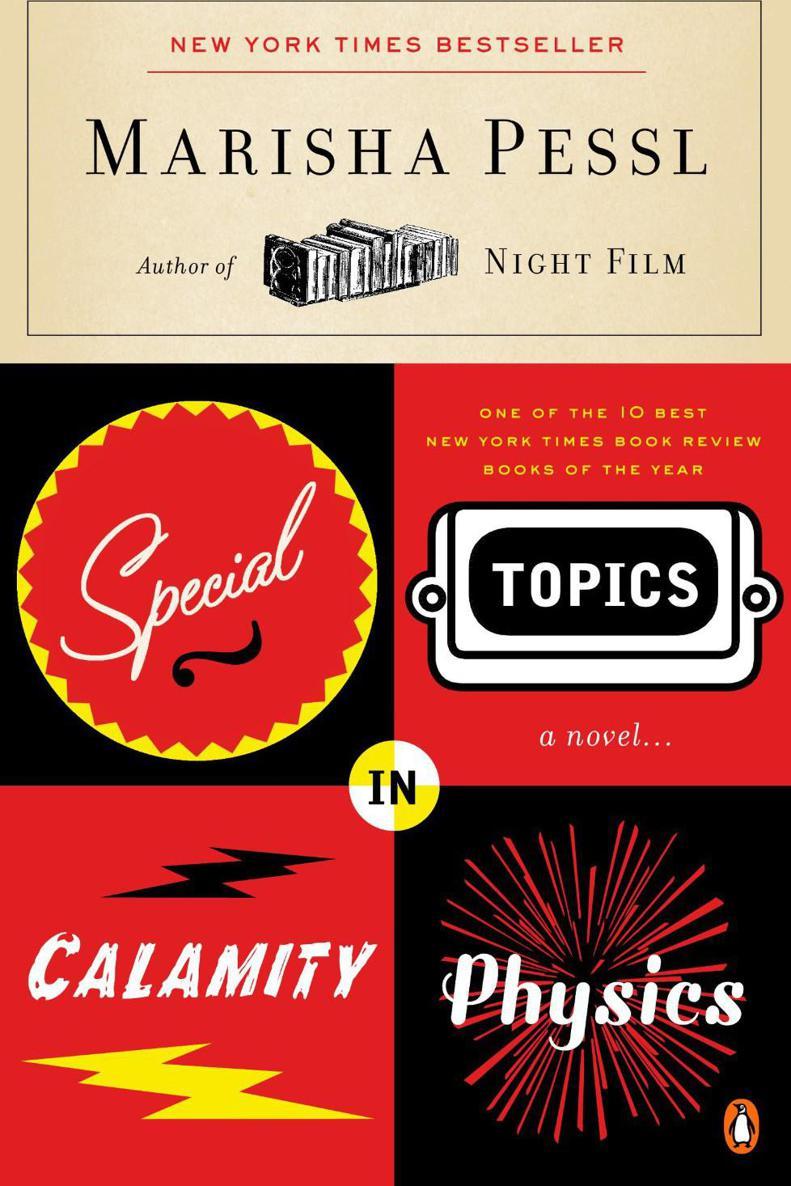
Marisha Pessl’s dazzling debut sparked raves from critics and heralded the arrival of a vibrant new voice in American fiction. At the center of Special Topics in Calamity Physics is clever, deadpan Blue van Meer, who has a head full of literary, philosophical, scientific, and cinematic knowledge, but she could use some friends. Upon entering the elite St. Gallway School, she finds some-a clique of eccentrics known as the Bluebloods. One drowning and one hanging later, Blue finds herself puzzling out a byzantine murder mystery. Nabokov meets Donna Tartt (then invites the rest of the Western Canon to the party) in this novel-with visual aids drawn by the author-that has won over readers of all ages.
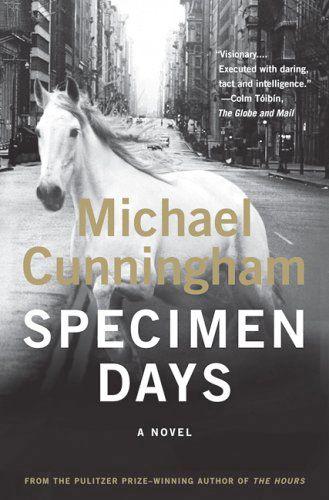
Specimen Days is a 2005 novel by American writer Michael Cunningham. It contains three stories: one that takes place in the past, one in the present and one in the future. Each of the three stories depicts three central, semi-consistent character-types: a young boy, a man, and a woman. Walt Whitman's poetry is also a common thread in each of the three stories and the title is from Whitman's own prose works.
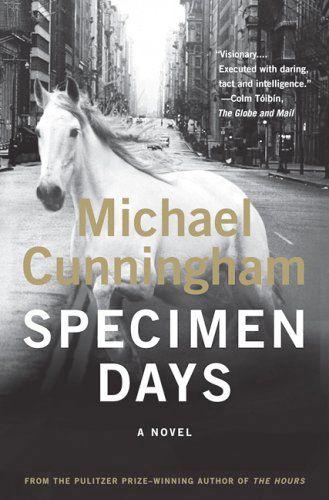
Specimen Daysis a 2005 novel by American writer Michael Cunningham. It contains three stories: one that takes place in the past, one in the present and one in the future. Each of the three stories depicts three central, semi-consistent character-types: a young boy, a man, and a woman. Walt Whitman’s poetry is also a common thread in each of the three stories and the title is from Whitman’s own prose works.
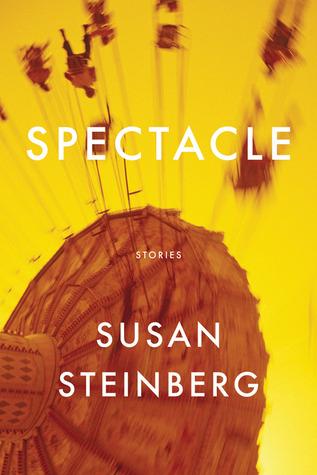
An inventive new collection from the author of Hydroplane and The End of Free Love
* A San Francisco Chronicle, Complex, Flavorwire, Vol. 1 Brooklyn, Largehearted Boy and Slaughterhouse 90210 Best Book of the Year *
In these innovative linked stories, women confront loss and grief as they sift through the wreckage of their lives. In the title story, a woman struggles with the death of her friend in a plane crash. A daughter decides whether to take her father off life support in the Pushcart Prize-winning “Cowboys.” And in “Underthings,” when a man hits his girlfriend, she calls it an accident. Spectacle bears witness to alarming and strange incidents: carnival rides and plane crashes, affairs spied through keyholes and amateur porn, vandalism and petty theft. These wounded women stand at the edge of disaster and risk it all to speak their sharpest secrets.
In lean, acrobatic prose, Susan Steinberg subverts assumptions about narrative and challenges conventional gender roles. She delivers insight with a fierce lyric intensity in sentences shorn of excessive sentiment or unnecessary ornament. By fusing style and story, Steinberg amplifies the connections between themes and characters so that each devastating revelation echoes throughout the collection. A vital and turbulent book from a distinctive voice, Spectacle will break your heart, and then, before the last page is turned, will bind it up anew.
“Experimental but never opaque, Steinberg’s stories seethe with real and imagined menace.” —Publishers Weekly
When Speedboat burst on the scene in the late ’70s it was like nothing readers had encountered before. It seemed to disregard the rules of the novel, but it wore its unconventionality with ease. Reading it was a pleasure of a new, unexpected kind. Above all, there was its voice, ambivalent, curious, wry, the voice of Jen Fain, a journalist negotiating the fraught landscape of contemporary urban America. Party guests, taxi drivers, brownstone dwellers, professors, journalists, presidents, and debutantes fill these dispatches from the world as Jen finds it.
A touchstone over the years for writers as different as David Foster Wallace and Elizabeth Hardwick, Speedboat returns to enthrall a new generation of readers.

Сборник полексианистических притч вперемешку с рассказами, написанными Алекшей Новичем за весь период осознанного творчества.
Что есть «Полексия»? Полексия есть!

Sphinx is the remarkable debut novel, originally published in 1986, by the incredibly talented and inventive French author Anne Garréta, one of the few female members of Oulipo, the influential and exclusive French experimental literary group whose mission is to create literature based on mathematical and linguistic restraints, and whose ranks include Georges Perec and Italo Calvino, among others.
A beautiful and complex love story between two characters, the narrator, "I," and their lover, A***, written without using any gender markers to refer to the main characters, Sphinx is a remarkable linguistic feat and paragon of experimental literature that has never been accomplished before or since in the strictly-gendered French language.
Anne Garréta (b. 1962) is a lecturer at the University of Rennes II and research professor of literature and Romance studies at Duke University. She joined the Oulipo in 2000, becoming the first member to join born after the Oulipo was founded. Garréta won France's prestigious Prix Médicis in 2002, awarded each year to an author whose "fame does not yet match their talent," for her novel Pas un jour.
Emma Ramadan is a graduate of Brown University and received her master's in literary translation from the American University of Paris. Her translation of Anne Parian's Monospace is forthcoming from La Presse. She is currently on a Fulbright Fellowship for literary translation in Morocco.
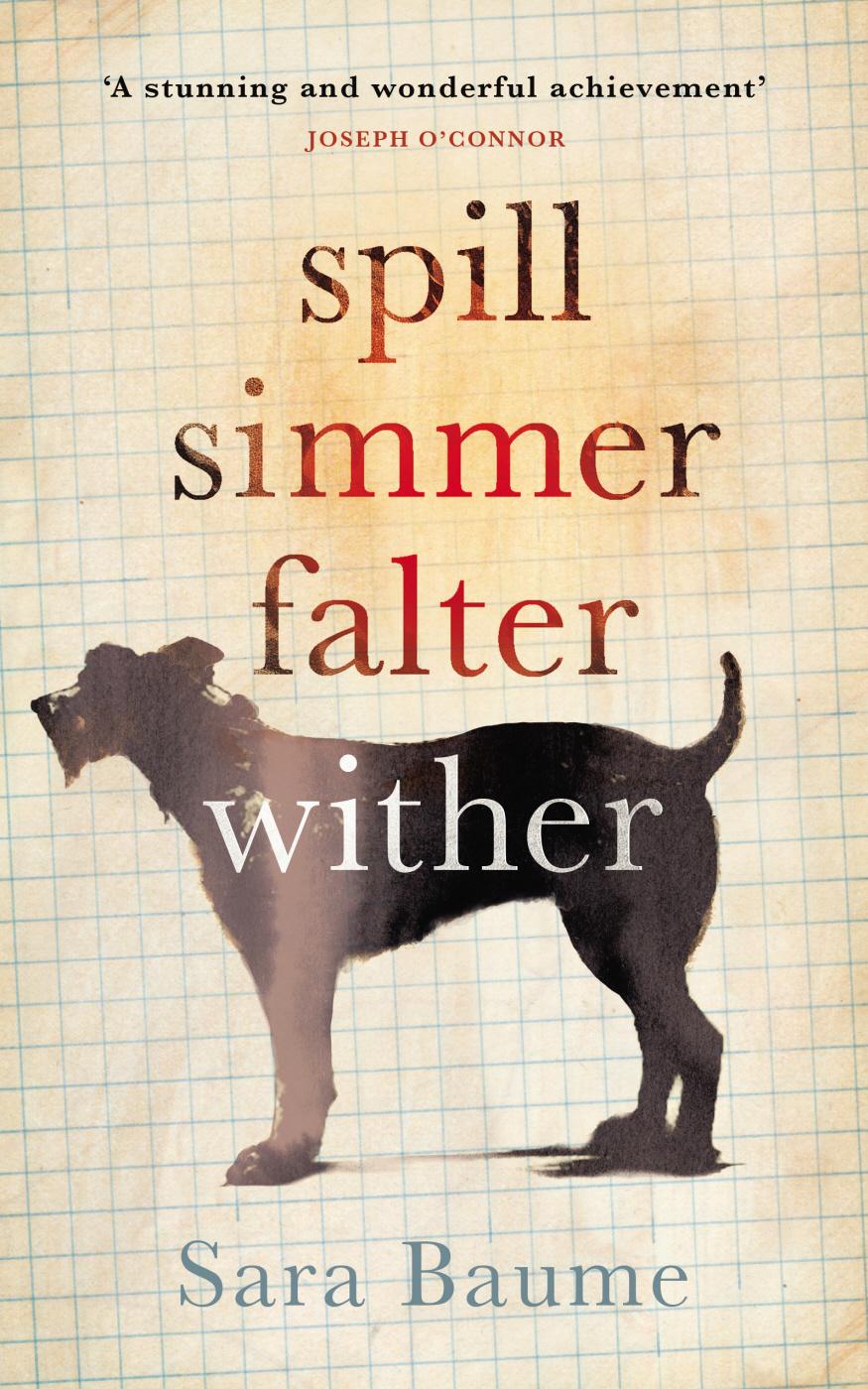
You find me on a Tuesday, on my Tuesday trip to town. A note sellotaped to the inside of the jumble-shop window: COMPASSIONATE & TOLERANT OWNER. A PERSON WITHOUT OTHER PETS & WITHOUT CHILDREN UNDER FOUR.
A misfit man finds a misfit dog. Ray, aged fifty-seven, ‘too old for starting over, too young for giving up’, and One Eye, a vicious little bugger, smaller than expected, a good ratter. Both are accustomed to being alone, unloved, outcast — but they quickly find in each other a strange companionship of sorts. As spring turns to summer, their relationship grows and intensifies, until a savage act forces them to abandon the precarious life they’d established, and take to the road.
Spill Simmer Falter Wither is a wholly different kind of love story: a devastating portrait of loneliness, loss and friendship, and of the scars that are more than skin-deep. Written with tremendous empathy and insight, in lyrical language that surprises and delights, this is an extraordinary and heartbreaking debut by a major new talent.