 fb2
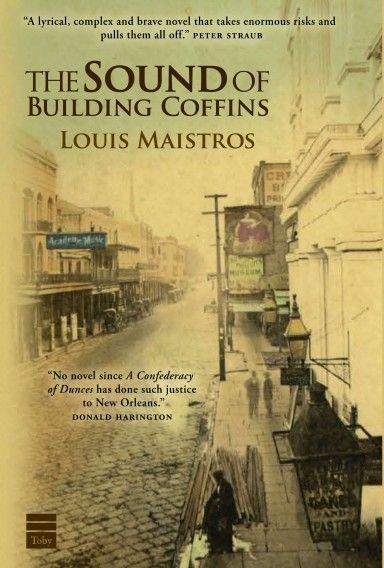
fb2It is 1891 in New Orleans, and young Typhus Morningstar cycles under the light of the half-moon to fulfill his calling, re-birthing aborted foetuses in the fecund waters of the Mississippi River. He cannot know that nearby, events are unfolding that will change his life forever – events that were set in motion by a Vodou curse gone wrong, forty years before he was born. In the humble home of Sicilian immigrants, a one-year-old boy has been possessed by a demon. His father dead, lynched by a mob, his distraught mother at her wits' end, this baby who yesterday could only crawl and gurgle is now walking, dancing, and talking – in a voice impossibly deep. The doctor has fled, and several men of the cloth have come and gone, including Typhus' father, warned off directly by the clear voice of his Savoir. A newspaper man, shamed by the part he played in inciting the lynch mob that cost this boy his father, appalled by what he sees, goes in search of help. Seven will be persuaded, will try to help…and all seven will be profoundly affected by what takes place in that one-room house that dark night. Not all will leave alive, and all will be irrevocably changed by this demonic struggle, and by the sound of the first notes blown of a new musical form: jazz.
A mainstream story about that moment when you realize the walls are thin, the streets are dark, and there's no way you can protect what you love.
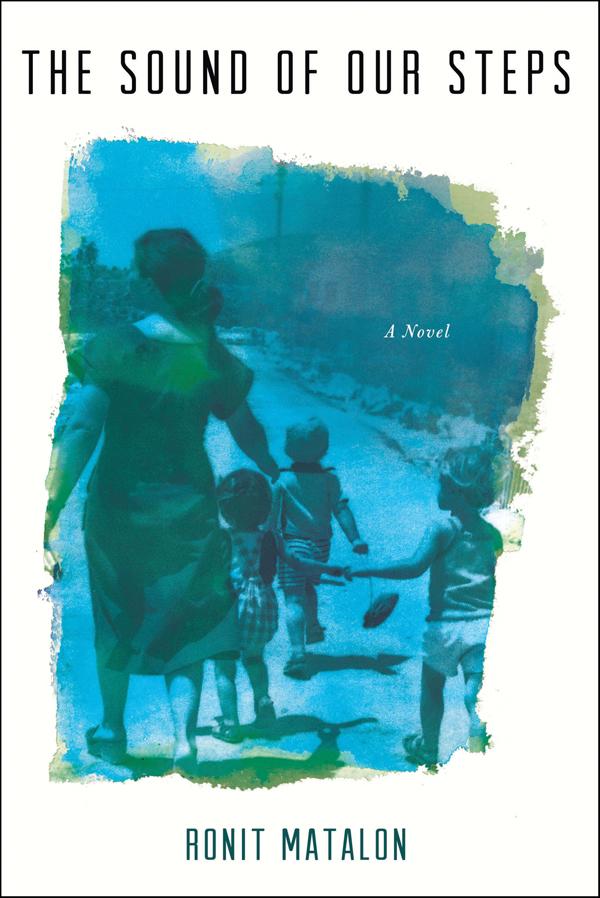
In the beginning there was Lucette, who is the mother to three children — Sammy, a gentle giant, almost blind, but a genius with locks; Corinne, a flighty beauty who cannot keep a job; and the child, an afterthought, who strives to make sense of her fractured Egyptian — Jewish immigrant family. Lucette's children would like a kinder, warmer home, but what they have is a government-issued concrete box, out in the thorns and sand on the outskirts of Tel Aviv; and their mother, hard-worn and hardscrabble, who cleans homes by night and makes school lunches by day. Lucette quarrels with everybody, speaks only Arabic and French, is scared only of snakes, and is as likely to lock her children out as to take in a stray dog. The child recounts her years in Lucette's house, where Israel's wars do not intrude and hold no interest. She puzzles at the mysteries of her home, why her father, a bitter revolutionary, makes only rare appearances. And why her mother rebuffs the kind rabbi whose home she cleans in his desire to adopt her. Always watching, the child comes to fill the holes with conjecture and story. In a masterful accumulation of short, dense scenes, by turns sensual, violent, and darkly humorous, The Sound of Our Steps questions the virtue of a family bound only by necessity, and suggests that displacement may not lead to a better life, but perhaps to art.
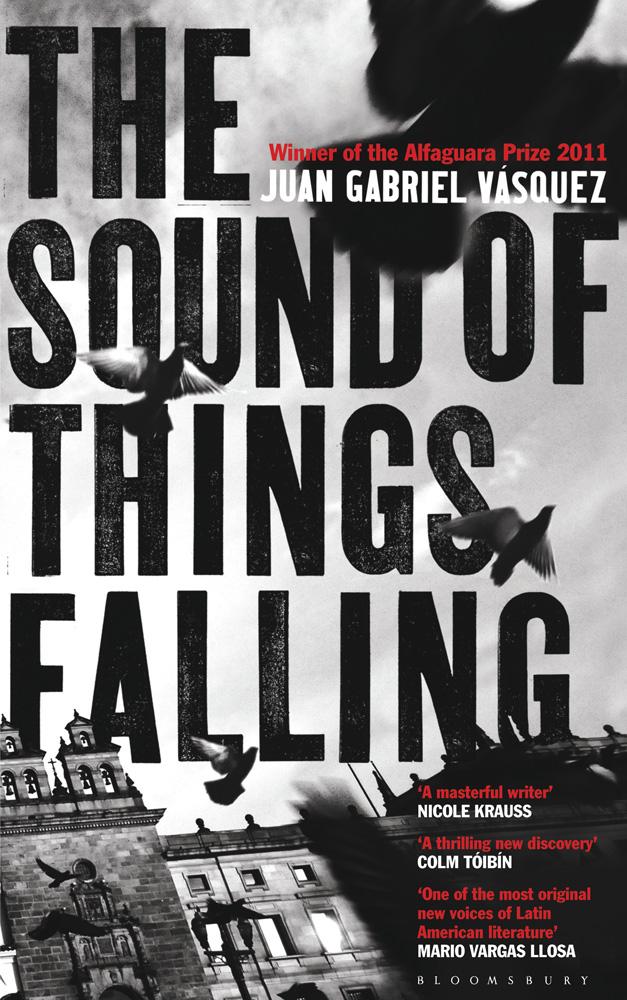
No sooner does he get to know Ricardo Laverde than disaffected young Colombian lawyer Antonio Yammara realises that his new friend has a secret, or rather several secrets. Antonio's fascination with the life of ex-pilot Ricardo Laverde begins by casual acquaintance in a seedy Bogota billiard hall and grows until the day Ricardo receives a cassette tape in an unmarked envelope. Asking Antonio to find him somewhere private to play it, they go to a library. The first time he glances up from his seat in the next booth, Antonio sees tears running down Laverde's cheeks; the next, the ex-pilot has gone. Shortly afterwards, Ricardo is shot dead on a street corner in Bogota by a guy on the back of a motorbike and Antonio is caught in the hail of bullets. Lucky to survive, and more out of love with life than ever, he starts asking questions until the questions become an obsession that leads him to Laverde's daughter. His troubled investigation leads all the way back to the early 1960s, marijuana smuggling and a time before the cocaine trade trapped a whole generation of Colombians in a living nightmare of fear and random death. Juan Gabriel Vasquez is one of the leading novelists of his generation, and The Sound of Things Falling that tackles what became of Colombia in the time of Pablo Escobar is his best book to date.
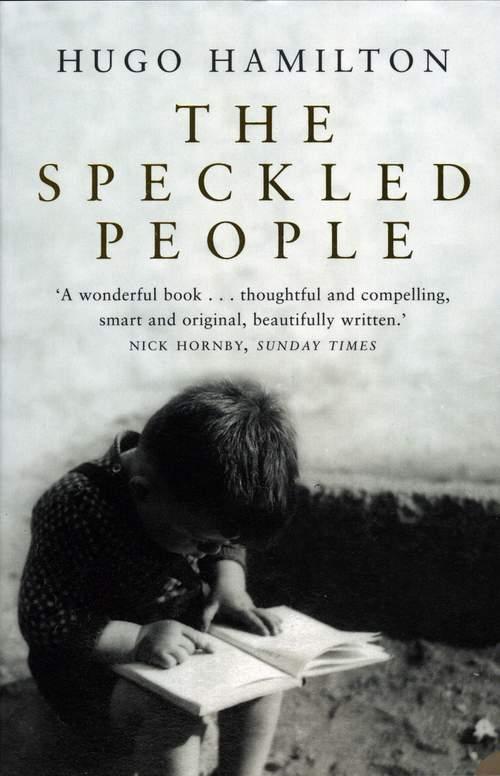
The childhood world of Hugo Hamilton is a confused place. His father, a brutal Irish nationalist, demands his children speak Gaelic at home whilst his mother, a softly spoken German emigrant who escaped Nazi Germany at the beginning of the war, encourages them to speak German. All Hugo wants to do is speak English. English is, after all, what the other children in Dublin speak. English is what they use when they hunt down Hugo (or Eichmann as they dub him) in the streets of Dublin, and English is what they use when they bring him to trial and execute him at a mock seaside court. Out of this fear and confusion Hugo tries to build a balanced view of the world, to turn the twisted logic of what he is told into truth. It is a journey that ends in liberation but not before this little boy has uncovered the dark and long-buried secrets that lie at the bottom of his parents' wardrobe.
There was a time when the longest story in this book was known by the title of this book — for in a certain sense that story concerns the fabulous costume nature can construe from us when it has made up its mind to unravel us down to the last stitch of thread. But whenever Noy Holland went to read aloud from her work, there was an audience who heard her begin, "At night, we kept watch for turtles," and who, as if transfixed by an enchantress, would not leave their seats until — seventy-nine pages later! — they had heard Holland say, crooning in the manner of one who must give herself to song to keep herself from weeping, "We sat for the men with our hands in our laps with all that was ours in the parlor." To these ravished audiences, and to those to whom they hurried to send word of the amazement they had had the great good luck to be present for, it was "Orbit" — the name of one of the children whose mother's fantastic dying is central to the story's dreamy, rapturous motion — that came to identify for these persons an event unique, and inexpressibly strange, in their experience of literature. For literature, very literature, the heart's inmost speech in all its unexampled difference, is the thing this new young writer has been making, and, along with it, well before the publication of her first book, a name for herself as a force — indeed, as a divergenceto be given every close notice. Nine adventures in the magic of narration, including the audience-retitled "Orbit," The Spectacle of the Body enacts a debut of the first importance and an invitation to feelings not felt in the absence of art.
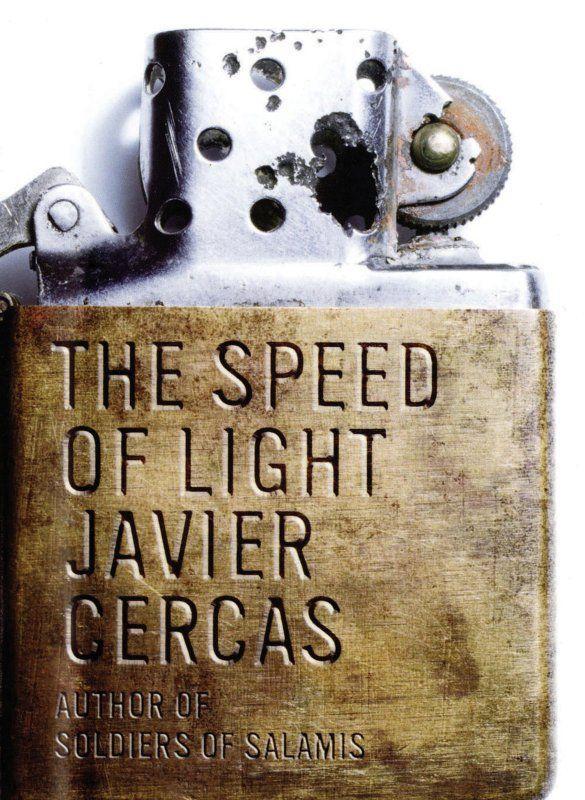
Javier Cercas' third and most ambitious novel has already been heralded in Spain as "daring," "magnificent, complex, and intense," and "a master class in invention and truth."As a young writer, the novel's protagonist-perhaps an apocryphal version of Cercas himself-accepts a post at a Midwestern university and soon he is in the United States, living a simple life, working and writing. It will be years before he understands that his burgeoning friendship with the Vietnam vet Rodney Falk, a strange and solitary man, will reshape his life, or that he will become obsessed with Rodney's mysterious past.
Why does Rodney shun the world? Why does he accept and befriend the narrator? And what really happened at the mysterious 'My Khe' incident? Many years pass with these questions unanswered; the two friends drift apart. But as the narrator's literary career takes off, his personal life collapses. Suddenly, impossibly, the novelist finds that Rodney's fate and his own are linked, and the story spirals towards its fascinating, surreal conclusion. Twisting together his own regrets with those of America, Cercas weaves the profound and personal story of a ghostly past.
Alan Hollinghurst’s tour-de-force debut, The Swimming-Pool Library, was a literary sensation. Edmund White called it “the best book on gay life yet written by an English author.” The Village Voice described it as “buoyant, smart, irrepressibly sexy…[with the] heft and resonance of a classic modernist novel.” The New York Times Book Review raved about its “shimmering elegance” and “camp-fired wit.” The New York Review of Books dubbed his second book, The Folding Star, a “miniature Remembrance of Things Past…an expanded Death in Venice…a homosexual Lolita.” The Spell is Hollinghurst’s most polished and entertaining novel to date. Here he marries Jane Austen’s delicious social asperity with a sly eroticism in a story as romantic and surprising as anything he has written. Set in London and the idyllic countryside, the narrative tracks the interlocking passions of four men. As each character falls successively under the spell of love or drugs, country living or urban glamour, The Spell unfurls into a richly witty picture of modern gay life…and of all human affairs of the heart.
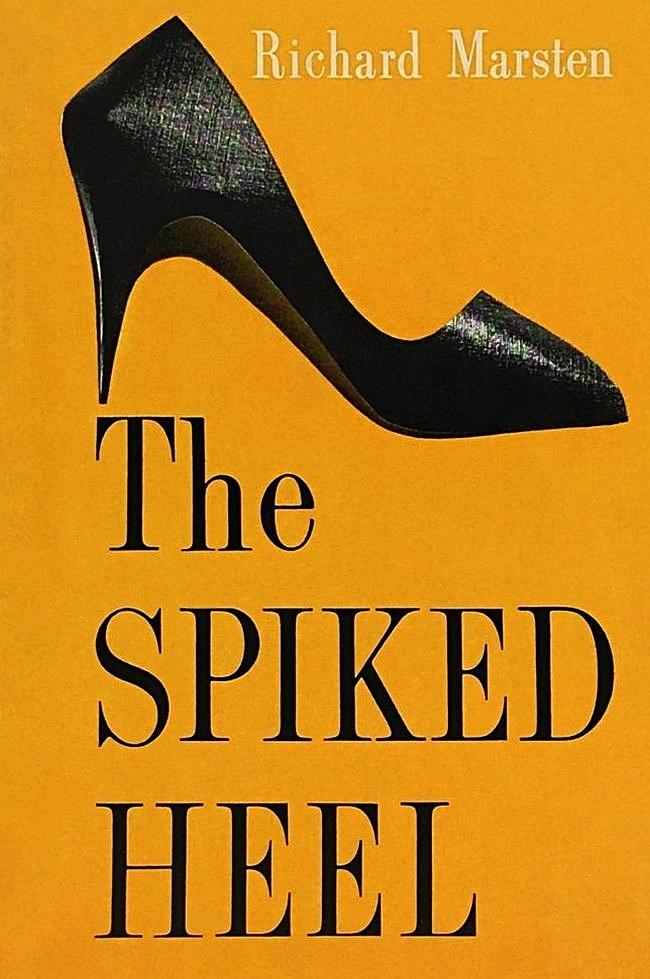
When the irresistible force of a giant corporation like Titanic Shoe meets an immovable, but tottering, object like the respectable shoe firm of Julien Kahn, something's got to give — and something does, explosively, surprisingly.
Here is an authentic, behind-the-scenes excursion into the high-fashion world of heels and vamps and into the private worlds of two men who crashed head on — one striving for personal power, the other for personal integrity.
Jefferson McQuade comes to the Kahn factory as the representative of the new owners, with his own ideas about what is needed to put the factory on a firm footing.
Raymond Griffin, who has worked his way up to head of Kahn’s Cost Department, doesn’t share the apprehension of those who fear a shake-up. For years Kahn has needed new blood, and he welcomes the smooth and affable McQuade.
But McQuade's methods soon reveal him as a ruthless tyrant whose polished words can pit friend against friend, a man who is ready to demolish anyone and everyone who stands in his way, a man who sees horrifying violence as the answer to an outbreak on the factory floor.
The last traces of doubt about McQuade are removed during Guild Week when, as the new shoe lines are shown to the entire industry, McQuade attempts to seduce Griffin’s girl. The long-smoldering warfare between the two men erupts into the open and provides the setting for a dramatic ending that will leave anyone who has ever stepped into the business world breathless and cheering.
Here, secretly aspiring to someday sit in the Executive Suite, are the white-collar workers and production people — their jackets off, their sleeves rolled up, their nails neat and sharpened.
In THE SPIKED HEEL, Richard Marsten has produced a dynamic and absorbing book that you and the people who work side-by-side with you will read and talk about for a long time to come. Of this we are certain. For THE SPIKED HEEL is not only an authentic portrayal of the fabulous fashion world of high-quality shoes. It is a gripping novel of the very real world inhabited by all men and women who make and use any of America’s products.
Beside this any novel — past or future — on the world of business must seem as pale and wan as Little Women.
In the aftermath of Ireland's financial collapse, dangerous tensions surface in an Irish town. As violence flares, the characters face a battle between public persona and inner desires. Through a chorus of unique voices, each struggling to tell their own kind of truth, a single authentic tale unfolds.
The Spinning Heart speaks for contemporary Ireland like no other novel. Wry, vulnerable, all-too human, it captures the language and spirit of rural Ireland and with uncanny perception articulates the words and thoughts of a generation. Technically daring and evocative of Patrick McCabe and J.M. Synge, this novel of small-town life is witty, dark and sweetly poignant.
A tale of bohemian youth on the make in Mexico City from a master of contemporary fiction, and a sublime precursor to The Savage Detectives
Two young poets, Jan and Remo, find themselves adrift in Mexico City. Obsessed with poetry, and, above all, with science fiction, they are eager to forge a life in the literary world—or sacrifice themselves to it. Roberto Bolaño’s The Spirit of Science Fiction is a story of youth hungry for revolution, notoriety, and sexual adventure, as they work to construct a reality out of the fragments of their dreams.
But as close as these friends are, the city tugs them in opposite directions. Jan withdraws from the world, shutting himself in their shared rooftop apartment where he feverishly composes fan letters to the stars of science fiction and dreams of cosmonauts and Nazis. Meanwhile, Remo runs headfirst into the future, spending his days and nights with a circle of wild young writers, seeking pleasure in the city’s labyrinthine streets, rundown cafés, and murky bathhouses.
This kaleidoscopic work of strange and tender beauty is a fitting introduction for readers uninitiated into the thrills of Roberto Bolaño’s fiction, and an indispensable addition to an ecstatic and transgressive body of work.

The Splendor of Portugal’s four narrators are members of a once well-to-do family whose plantation was lost in the Angolan War of Independence; the matriarch of this unhappiest of clans and her three adult children speak in a nightmarish, remorseless gush to give us the details of their grotesque family life. Like a character out of Faulkner’s decayed south, the mother clings to the hope that her children will come back, save her from destitution, and restore the family’s imagined former glory. The children, for their part, haven’t seen each other in years, and in their isolation are tormented by feverish memories of Angola. The vitriol and self-hatred of the characters know no bounds, for they are at once victims and culprits, guilty of atrocities committed in the name of colonialism as well as the cruel humiliations and betrayals of their own kin. Antunes again proves that he is the foremost stylist of his generation, a fearless investigator into the worst excesses of the human animal.
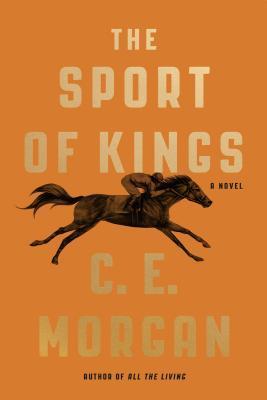
Hellsmouth, an indomitable thoroughbred with the blood of Triple Crown winners in her veins, runs for the glory of the Forge family, one of Kentucky’s oldest and most powerful dynasties. Henry Forge has partnered with his daughter, Henrietta, in an endeavor of raw obsession: to breed the next superhorse, the next Secretariat. But when Allmon Shaughnessy, an ambitious young black man, comes to work on their farm after a stint in prison, the violence of the Forges’ history and the exigencies of appetite are brought starkly into view. Entangled by fear, prejudice, and lust, the three tether their personal dreams of glory to the speed and grace of Hellsmouth.
A spiraling tale of wealth and poverty, racism and rage, The Sport of Kings is an unflinching portrait of lives cast in shadow by the enduring legacy of slavery. A vital new voice, C. E. Morgan has given life to a tale as mythic and fraught as the South itself — a moral epic for our time.
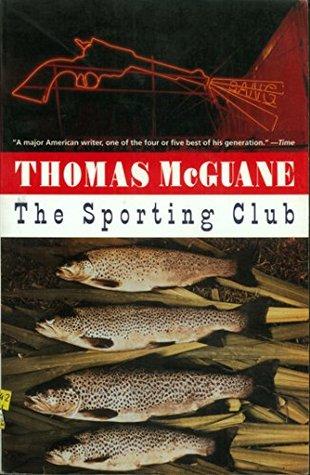
When James Quinn and Vernor Stanton reunite at the Centennial Club, the scene of many a carefree childhood summer, Stanton marks the occasion by shooting his friend in the heart. The good news is that the bullet is made of wax. The bad news is that the Mephistophelian Stanton wants Quinn to help him wreak havoc upon this genteel enclave of weekend sportsmen: "May I predict that this is not going to be the usual boring, phlegmatic summer?"
In this hilarious novel, Thomas McGuane launches a renegade aristocrat and a mild-mannered fly-fisherman onto a collision course with each other and with the overbred scions of Michigan's robber barony. Escalating from practical jokes to guerrilla warfare, and from screwball comedy to mayhem worth of today's headlines, The Sporting Club is a foray into the sclerotic heart of American machismo.
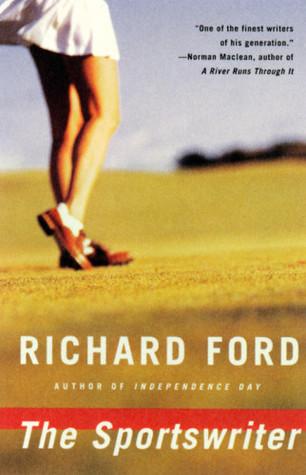
As a sportswriter, Frank Bascombe makes his living studying people-men, mostly-who live entirely within themselves. This is a condition that Frank himself aspires to. But at thirty-eight, he suffers from incurable dreaminess, occasional pounding of the heart, and the not-too-distant losses of a career, a son, and a marriage. In the course of the Easter week in which Ford's moving novel transpires, Bascombe will end up losing the remnants of his familiar life, though with his spirits soaring.
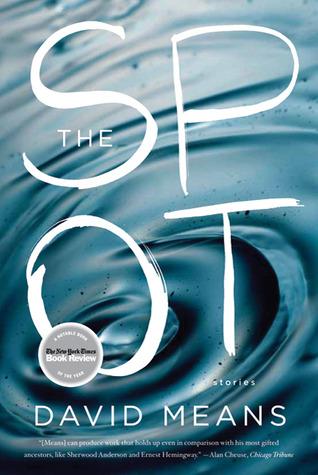
The Spot is an old blacksmith shed in which three men tweeze apart the intricacies of a botched bank robbery.
The Spot is a park on the Hudson River, where two lovers sense their affair is about to come to an end.
The Spot is at the bottom of Niagara Falls, where the body of a young girl floats as if caught in the currents of her own tragic story.
The Spot is in the ear of a Manhattan madman plagued by a noisy upstairs neighbor.
The Spot is a suburban hospital room in which a young father confronts his son's potentially devastating diagnosis.
The Spot is a dusty encampment in Nebraska where a gang of inept radicals plot a revolution.
The Spot draws thirteen new stories together into a masterful collection that shows David Means at his finest: at once comically detached and wrenchingly affecting, expansive and concise, wildly inventive and firmly rooted in tradition. Means's work has earned him comparisons to Flannery O'Connor (London Review of Books), Alice Munro, Bob Dylan, Jack Kerouac (Newsday), Hemingway, Sherwood Anderson (Chicago Tribune/NPR), Denis Johnson (Entertainment Weekly), Poe, Chekhov, and Carver (Milwaukee Journal Sentinel), but the spot he has staked out in the American literary landscape is fully and originally his own.

"César Aira has become a cult fiction writer in his native Argentina as well as throughout Latin America for his hyperrealist treatment of surreal or implausible scenarios and his aggressive defiance of literary conventions," writes Mónica de la Torre, Senior Editor BOMB Magazine, in her introduction to this issue of Recommended Reading.
With their translation of "The Spy," BOMB became one of the first to bring César Aira to English speaking readers.
Here, Aira takes a metaphysical look at life, art, and politics, confirming that "in art there is one condition that takes precedent over all others: to do things well."
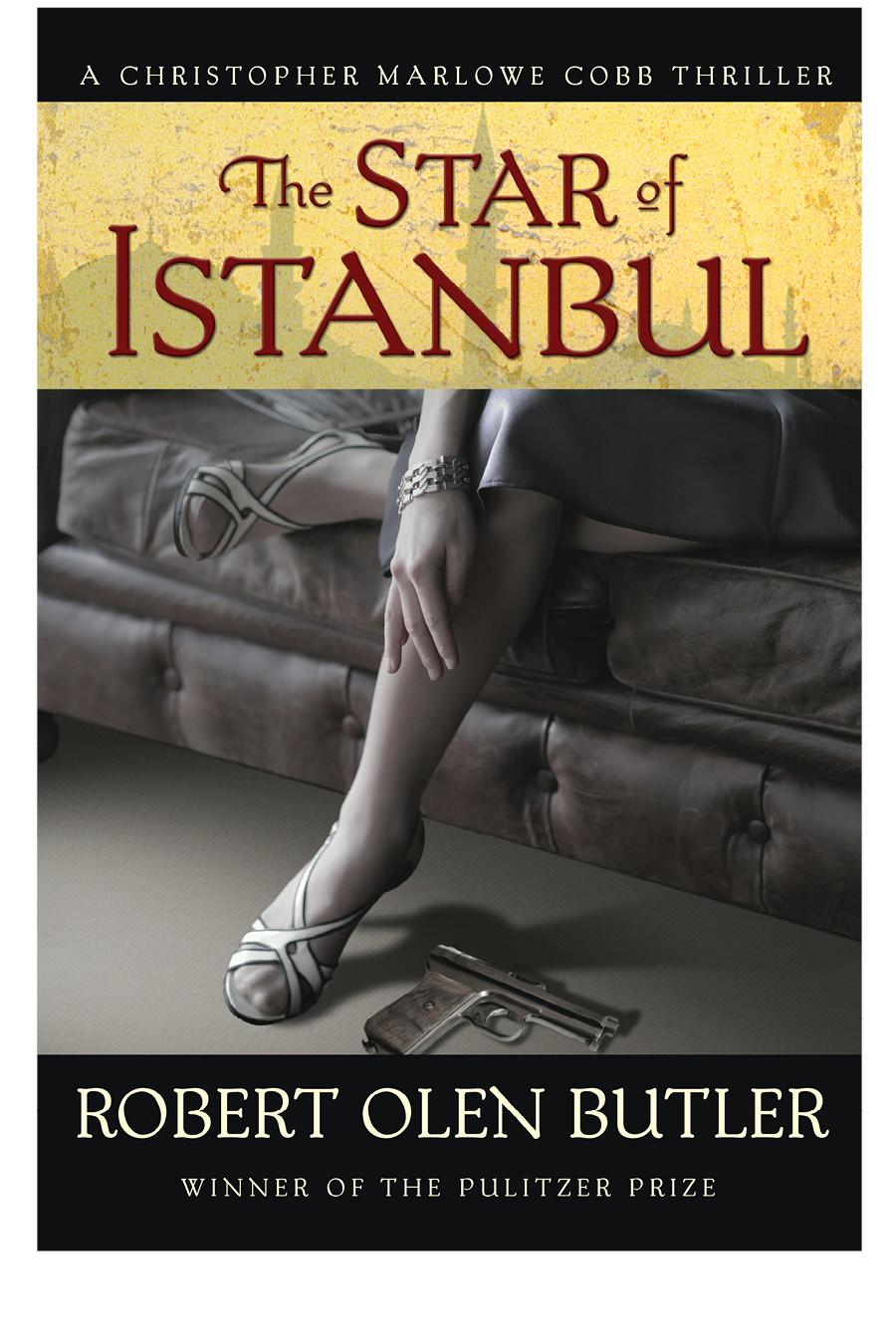
World War I is in full swing. Germany has allied itself with the Ottoman empire, persuading the caliphs of Turkey to declare a jihad on the British empire, as President Woodrow Wilson hesitates to enter the fray. War correspondent and American spy Christopher Marlowe Cobb has been tasked to follow a man named Brauer, a German intellectual and possible secret service agent, into perilous waters aboard the ship Lusitania, as the man is believed to hold information vital to the war effort. Aboard the Lusitania on its fateful voyage, Cobb becomes smitten with famed actress Selene Bourgani, who for some reason appears to be working with German Intelligence.
Soon Cobb realizes that this simple actress is anything but, as she harbors secrets that could pour gasoline on the already raging conflict. Following the night of the infamous German U-Boat attack on the Lusitania, Cobb must follow Selene and Brauer into the darkest alleyways of London, then on to the powder keg that is Istanbul. He must use all the cunning he possesses to uncover Selene’s true motives, only to realize her hidden agenda could bring down some of the world's most powerful leaders.
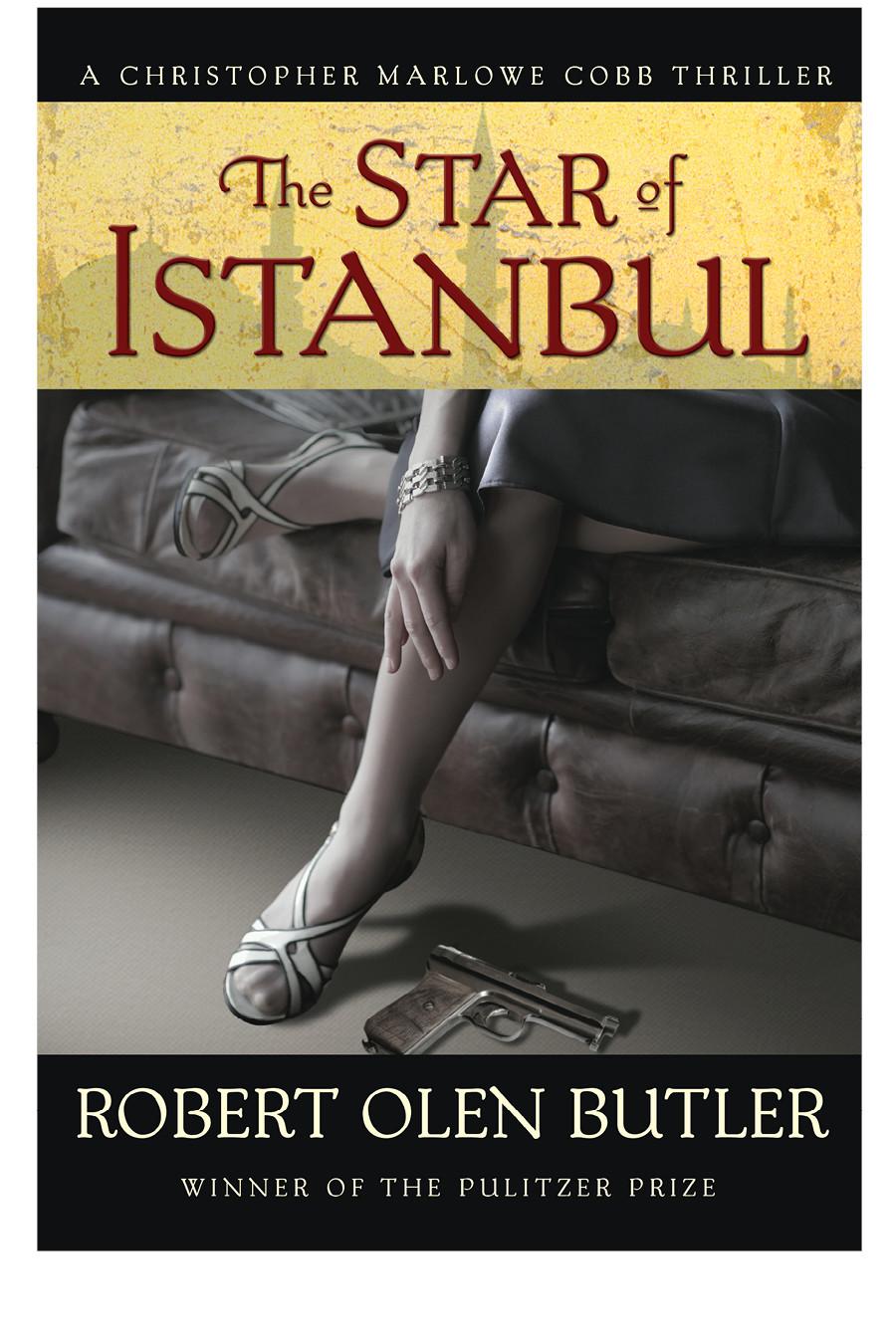
World War I is in full swing. Germany has allied itself with the Ottoman empire, persuading the caliphs of Turkey to declare a jihad on the British empire, as President Woodrow Wilson hesitates to enter the fray. War correspondent and American spy Christopher Marlowe Cobb has been tasked to follow a man named Brauer, a German intellectual and possible secret service agent, into perilous waters aboard the ship Lusitania, as the man is believed to hold information vital to the war effort. Aboard the Lusitania on its fateful voyage, Cobb becomes smitten with famed actress Selene Bourgani, who for some reason appears to be working with German Intelligence.
Soon Cobb realizes that this simple actress is anything but, as she harbors secrets that could pour gasoline on the already raging conflict. Following the night of the infamous German U-Boat attack on the Lusitania, Cobb must follow Selene and Brauer into the darkest alleyways of London, then on to the powder keg that is Istanbul. He must use all the cunning he possesses to uncover Selene’s true motives, only to realize her hidden agenda could bring down some of the world's most powerful leaders.

After their mother can no longer care for them, young Phaedra and her older sister, Dionne, are exiled from Brooklyn to Bird Hill in Barbados to live with their grandmother Hyacinth, a midwife and practitioner of the local spiritual practice of obeah.
Dionne spends the summer in search of love, testing her grandmother's limits, and wanting to go home. Phaedra explores Bird Hill, where her family has lived for generations, accompanies her grandmother in her role as a midwife, and investigates their mother's mysterious life.
When the father they barely know comes to Bird Hill to reclaim his daughters, and both Phaedra and Dionne must choose between the Brooklyn they once knew and loved or the Barbados of their family.