 fb2
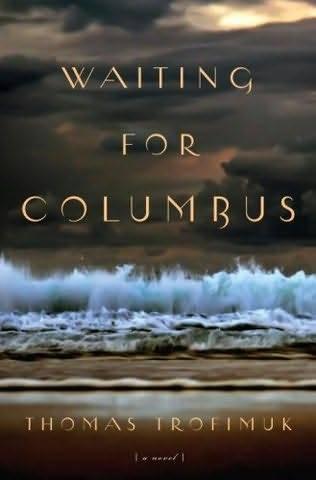
fb2A man arrives at an insane asylum in contemporary Spain claiming to be the legendary navigator Christopher Columbus. Who he really is, and the events that led him to break with reality, lie at the center of this captivating, romantic, and stunningly written novel.
Found in the treacherous Strait of Gibraltar, the mysterious man who calls himself Columbus appears to be just another delirious mental patient, until he begins to tell the 'true' story of how he famously obtained three ships from Spanish royalty.
It's Nurse Consuela who listens to these fantastical tales of adventure and romance, and tries desperately to make sense of why this seemingly intelligent man has been locked up, and why no one has come to visit. As splintered fragments of the man beneath the façade reveal a charming yet guarded individual, Nurse Consuela can't avoid the inappropriate longings she begins to feel. Something terrible caused his break with reality and she can only listen and wait as Columbus spins his tale to the very end.
In the tradition of The Story of Edgar Sawtelle and The Dogs of Babel, this unforgettable novel mines the darkest recesses of loss and the extraordinary capacity of the human spirit. It is an immensely satisfying novel that will introduce Thomas Trofimuk to readers who will want to hear his voice again and again.
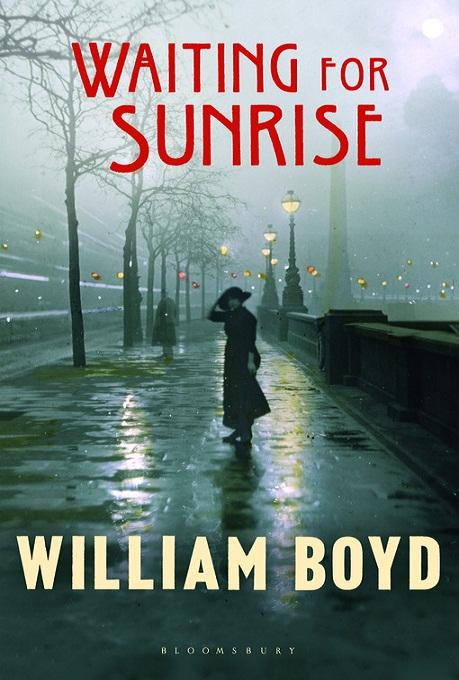
Vienna. 1913. It is a fine day in August when Lysander Rief, a young English actor, walks through the city to his first appointment with the eminent psychiatrist, Dr. Bensimon. Sitting in the waiting room he is anxiously pondering the nature of his problem when an extraordinary woman enters. She is clearly in distress, but Lysander is immediately drawn to her strange, hazel eyes and her unusual, intense beauty.
Later the same day they meet again, and a more composed Hettie Bull introduces herself as an artist and sculptor, and invites Lysander to a party hosted by her lover, the famous painter Udo Hoff. Compelled to attend and unable to resist her electric charm, they begin a passionate love affair. Life in Vienna becomes tinged with the frisson of excitement for Lysander. He meets Sigmund Freud in a café, begins to write a journal, enjoys secret trysts with Hettie and appears to have been cured.
London, 1914. War is stirring, and events in Vienna have caught up with Lysander. Unable to live an ordinary life, he is plunged into the dangerous theatre of wartime intelligence — a world of sex, scandal and spies, where lines of truth and deception blur with every waking day. Lysander must now discover the key to a secret code which is threatening Britain’s safety, and use all his skills to keep the murky world of suspicion and betrayal from invading every corner of his life.
Moving from Vienna to London’s west end, the battlefields of France and hotel rooms in Geneva, Waiting for Sunrise is a feverish and mesmerising journey into the human psyche, a beautifully observed portrait of wartime Europe, a plot-twisting thriller and a literary tour de force from the bestselling author of Any Human Heart, Restless and Ordinary Thunderstorms.
"[A] distinguished piece of fiction…[Its] power of historical immediacy gives the novel its thrust, its larger and, if you wish, 'universal' value." The New York Times
"I have known few authors who can evoke such a wilderness in the heart of man. He is an artist of a weight and depth that put him beyond ordinary comparisons…Coetzee knows the elusive terror of Kafka." Bernard Levin, Sunday Times (London)
"The novel moves between claustrophobic enclosures and arid, exquisitely rendered open spaces that reveal treacherous trap-doors…The book keeps us on edge, uneasy." Walter Clemons, Newsweek
"The book makes for compelling reading, largely due to the successful use of the present tense throughout and the vivid presentation of unfolding events." World Literature Today
Moving and powerful, this book presents the dark tale of an aging magistrate in an African frontier settlement, who finds himself becoming increasingly sympathetic toward the indigenous "barbarians" that the colonial empire's forces brutalize.
For decades the Magistrate has been a loyal servant of the Empire, running the affairs of a tiny frontier settlement and ignoring the impending war with the barbarians. When interrogation experts arrive, however, he witnesses the Empire's cruel and unjust treatment of prisoners of war. Jolted into sympathy for their victims, he commits a quixotic act of rebellion that brands him an enemy of the state.
J. M. Coetzee's prize-winning novel is a startling allegory of the war between opressor and opressed. The Magistrate is not simply a man living through a crisis of conscience in an obscure place in remote times; his situation is that of all men living in unbearable complicity with regimes that ignore justice and decency.
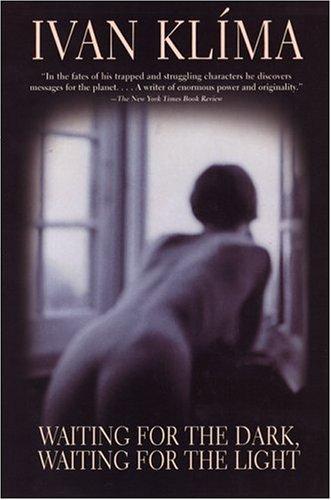
Ivan Klima was in the United States when Russian tanks entered Prague in 1968 but, against the advice of friends, he returned home. He became a dissident, writing books (never published) that were invariably inspired by Czechoslovakia's repressive regime. But what happens to a rebel artist when there is nothing left to rebel against? This question informs Klima's powerful novel, "Waiting for the Dark, Waiting for the Light," which describes life before, during, and after the Velvet Revolution of 1989. It is the story of Pavel, a middle-aged television cameraman working uneasily within the boundaries set by the regime, who dreams of one day making a film — a searing portrait of his times — that the authorities will never allow. But after the collapse of communism, Pavel finds he is unprepared for this new world of unlimited freedoms. He never quite gets around to making that film; his time is taken up instead with lucrative small jobs — a TV spot, a commercial, a porn film. This is a masterful novel that focuses on the most pressing issue confronting the individual in the former Soviet bloc countries today: how to live one's life when one is truly free.
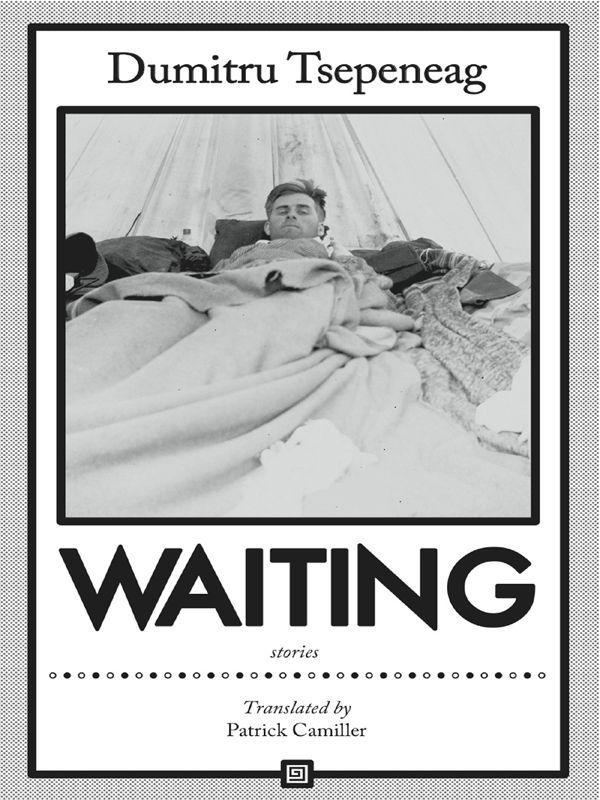
Though best known now for his novels, this collection of pre-exile short stories by the renowned Romanian author and "onirist" not only show Dumitru Tsepeneag at his best, but provide a glimpse into the secret history of surrealism uunder the brutal regime of Nicolae Ceauşescu. In these stories, life is both banal and bizarre, on the verge of breaking down, like a film loop played once too often, with the hot glare of irrationality always waiting to burn through. Looking forward to Vain Art of the Fugue and back to Breton, Waiting is a subversive delicacy.
Graham Park is in love. But Sara Ffitch is an enigma to him, a creature of almost perverse mystery. Steven Grout is paranoid - and with justice. He knows that They are out to get him. They are. Quiss, insecure in his fabulous if ramshackle castle, is forced to play interminable impossible games. The solution to the oldest of all paradoxical riddles will release him. But he must find an answer before he knows the question.
Park, Grout, Quiss - no trio could be further apart. But their separate courses are set for collision...
"A feast of horrors, variously spiced with incest, conspiracy, and cheerful descriptions of torture... fine writing" The Times
"The author's powerful imagination is displayed again here every bit as vividly as in his debut" Financial Times
"Establishes beyond doubt that lain Banks is a novelist of remarkable talents" Daily Telegraph

Thomas Bernhard is “one of the masters of contemporary European fiction” (George Steiner); “one of the century’s most gifted writers” (Newsday); “a virtuoso of rancor and rage” (Bookforum). And although he is favorably compared with Franz Kafka, Samuel Beckett, and Robert Musil, it is only in recent years that he has gained a devoted cult following in America.
A powerful, compact novella, Walking provides a perfect introduction to the absurd, dark, and uncommonly comic world of Bernhard, showing a preoccupation with themes — illness and madness, isolation, tragic friendships — that would obsess Bernhard throughout his career. Walking records the conversations of the unnamed narrator and his friend Oehler while they walk, discussing anything that comes to mind but always circling back to their mutual friend Karrer, who has gone irrevocably mad. Perhaps the most overtly philosophical work in Bernhard’s highly philosophical oeuvre, Walking provides a penetrating meditation on the impossibility of truly thinking.
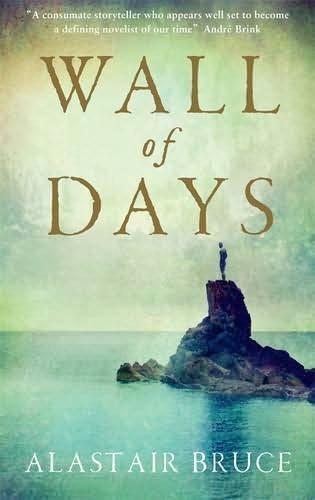
In a world all but drowned, a man called Bran has been living on an island for ten years. He was sent there in exile by those whose leader he was, and he tallies on the wall of his cave the days as they pass. Until the day when something happens that kindles in Bran such memories and longing that he persuades himself to return, even if it means execution. His reception is so unexpected, so mystifying that he casts about unsure of what is real and what imaginary. Only the friendship of a child consoles him as he retraces the terrible deeds for which he is answerable, and as he tries to reach back, over his biggest betrayal, to the one he loved. Wall of Days is a moving parable about guilt, loss and remembering.

Stefan Wallner, verheiratet mit der Deutsch-Rumänin Ana, hat sich mit seiner Firma für Landmaschinen eine Heimat geschaffen. Der berufliche Erfolg ließ ihn seine katastrophale Vaterbeziehung vergessen. Aber über die Jahre hinweg, in denen die Firma floriert, schließlich mit einer anderen fusioniert und an die Börse geht, bröckelt das enge Verhältnis zu den Mitarbeitern innerhalb des Betriebs. Wallner fühlt sich verfolgt, wittert eine Verschwörung. Sein Sohn Costin ahnt nichts von der beginnenden Paranoia seines Vaters. Doch was bei Stefan Wallner nur im Kopf stattfindet, das erlebt Costin in Wirklichkeit, er zappt sich durch sein Leben und seine Rollen wie durch eine Fernsehserie. Er macht Karriere als Superstar einer vom Fernsehen gecasteten Popgruppe, er lebt Alternativkarrieren als Synchronsprecher in einem Hitler Zeichentrickfilm oder als Ex-Promi in einer Reality-Show. Er gründet ein Rock-Label, lebt mit Romy zusammen, der Sängerin der Gruppe „Erich“, und erfährt erst spät von seiner unehelichen Tochter Wendy. Wendy trifft ihren Vater zum ersten Mal kurz vor ihrer Volljährigkeit. Die Mutter hatte ihr das Verhältnis mit Costin verschwiegen. Doch kaum hat sie ihren leiblichen Vater kennen und lieben gelernt, da stirbt Costin. Als Wendy sich nach dem Tod Costins daran macht, ihre Familiengeschichte zu rekonstruieren und aufzuschreiben, fällt es ihr bald schwer, zwischen Lebenslügen, Irrtümern und der nachrecherchierten Wirklichkeit zu unterscheiden. „Wallner beginnt zu fliegen“ ist ein Familienroman, eine Saga über drei Familiengenerationen. Und ein Roman über die Frage, ob man Familiengeschichte so erzählen kann, wie sie wirklich passiert ist. Ein faszinierendes Debüt in drei Kapiteln: Ein Wirtschaftsroman, ein Musikerleben und ein Frauenschicksal.
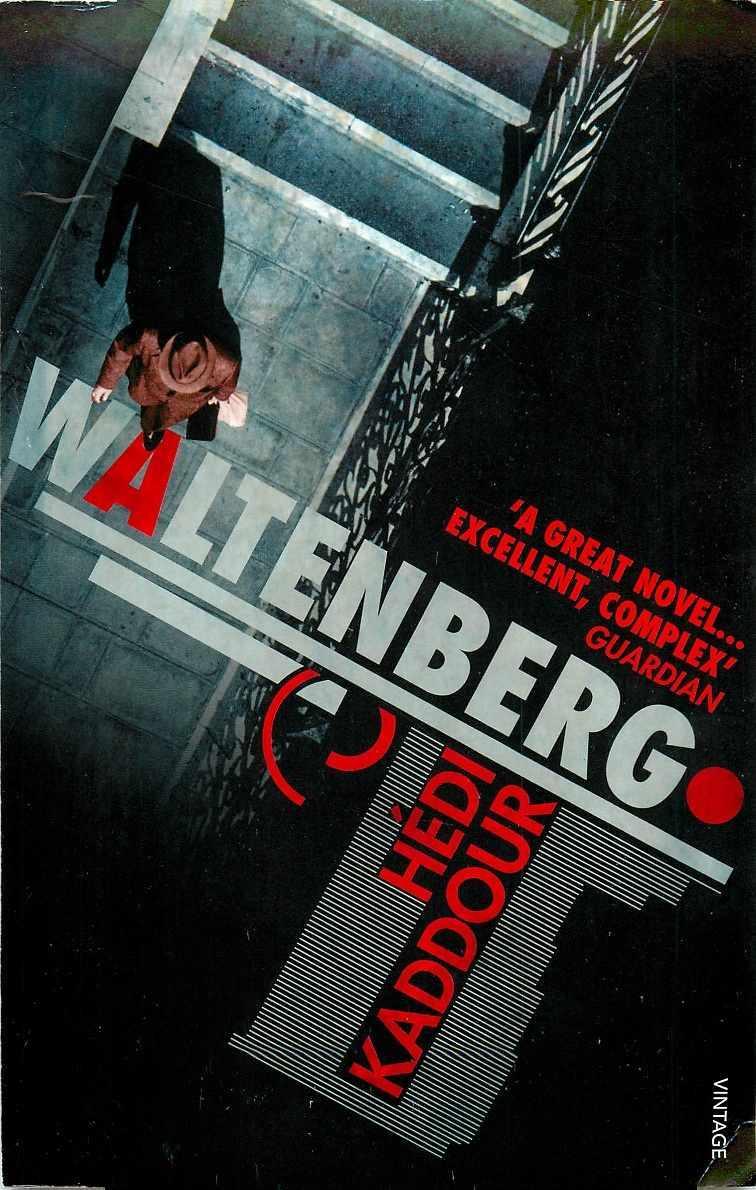
Waltenberg is a riveting novel of espionage and a major work of literature.
The Hotel Waldhaus in the Swiss mountain village of Waltenberg is central to the action of this epic novel, which takes in Europe from the First World War to the collapse of the Soviet Union.
Waltenberg tells the story of the love between Hans Kappler, a German novelist, and Lena Hotspur, an American singer; of the friendship between Hans and Max Goffard, a French journalist. It is also a spy story. Michael Lilstein, a leader of the underground German communist party before World War II and an Auschwitz survivor, becomes responsible for the East German spy network. In 1956 in Waltenberg, Lilstein recruits as his mole a young Frenchman whose identity remains mysterious. At the height of the Cold War, the CIA observes Lilstein and Max at Hans’s funeral, determined to flush out the mole.


In Rosewood, majestic estates sprawl for acres, and Tiffany toggle bracelets dangle from every girl's wrist. But not all that glitters is gold, and the town harbors secrets darker than anyone could imagine—like the truth about what really happened the night Alison DiLaurentis went missing. . . .
Back in middle school, Ali plucked Emily, Hanna, Aria, and Spencer from obscurity and turned them into the beautiful, popular girls everyone wanted to be. Ali was the best friend they ever had. But she also made them do terrible things and taunted them with their worst secrets. Now, three years later, all their questions about Ali have finally been answered and they can put this awful chapter of their lives behind them. Or so they think.
Not every story has a happy ending, especially when four pretty little liars have done so many wicked things. In the dramatic conclusion of Sara Shepard's bestselling Pretty Little Liars series, Emily, Hanna, Aria, and Spencer could get everything they've ever wanted—unless A has one more horrifying twist in store.
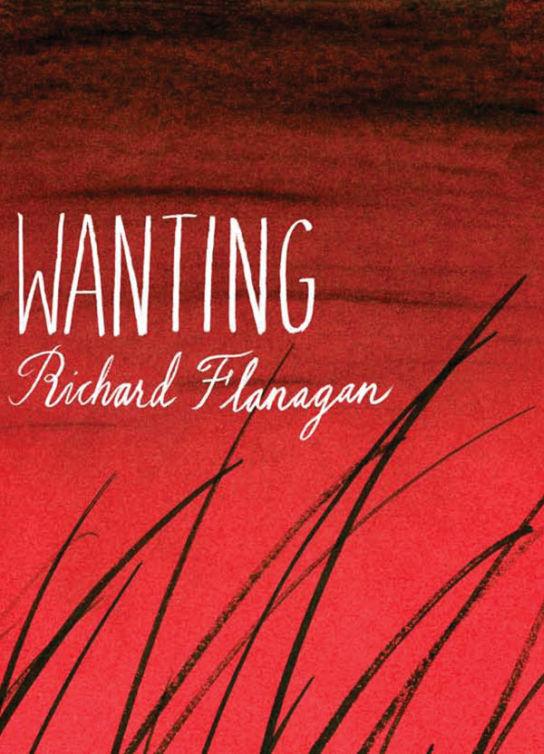
Internationally acclaimed and profoundly moving, Richard Flanagan’s Wanting is a stunning tale of colonialism, ambition, and the lusts and longings that make us human. Now in paperback, it links two icons of Western civilization through a legendarily disastrous arctic exploration, and one of the most infamous episodes in human history: the colonization of Tasmania.
In 1841, Sir John Franklin and his wife, Lady Jane, move to the remote penal colony of Van Diemen’s Land, now Tasmania. There Lady Jane falls in love with a lively aboriginal girl, Mathinna, whom she adopts and makes the subject of a grand experiment in civilization—one that will determine whether science, Christianity, and reason can be imposed in the place of savagery, impulse, and desire.
A quarter of a century passes. Sir John Franklin disappears in the Arctic with his crew and two ships on an expedition to find the fabled Northwest Passage. England is horrified by reports of cannibalism filtering back from search parties, no one more so than the most celebrated novelist of the day, Charles Dickens. As Franklin’s story becomes a means to plumb the frozen depths of his own life, Dickens finds a young actress thawing his heart.
Internationally acclaimed and profoundly moving, Richard Flanagan’s Wanting is a stunning tale of colonialism, ambition, and the lusts and longings that make us human. Now in paperback, it links two icons of Western civilization through a legendarily disastrous arctic exploration, and one of the most infamous episodes in human history: the colonization of Tasmania.
In 1841, Sir John Franklin and his wife, Lady Jane, move to the remote penal colony of Van Diemen’s Land, now Tasmania. There Lady Jane falls in love with a lively aboriginal girl, Mathinna, whom she adopts and makes the subject of a grand experiment in civilization—one that will determine whether science, Christianity, and reason can be imposed in the place of savagery, impulse, and desire.
A quarter of a century passes. Sir John Franklin disappears in the Arctic with his crew and two ships on an expedition to find the fabled Northwest Passage. England is horrified by reports of cannibalism filtering back from search parties, no one more so than the most celebrated novelist of the day, Charles Dickens. As Franklin’s story becomes a means to plumb the frozen depths of his own life, Dickens finds a young actress thawing his heart.

A novel of awesome beauty and power by the Hungarian master, Laszla Krasznahorkai. Winner of a 2005 PEN Translation Fund Award.
War and War, Laszla Krasznahorkai's second novel in English from New Directions, begins at a point of danger: on a dark train platform Korim is on the verge of being attacked by thuggish teenagers and robbed; and from here, we are carried along by the insistent voice of this nervous clerk. Desperate, at times almost mad, but also keenly empathic, Korim has discovered in a small Hungarian town's archives an antique manuscript of startling beauty: it narrates the epic tale of brothers-in-arms struggling to return home from a disastrous war. Korim is determined to do away with himself, but before he can commit suicide, he feels he must escape to New York with the precious manuscript and commit it to eternity by typing it all on the world-wide web. Following Korim with obsessive realism through the streets of New York (from his landing in a Bowery flophouse to his moving far uptown with a mad interpreter), War and War relates his encounters with a fascinating range of humanity, a world torn between viciousness and mysterious beauty. Following the eight chapters of War and War is a short "prequel acting as a sequel," "Isaiah," which brings us to a dark bar, years before in Hungary, where Korim rants against the world and threatens suicide. Written like nothing else (turning single sentences into chapters), War and War affirms W. G. Sebald's comment that Krasznahorkai's prose "far surpasses all the lesser concerns of contemporary writing."
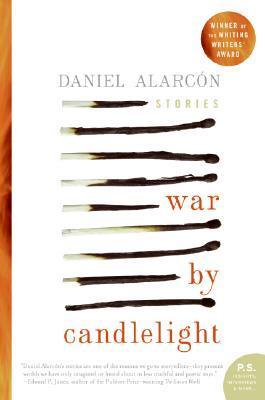
Something is happening. Wars, both national and internal, are being waged in jungles, across borders, in the streets of Lima, in the intimacy of New York apartments. War by Candlelight is an exquisite collection of stories that carry the reader from Third World urban centers to the fault lines that divide nations and people — a devastating portrait of a world in flux — and Daniel Alarcón is an extraordinary new voice in literary fiction, one you will not soon forget.
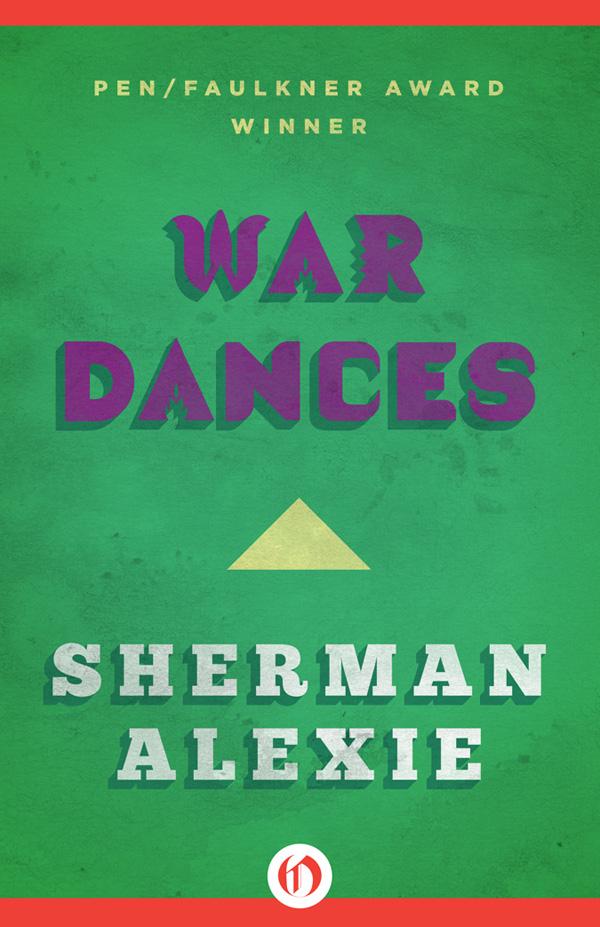
Fresh off his National Book Award win, Alexie delivers a heartbreaking, hilarious collection of stories that explores the precarious balance between self-preservation and external responsibility in art, family, and the world at large. With unparalleled insight into the minds of artists, laborers, fathers, husbands, and sons, Alexie populates his stories with ordinary men on the brink of exceptional change. In a bicoastal journey through the consequences of both simple and monumental life choices, Alexie introduces us to personal worlds as they transform beyond return. In the title story, a famous writer must decide how to care for his distant father who is slowly dying a “natural Indian death” from alcohol and diabetes, just as he learns that he himself may have a brain tumor. Alexie dissects a vintage-clothing store owner’s failing marriage and his courtship of a married photographer in various airports across the country; what happens when a politician’s son commits a hate crime; and how a young boy discovers his self-worth while writing obituaries for his local newspaper. Brazen and wise, War Dances takes us to the heart of what it means to be human. This provocative new work is Alexie at the height of his powers.
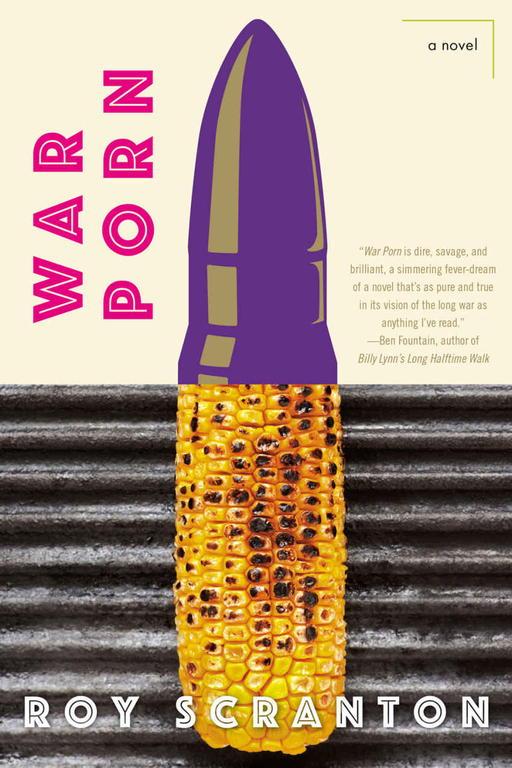
“War porn,” n. Videos, images, and narratives featuring graphic violence, often brought back from combat zones, viewed voyeuristically or for emotional gratification. Such media are often presented and circulated without context, though they may be used as evidence of war crimes.
War porn is also, in Roy Scranton’s searing debut novel, a metaphor for the experience of war in the age of the War on Terror, the fracturing and fragmentation of perspective, time, and self that afflicts soldiers and civilians alike, and the global networks and face-to-face moments that suture our fragmented lives together. In War Porn three lives fit inside one another like nesting dolls: a restless young woman at an end-of-summer barbecue in Utah; an American soldier in occupied Baghdad; and Qasim al-Zabadi, an Iraqi math professor, who faces the US invasion of his country with fear, denial, and perseverance. As War Porn cuts from America to Iraq and back again, as home and hell merge, we come to see America through the eyes of the occupied, even as we see Qasim become a prisoner of the occupation. Through the looking glass of War Porn, Scranton reveals the fragile humanity that connects Americans and Iraqis, torturers and the tortured, victors and their victims.
From Publishers Weekly
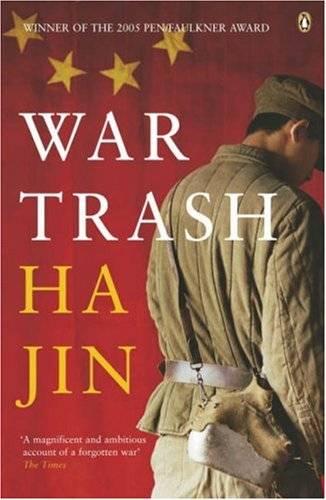
Jin (Waiting; The Crazed; etc.) applies his steady gaze and stripped-bare storytelling to the violence and horrifying political uncertainty of the Korean War in this brave, complex and politically timely work, the story of a reluctant soldier trying to survive a POW camp and reunite with his family. Armed with reams of research, the National Book Award winner aims to give readers a tale that is as much historical record as examination of personal struggle. After his division is decimated by superior American forces, Chinese "volunteer" Yu Yuan, an English-speaking clerical officer with a largely pragmatic loyalty to the Communists, rejects revolutionary martyrdom and submits to capture. In the POW camp, his ability to communicate with the Americans thrusts him to the center of a disturbingly bloody power struggle between two factions of Chinese prisoners: the pro-Nationalists, led in part by the sadistic Liu Tai-an, who publicly guts and dissects one of his enemies; and the pro-Communists, commanded by the coldly manipulative Pei Shan, who wants to use Yu to save his own political skin. An unofficial fighter in a foreign war, shameful in the eyes of his own government for his failure to die, Yu can only stand and watch as his dreams of seeing his mother and fiancée again are eviscerated in what increasingly looks like a meaningless conflict. The parallels with America 's current war on terrorism are obvious, but Jin, himself an ex-soldier, is not trying to make a political statement. His gaze is unfiltered, camera-like, and the images he records are all the more powerful for their simple honesty. It is one of the enduring frustrations of Jin's work that powerful passages of description are interspersed with somewhat wooden dialogue, but the force of this story, painted with starkly melancholy longing, pulls the reader inexorably along.
From The New Yorker
Ha Jin's new novel is the fictional memoir of a Chinese People's Volunteer, dispatched by his government to fight for the Communist cause in the Korean War. Yu Yuan describes his ordeal after capture, when P.O.W.s in the prison camp have to make a wrenching choice: return to the mainland as disgraced captives, or leave their families and begin new lives in Taiwan. The subject is fascinating, but in execution the novel often seems burdened by voluminous research, and it strains dutifully to illustrate political truisms. In a prologue, Yuan claims to be telling his story in English because it is "the only gift a poor man like me can bequeath his American grandchildren." Ha Jin accurately reproduces the voice of a non-native speaker, but the labored prose is disappointing from an author whose previous work – "Waiting" and " Ocean of Words " – is notable for its vividness and its emotional precision.