 fb2
fb2
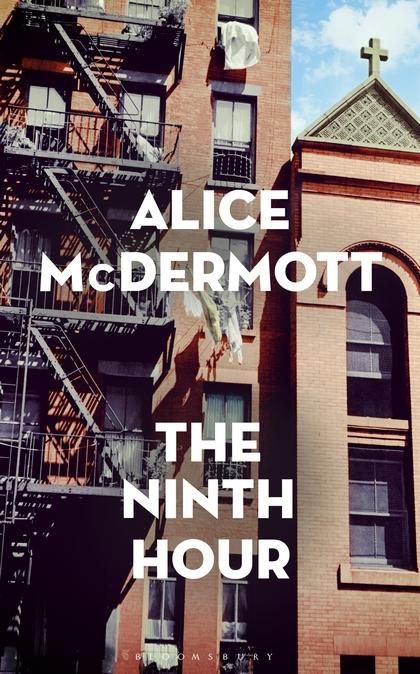
On a gloomy February afternoon, Jim sends his wife Annie out to do the shopping before dark falls. He seals their meagre apartment, unhooks the gas tube inside the oven, and inhales.
Sister St. Saviour, a Little Nursing Sister of the Sick Poor, catches the scent of fire doused with water and hurries to the scene: a gathered crowd, firemen, and the distraught young widow. Moved by the girl's plight, and her unborn child, the wise nun finds Annie work in the convent's laundry – where, in turn, her daughter will grow up amidst the crank of the wringer and the hiss of the iron.
In Catholic Brooklyn in the early part of the twentieth century, decorum, superstition and shame collude to erase Jim's brief existence; and yet his suicide, although never mentioned, reverberates through many generations – testing the limits of love and sacrifice, of forgiveness and forgetfulness.
In prose of startling radiance and precision, Alice McDermott tells a story that is at once wholly individual and universal in its understanding of the human condition. Rendered with remarkable lucidity and intelligence, The Ninth Houris the crowning achievement of one of today's finest writers.
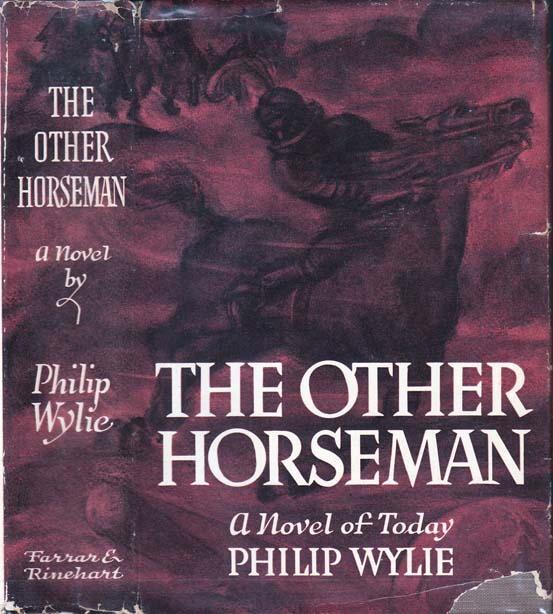
A novel of America’s isolationist attitudes before the Second World War.
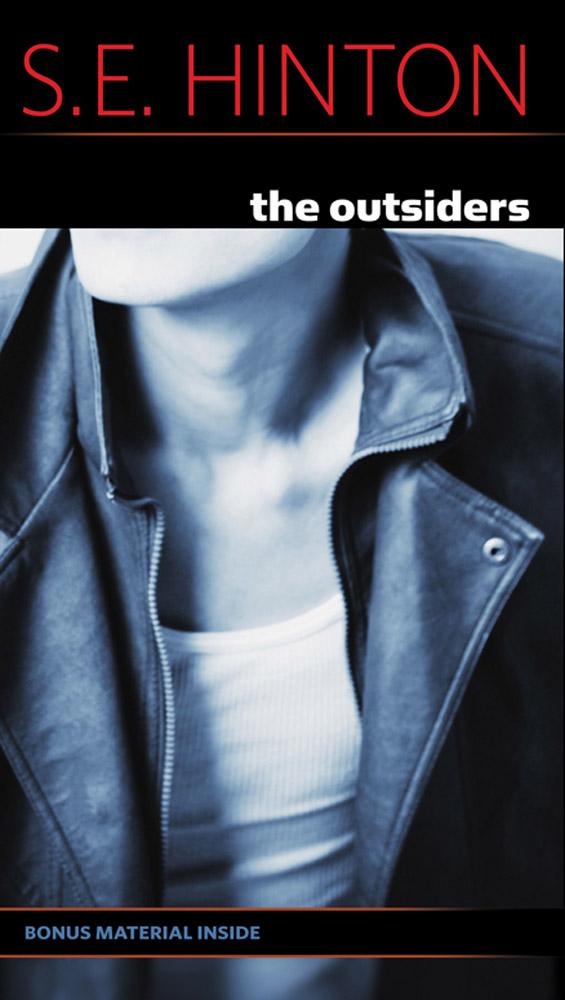
According to Ponyboy, there are two kinds of people in the world: greasers and socs. A soc (short for "social") has money, can get away with just about anything, and has an attitude longer than a limousine. A greaser, on the other hand, always lives on the outside and needs to watch his back. Ponyboy is a greaser, and he's always been proud of it, even willing to rumble against a gang of socs for the sake of his fellow greasers-until one terrible night when his friend Johnny kills a soc. The murder gets under Ponyboy's skin, causing his bifurcated world to crumble and teaching him that pain feels the same whether a soc or a greaser.
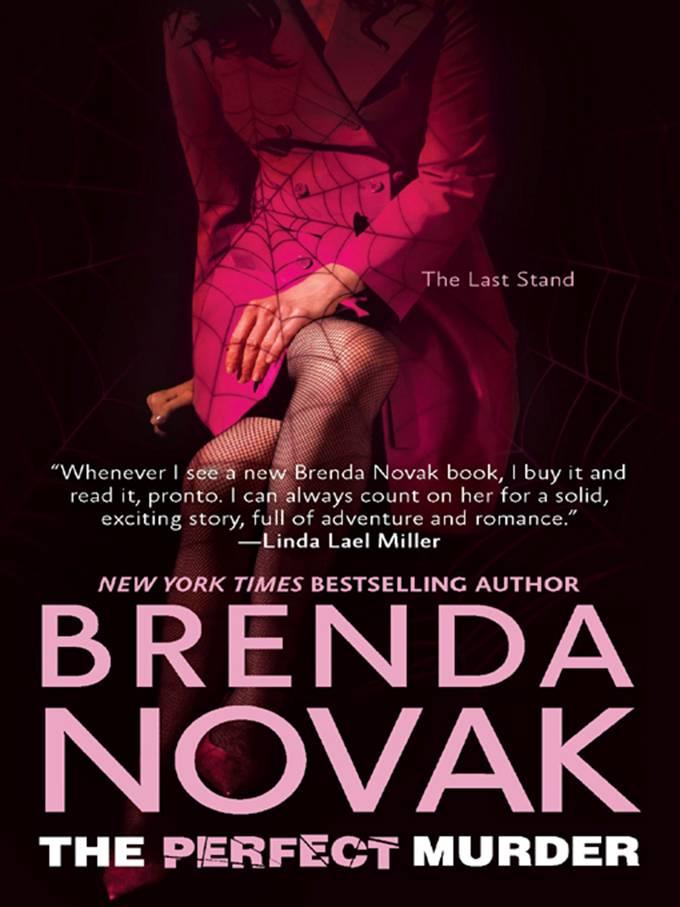
For more than a year, Sebastian Costas has been trying to unravel the truth behind the murder of his ex-wife and son. Despite overwhelming evidence to the contrary, he's convinced that her second husband – a cop – committed both murders, then faked his own death. Now Sebastian has followed the slimmest of leads to Sacramento.and that's where he finally gets the break he needs. Jane Burke, an investigator with The Last Stand, calls him in connection with a separate crime – a crime that could lead him straight to the man he's been looking for.
Once married to a serial killer, Jane has spent the past five years rebuilding her life. And with Sebastian she finally has a chance at happiness. But the man they're after is after them, too. For him this has become a personal battle, one he's determined to win. Whatever it takes.
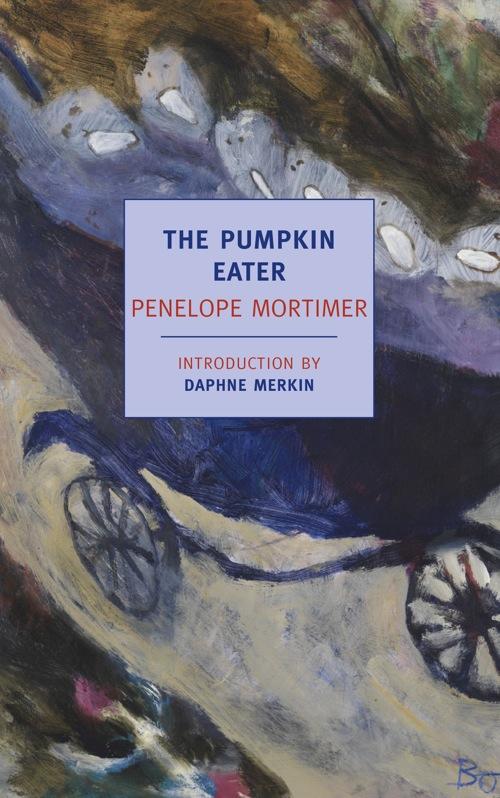
The Pumpkin Eater is a surreal black comedy about the wages of adulthood and the pitfalls of parenthood. A nameless woman speaks, at first from the precarious perch of a therapist’s couch, and her smart, wry, confiding, immensely sympathetic voice immediately captures and holds our attention. She is the mother of a vast, swelling brood of children, also nameless, and the wife of a successful screenwriter, Jake Armitage. The Armitages live in the city, but they are building a great glass tower in the country in which to settle down and live happily ever after. But could that dream be nothing more than a sentimental delusion? At the edges of vision the spectral children come and go, while our heroine, alert to the countless gradations of depression and the innumerable forms of betrayal, tries to make sense of it all: doctors, husbands, movie stars, bodies, grocery lists, nursery rhymes, messes, aging parents, memories, dreams, and breakdowns. How to pull it all together? Perhaps you start by falling apart.

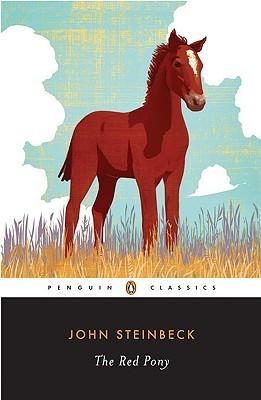
Raised on a ranch in northern California, Jody is well-schooled in the hard work and demands of a rancher's life. He is used to the way of horses, too; but nothing has prepared him for the special connection he will forge with Gabilan, a hot-tempered pony his father gives him. With Billy Buck, the hired hand, Jody tends and trains his horse, restlessly anticipating the moment he will sit high upon Gabilan's saddle. But when Gabilan falls ill, Jody discovers there are still lessons he must learn about the ways of nature and, particularly, the ways of man.
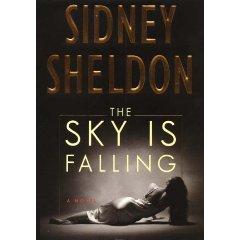
Dana Evans, who made her first appearance in Sidney Sheldon's The Best Laid Plans, is a spunky, good-looking, young Washington TV journalist who's recently returned to the nation's capital from the Balkans, where she adopted a handicapped war orphan who's having trouble adjusting to life in America. But that doesn't keep Dana from following a story all over the world, from Washington to Aspen, Nice, Juneau, Düsseldorf, Rome, Brussels, Moscow, and Siberia. Each of these brief visits is like a postcard--a local landmark or two, an interesting local restaurant (at least in the European venues), and another piece of the puzzle, which has to do with why every member of a venerable, old Washington dynasty has died a violent death in the last year. It seems strange that in a media-savvy city like Washington, no one but Dana has noticed there's a pattern in the rapid extinction of the Winthrops or even whispered the words family vendetta. But that's why pretty, young girl TV reporters were invented, at least by Sheldon.
As Dana sets out to investigate the distinguished career of the Winthrop family patriarch, her lover Jeff, a sports anchor at her station, is called away to administer aid and succor to his former wife, a beautiful model who's realized, too little and too late, that she never should have dumped him. And Kemal, the 12-year-old orphan, is being drugged by his baby sitter, who's in cahoots with at least one set of bad guys. Dana hasn't noticed how tractable the temperamental boy has become recently because she's been dressing up like a two-bit Russian tramp to infiltrate a secret weapons base in Siberia... Do you hear the words movie locations? But all's well that ends well, as it usually does for Sheldon's heroines, and in the meantime you've learned where the five-star hotels are and what to order in a famous restaurant in Rome. A slick, commercial, slightly thin tale told by a craftsman of the genre.
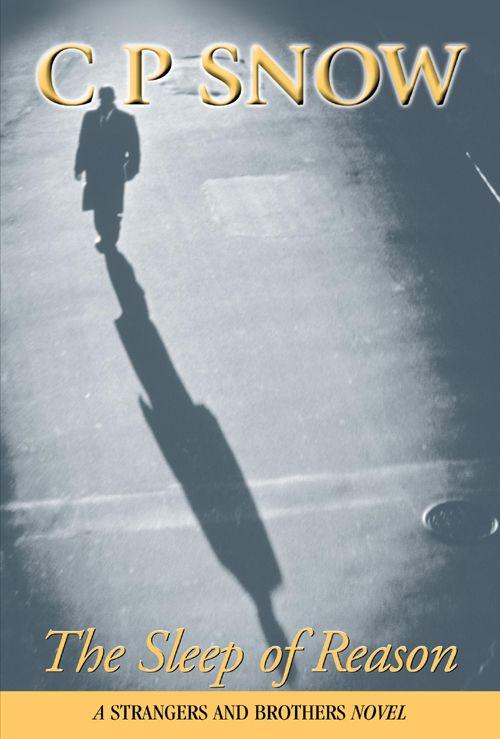
The penultimate novel in the Strangers and Brothers series takes Goya's theme of monsters that appear in our sleep. The sleep of reason here is embodied in the ghastly murders of children that involve torture and sadism.
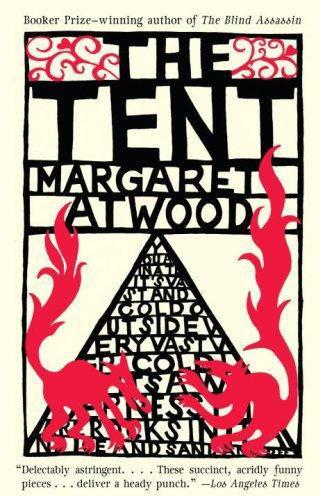
One of the world’s most celebrated authors, Margaret Atwood has penned a collection of smart and entertaining fictional essays, in the genre of her popular books Good Bones and Murder in the Dark, punctuated with wonderful illustrations by the author. Chilling and witty, prescient and personal, delectable and tart, these highly imaginative, vintage Atwoodian mini-fictions speak on a broad range of subjects, reflecting the times we live in with deadly accuracy and knife-edge precision.
In pieces ranging in length from a mere paragraph to several pages, Atwood gives a sly pep talk to the ambitious young; writes about the disconcerting experience of looking at old photos of ourselves; gives us Horatio's real views on Hamlet; and examines the boons and banes of orphanhood. “Bring Back Mom: An Invocation” explores what life was really like for the “perfect” homemakers of days gone by, and in “The Animals Reject Their Names,” she runs history backward, with surprising results.
Chilling and witty, prescient and personal, delectable and tart, The Tent is vintage Atwood. Enhanced by the author’s delightful drawings, it is perfect for Valentine’s Day, and any other occasion that demands a special, out-of-the-ordinary gift.
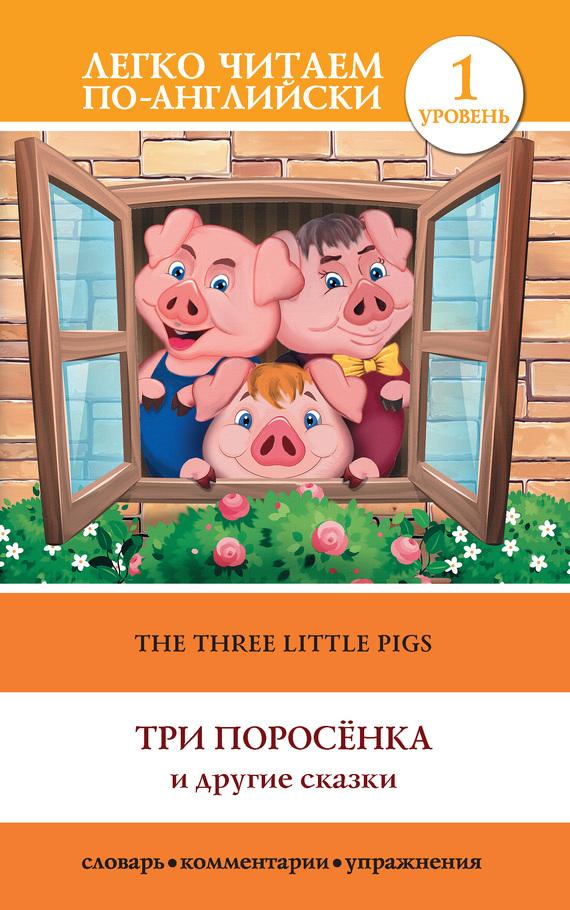
В книгу вошли всемирно известные «Три поросёнка» и другие английские сказки.
Тексты сказок подготовлены для уровня 1 (т. е. для начинающих учить английский язык) и снабжены комментариями.
Для проверки восприятия текстов предлагаются упражнения, а в конце книги дается англо-русский словарь.
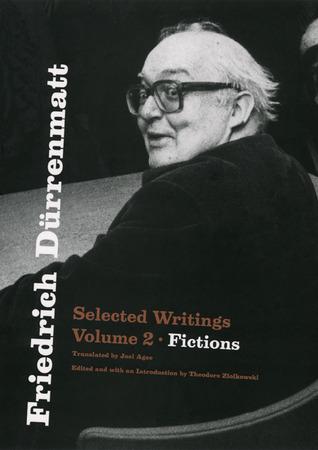
The Swiss writer Friedrich Dürrenmatt (1921–90) was one of the most important literary figures of the second half of the twentieth century. During the years of the cold war, arguably only Beckett, Camus, Sartre, and Brecht rivaled him as a presence in European letters. Yet outside Europe, this prolific author is primarily known for only one work, The Visit. With these long-awaited translations of his plays, fictions, and essays, Dürrenmatt becomes available again in all his brilliance to the English-speaking world.
This second volume of Selected Writings reveals a writer who may stand as Kafka’s greatest heir. Dürrenmatt’s novellas and short stories are searing, tragicomic explorations of the ironies of justice and the corruptibility of institutions. Apart from The Pledge, a requiem to the detective story that was made into a film starring Jack Nicholson, none of the works in this volume are available elsewhere in English. Among the most evocative fictions included here are two novellas: The Assignment and Traps. The Assignment tells the story of a woman filmmaker investigating a mysterious murder in an unnamed Arab country and has been hailed by Sven Birkerts as “a parable of hell for an age consumed by images.” Traps, meanwhile, is a chilling comic novella about a traveling salesman who agrees to play the role of the defendant in a mock trial among dinner companions—and then pays the ultimate penalty.
Dürrenmatt has long been considered a great writer—but one unfairly neglected in the modern world of letters. With these elegantly conceived and expertly translated volumes, a new generation of readers will rediscover his greatest works.
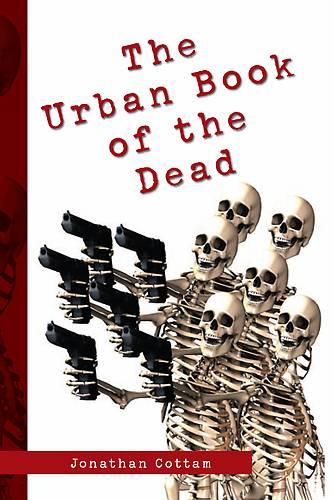
Urban Book of the dead is my second book to be published, after 'The Unrequited Zombie'. It is a rather less experimental work, though still unusual, vivid, and descriptive. I would describe the book as both psychedelic and surreal, being rather pedantic about the use of those two words. That is, if it were surreal I would be dealing with a psychological work, something that looked towards expanding knowledge of the Id, that primitive part of our nature that is repressed by social conventions and the need to plan to get what we want. It is, in that it is self gratifying without recourse to opinion, it is every animalistic urge that can only be released through art, because to do it any other way would have terrible repercussions. Having said that, next to my early work, it is not particularly arty or deep. It is psychedelic because it looks to reaching a higher consciousness by through creativity, to reach a state beyond the normal level of seeing things, it is also psychedelic and surreal in the commonly understood sense, it is 'trippy' and sometimes deals with drugs. It starts like this… "I floated above my body, I was a bubble fit to burst, I squeezed and struggled with my form, my clothes gripping and distorting my figure with their relative solidity, were the same ghost like material as the rest of me. Down below my face stared back at me; distorted and grotesque as the spirit shapes on the bark of trees, I felt my ghost face and it was etched there too, deforming me, chiselled by a million molecules of heroin, I had my wings, hung as from a pin, spread and feathered, and spanning the whole nicotine ceiling. I stared at the blue marbled arm; growing out like the gnarled branch of a tree, the fingers gesturing me towards it, and hanging from it, the syringe full of bubbles, blood and a quicksand of powdered death whirling like a vortex. A spoon lay on the floor and a small bit of cigarette filter in it, all having served a purely symbolic process. It seemed years of injecting powders and stuff flicked down to a dirty lemonade had paid off, perhaps a bubble could kill you after all." The book is I think taking one thing at least to a new level in literature, egomania. That is because the concept of the book is I the authors fight with god who is defeated, whilst at the same time dealing with my real life struggles as I go back through things that really actually happened to me in my drug filled and violent life as a drug dealer and through prison etcetera, and, changing them. I say egomania but again I mean the Id, the ego compromises, the Id does not. It is a very angry book because I am taking back the control that was taken from me, in that, to a very large extent I did not choose my life but it was forced on me, as with all the mishaps of all my dead friends who did not survive, through suicide, alcoholism, heroin overdose and murder. Enter God. God then is a symbol for society, capitalism, and the state, and also, plain bad luck. So is God then not God, is the book not satanic? My interest in black magic personally does not extend to believing in it, or God in any accepted sense either. I believe in magic as will, that Hitler could gain power through will is magic, that people can realise the future not through clairvoyance but precognition, taking in the world around them and understanding consciously or unconsciously where it is all going to lead, that kind of magic I believe, the other sort I only have a fair knowledge of as an interest and I am not a Satanist, that would be a misplacement of effort. "The noise got louder, but lower, rather than higher, so it travelled further and vibrated the walls. Crack's appeared in the walls in the form of a hundred distorted faces of people I had known, adventured and suffered with. A fragment of glass from a picture of 'Judith with the head of Hollerfernes' hit me in my eye, almost bursting my substance, which it settled in like a bloody monocle, magnifying the African tribal Fang mask in the centre of the wall, with its pale long wooden nose and owl like brow, its jutting chin; appeared to grow eyes that searched with the deepest hideous depth around my room and the dead body of me whose 'nakedness' I wanted to cover from the gaze. The mask bowed and came out of the wall, after it a huge body wearing the blue pinstripes of my wall paper and looking every bit the business man, come to settle my accounts, I was not about to make it easy. The scrambled voices became one, the word "Jonathan!" boomed. This was God, this was the confrontation I had been waiting for my whole life." The meaning of that is obvious in the pinstriped suit I think, but also a little later the meaning and symbolism is made totally obvious. "God spoke "I am the unity, I am the morals and the law, think like me and my triumphs will be your triumphs because there will be no difference, surrender all self generated thought of conflict, all difference is imaginary, it is not held and is alien to mind." I replied simply, my head turned to him from my place on the ceiling, "I am my desire." -A little later it gets really obvious. "With haste I flew forward and stabbed God in the eyes with my fingers, which flattened against the harder substance of Gods eyes, I cried out "This is for poverty, this is for the atomisation of life, this is for your prisons and the police, for all my friends who are lost yet alive, and all those you sent to hell which is a place on Earth. This is for everything." Soon events from the past unfold, and people I knew come into the picture such as Jay. Jay was a traveller; that is he moved from town to town, lived rough and begged. He had the unnerving attribute of being both friendly, warm, and a complete psychopath, loyal and perverse, he was a real good character for a book. I meet Jay again fishing in Hell. "I dropped my line in the molten lead from my rod. Immediately the rod bent almost double, despite its thickness. It pulled so hard I estimated that what ever was on the end must have been over two hundred pounds. I reeled in my rod and a giant fish splashed on the end of it, it looked like some kind of gigantic roach, its tail splashing molten lead at me as its body curved in the waves trying to get away. I landed the fish in the boat and it suffocated there its mouth open and body heaving, I marvelled at the square scales on its silver body, bigger than my hands. As I stood fascinated, the body of the fish, distorted as if something inside was trying to push its way out, a fist punched its way through, then two hands, pulled the fish apart, then before me was the crouched naked body of Jay, covered in a stinky fish slime, he held his nose and spoke nasally. "Hello Monster!" he said smoothly. Jay stood up tall, rocking only slightly; and threw chunks of fish in the water, now without the protection of its tough outer layers, the bits of fish flamed up as they entered the sea, with puffs of flame and billows of smoke. He held the rest of the carcass above his head, his arms at full length, and chucked that in after it; there was a huge flaming that threatened to engulf the boat, but it went out fast. I was pleased to see Jay, I had him picked out as my right hand man, there was something about him that persuaded you to trust him at the same time as acknowledging he wasn't entirely trust worthy, a slightly sly warmth, a look in the eyes that said he was tough and dependable, but somehow self centred. But, however he was useful, very handy; a good person to know. I asked a searching question. "How are you here? As far as I know you're still alive." Jay looked at me long and hard "Doesn't bloody look like it does it Monster. In Hell as well. What did I do to deserve that? A few fights, drug dealing, a couple of rich burglaries, fucking a tree on LSD, underage sex and a sexual assault in McDonalds that was nothing but feeling some ones leg, and I'm in Hell." Yes, he was really like that and he did all those things. The character of Jay is a rich part of the book, to which I am indebted to knowing him, not that many people will ever read it, but I live to write, quite literally. Another theme of the book is the yearning for togetherness, community, against the very real need for individuality, adventure and subjectivity. The two themes run through every religion, philosophy and form of politics to a varying degree of scientific application. It is not as simple as one or the other and both sides in the book take both approaches. There is no answer in human nature between the two, it is irreconcilable and all we can do is draw attention theoretically to the issue between fascism and anarchism, individuality and togetherness, though we do find more honest and liveable conditions in libertarianism than dictatorial politics. The problem between wanting togetherness and a shared identity, but being repulsed at having to give up subjectivity so pervades the book that many characters rebel against the human form, whilst not giving up the need for community, and become many headed monsters. But, the book insists, the need for adventure is the unifying theory that makes sense of our misery and creates a symbiosis between the conflicting forces. "As the ship rowed closer I realised it was the rule of these creatures, my brave men which is what they were, to reject the human form given by God for those of their own imagination, and to conjoin like the ultimate pack of animals, or; what I had seen in human riots when a crowd does indeed become a single and very different animal than the sum of its parts. I saw men who had formed their joints together to form the bodies of double kneed, twelve-foot men with two heads. Two had done that. The dragon with seven necks and six heads was also there, waiting in futility for my strange communion, for I was still attached to the human form, it still represented for me a thing of beauty and free autonomy." The book is all about conflict, but as Buddhists say, all conflict is imaginary, so I think, we are all in a state of symbiosis in a world where assistance between organisms is the norm even when it appears in the form of its opposite. That's all I want to say about the book.
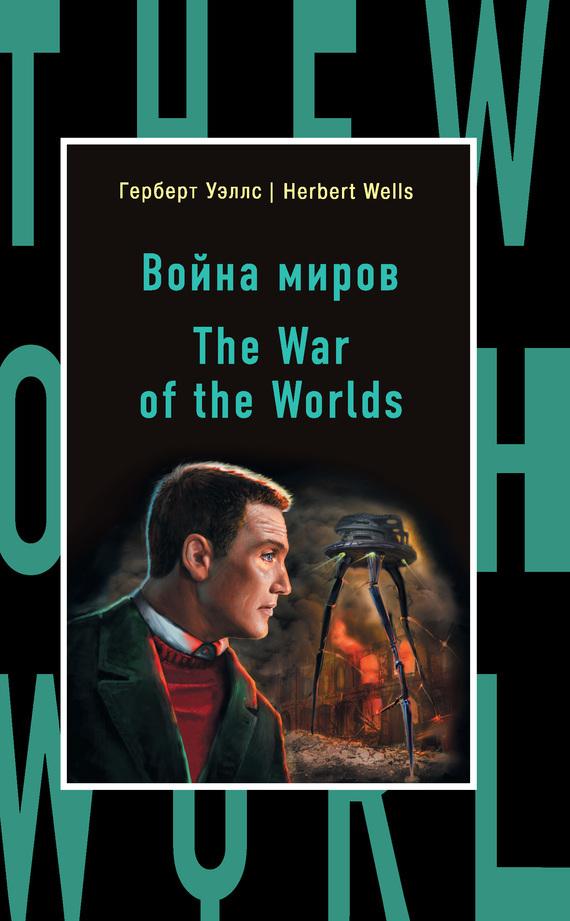
Чтение оригинальных произведений — простой и действенный способ погрузиться в языковую среду и совершенствоваться в иностранном языке. Серия «Бестселлер на все времена» — это возможность улучшить свой английский, читая лучшие произведения англоязычных авторов, любимые миллионами читателей. Для лучшего понимания текста в книгу включены краткий словарь и комментарии, поясняющие языковые и лингвострановедческие вопросы, исторические и культурные реалии описываемой эпохи.
«Война миров» — один из первых романов об инопланетном вторжении и культовое фантастическое произведение. Чем грозит человечеству нападение марсиан? И как выжить в катаклизме? Захватывающий сюжет и прекрасный язык помогут читателям улучшить свой английский, читая невероятную хронику межпланетного противостояния.
Книга предназначена для тех, кто изучает английский язык на продолжающем или продвинутом уровне и стремится к его совершенствованию.
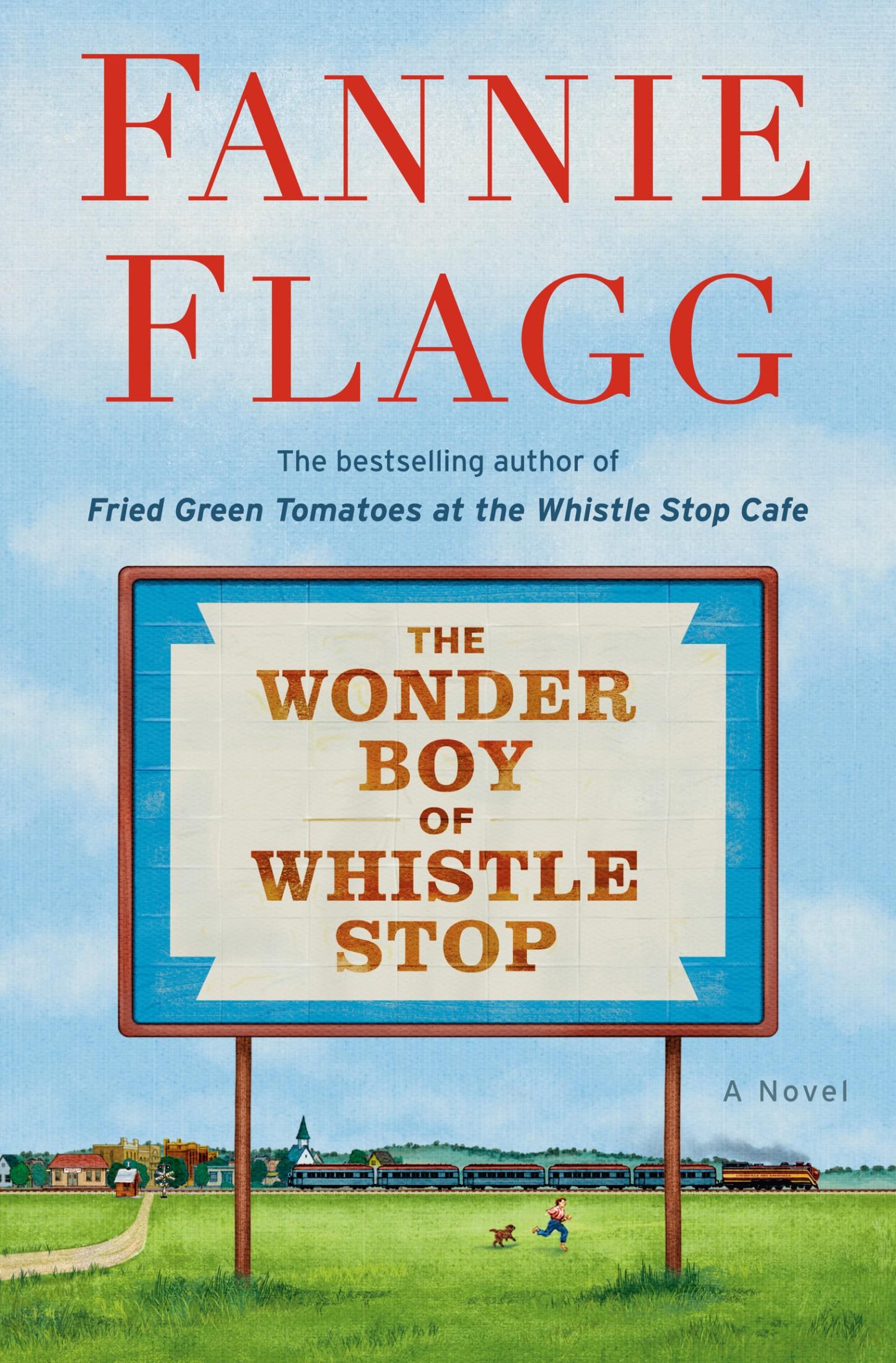
****A heartwarming novel about secrets of youth rediscovered, hometown memories, and everyday magic, from the beloved author of** ** *Fried Green Tomatoes at the Whistle Stop Caf e*** ******
Bud Threadgoode grew up in the bustling little railroad town of Whistle Stop, Alabama, with his mother Ruth, church going and proper, and his Aunt Idgie, the fun-loving hell-raiser. Together they ran the town's popular Whistle Stop Cafe, known far and wide for its friendly, fun, and famous "Fried Green Tomatoes." And as Bud often said to his daughter Ruthie, of his childhood, "How lucky can you get?"
But sadly, as the railroad yards shut down and the town became a ghost town, nothing was left but boarded-up buildings and memories of a happier time.
Then one day, Bud decides to take one last trip, just to see where his beloved Whistle Stop used to be. In so doing, he discovers new friends, new surprises about Idgie's life, and about Ninny Threadgoode, Evelyn...