 fb2
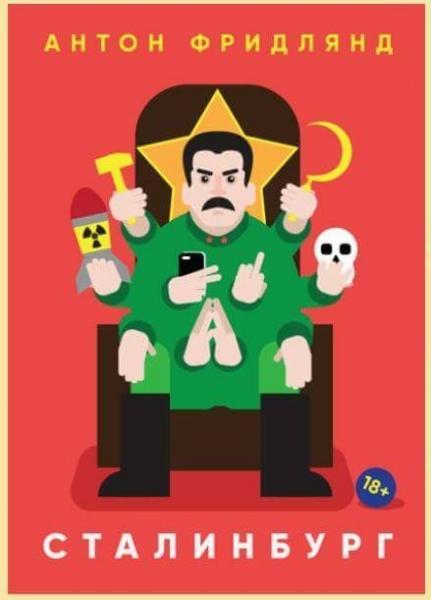
fb2Новая книга Антона Фридлянда — едкая сатирическая антиутопия, действие которой происходит в современном СССР, последнем оплоте СВЯТОСТИ И ПРАВОЙ ВЕРЫ.
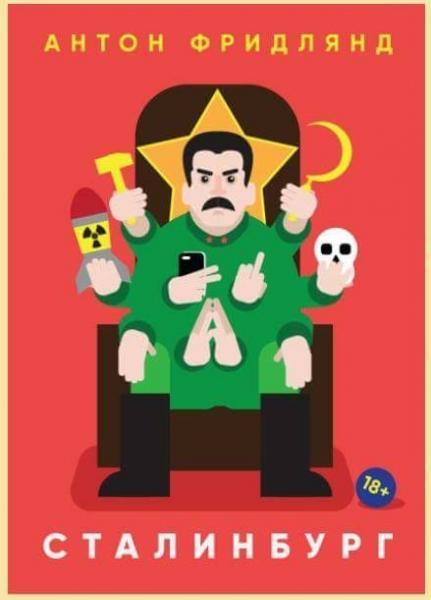
Новая книга Антона Фридлянда — едкая сатирическая антиутопия, действие которой происходит в современном СССР, последнем оплоте святости и правой веры.
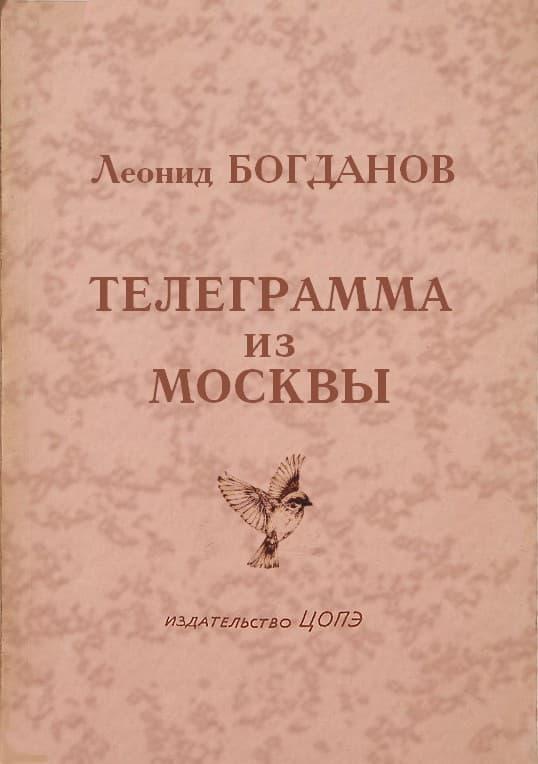
«„Телеграмма из Москвы“ — сатирическая повесть, написанная по советской действительности.
Условный Орешниковский район, в котором происходит действие повести…типичен для любого места Советского Союза. Автор хорошо знает все стороны советского быта, советской жизни вообще, включая методы партийной работы и пропаганды, и настроение населения. Ему удалось свои разнородные и разноместные наблюдения и впечатления, вынесенные из Советского Союза, слить в почти конкретно ощущаемый „определенный“ район и райком… Гиперболизм и гротеск, сознательно „культивируемые“ автором, роднят его с известными Ильфом и Петровым, придавая сатире убедительность.
И это не парадокс: и после „исторического XX съезда КПСС“ многое в СССР, „благодаря мудрому руководству партии и правительства“, носит гротескный характер — характер не нормальной человеческой жизни, а жизненной трагедии. Эта трагедия выступает и через сатиру автора. В этом смысле в царстве коммунистической диктатуры ничего не меняется и измениться не может. Пусть меняются некоторые стороны быта, сущность неизменна.
Картина, нарисованная автором к сорокалетию установления советской власти в нашей стране, — убийственный приговор системе».
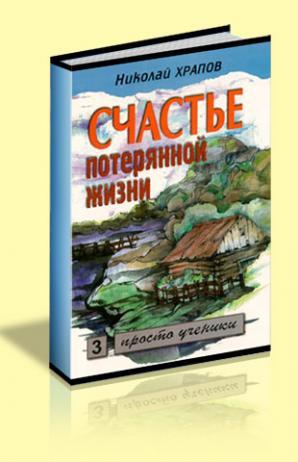
Автобиографический роман Николая Храпова — бесспорно, ярчайшая страница истории евангельского движения в бывшем Советском Союзе.
Жизнь автора уникальна, поскольку фактически лишь за написание этой книги 66-летнего старика приговорили к трем годам тюремного заключения. Незадолго до окончания последнего, пятого по счету, срока, он «освобождается», уже навсегда. Ничто не сломило этого героя веры в его уповании на Бога: ни трудности жизни, ни прелесть соблазнов, ни угрозы со стороны КГБ. Он был и остался победителем.
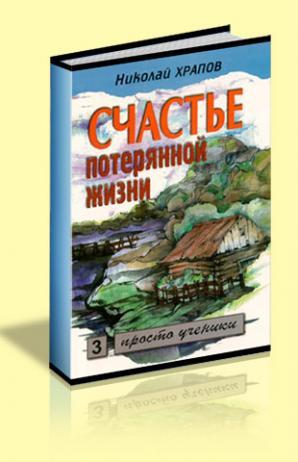
Автобиографический роман Николая Храпова — бесспорно, ярчайшая страница истории евангельского движения в бывшем Советском Союзе. Жизнь автора уникальна, поскольку фактически лишь за написание этой книги 66-летнего старика приговорили к трем годам тюремного заключения. Незадолго до окончания последнего пятого по счету срока, он «освобождается», уже навсегда.
Ничто не сломило этого героя веры в его уповании на Бога: ни трудности жизни, ни прелесть соблазнов, ни угрозы со стороны КГБ. Он был и остался победителем.
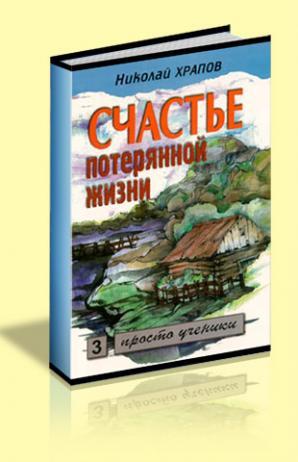
Автобиографический роман Николая Храпова — бесспорно, ярчайшая страница истории евангельского движения в бывшем Советском Союзе.
Жизнь автора уникальна, поскольку фактически лишь за написание этой книги 66-летнего старика приговорили к трем годам тюремного заключения. Незадолго до окончания последнего, пятого по счету, срока, он «освобождается», уже навсегда. Ничто не сломило этого героя веры в его уповании на Бога: ни трудности жизни, ни прелесть соблазнов, ни угрозы со стороны КГБ. Он был и остался победителем.
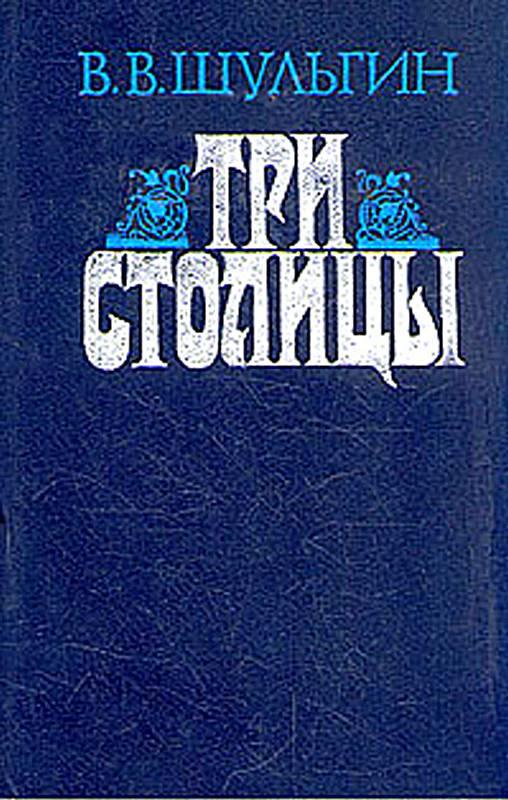
В конце 1925 года некий Эдуард Эмильевич Шмитт нелегально перешел советскую границу и совершил двухмесячное путешествие по Советской России. Под этим именем скрывался известный в недалеком прошлом русский политический деятель и публицист, а затем эмигрант В.В.Шульгин.
Впечатления от страны, живущей в условиях НЭПа, составили содержание книги «Три столицы».
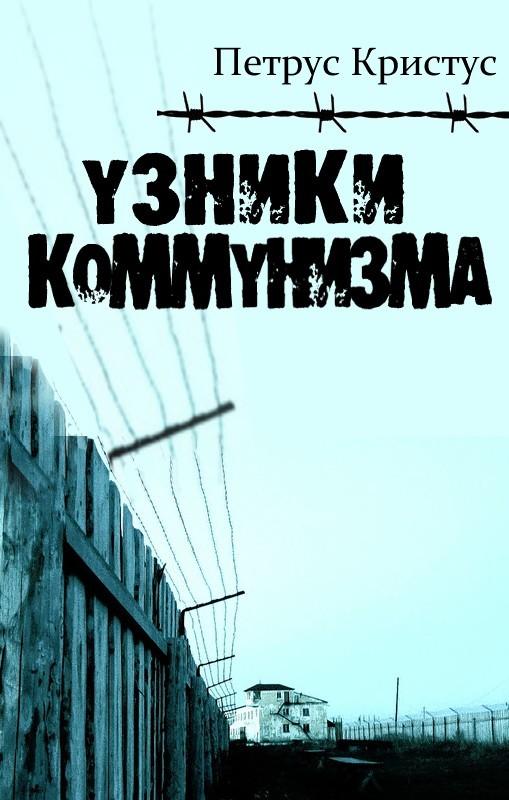
Там, где кончается религия, начинается большевизм. Пережитые мною испытания в тюрьмах и концлагерях СССР и последующие скитания в годы Второй мировой войны убедили меня в непреложности этого духовного закона. Наш многострадальный век заболел большевизмом только потому, что человеческая личность, потеряв веру в Бога, переживает тяжелую моральную депрессию, от которой ее сможет спасти только учение Христа в его социальной и нравственной сущности. Нынешнее правительство США уже поняло эту необходимость и принимает соответствующие мероприятия… Очередь за больной Европой и нашей грызущейся между собою многонациональной эмиграцией. Лишь учение Христа может дать исстрадавшемуся человечеству желанный мир и спасение от надвигающейся мировой катастрофы. И Он зовет:
Рассказы Виктора Робсмана — выполнение миссии, ответственной и суровой: не рассказывать, а показать всю жестокость, бездушность и бесчеловечность советской жизни. Пишет он не для развлечения читателя. Он выполняет высокий завет — передать, что глаза видели, а видели они много.
Послесловие к зарубежному изданию «В окопах Сталинграда».
«Враг будет разбит! Победа будет за нами! Но дело наше оказалось неправое. В этом трагедия моего поколения. И моя в том числе…»
Драгоценная книга, единственная в своем жанре, выходящая на уровень прозы Варлама Шаламова. Чудовищность этих рассказов нормальна, мы привыкли) — но это большая литература. К фантастике она отношения не имеет, но есть в этой книге «Приложение первое» — «История отпадения Нидерландов от Испании» (написано в соавторстве с Л. Гумилевым на блатном языке, но от этого стало только лучше). Если есть на этом языке великая литература, то перед нами образец таковой. А поскольку подлинный сюжет совершенно мифологизирован («…На Альбу пахали епископы и князья, в ставке шестерили графьья и генералы, а кто махлевал, тот хагинался. Он самых высоких в кодле брал на оттяжку… — и т. д.).
Так и вспоминаешь диалог Ваги Колеса с Доном Рэбой («С нами габузиться вам не сростно»).
Словом, во что ценю эту книгу, то и ставлю. Все остальные книги того же автора она, мне кажется, перевесит. Даже вместе взятые.
Малое издательство «Просвет» разработало и осуществляет издание серии книг под названием «Преступление и наказание в мировой практике». В серии выйдет не менее двадцати книг, рассказывающих об истории пенитенциарных систем всех времен и народов. Изучая их, читатель убедится, что все познается в сравнении.
For eight weeks in 1945, as Berlin fell to the Russian army, a young woman kept a daily record of life in her apartment building and among its residents. Spare, unpredictable, minutely observed, and utterly free of self-pity (The Plain Dealer, Cleveland), the anonymous author depicts her fellow Berliners in all their humanity as well as their cravenness. And with bald honesty and brutal lyricism (Elle), she tells of the shameful indignities to which women in a conquered city are always subject. A Woman in Berlin is, to quote A. S. Byatt, essential, and a classic of war literature.
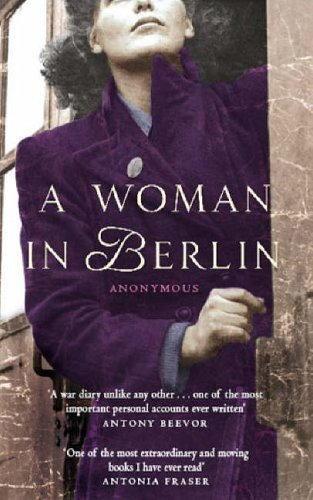
For eight weeks in 1945, as Berlin fell to the Russian army, a young woman kept a daily record of life in her apartment building and among its residents. Spare, unpredictable, minutely observed, and utterly free of self-pity (The Plain Dealer, Cleveland), the anonymous author depicts her fellow Berliners in all their humanity as well as their cravenness. And with bald honesty and brutal lyricism (Elle), she tells of the shameful indignities to which women in a conquered city are always subject. A Woman in Berlin is, to quote A. S. Byatt, essential, and a classic of war literature.
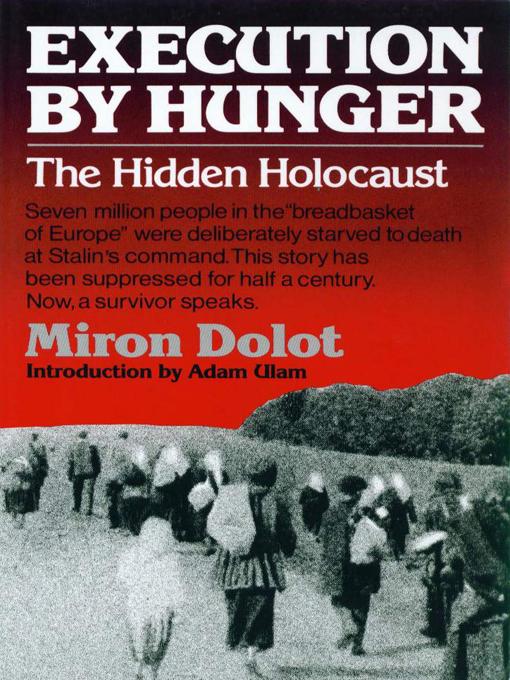
Seven million people in the “breadbasket of Europe” were deliberately starved to death at Stalin’s command. This story has been suppressed for half a century. Now, a survivor speaks.
In 1929, in an effort to destroy the well-to-do peasant farmers, Joseph Stalin ordered the collectivization of all Ukrainian farms. In the ensuing years, a brutal Soviet campaign of confiscations, terrorizing, and murder spread throughout Ukrainian villages. What food remained after the seizures was insufficient to support the population. In the resulting famine as many as seven million Ukrainians starved to death.
This poignant eyewitness account of the Ukrainian famine by one of the survivors relates the young Miron Dolot’s day-to-day confrontation with despair and death—his helplessness as friends and family were arrested and abused—and his gradual realization, as he matured, of the absolute control the Soviets had over his life and the lives of his people. But it is also the story of personal dignity in the face of horror and humiliation. And it is an indictment of a chapter in the Soviet past that is still not acknowledged by Russian leaders.

A stunningly imaginative novel about the Cold War, the Russian space program, and the amazing fraud that pulled the wool over the eyes of the world.
It’s 1964 in the USSR, and unbeknownst even to Premier Khrushchev himself, the Soviet space program is a sham. Well, half a sham. While the program has successfully launched five capsules into space, the Chief Designer and his team have never successfully brought one back to earth. To disguise this, they’ve used twins. But in a nation built on secrets and propaganda, the biggest lie of all is about to unravel.
Because there are no more twins left.
Combining history and fiction, the real and the mystical, First Cosmic Velocity is the story of Leonid, the last of the twins. Taken in 1950 from a life of poverty in Ukraine to the training grounds in Russia, the Leonids were given one name and one identity, but divergent fates. Now one Leonid has launched to certain death (or so one might think…), and the other is sent on a press tour under the watchful eye of Ignatius, the government agent who knows too much but gives away little. And while Leonid battles his increasing doubts about their deceitful project, the Chief Designer must scramble to perfect a working spacecraft, especially when Khrushchev nominates his high-strung, squirrel-like dog for the first canine mission.
By turns grim and whimsical, fatalistic and deeply hopeful, First Cosmic Velocity is a sweeping novel of the heights of mankind’s accomplishments, the depths of its folly, and the people—and canines—with whom we create family.
At the height of the cold war, a cashiered SEAL officer in Japan is retained by a world famous Russian dissident to rescue a friend from the Siberian Gulag. The SEAL recruits and trains a group to undertake the cold weather operation and even finagles an off-the-books submarine… for a price. The rescue is grueling and the withdrawal harrowing.

In 1947, Ayn Rand wrote a pamphlet for the Motion Picture Alliance for the Preservation of American Ideals, entitled “Screen Guide for Americans,” based on her personal impressions of the American film industry. Rand cited examples of popular and critically acclaimed films which in her view contained hidden Communist or “Collectivist” messages that had not been recognized as such, even by conservatives. Examples included “The Best Years of Our Lives” (because it portrayed businessmen negatively, and suggested that bankers should give veterans collateral-free loans) and “A Song to Remember” (because it implied that Chopin sacrificed himself for a patriotic cause rather than devoting himself to his music).
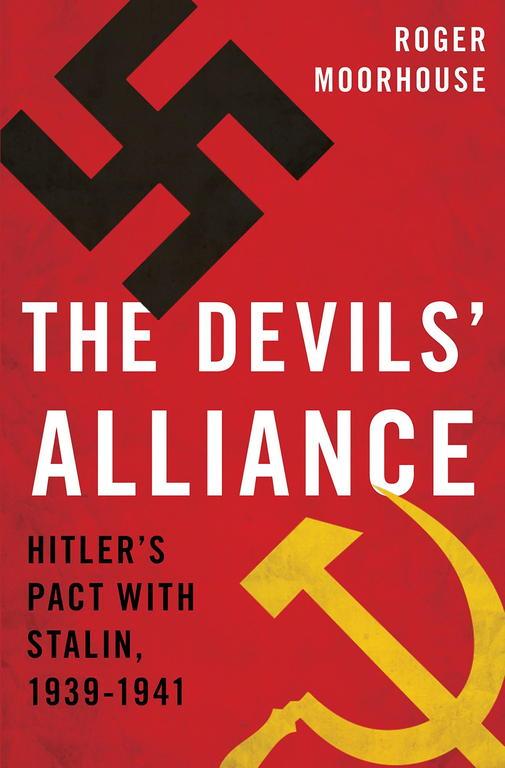
History remembers the Soviets and the Nazis as bitter enemies and ideological rivals, the two mammoth and opposing totalitarian regimes of World War II whose conflict would be the defining and deciding clash of the war. Yet for nearly a third of the conflict’s entire timespan, Hitler and Stalin stood side by side as allies. In The Devils’ Alliance, acclaimed historian Roger Moorhouse explores the causes and implications of the tenuous Nazi-Soviet pact, an unholy covenant whose creation and dissolution were crucial turning points in World War II. Indeed, this riveting chapter of World War II is the key to understanding why the conflict evolved—and ended—the way it did.
Nazism and Bolshevism made unlikely bedfellows, but the brutally efficient joint Nazi-Soviet invasion of Poland in 1939 illustrated the powerful incentives that existed for both sides to set aside their differences. Forged by vain and pompous German foreign minister Joachim von Ribbentrop and his Russian counterpart, the inscrutable and stubborn Vyacheslav Molotov, the Nazi-Soviet pact in August of 1939 briefly unified the two powers. Together, the Germans and Soviets quickly conquered and divvied up central and eastern Europe—Poland, the Baltic States, Finland, and Bessarabia—aiding one another through exchanges of information, blueprints, and prisoners. The human cost was staggering: in Poland alone, the Soviets deported 1.5 million people in 1940, 400,000 of whom would never return. Tens of thousands were also deported from the Baltic States, including almost all of the members of the Estonian parliament. Of the 100,000 civilians deported to Siberia from Bessarabia, barely a third survived.
Nazi and Soviet leaders hoped that a similar quid-pro-quo agreement would also characterize their economic relationship. The Soviet Union would export much-needed raw materials to Germany, while the Germans would provide weapons and technological innovations to their communist counterparts. In reality, however, economic negotiations were fraught from the start, not least because the Soviets, mindful that the Germans were in dire need of raw materials to offset a British blockade, made impossible demands of their ally. Although German-Soviet trade still grew impressively through 1940, it was not enough to convince Hitler that he could rely on the partnership with Moscow, which on the whole was increasingly turbulent and unpredictable.
Fortunately for the Allies, the pact—which seemed to negate any chances of an Allied victory in Europe—was short-lived. Delving into the motivations and forces at work, Moorhouse explores how the partnership soured, ultimately resulting in the surprise June 1941 German invasion of the Soviet Union. With the final dissolution of the pact, the Soviets sided with the Western democracies, a development that changed the course of the war—and which, upon Germany’s defeat, allowed the Soviets to solidify the inroads they had made into Eastern Europe during their ill-starred alliance. Reviled by contemporaries, the Nazi-Soviet Pact would have a similarly baleful afterlife. Though it was torn up by the Nazis and denied or excused as a strategic necessity by the Soviets, its effects and political ramifications proved remarkably persistent. The boundaries of modern eastern and central Europe adhere closely to the hasty divisions made by Ribbentrop and Molotov. Even more importantly, the pact laid the groundwork for Soviet control of Eastern Europe, a power grab that would define the post-war order.
Drawing on memoirs, diaries, and official records from newly opened Soviet archives, The Devils’ Alliance is the authoritative work on one of the seminal episodes of World War II. In his characteristically rich and detailed prose, Moorhouse paints a vivid picture of the pact’s origins and its enduring influence as a crucial turning point, in both the war and in modern history.
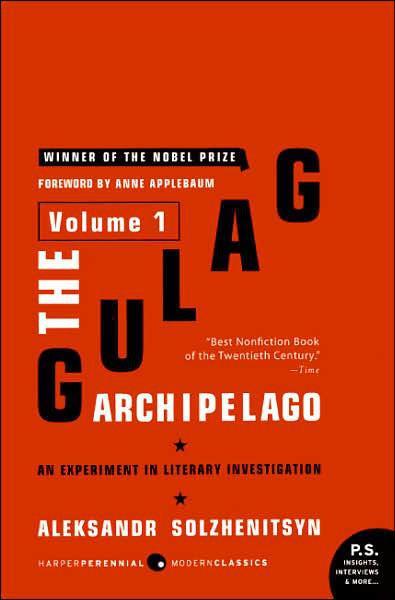
Volume 1 of the gripping epic masterpiece, Solzhenitsyn’s chilling report of his arrest and interrogation, which exposed to the world the vast bureaucracy of secret police that haunted Soviet society
“Best Nonfiction Book of the Twentieth Century” (Time magazine )
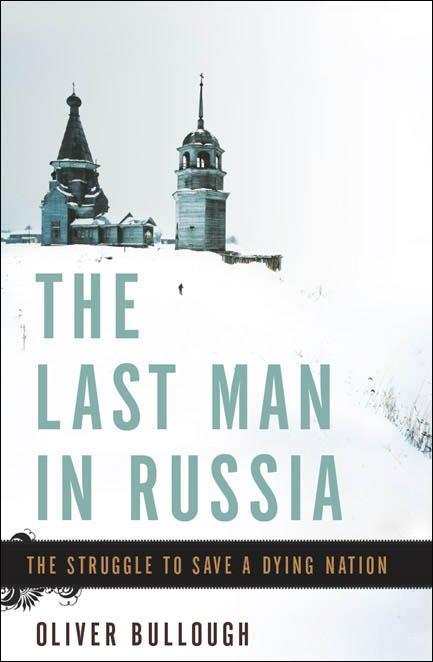
Russia is dying from within. Oligarchs and oil barons may still dominate international news coverage, but their prosperity masks a deep-rooted demographic tragedy. Faced with staggering population decline—and near-certain economic collapse—driven by toxic levels of alcohol abuse, Russia is also battling a deeper sickness: a spiritual one, born out of the country’s long totalitarian experiment.
In The Last Man in Russia, award-winning journalist Oliver Bullough uses the tale of a lone priest to give life to this national crisis. Father Dmitry Dudko, a dissident Orthodox Christian, was thrown into a Stalinist labor camp for writing poetry. Undaunted, on his release in the mid-1950s he began to preach to congregations across Russia with little concern for his own safety. At a time when the Soviet government denied its subjects the prospect of advancement, and turned friend against friend and brother against brother, Dudko urged his followers to cling to hope. He maintained a circle of sacred trust at the heart of one of history’s most deceitful systems. But as Bullough reveals, this courageous group of believers was eventually shattered by a terrible act of betrayal—one that exposes the full extent of the Communist tragedy. Still, Dudko’s dream endures. Although most Russians have forgotten the man himself, the embers of hope that survived the darkness are once more beginning to burn.
Leading readers from a churchyard in Moscow to the snow-blanketed ghost towns of rural Russia, and from the forgotten graves of Stalin’s victims to a rock festival in an old gulag camp, The Last Man in Russia is at once a travelogue, a sociological study, a biography, and a cri de coeur for a dying nation—one that, Bullough shows, might yet be saved.