
 fb2
fb2Отрывки из кн. B. Ацюковского «Материализм и релятивизм», (Энергоатомиздат, 1992).
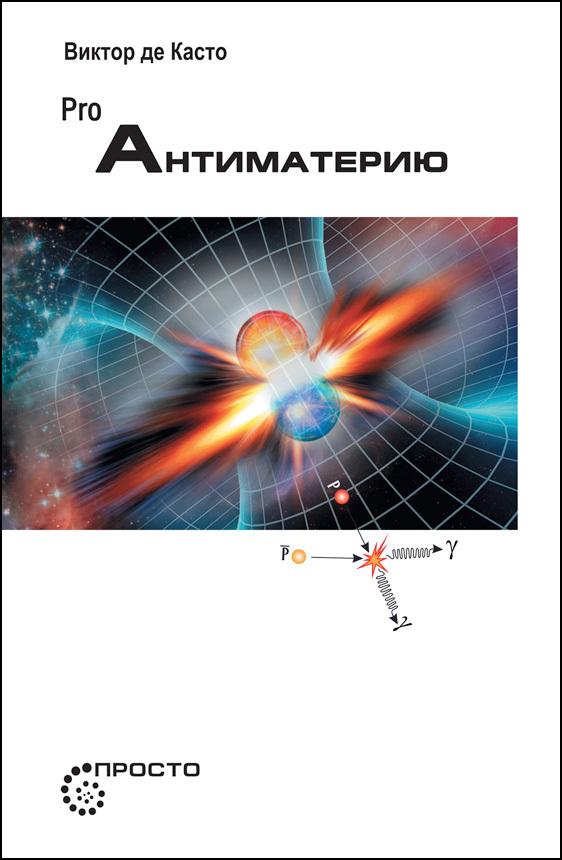
Антиматерия – одна из любимых тем писателей-фантастов. Тем не менее она реальна, и ученые уже научились ее получать. Материя и антиматерия появились в результате Большого Взрыва в равных количествах. Но материя осталась, а антиматерии в нашей Вселенной нет или почти нет. Почему так получилось? Что происходило почти четырнадцать миллиардов лет назад? Есть ли другие вселенные, состоящие из антиматерии? Как можно использовать антиматерию на Земле? Автор отвечает на все эти вопросы и рассказывает о большом интересе к антиматерии различных специалистов – как альтернативному источнику энергии, как возможному топливу для межгалактических космических кораблей и как основе самого страшного оружия, которое только может изобрести человечество.
Martins GARDNERS
RELATIVITĀTES TEORIJA VISIEM
IZDEVNIECĪBA «LIESMA» RĪGĀ 1969
RELATIVITY FOR THE million
by martin gardner
Ulustrated by Anthony Ravielli
MACMILLAN NEW YORK, LONDON
Two views of the world clashed at the dawn of thought. In the great debate between the earliest Greek philosophers, Heraclitus argued for perpetual change, but Parmenides maintained there was neither time nor motion. Over the ages, few thinkers have taken Parmenides seriously, but I shall argue that Heraclitan flux, depicted nowhere more dramatically than in Turner’s painting below, may well be nothing but a well-founded illusion. I shall take you to a prospect of the end of time. In fact, you see it in Turner’s painting, which is static and has not changed since he painted it. It is an illusion of flux. Modern physics is beginning to suggest that all the motions of the whole universe are a similar illusion – that in this respect Nature is an even more consummate artist than Turner. This is the story of my book.
Richard Feynman once quipped that "Time is what happens when nothing else does." But Julian Barbour disagrees: if nothing happened, if nothing changed, then time would stop. For time is nothing but change. It is change that we perceive occurring all around us, not time. Put simply, time does not exist. In this highly provocative volume, Barbour presents the basic evidence for a timeless universe, and shows why we still experience the world as intensely temporal. It is a book that strikes at the heart of modern physics. It casts doubt on Einstein's greatest contribution, the spacetime continuum, but also points to the solution of one of the great paradoxes of modern science, the chasm between classical and quantum physics. Indeed, Barbour argues that the holy grail of physicists--the unification of Einstein's general relativity with quantum mechanics--may well spell the end of time. Barbour writes with remarkable clarity as he ranges from the ancient philosophers Heraclitus and Parmenides, through the giants of science Galileo, Newton, and Einstein, to the work of the contemporary physicists John Wheeler, Roger Penrose, and Steven Hawking. Along the way he treats us to enticing glimpses of some of the mysteries of the universe, and presents intriguing ideas about multiple worlds, time travel, immortality, and, above all, the illusion of motion. The End of Time is a vibrantly written and revolutionary book. It turns our understanding of reality inside-out.
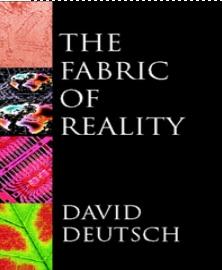
Deutsch’s pioneering and accessible book integrates recent advances in theoretical physics and computer science to explain and connect many topics at the leading edge of current research and thinking, such as quantum computers, and physics of time travel, and the ultimate fate of the universe.
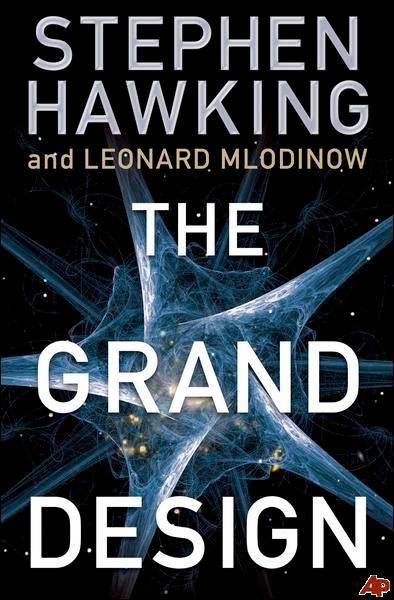
Sometimes, to laymen theoretical physics can seem as mercurial and trend-following as high fashion. That's where Stephen Hawking steps in. Since the publication of A BRIEF HISTORY OF TIME (1988), the longtime Oxford professor has been finding ways to explain these complex and ever-changing theories. Here, working with physicist Leonard Mlodinow, Hawking delivers another bang-up book with GRAND DESIGN, in which the authors attempt to clarify one of the most fundamental and puzzling questions-how did are universe begin. Examining M-theory, string theory, parallel universes, quantum theory, and other ideas in chatty yet informative prose, GRAND DESIGN takes a quick tour of the history of the development of these crazy ideas and then synthesizes the questions and possible solutions that lie in the gray matter between science, philosophy, and the imagination.

Winner of the Pulitzer Prize, the National Book Award, and the National Book Critics Circle Award
TWENTY-FIVE YEARS after its initial publication, The Making of the Atomic Bomb remains the seminal and complete story of how the bomb was developed, from the turn-of-the-century discovery of the vast energy locked inside the atom to the dropping of the first bombs on Japan.
Few great discoveries have evolved so swiftly—or have been so misunderstood. From the theoretical discussions of nuclear energy to the bright glare of Trinity, there was a span of hardly more than twenty-five years. What began as merely an interesting speculative problem in physics grew into the Manhattan Project, and then into the bomb, with frightening rapidity, while scientists known only to their peers—Szilard, Teller, Oppenheimer, Bohr, Meitner, Fermi, Lawrence, and von Neumann—stepped from their ivory towers into the limelight.
Richard Rhodes gives the definitive story of man’s most awesome discovery and invention. Told in rich human, political, and scientific detail, The Making of the Atomic Bomb is a narrative tour de force and a document with literary power commensurate with its subject.
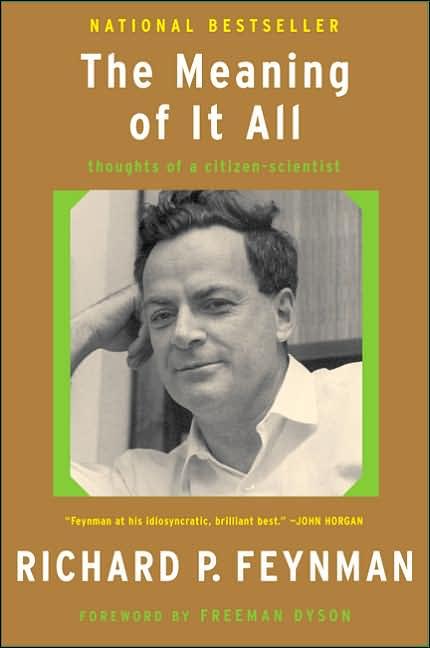
Richard P. Feynman was one of this century’s most brilliant theoretical physicists and original thinkers. Born in Far Rockaway, New York, in 1918, he studied at the Massachusetts Institute of Technology, where he graduated with a BS in 1939. He went on to Princeton and received his Ph.D. in 1942. During the war years he worked at the Los Alamos Scientific Laboratory. He became Professor of Theoretical Physics at Cornell University, where he worked with Hans Bethe. He all but rebuilt the theory of quantum electrodynamics and it was for this work that he shared the Nobel Prize in 1965. His simplified rules of calculation became standard tools of theoretical analysis in both quantum electrodynamics and high-energy physics. Feynman was a visiting professor at the California Institute of Technology in 1950, where he later accepted a permanent faculty appointment, and became Richard Chace Tolman Professor of Theoretical Physics in 1959. He had an extraordinary ability to communicate his science to audiences at all levels, and was a well-known and popular lecturer. Richard Feynman died in 1988 after a long illness. Freeman Dyson, of the Institute for Advanced Study in Princeton, New Jersey, called him ‘the most original mind of his generation’, while in its obituary The New York Times described him as ‘arguably the most brilliant, iconoclastic and influential of the postwar generation of theoretical physicists’.
A number of collections and adaptations of his lectures have been published, including The Feynman Lectures on Physics, QED (Penguin, 1990), The Character of Physical Law (Penguin, 1992), Six Easy Pieces (Penguin, 1998), The Meaning of It All (Penguin, 1999) and Six Not-So-Easy Pieces (Allen Lane, 1998; Penguin, 1999). The Feynman Lectures on Gravitation and The Feynman Lectures on Computation are both forthcoming in Penguin. His memoirs, Surely You’re Joking, Mr Feynman, were published in 1985.
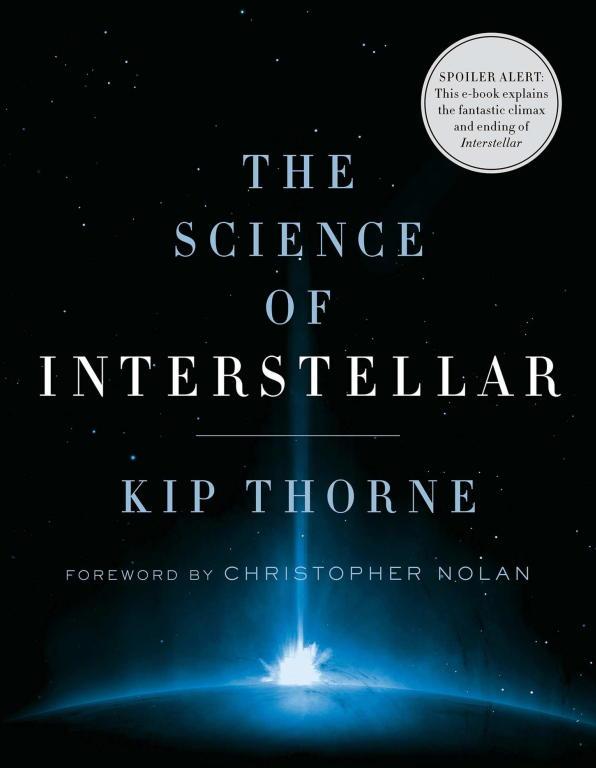
A journey through the otherworldly science behind Christopher Nolan’s highly anticipated film, Interstellar, from executive producer and theoretical physicist Kip Thorne.
Interstellar, from acclaimed filmmaker Christopher Nolan, takes us on a fantastic voyage far beyond our solar system. Yet in The Science of Interstellar, Kip Thorne, the physicist who assisted Nolan on the scientific aspects of Interstellar, shows us that the movie’s jaw-dropping events and stunning, never-before-attempted visuals are grounded in real science. Thorne shares his experiences working as the science adviser on the film and then moves on to the science itself. In chapters on wormholes, black holes, interstellar travel, and much more, Thorne’s scientific insights—many of them triggered during the actual scripting and shooting of Interstellar—describe the physical laws that govern our universe and the truly astounding phenomena that those laws make possible.
[200 color illustrations]
https://www.youtube.com/watch?v=jQye2XkvDpo
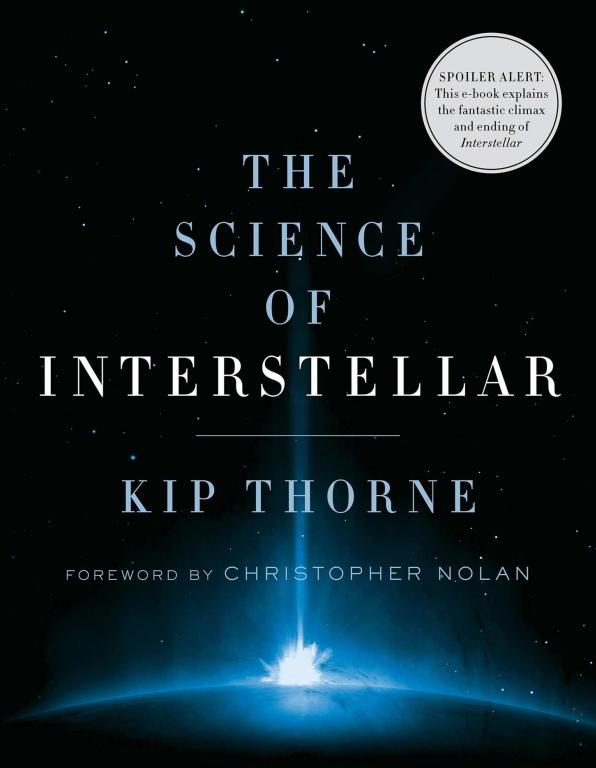
A journey through the otherworldly science behind Christopher Nolan’s highly anticipated film, Interstellar, from executive producer and theoretical physicist Kip Thorne.
Interstellar, from acclaimed filmmaker Christopher Nolan, takes us on a fantastic voyage far beyond our solar system. Yet in The Science of Interstellar, Kip Thorne, the physicist who assisted Nolan on the scientific aspects of Interstellar, shows us that the movie’s jaw-dropping events and stunning, never-before-attempted visuals are grounded in real science. Thorne shares his experiences working as the science adviser on the film and then moves on to the science itself. In chapters on wormholes, black holes, interstellar travel, and much more, Thorne’s scientific insights—many of them triggered during the actual scripting and shooting of Interstellar—describe the physical laws that govern our universe and the truly astounding phenomena that those laws make possible.
[200 color illustrations]
https://www.youtube.com/watch?v=jQye2XkvDpo
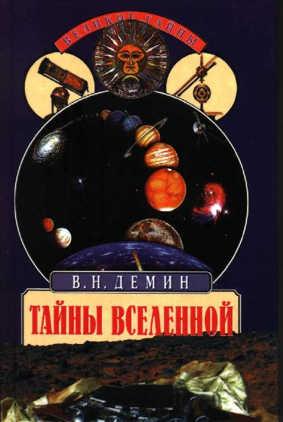
В книге на основе новейших научных данных воссоздается картина мироздания в ее развитии — от первых мифопоэтических представлений до современной космологической панорамы. Автор обращается к загадкам устроения наиболее трудных и острых проблем астрономии, астрологии, астрофизики, паранормальных явлений, космических контактов.
Только текст. В самой книге 140 иллюстраций.
В монографии рассмотрена история участия заключенных, содержащихся в исправительно-трудовых лагерях закрытых городов Урала. На обширном материале и по воспоминаниям очевидцев описываемых событий показана реальная картина трудового использования заключенных, материально-бытовые условия их содержания. Эта книга, по сути, является вторым, дополненным и переработанным вариантом книги «Атомный проект за колючей проволокой». Её название связано с тем, что автор расширил территориальные рамки исследования. Автором дополнительно были исследованы архивные документы по Кузнецкому (Челябинск-40), Сосновскому (Златоуст-20[36]) исправительно-трудовым лагерям и ИТЛ № 100 МВД СССР (Свердловск 44). Приведенный автором материал подробно и убедительно показывает специфику работы ИТЛ атомной промышленности.Книга позволяет объективно оценить вклад первых строителей, в т.ч. и заключенных, в строительство уникальных секретных объектов Урала. Монография предназначена для научных работников, а также всем, кто интересуется историей атомной промышленности.

Якова Борисовича Зельдовича нет нужды представлять читателям "Природы". Автор фундаментальных работ в области физической химии, теории элементарных частиц, ядерной физики, астрофизики и космологии, он, кроме того, был еще и блестящим популяризатором, ярко, живо и образно рассказывающим в своих популярных книгах и статьях о наиболее "горячих" проблемах современной науки. В последние годы особое внимание он уделял релятивистской астрофизике и космологии. Именно в это время им написаны для нашего журнала статьи "Черные и белые дыры" (совместно с А.А. Старобинским и И.Д. Новиковым; 1976, № 1); "Современная космология" (1983, № 9); "Почему расширяется Вселенная!" (1984, № 2). Продолжает эту тематику и последняя его публикация "Возможно ли образование Вселенной "из ничего?". Послесловие к ней написал академик А.Д. Сахаров.
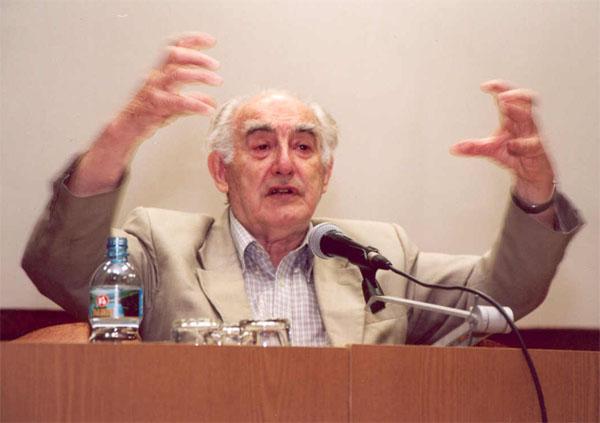
Вступление
Список «особенно важных и интересных проблем»
Макрофизика
Микрофизика
Астрофизика
О трех «великих» проблемах
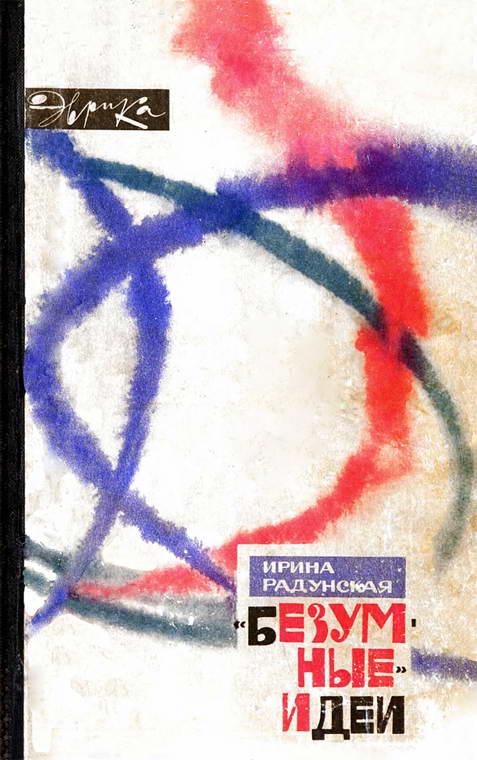
Книга И. Радунской «„Безумные“ идеи» утверждает доминирующую роль «безумных» идей. Не планомерное, постепенное развитие мысли, а скачки в познании, принципиально новые углы зрения — вот что так эффективно способствует прогрессу. Именно от «безумных» идей ученые ждут сегодня раскрытия самых загадочных тайн мироздания.
О наиболее парадоксальных, дерзких идеях современной физики — в области элементарных частиц, физики сверхнизких температур и сверхвысоких давлений, квантовой оптики, астрофизики, теории относительности, квантовой электроники, космологии и о других аспектах современного естествознания — рассказывает книга «„Безумные“ идеи».
Книга «„Безумные“ идеи» была переведена на венгерский, немецкий, французский, чешский, японский языки. В Японии за полтора года она была переиздана девять раз.
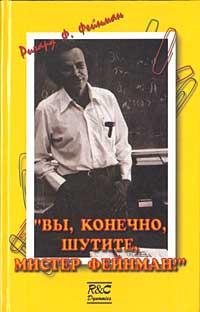
Книга рассказывает о жизни и приключениях знаменитого ученого-физика, одного из создателей атомной бомбы, лауреата Нобелевской премии, Ричарда Филлипса Фейнмана. Эта книга полностью изменит ваш взгляд на ученых; она рассказывает не об ученом, который большинству людей представляется сухим и скучным, а о человеке: обаятельном, артистичном, дерзком и далеко не таком одностороннем, каковым он смел себя считать. Прекрасное чувство юмора и легкий разговорный стиль автора сделает чтение книги не только познавательным, но и увлекательным занятием.
Для широкого круга читателей.
Книга рассказывает о жизни и приключениях знаменитого ученого-физика, одного из создателей атомной бомбы, лауреата Нобелевской премии, Ричарда Филлипса Фейнмана. Эта книга полностью изменит ваш взгляд на ученых; она рассказывает не об ученом, который большинству людей представляется сухим и скучным, а о человеке: обаятельном, артистичном, дерзком и далеко не таком одностороннем, каковым он смел себя считать. Прекрасное чувство юмора и легкий разговорный стиль автора сделает чтение книги не только познавательным, но и увлекательным занятием.
Для широкого круга читателей.
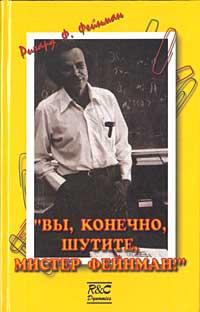
Книга рассказывает о жизни и приключениях знаменитого ученого-физика, одного из создателей атомной бомбы, лауреата Нобелевской премии, Ричарда Филлипса Фейнмана. Эта книга полностью изменит ваш взгляд на ученых; она рассказывает не об ученом, который большинству людей представляется сухим и скучным, а о человеке: обаятельном, артистичном, дерзком и далеко не таком одностороннем, каковым он смел себя считать. Прекрасное чувство юмора и легкий разговорный стиль автора сделает чтение книги не только познавательным, но и увлекательным занятием.
Для широкого круга читателей.