HomeLib
Books of sequence (New York Review Books Classics)
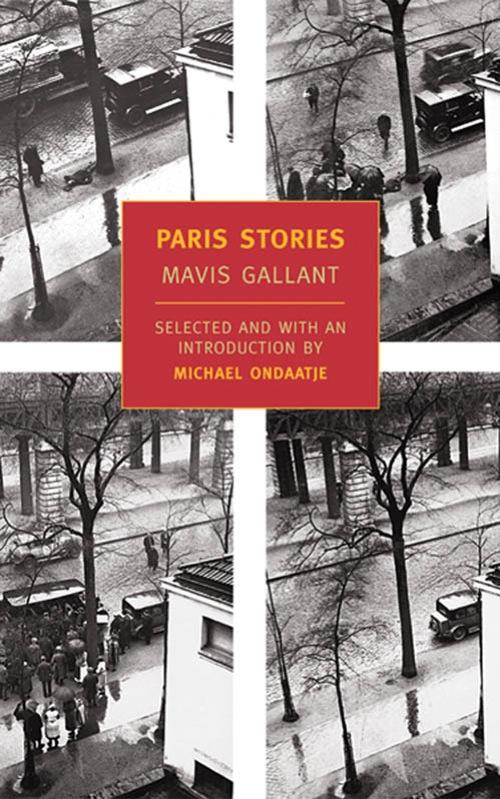
Paris Stories

fb2
Michael Ondaatje's new selection of Mavis Gallant's work gathers some of her stories set in Europe and Paris, where Gallant has long lived. These are tales of expatriates and exiles, wise children and straying saints. Together they compose a secret history, at once intimate and panoramic, of modern times.
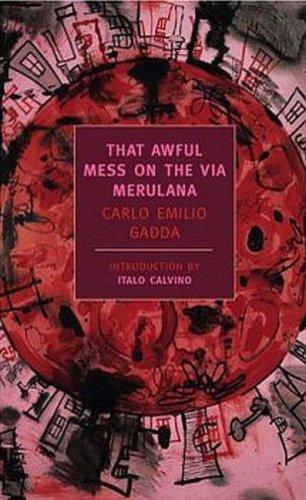
That Awful Mess on the via Merulana

fb2
In a large apartment house in central Rome, two crimes are committed within a matter of days: a burglary, in which a good deal of money and precious jewels are taken, and a murder, as a young woman whose husband is out of town is found with her throat cut. Called in to investigate, melancholy Detective Ciccio, a secret admirer of the murdered woman and a friend of her husband’s, discovers that almost everyone in the apartment building is somehow involved in the case, and with each new development the mystery only deepens and broadens. Gadda’s sublimely different detective story presents a scathing picture of fascist Italy while tracking the elusiveness of the truth, the impossibility of proof, and the infinite complexity of the workings of fate, showing how they come into conflict with the demands of justice and love.Italo Calvino, Pier Paolo Pasolini, and Alberto Moravia all considered That Awful Mess on the Via Merulana to be the great modern Italian novel. Unquestionably, it is a work of universal significance and protean genius: a rich social novel, a comic opera, an act of political resistance, a blazing feat of baroque wordplay, and a haunting story of life and death.
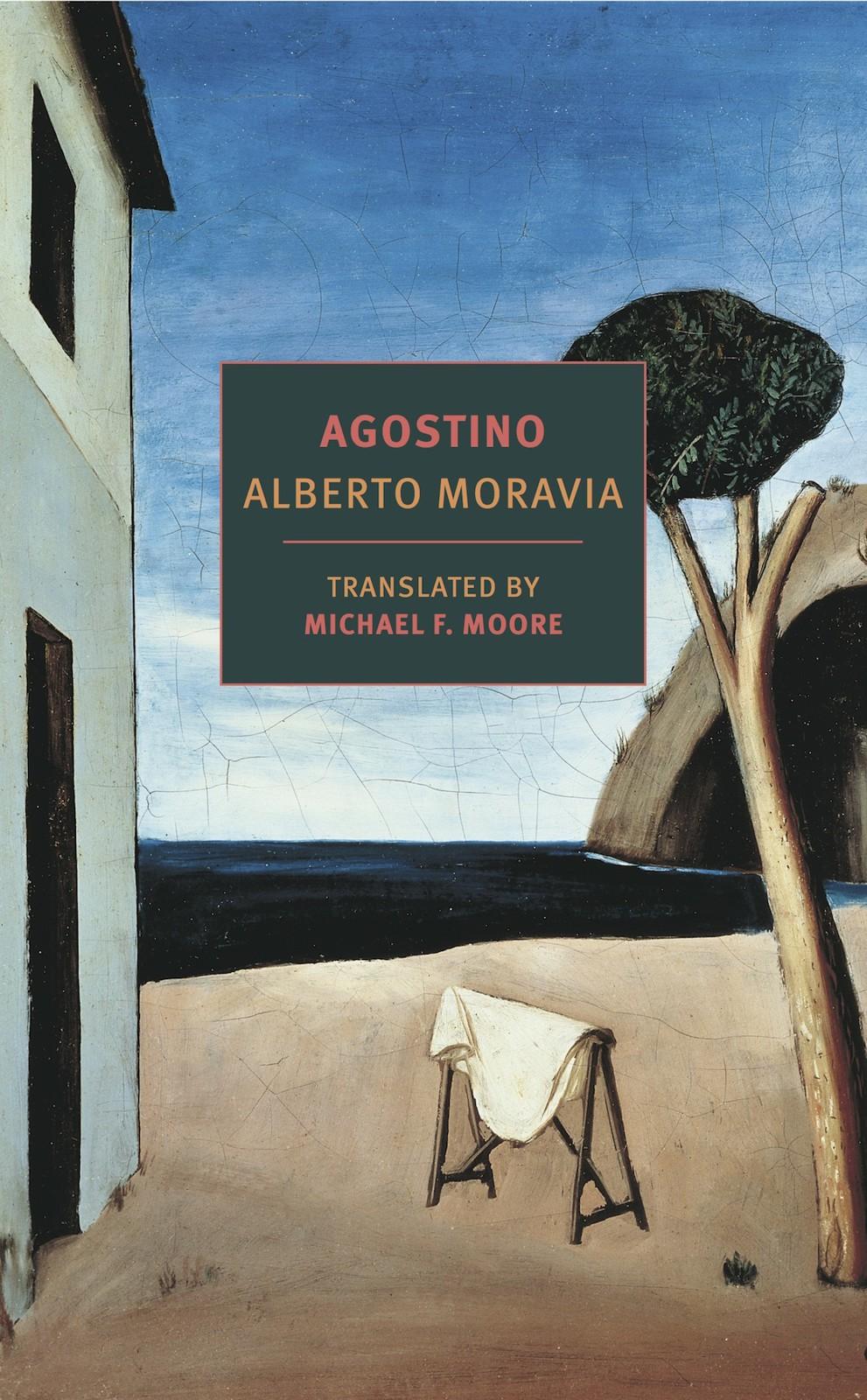
Agostino

fb2
Thirteen-year-old Agostino is spending the summer at a Tuscan seaside resort with his beautiful widowed mother. When she takes up with a cocksure new companion, Agostino, feeling ignored and unloved, begins hanging around with a group of local young toughs. Though repelled by their squalor and brutality, and repeatedly humiliated for his weakness and ignorance when it comes to women and sex, the boy is increasingly, masochistically drawn to the gang and its rough games. He finds himself unable to make sense of his troubled feelings. Hoping to be full of manly calm, he is instead beset by guilty curiosity and an urgent desire to sever, at any cost, the thread of troubled sensuality that binds him to his mother.Alberto Moravia’s classic, startling portrait of innocence lost was written in 1942 but rejected by Fascist censors and not published until 1944, when it became a best seller and secured the author the first literary prize of his career. Revived here in a new translation by Michael F. Moore, Agostino is poised to captivate a twenty-first-century audience.
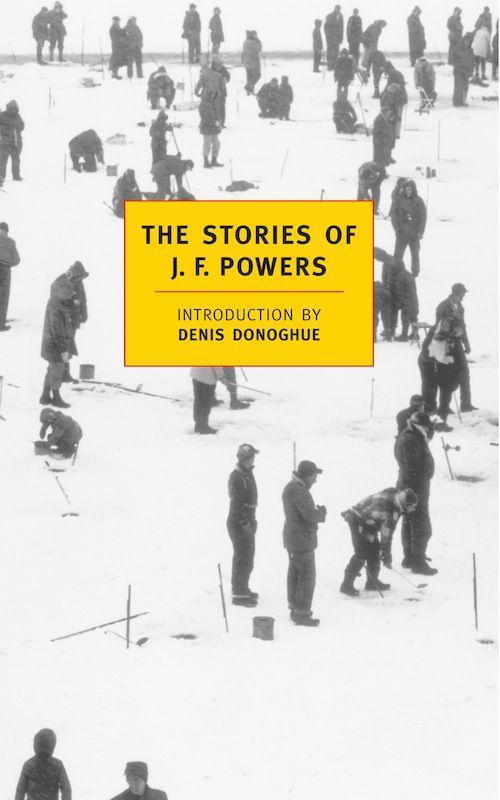
The Stories of J.F. Powers

fb2
Hailed by Frank O'Connor as one of "the greatest living storytellers," J. F. Powers, who died in 1999, stands with Eudora Welty, Flannery O'Connor, and Raymond Carver among the authors who have given the short story an unmistakably American cast. In three slim collections of perfectly crafted stories, published over a period of some thirty years and brought together here in a single volume for the first time, Powers wrote about many things: baseball and jazz, race riots and lynchings, the Great Depression, and the flight to the suburbs. His greatest subject, however — and one that was uniquely his — was the life of priests in Chicago and the Midwest. Powers's thoroughly human priests, who include do-gooders, gladhanders, wheeler-dealers, petty tyrants, and even the odd saint, struggle to keep up with the Joneses in a country unabashedly devoted to consumption.These beautifully written, deeply sympathetic, and very funny stories are an unforgettable record of the precarious balancing act that is American life.
Wheat That Springeth Green

fb2
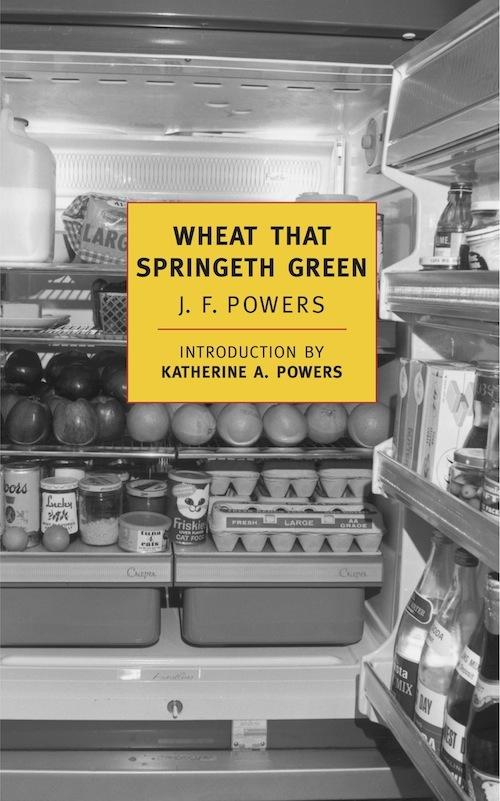
Wheat That Springeth Green, J. F. Powers's beautifully realized final work, is a comic foray into the commercialized wilderness of modern American life. Its hero, Joe Hackett, is a high school track star who sets out to be a saint. But seminary life and priestly apprenticeship soon damp his ardor, and by the time he has been given a parish of his own he has traded in his hair shirt for the consolations of baseball and beer. Meanwhile Joe's higher-ups are pressing for an increase in profits from the collection plate, suburban Inglenook's biggest business wants to launch its new line of missiles with a blessing, and not all that far away, in Vietnam, a war is going on. Joe wants to duck and cover, but in the end, almost in spite of himself, he is condemned to do something right.J. F. Powers was a virtuoso of the American language with a perfect ear for the telling cliché and an unfailing eye for the kitsch that clutters up our lives. This funny and very moving novel about the making and remaking of a priest is one of his finest achievements.
Morte D'Urban

fb2
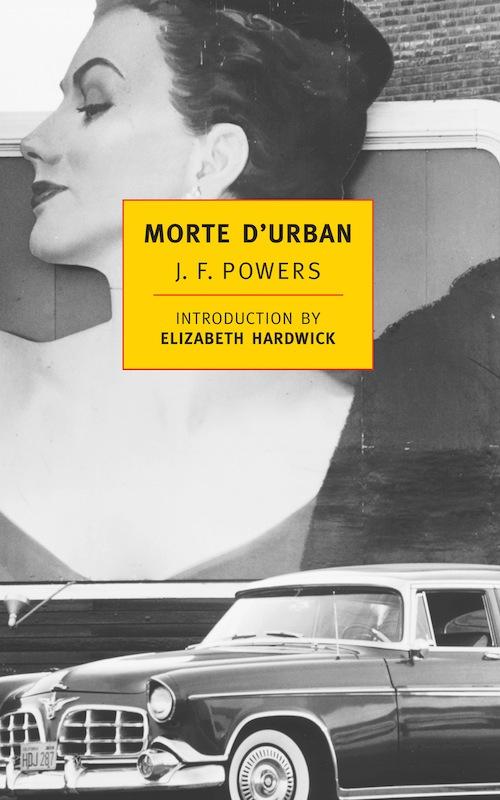
Winner of The 1963 National Book Award for Fiction.The hero of J.F. Powers's comic masterpiece is Father Urban, a man of the cloth who is also a man of the world. Charming, with an expansive vision of the spiritual life and a high tolerance for moral ambiguity, Urban enjoys a national reputation as a speaker on the religious circuit and has big plans for the future. But then the provincial head of his dowdy religious order banishes him to a retreat house in the Minnesota hinterlands. Father Urban soon bounces back, carrying God's word with undaunted enthusiasm through the golf courses, fishing lodges, and backyard barbecues of his new turf. Yet even as he triumphs his tribulations mount, and in the end his greatest success proves a setback from which he cannot recover.First published in 1962, Morte D'Urban has been praised by writers as various as Gore Vidal, William Gass, Mary Gordon, and Philip Roth. This beautifully observed, often hilarious tale of a most unlikely Knight of Faith is among the finest achievements of an author whose singular vision assures him a permanent place in American literature.
The Use of Man

fb2
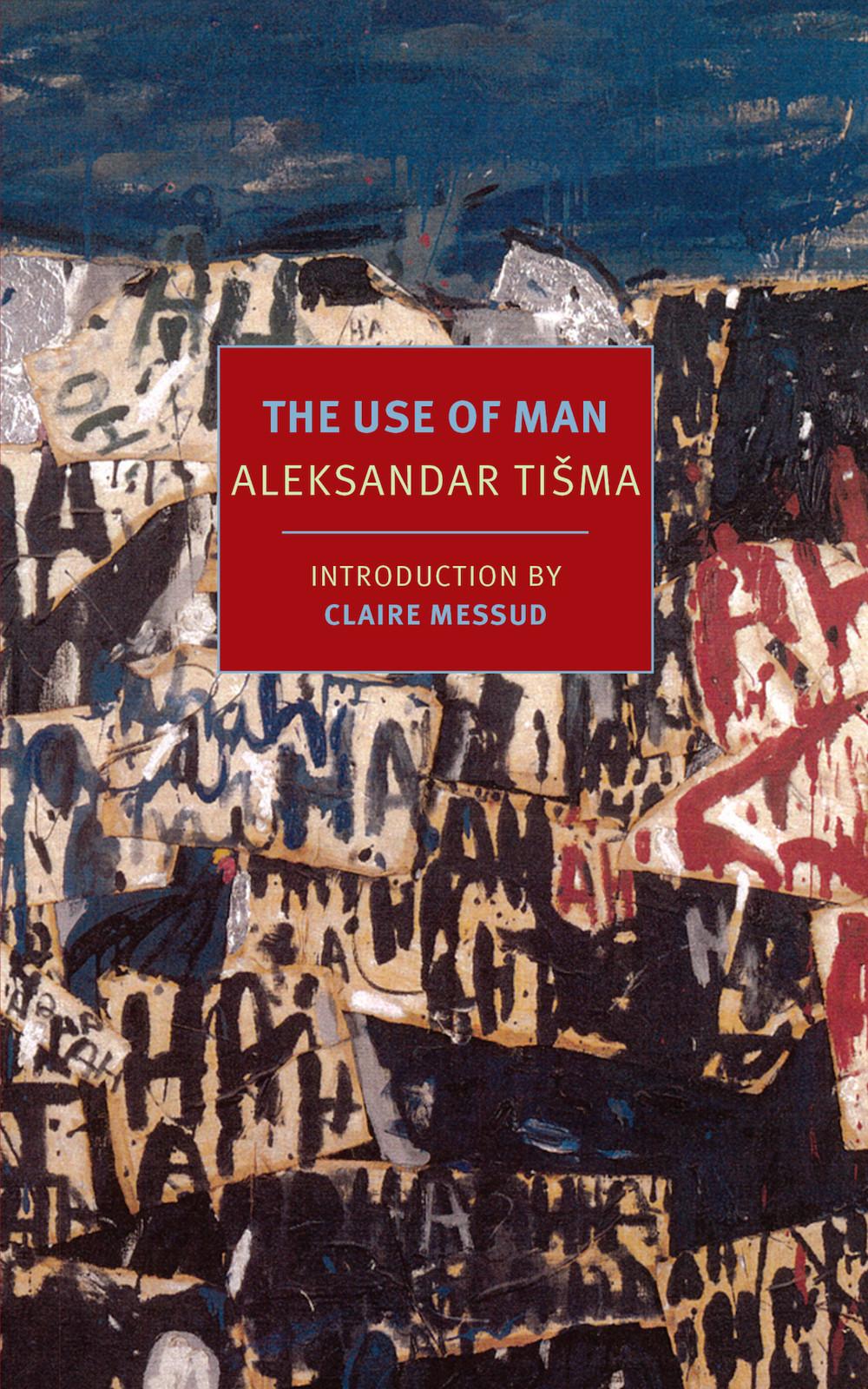
The Use of Man starts with an unexpected discovery. World War II is ending. Sredoje Lazukić has been fighting all through it. Now, as one of the victorious Partisans, he has come home to Novi Sad. He visits the house he grew up in. Strangers nervously show him around. He looks up the mother of Milinko, his best friend. Milinko’s girlfriend, Vera, was the daughter of a Jew, a bookish businessman. Her house stands empty and open. Venturing in, Sredoje is surprised to find the diary of the German tutor that Milinko, Vera, and he all shared, Fräulein, who died on the operating table just before the war. Here, however, in a cheap notebook in Vera’s old room, is a record of Fräulein’s lonely days, with the sentimental caption Poésie. .The diary survived. Sredoje survived. Vera and Milinko have survived too. But what survives? A few years back Sredoje, Vera, and Milinko were teenagers, struggling to make sense of life. Life, they now know, can be more bitter than death.A work of stark poetry and illimitable sadness, The Use of Man is one of the great books of the 20th century.
Last Words from Montmartre

fb2
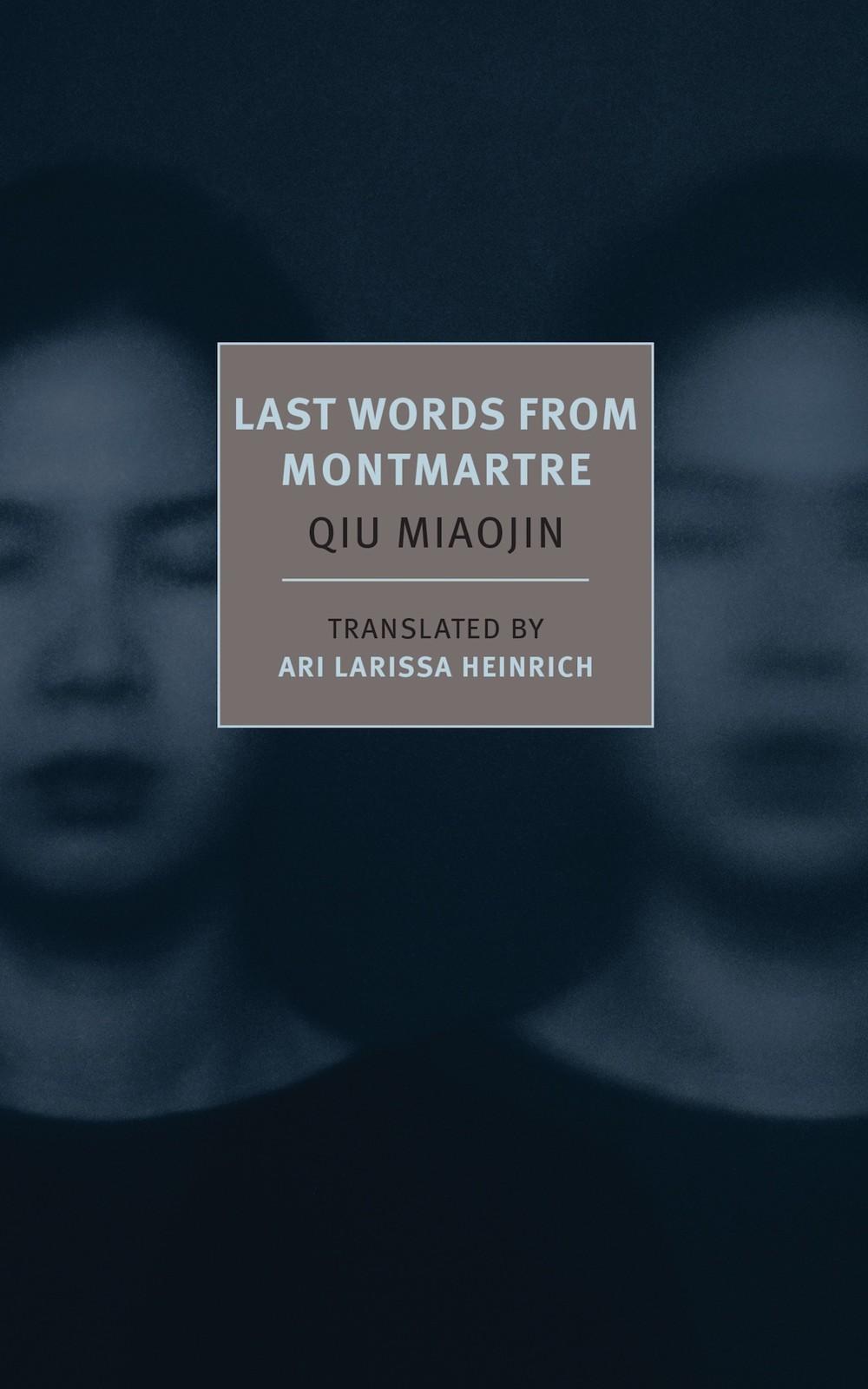
When the pioneering Taiwanese novelist Qiu Miaojin committed suicide in 1995 at age twenty-six, she left behind her unpublished masterpiece, Last Words from Montmartre. Unfolding through a series of letters written by an unnamed narrator, Last Words tells the story of a passionate relationship between two young women — their sexual awakening, their gradual breakup, and the devastating aftermath of their broken love. In a style that veers between extremes, from self-deprecation to pathos, compulsive repetition to rhapsodic musings, reticence to vulnerability, Qiu’s genre-bending novel is at once a psychological thriller, a sublime romance, and the author’s own suicide note.The letters (which, Qiu tells us, can be read in any order) leap between Paris, Taipei, and Tokyo. They display wrenching insights into what it means to live between cultures, languages, and genders — until the genderless character Zoë appears, and the narrator’s spiritual and physical identity is transformed. As powerfully raw and transcendent as Mishima’s Confessions of a Mask, Goethe’s The Sorrows of Young Werther, and Theresa Cha’s Dictée, to name but a few, Last Words from Montmartre proves Qiu Miaojin to be one of the finest experimentalists and modernist Chinese-language writers of our generation.
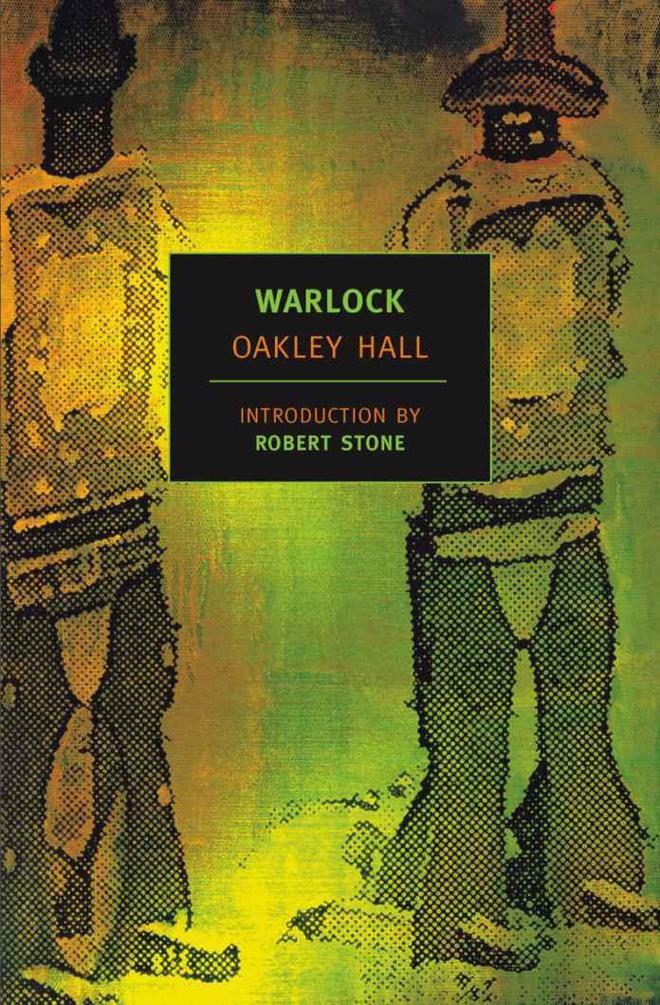
Warlock

fb2
Oakley Hall's legendary Warlock revisits and reworks the traditional conventions of the Western to present a raw, funny, hypnotic, ultimately devastating picture of American unreality. First published in the 1950s, at the height of the McCarthy era, Warlock is not only one of the most original and entertaining of modern American novels but a lasting contribution to American fiction."Tombstone, Arizona, during the 1880's is, in ways, our national Camelot: a never-never land where American virtues are embodied in the Earps, and the opposite evils in the Clanton gang; where the confrontation at the OK Corral takes on some of the dry purity of the Arthurian joust. Oakley Hall, in his very fine novel Warlock has restored to the myth of Tombstone its full, mortal, blooded humanity. Wyatt Earp is transmogrified into a gunfighter named Blaisdell who. . is summoned to the embattled town of Warlock by a committee of nervous citizens expressly to be a hero, but finds that he cannot, at last, live up to his image; that there is a flaw not only in him, but also, we feel, in the entire set of assumptions that have allowed the image to exist. . Before the agonized epic of Warlock is over with — the rebellion of the proto-Wobblies working in the mines, the struggling for political control of the area, the gunfighting, mob violence, the personal crises of those in power — the collective awareness that is Warlock must face its own inescapable Horror: that what is called society, with its law and order, is as frail, as precarious, as flesh and can be snuffed out and assimilated back into the desert as easily as a corpse can. It is the deep sensitivity to abysses that makes Warlock one of our best American novels. For we are a nation that can, many of us, toss with all aplomb our candy wrapper into the Grand Canyon itself, snap a color shot and drive away; and we need voices like Oakley Hall's to remind us how far that piece of paper, still fluttering brightly behind us, has to fall." — Thomas Pynchon
< 1 2 >