 fb2
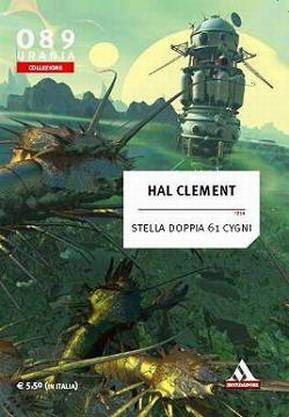
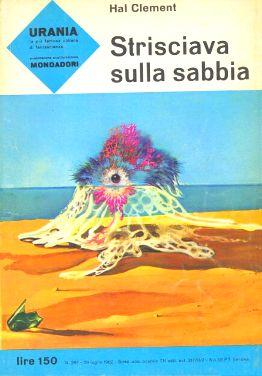
fb2Nel 1942, l’astronomo americano K. A. Strand annunciava che la stella doppia 61, nella costellazione del Cigno, aveva un satellite di massa planetaria, gravitante intorno al suo sole (una delle componenti il sistema binario 61 Cygni) in poco meno di cinque anni. La massa di questo pianeta extrasolare era stata calcolata dallo Strand circa 16 volte superiore alla massa di Giove. Sebbene nei mesi successivi fossero fatte altre segnalazioni di corpi planetari gravitanti intorno ad altri Soli (per esempio il satellite della stella 70 Ophiuchi, con una massa 10 volte superiore alla massa di Giove, e il satellite di Proxima Centauri, la stella a noi più vicina, il quale non sarebbe che il doppio della massa di Giove!), pure la comunicazione dello Strand è una delle più sensazionali: per la prima volta la scienza poteva ufficialmente annunciare l’esistenza di pianeti al di là del sistema solare! E’ sul satellite planetario scoperto dallo Strand che Hal Clement, astronomo egli stesso e insegnante di matematica a Cambridge, si è ispirato per questo suo affascinante romanzo. Immaginate che cosa possa significare vivere su un immenso pianeta, la cui atmosfera è prevalentemente composta d’idrogeno, metano e ammoniaca; dove la forza di attrazione gravitazionale è circa tre volte all’equatore quella della Terra, ma per l’enorme schiacciamento dei poli sale a quasi 700 volte nelle regioni polari; dove dato il velocissimo moto di rotazione del pianeta il sole sorge e tramonta ogni venti minuti, mentre un altro sole, molto più lontano, illumina il cielo senza illuminarlo.
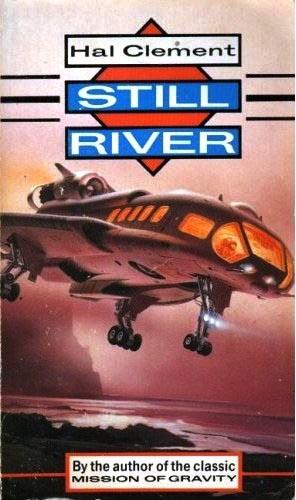
A riddle wrapped in a mystery inside an enigma ...
Enigma 88, a tiny planet in the orbit of Arc, is a world with so little mass that it should have no atmosphere. But it does—and to find out why is the final study assignment that will earn five students, each the best of their species, their prestigious Respected Opinion degrees.
But from the moment they arrive on Enigma, none of their careful calculations seem to fit; on the surface, the riddle seems insoluble. And when one of their wind robots disappears under the surface, closely followed by the Human, Molly, they find the mystery is indeed inside Enigma. For the vast subterranean network of caves and tunnels Molly tumbles into supports a rich profusion of life-life that can’t possibly exist ...
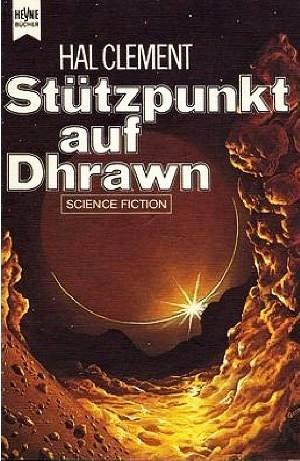
Die bereits aus Clements Roman Unternehmen Schwerkraft (Mission of Gravity — 1953) bekannten Meskliniten erforschen im Auftrag der Menschheit den Planeten Dhrawn, der sich durch seine vierzigfache Erdanziehung auszeichnet. Die sowohl für Menschen als auch Meskliniten lebensfeindlich Umwelt führt immer wieder zu Ausfällen der technischen Ausrüstung. Hinzu kommt ein gesundes Misstrauen des Forschungsteam gegenüber den Menschen, das zur Folge hat, dass die Raupenähnlichen Wesen unbemerkt einen eigenen Forschungsauftrag durchführen.
Wie im Vorgängerroman dient die Physik des Extremen dazu, die mentalen Gemeinsamkeiten und Unterschiede von Menschen und Meskliniten auszuloten. Dabei dürfte es Clements naturwissenschaftlichem Studium zu verdanken sein, dass die Naturgesetze nicht über den Haufen geschmissen werden, sondern gerade die Spannung des Buches ausmachen. Naturgemäß sind Fortsetzungen selten so gut wie das Original. Das trifft auch hier zu, aber lesenswert ist dieser zweite Band allemal.
Druhým tématem Clementa velmi zajímajícím je téma inteligentního života, který Clement umísťuje do nejrůznějšího exotického a nehostinného prostředí. To je příklad jeho v češtině jediného vyšlého románu „Těžká expedice“, který se odehrává na planetě Mesklin, která je 4.800 krát větší než Země a otočí se kolem své osy jednou za 18 minut — to ve svých důsledcích znamená, že zatímco na rovníku jsou pouhá 3 g, na pólech je 700 g.
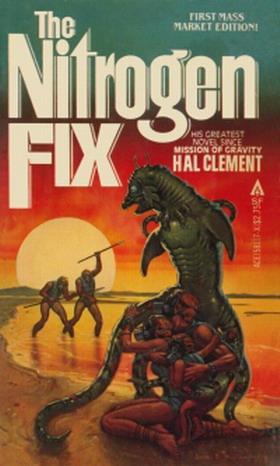
The Nitrogen Fix is a 1980 science fiction novel by Hal Clement. The plot revolves around a nomadic family in a future where all oxygen in the Earth's atmosphere has combined with nitrogen, so the atmosphere is mostly nitrogen with traces of water, nitrogen oxides and carbon dioxide, and the seas are very dilute nitric acid.
The family is allied with an alien, an octopus-like being who can survive in the new atmosphere. Humans must live in shelters with oxygen-generating plants, or use suitable breathing equipment. Some of Earth's original life forms have mutated to survive in the changed atmosphere. Since almost no metals can exist in the corrosive atmosphere, any technology is based on ceramics or glass.
Some humans are suspicious of the aliens, and even blame them for the change to the atmosphere, since they seem to be adapted for it. The family have an almost fatal encounter with a group of such people, who are holding another alien hostage. However, the two aliens are able to pool memories biochemically, so that they become the same personality in two bodies. Their combined knowledge and skills help the humans to escape.
At the end the aliens reveal that they are basically tourists or scientists, and they travel from one system to another over thousands of years. Atmospheres "mature" when the nitrogen absorbs all the oxygen, the cause being the inevitable evolution of bacteria that use gold to catalyze the reaction. It is hinted, but not stated outright, that human mining of gold triggered this reaction.

Mūsdienu zinātnei pilnīgi nekas nav zināms par to, vai Sietiņa zvaigznei Alkionei ir planētu sistēma. Klements pieņem, ka ir. Taču Alkione ir dubultzvaigzne, un zinātniekiem ir skaidrs, ka planētu orbītas ap dubultzvaigznēm nevar būt stabilas un dzīvība uz tām nav iespējama. Tomēr Klements uz šādas planētas nometina saprātīgas dzīvās būtnes un «Uguns ciklā» izvirza pilnīgi neticamu, tomēr konsekventu un, ņemot vērā mūsu pašreizējo zināšanu līmeni, neapgāžamu hipotēzi, kura izskaidro gan pašu planētu eksistenci Alkiones sistēmā, gan dzīvības esību uz vienas no šīm planētām. Vārdu sakot, Klements pats rada pilnīgi fantastisku pasauli, tomēr izskaidro to no stingri zinātniskām pozīcijām. Vide, kurā notiek viņa romānu darbība, ir autora izdomāta un popularizē zināšanas nevis tieši, bet ar viņa paša izveidotās aizraujošās hipotēzēs starpniecību.
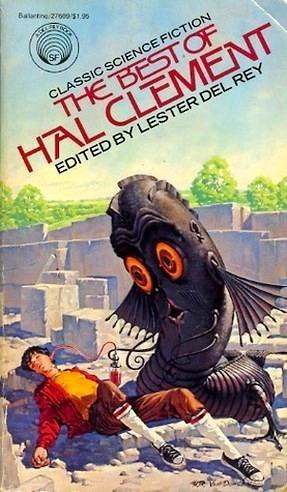

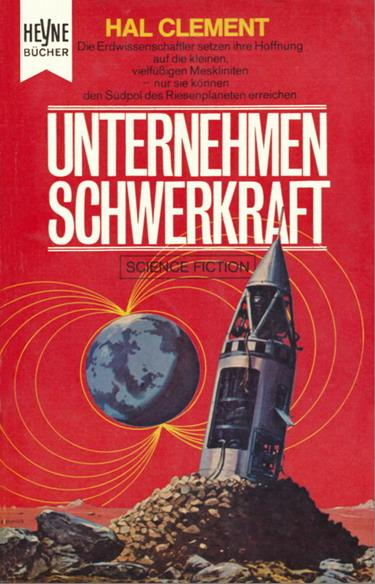
Der gigantische Planet Mesklin wirkte auf Menschen wie ein tödlicher Alptraum. Seine Meere bestanden aus flüssigem Methan, der Schnee auf dem Festland war gefrorenes Ammoniak, und die Schwerkraft erreichte einen bis zu siebenhundertmal höheren Wert als auf der Erde. Kein Mensch wäre imstande gewesen, sich auf dem Riesenplaneten zu bewegen.
Aber auf Mesklin war eine Forschungsrakete mit unendlich wichtigen Meßwerten niedergegangen. Irgend jemand mußte zu ihr vordringen. Dieser Jemand war der Mesklinit Barlennan — Händler und Forscher zugleich, vierzig Zentimeter lang, mit sechsunddreißig Beinen und Hunderte von Pfund schwer. Und der gerissenste Geschäftemacher, dem Menschen jemals begegnet waren.
In den Tiefen der Meere entbrennt ein erbitterter Kampf um die Zukunft der Menschheit. Die Männer des Power Board jagen den Unbekannten, der die Energievorräte der Erde plündert.