
 fb2
fb2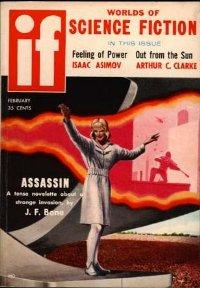
Also published as Out from the Sun.
From Robert Silverberg’s “Earthmen and Strangers” anthology, 1966:
Arthur C. Clarke is a true citizen of the world. Where he is at any given moment only his travel agent is likely to know: perhaps in New York conferring with his publishers, perhaps excavating sunken treasure off the coast of Ceylon, perhaps supervising the filming of a movie in London, perhaps studying the cored formations of Australia’s Great Barrier Reef, perhaps watching a rocket blasting moonward from Cape Kennedy. He was born in England, but he is at home on any continent, and probably will be found sightseeing on Mars and Venus as soon as commercial service to those ports of call is inaugurated.
As an acknowledged master of science fiction, Clarke’s presence in any anthology is almost mandatory. He works within the great tradition of H. G. Wells, combining literary artistry with scientific accuracy to create stories of stirring wonder and breathtaking provocativeness. Here Clarke offers a fitting epilogue for this collection of stories of alien life: a glimpse of a life-form so incredibly strange that we poor mortals can barely begin to comprehend its nature.
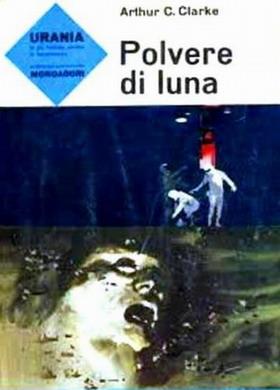
La polvere che ricopre la luna non è né liquida né solida: e in questo mare uniforme e infido si svolge la spaventosa avventura del battello Selene, mirabilmente narrata ora per ora da uno dei maestri della fantascienza moderna. Seguendo il drammatico «montaggio» del bestseller di Clarke il lettore vedrà subito perchè una grande Casa di produzione abbia già acquistato, a poche settimane dalla pubblicazione, i diritti cinematografici di questo «Titanic» del futuro.
Alla fine, però, il film non è stato girato, e il romanzo è fra i meno ristampati in Italia del grande autore britannico: appare infatti in sole tre edizioni italiane!
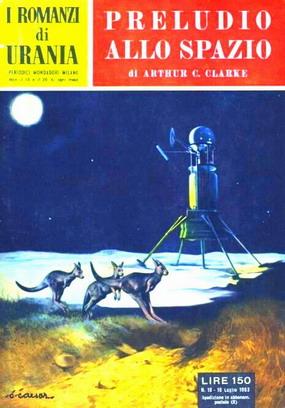
I lettori conoscono già Arthur C. Clarke, che ha inaugurato la serie dei romanzi di Urania con «Le sabbie di Marte». Con lo stesso stile avvincente, la stessa precisione di scienziato, Arthur Clarke ci narra ora come gli esseri umani si preparino al primo volo nello spazio: destinazione Luna. Siamo nel 1980 circa. «Per migliaia d’anni» dice l’Autore «la razza umana si è diffusa sulla Terra, finchè l’intero globo non fu esplorato e colonizzato. Ora è arrivato il momento di fare il passo seguente e attraversare lo spazio. L’umanità deve sempre avere nuovi orizzonti, per non sprofondare nella decadenza. La Terra era grande abbastanza per gli uomini dei giorni della diligenza e della nave a vela, ma ora che possiamo farne il giro in poche ore è diventata troppo piccola… E questa conquista è possibile, perchè gli uomini hanno l’eredità del sapere che conquistarono dalla loro comparsa sulla Terra ad oggi. Durante tutti questi secoli, in lontani mondi, sotto soli stranieri, il Tempo ha preparato per l’Uomo i luoghi dove sorgeranno città nuove e uomini nuovi… Molti dei giovani di questa generazione assisteranno certo alla partenza della prima astronave per la Luna.» Questo libro vi farà vivere il momento che segnerà una nuova era per l’umanità, quando il primo uomo supererà la stratosfera per lanciarsi alla conquista degli spazi e delle stelle!

A. C. Clarke 1973-ban adta közre jelen regényét, mely azonnal óriási világsikert aratott. Címét arról az űrhajóról kapta, melyet a XXII. Század közepén fedeztek fel a Jupiteren túl. Az Endeavour napkutató űrhajót küldik a Ráma felderítésére…
Clarke minden tud, amit egy sci-fi írónak tudnia kell. Fantáziája valóságos tudományos tényekre alapozva szárnyal, és mint Kuczka Péter a kötet utószavában megállapítja: mindig az emberség, az emberiesség oldalán áll. Kitartó tudásvágy élteti minden regényét, és ezzel fogja meg olvasóit is.
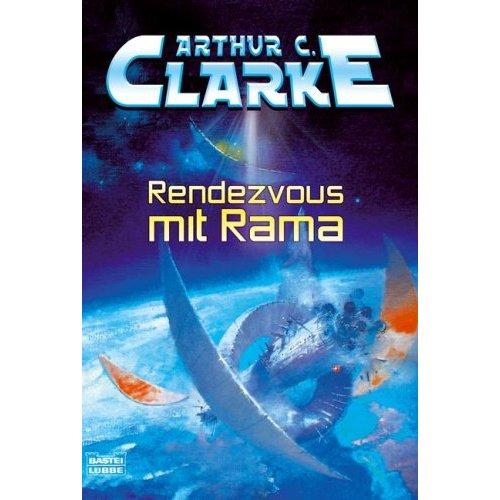
Das rätselhafte Objekt, das die Astronomen auf den Namen Rama tauften, gab allen Rätsel auf. Es war noch weit entfernt, deutlich außerhalb der Jupiter-Umlaufbahn. Etwas, das auf eine solch große Entfernung auf dem Radar erschien, musste gigantisch groß sein. Während das Objekt durch das Sonnensystem raste, zeigte sich bald, dass es geformt war wie ein perfekter Zylinder. Offenbar stand die Menschheit im Begriff, ihren ersten Besucher von den Sternen zu empfangen…


Autor cunoscut mai mult pentru «Odiseea spatiala 2001…2010», precum si pentru inventarea satelitului artificial, Clarke este un scriitor bland, care nu socheaza, nu sperie si nu nelinisteste. In «Sfarsitul copilariei», viziunea lui despre viitor este una optimista. In fata tuturor razboaielor ce macina oamenii de mii de ani, in fata poluarii, a amenintarii nucleare, a mutatiilor genetice, a urii rasiale si a multor altor nenorociri, Clarke viseaza frumos si, prin cartile lui, ne facem sa speram.
«Sfarsitul copilariei» are un final trist, dar plin de speranta. O carte ce loveste adanc in mandria omului redus la cotidian, dar care glorifica acelasi om care isi doreste un viitor mai bun pentru copilul sau. O carte clasica, nerecomandata iubitorilor de nave spatiale, lasere si batalii galactice. O carte ce merita citita.
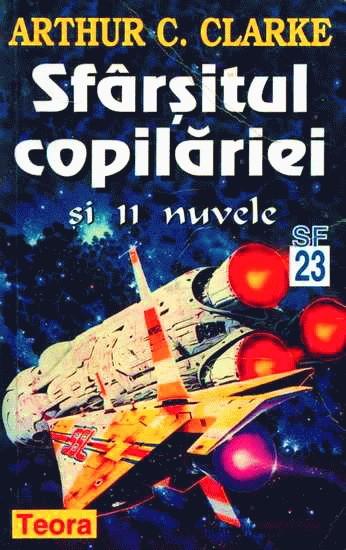
Autor cunoscut mai mult pentru «Odiseea spatiala 2001…2010», precum si pentru inventarea satelitului artificial, Clarke este un scriitor bland, care nu socheaza, nu sperie si nu nelinisteste. In «Sfarsitul copilariei», viziunea lui despre viitor este una optimista. In fata tuturor razboaielor ce macina oamenii de mii de ani, in fata poluarii, a amenintarii nucleare, a mutatiilor genetice, a urii rasiale si a multor altor nenorociri, Clarke viseaza frumos si, prin cartile lui, ne facem sa speram.
«Sfarsitul copilariei» are un final trist, dar plin de speranta. O carte ce loveste adanc in mandria omului redus la cotidian, dar care glorifica acelasi om care isi doreste un viitor mai bun pentru copilul sau. O carte clasica, nerecomandata iubitorilor de nave spatiale, lasere si batalii galactice. O carte ce merita citita.
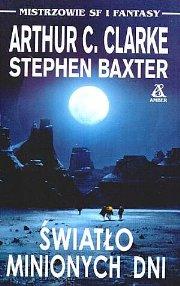
Szef wielkiej stacji telewizyjnej dokonuje epokowego odkrycia — znajduje metodę tworzenia mikrotuneli podprzestrzennych, które pozwalają zajrzeć kamerze w każde miejsce w teraźniejszości i przeszłości... W przezroczystym świcie nic nie ukryje się przed kamerą. Ludzie zaczynają szukać sposobów na ukrycie swojej prywatności i swoich zbrodni…
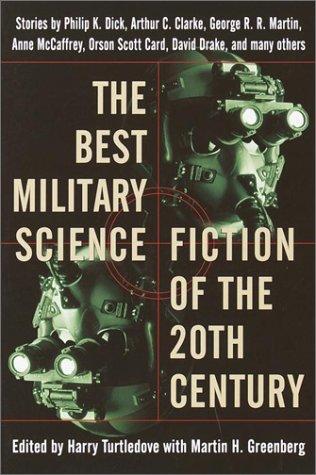
Explosive and provocative battles fought across the boundaries of time and space—and on the frontiers of the human mind.
Science fiction's finest have yielded this definitive collection featuring stories of warfare, victory, conquest, heroism, and overwhelming odds. These are scenarios few have ever dared to contemplate, and they include:
-"Superiority": Arthur C. Clarke presents an intergalactic war in which one side's own advanced weaponry may actually lead to its ultimate defeat.
-"Dragonrider": A tale of Anne McCaffrey's Dragonriders of Pern, in which magic tips the scales of survival.
-"Second Variety": Philip K. Dick, author of the short story that became the movie Blade Runner, reaches new heights of terror with his post apocalyptic vision of the future.
-"The Night of the Vampyres": A chilling ultimatum of atomic proportions begins a countdown to disaster in George R. R. Martin's gripping drama.
-"Hero": Joe Haldeman's short story that led to his classic of interstellar combat, The Forever War.
-"Ender's Game": The short story that gave birth to Orson Scott Card's masterpiece of military science fiction.
. . . as well as stories from Poul Anderson, Gregory Benford, C. J. Cherryh, David Drake, Cordwainer Smith, Harry Turtledove and Walter John Williams.
Guaranteed to spark the imagination and thrill the soul, these thirteen science fiction gems cast a stark light on our dreams and our darkest fears—truly among the finest tales of the 20th century.
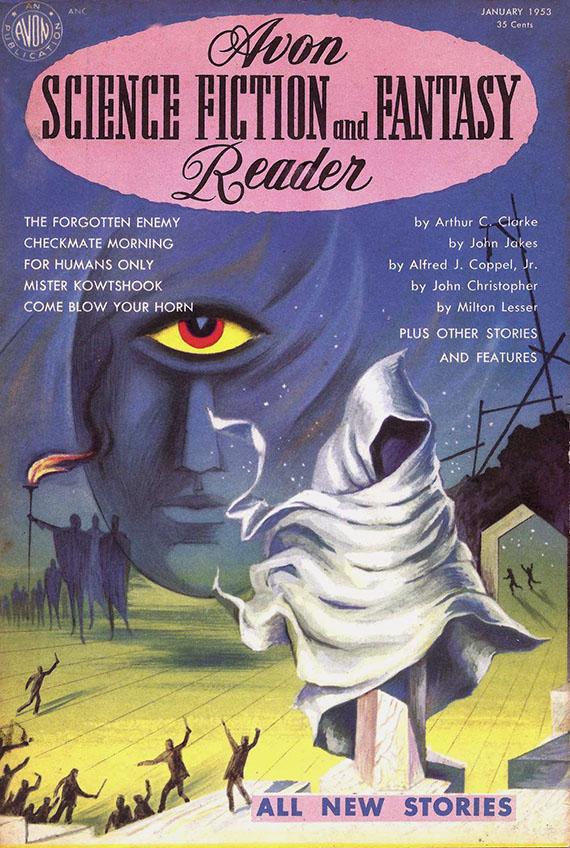
Arthur C. Clarke's brilliant exposition on the building of the space-station, THE EXPLORATION OF SPACE, has caused such a stir that many people have forgotten that the English writer can also create convincing, spine-tingling fiction. We think THE FORGOTTEN ENEMY is as fine a tale as has flowed from his prolific pen.

A hundred years after the sinking of the Titanic, two of the world’s most powerful corporations race to find a way to raise and preserve the doomed luxury liner. The quest to uncover the secrets of the wreck and reclaim her becomes an obsession… and for some, a fatal one.

The crowning achievement of any professional writer is to get paid twice for the same material: write a piece for one publisher and then tweak it just enough that you can turn around and sell it to someone else. While it’s specious to accuse Stephen Baxter and Arthur C. Clarke of this, fans of both authors will definitely notice some striking similarities between Light of Other Days and other recent works by the two, specifically Baxter’s Manifold: Time and Clarke’s The Trigger.
The Light of Other Days follows a soulless tech billionaire (sort of an older, more crotchety Bill Gates), a soulful muckraking journalist, and the billionaire’s two (separated since birth) sons. It’s 2035, and all four hold ringside seats at the birth of a new paradigm-destroying technology, a system of "WormCams," harnessing the power of wormholes to see absolutely anyone or anything, anywhere, at any distance (even light years away). As if that weren’t enough, the sons eventually figure out how to exploit a time-dilation effect, allowing them to use the holes to peer back in time.
For Baxter’s part, the Light of Other Days develops another aspect of Manifold’s notion that humanity might have to master the flow of time itself to avert a comparatively mundane disaster (yet another yawn-inducing big rock threatening to hit the earth); Clarke, just as he did with Trigger’s anti-gun ray, speculates on how a revolutionary technology can change the world forever.
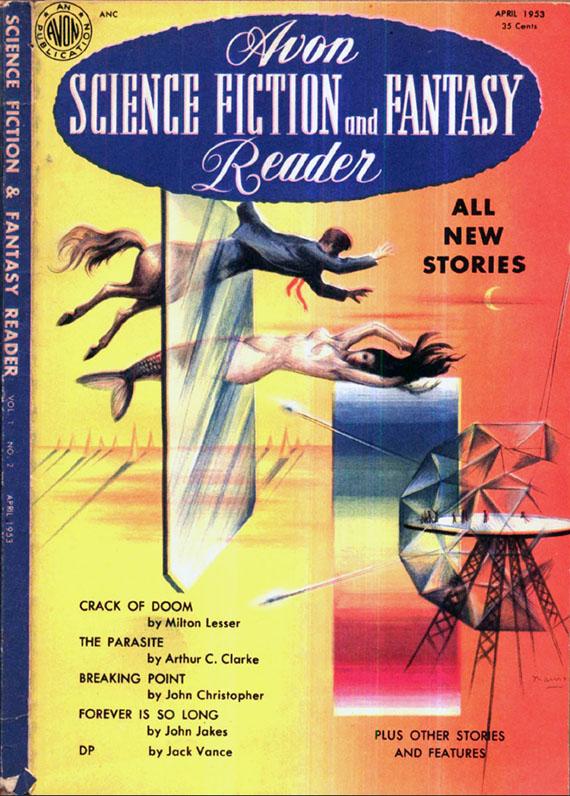
Ever done anything for no particular reason at all? Ever feel as if you were arguing with yourself? Do you sometimes get the feeling that you’re really two people who are at odds over the basic rights and wrongs of life?
Probably you're merely schizophrenic, and there’s nothing to worry about except the prospect of life in a padded cell. But, on the other hand, perhaps. . . .