 fb2
fb2
The world Cal and Frida have always known is gone, and they've left the crumbling city of Los Angeles far behind them. They now live in a shack in the wilderness, working side-by-side to make their days tolerable despite the isolation and hardships they face. Consumed by fear of the future and mourning for a past they can't reclaim, they seek comfort and solace in one other. But the tentative existence they've built for themselves is thrown into doubt when Frida finds out she's pregnant.
Terrified of the unknown but unsure of their ability to raise a child alone, Cal and Frida set out for the nearest settlement, a guarded and paranoid community with dark secrets. These people can offer them security, but Cal and Frida soon realize this community poses its own dangers. In this unfamiliar world, where everything and everyone can be perceived as a threat, the couple must quickly decide whom to trust.
A gripping and provocative debut novel by a stunning new talent, California imagines a frighteningly realistic near future, in which clashes between mankind's dark nature and irrepressible resilience force us to question how far we will go to protect the ones we love.
A mediados de los cuarenta, Ringo es un chiquillo de quince años que pasa las horas muertas en el bar de la señora Paquita, moviendo los dedos sobre la mesa, como si repasara las lecciones de piano que su familia ya no puede pagarle.En esa taberna del barrio de Gracia, el chaval es testigo de la historia de amor de Vicky Mir y el señor Alonso: ella, una mujer entrada en años y en carnes, masajista de profesión, ingenua y enamoradiza; él, un cincuentón apuesto que ha acabado instalándose en su casa. Allí viven junto a Violeta, la hija de la señora Mir, hasta que sucede algo inesperado: un domingo por la tarde, Vicky se echa a las vías muertas de un tranvía intentando un suicidio imposible y patético, y el señor Alonso desaparece para no volver. Lo único que queda de él es una carta que prometió escribir y que Vicky estará esperando y deseando hasta la locura, mientras Violeta mueve sus espléndidas caderas por el barrio, hosca e indiferente a los halagos.La vida entera discurre por el bar de la señora Paquita y bajo la mirada de Ringo, que escucha, lee y finalmente empezará a escribir, llenando de luz la triste caligrafía de toda una generación que alimentó sus sueños en los cines de barrio y en las calles grises de una ciudad donde el futuro parecía algo improbable.Espléndido relato de iniciación al deseo y a la escritura, Caligrafía de los sueños es la primera novela que Juan Marsé publica tras la concesión del Premio Cervantes en 2009.
In 1977, one of the world’s finest crime novelists turned his pen to suspense of a very different sort — and the results have never been published, until now.
Fans of mystery fiction have often pondered whether it would be possible to write a suspense novel without any crime at all, and in CALL ME A CAB the masterful Donald E. Westlake answered the question in his inimitable style. You won’t find any crime in these pages — but what you will find is a wonderful suspense story, about a New York City taxi driver hired to drive a beautiful woman all the way across America, from Manhattan to Los Angeles, where the biggest decision of her life is waiting to be made. It’s Westlake at his witty, thought-provoking best, and it proves that a page-turner doesn’t need to have a bomb set to go off at the end of it in order to keep sparks flying every step of the way.
Call Me by Your Name is the story of a sudden and powerful romance that blossoms between an adolescent boy and a summer guest at his parents' cliff-side mansion on the Italian Riviera. Unprepared for the consequences of their attraction, at first each feigns indifference. But during the restless summer weeks that follow, unrelenting buried currents of obsession and fear, fascination and desire, intensify their passion as they test the charged ground between them. What grows from the depths of their spirits is a romance of scarcely six weeks' duration and an experience that marks them for a lifetime. For what the two discover on the Riviera and during a sultry evening in Rome is the one thing both already fear they may never truly find again: total intimacy.
The psychological maneuvers that accompany attraction have seldom been more shrewdly captured than in André Aciman's frank, unsentimental, heartrending elegy to human passion. Call Me by Your Name is clear-eyed, bare-knuckled, and ultimately unforgettable.
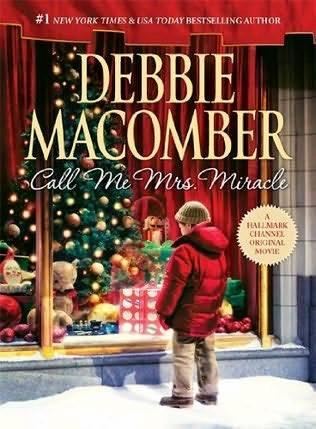
From #1 New York Times and USA Today bestselling author Debbie Macomber – Mrs. Miracle on 34th Street! While working in the toy department of a family-run department store in NYC, Mrs. Miracle seizes the opportunity to connect Holly, who is searching for the perfect robot for her nephew, with Jake, the owner's son.
Calligraphy Lesson is the first English-language collection of short stories by Mikhail Shishkin, the most acclaimed contemporary author in Russia. Spanning his entire writing career, from his first published story, “Calligraphy Lesson,” which heralded an entirely new voice in post-Soviet Russian literature and won him Russia’s prestigious Debut Prize in 1993, to creative essays reflecting on the transcendent importance of language, to the newest story, “Nabokov’s Inkblot,” written in 2013 for dramatic adaptation by a theater in Zurich. A master prose writer and unique stylist, Shishkin is heir to the greatest Russian writers, such as Tolstoy, Bunin, and Pasternak, and is the living embodiment of the combination of style and content that has made Russian literature so unique and universally popular for over two centuries. Shishkin’s breathtakingly beautiful writing style comes across perfectly in these stories, where he experiments with the forms and ideas that are worked into his grand novels while exploring entirely new literary territory in the space between fiction and creative nonfiction as he reflects on the most important and universal themes in life: love, happiness, art, death, resurrection…
Calloustown, the seventh collection from master raconteur George Singleton, who’s been praised by The Atlanta Journal-Constitution as the “unchallenged king of the comic Southern short story,” finds the author at the absolute top of his game as he traces the unlikely inhabitants of the titular Calloustown in all their humanity. Whether exploring family, religion, politics or the true meaning of home, these stories range from deeply affecting to wildly absurd and back again, all in the blink of an eye.
El Domingo de Ramos de 1965 cuatro personajes inician un viaje hacia Veracruz y se detienen en Cholula, ciudad de las pirámides aztecas. En el laberinto de sus galerías se internarán las dos parejas, como en un descenso a los infiernos, que concluirá con una tragedia ritual inesperada. `Ficción total` en palabras del propio autor, `Cambio de piel` indaga en el mito del México prehispánico y en el holocausto europeo a través de la memoria de sus protagonistas para decirnos que, en definitiva, todas las violencias son la misma violencia. Un retrato del hombre de nuestro siglo, atormentado por las dudas sobre el presente, la carga del pasado y el miedo del porvenir.
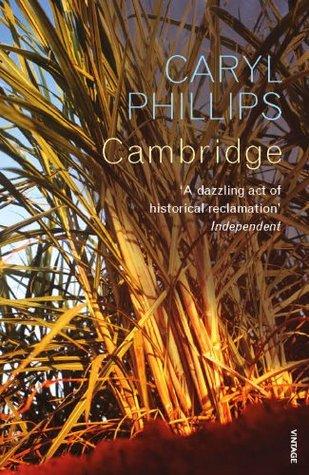
Cambridge is a powerful and haunting novel set in that uneasy time between the abolition of the slave trade and the emancipation of the slaves. It is the story of Emily Cartwright, a young woman sent from England to visit her father's West Indian plantation, and Cambridge, a plantation slave, educated and Christianised by his first master in England and now struggling to maintain his dignity.
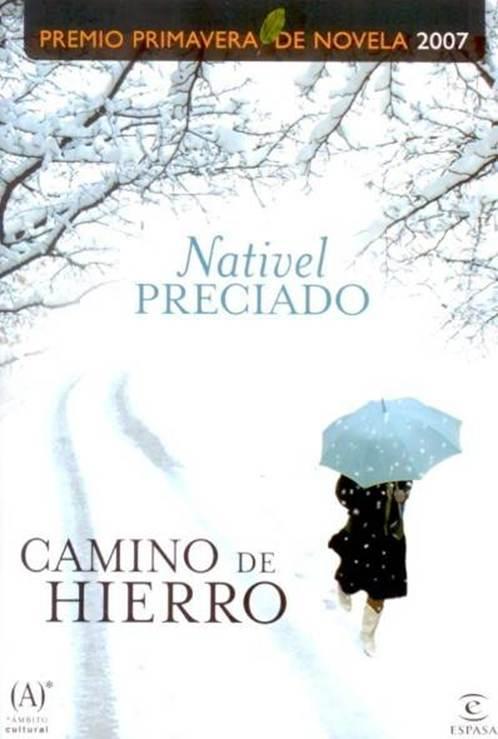
La soledad y el dolor amargan la vida de Paula desde la marcha inesperada e inexplicable de su amadísimo esposo Lucas, su cómplice y su maestro, con quien había planeado una existencia de plenitud y de gozo en la que encarar el otoño de sus vidas. Ahora sólo quedan el vacío y el desánimo, la desolación de una ausencia incomprensible. Paula lucha por sobreponerse y viaja a León, el escenario de su infancia, para recuperar la memoria de su abuelo Román, condenado en un juicio inicuo y asesinado tras la Guerra Civil, en la feroz represión desatada por los vencedores contra los “enemigos de España”. En León, Paula reencontrará su propio pasado, el de su familia destrozada, y el pasado colectivo de una tierra asolada por el odio cainita. El reencuentro con sus parientes le permitirá recuperar los papeles con los que reconstruir los últimos días del abuelo Román, un hombre bueno destruido en ese “tiempo de canallas”. Es una novela descarnada, sin concesiones, pero llena también de emoción y ternura, y que gira en torno a dos temas esenciales y universales: la muerte y la memoria. Es también una novela valiente, con la pretensión de ser un canto al ser humano y lo más sublime de su esencia, a su capacidad de sobreponerse a la desgracia y de enfrentar el conocimiento de sí mismo.
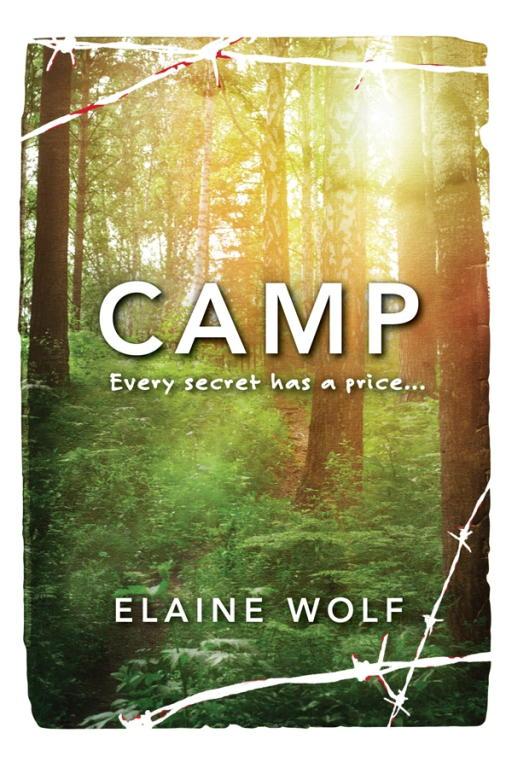
Every secret has a price.
For most girls, sleepaway camp is great fun. But for Amy Becker, it’s a nightmare. Amy, whose home life is in turmoil, is sent to Camp Takawanda for Girls for the first time as a teenager. Although Amy swears she hates her German-immigrant mother, who is unduly harsh with Amy’s autistic younger brother, Amy is less than thrilled about going to camp. At Takawanda she is subjected to a humiliating “initiation” and relentless bullying by the ringleader of the senior campers. As she struggles to stop the mean girls from tormenting her, Amy becomes more confident. Then a cousin reveals dark secrets about Amy’s mother’s past, which sets in motion a tragic event that changes Amy and her family forever.
Camp is a compelling coming-of-age novel about bullying, mothers and daughters, and the collateral damage of family secrets. It will resonate with a wide teenage readership. Camp will be a strong addition to school recommended reading and summer reading lists, and it is appropriate for anti-bullying programs. Mostly, though, Camp is a mother-daughter story for mothers and daughters to share.
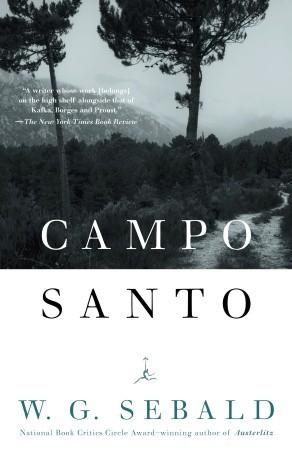
This final collection of essays by W. G. Sebald offers profound ruminations on many themes common to his work — the power of memory and personal history, the connections between images in the arts and life, the presence of ghosts in places and artifacts. Some of these pieces pay tribute to the Mediterranean island of Corsica, weaving elegiacally between past and present, examining, among other things, the island’s formative effect on its most famous citizen, Napoleon. In others, Sebald examines how the works of Günter Grass and Heinrich Böll reveal “the grave and lasting deformities in the emotional lives” of postwar Germans; how Kafka echoes Sebald’s own interest in spirit presences among mortal beings; and how literature can be an attempt at restitution for the injustices of the real world.
Dazzling in its erudition, accessible in its deep emotion, Campo Santo confirms Sebald’s status as one of the great modern writers who divined and expressed the invisible connections that determine our lives.
“W. G. Sebald exemplified the best kind of cosmopolitan literary intelligence — humane, digressive, deeply erudite, unassuming and tinged with melancholy. . In [Campo Santo] Sebald reveals his distinctive tone, as his winding sentences gradually mingle together curiosity and plangency, learning and self-revelation. . [Readers will] be rewarded with unexpected illuminations.”
— The Washington Post Book World
“Brilliant … bursting with flavors … at once precise and luscious … [Campo Santo] reminds us what a significant loss [Sebald’s] early passing was to the literary world.… [The] travel essays on Corsica are absolute gems.… [D]iscussions of Nabokov, Kafka, Gunter Grass, and the schizophrenic poet Herbeck … provide a satisfaction as rare as a perfect meal.”
— The Boston Globe
“[A] darkly companionable voice … This magnificent writer may have left abruptly, but his own shadow lingers.”
— The New York Times Book Review
“Max Sebald has begun to be widely recognized as one of the most important prose writers of the past 20 years.”
— The Economist
“Nuanced … multidimensional … Ruminative and elegiac, the late W. G. Sebald wove threads of timelessness connecting past and present.”
— The Dallas Morning News
“All of Sebald’s books are about journeys … [and he] is an entertaining guide.”
— The New York Review of Books
“[Sebald] is prone to visions, hallucinations, and premonitions, usually induced by a confrontation with a personal memory or a historical site. These are the source of the subdued horror of much of Sebald’s work, and also of its very dry humor.… Four fragments of a literary work about a trip to Corsica … have the virtues of Sebald’s best work, with its odd blend of fiction, memoir, history, and travelogue.”
— The New York Sun
“Stunning … intensely observant, erudite, lyrical, and provocative … Detailed descriptions of Sebald’s wanderings on [Corsica] turn into musings of astonishing beauty and insight into history, environmental decimation, and our feelings about death. These arresting meditations, brilliant syntheses of thought and feeling, are followed by masterful, passionate critical essays expressing Sebald’s belief in the healing power of literature and our obligation to remember the past and respect life in all its wonders and mysteries
— Booklist
“[A] masterful translation … Sebald was a beautiful and intelligent writer.”
— Publishers Weekly
“If you thought literary modernism was dead, guess again. The spirit of such masters as Kafka and Borges lives on in the [work] of W. G. Sebald.”
— The Wall Street Journal
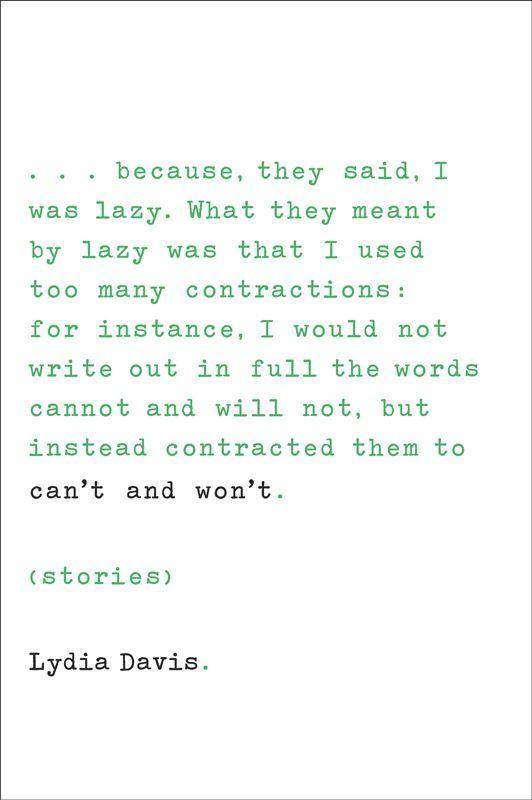
A new collection of short stories from the writer Rick Moody has called “the best prose stylist in America”.
Her stories may be literal one-liners: the entirety of “Bloomington” reads, “Now that I have been here for a little while, I can say with confidence that I have never been here before.” Or they may be lengthier investigations of the havoc wreaked by the most mundane disruptions to routine: in “A Small Story About a Small Box of Chocolates,” a professor receives a gift of thirty-two small chocolates and is paralyzed by the multitude of options she imagines for their consumption. The stories may appear in the form of letters of complaint; they may be extracted from Flaubert’s correspondence; or they may be inspired by the author’s own dreams, or the dreams of friends.
What does not vary throughout Can’t and Won’t, Lydia Davis’s fifth collection of stories, is the power of her finely honed prose. Davis is sharply observant; she is wry or witty or poignant. Above all, she is refreshing. Davis writes with bracing candor and sly humor about the quotidian, revealing the mysterious, the foreign, the alienating, and the pleasurable within the predictable patterns of daily life.
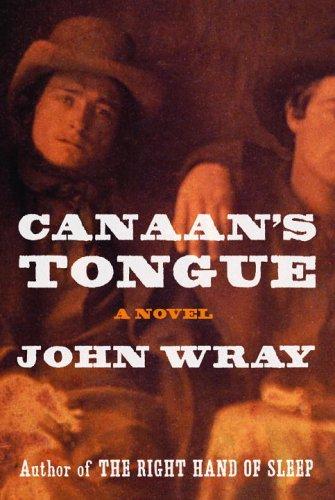
From the acclaimed and prizewinning author of The Right Hand of Sleep (“Brilliant…A truly arresting work”—The New York Times Book Review), an explosive allegorical novel set on the eve of the Civil War, about a gang of men hunted by both the Union and the Confederacy for dealing in stolen slaves.
Geburah Plantation, 1863: in a crumbling estate on the banks of the Mississippi, eight survivors of the notorious Island 37 Gang wait for the war, or the Pinkerton Detective Agency, to claim them. Their leader, a bizarre charismatic known only as “the Redeemer,” has already been brought to justice, and each day brings the battling armies closer. The hatred these men feel for one another is surpassed only by their fear of their many pursuers. Into this hell comes a mysterious force, an “avenging angel” that compels them, one by one, to a reckoning of their many sins.
Canaan’s Tongue is rooted in the criminal world of John Murrell, as infamous in his day as Jesse James or Al Capone. It tells the story of his reluctant protégé, Virgil Ball, who derives riches, sexual privilege, and power from the commerce in stolen slaves, known only as “the Trade”—and discovers, when he finally decides to free himself from the Redeemer’s yoke, that the force he is challenging is far more formidable than he imagined. It is as old as the river, as vast as the country itself, and it is with us to this day.
Canaan’s Tongue is a work of extraordinary narrative and emotional power.


An international literary phenomenon-now available for the first time in English translation-Candy is a hip, harrowing tale of risk and desire, the story of a young Chinese woman forging a life for herself in a world seemingly devoid of guidelines. Hong, who narrates the novel, and whose life in many ways parallels the author''s own, drops out of high school and runs away at age 17 to the frontier city of Shenzen. As Hong navigates the temptations of the city, she quickly falls in love with a young musician and together they dive into a cruel netherworld of alcohol, drugs, and excess, a life that fails to satisfy Hong''s craving for an authentic self, and for a love that will define her. This startling and subversive novel is a blast of sex, drugs, and rock ''n'' roll that opens up to us a modern China we''ve never seen before. – Banned in China -with Mian Mian labeled the ''poster child for spiritual pollution''-CANDY still managed to sell 60,000 copies, as well as countless additional copies in pirated editions. – CANDY has been published in eight countries to date and has become a bestseller in France.
***
Sex, drugs, and rock 'n roll: ingredients for novels about modern China? Yes, SHANGHAI BABY by Wei Hui (Pocket Books, 2001) showed international readers modern Chinese youth were not immune to the running dogs of Western decadence: Globalization might even include mixing with dissolute foreigners. Following SHANGHAI BABY to English by a few years, Mian Mian now suggests with CANDY the decadence is more likely homegrown, possibly an inevitable side-effect of China's ascension to manufacturing colossus for the world. After this first novel by Shanghainese Mian was banned in China -an "honor" Wei Hui also earned – she was labelled a "poster child for spiritual pollution."
The buzz made CANDY an underground bestseller.
Whether Mian Mian harvested autobiographical details for her protagonist Hong's drug-plagued odyssey is open to question. She prefaces the novel with a note: "This book exists because one morning as the sun was coming up I told myself that I had to swallow up all of the fear and garbage around me, and once it was inside me I had to transform it all into candy. Because I know you all will be able to love me for it."
In a larger context, Hong's story, the characters in her life, often resonate with American stories we've heard of the Old West and Gold Rush days (whether in California or Alaska). She leaves Shanghai to seek her future in the new frontier of the Special Economic Zones the Chinese government created along the south coast in the 1980s, near Guangzhou. Not only did the SEZs permit a laissez faire approach to business-much of the Confucian social rules that apply elsewhere are ignored. In the SEZ thick with fortune seekers and finders, prostitution flourishes, as does alcohol and drug addiction.
Hong, only 17, has dropped out of a competitive high school, somewhat dispirited by the suicide of a classmate (an echo of Murakami's NORWEGIAN WOOD), when she leaves for the south. There she meets a young musician Saining and they become lovers, so often hopeless for each other and so often hopeless for their addictions. They survive, slacker-style, largely by the generosity of Saining's mom, who lives in Japan.
Hong's love for Saining has compelling moments of violence, promiscuity, and druggy indifference. But the greatest achievement of Hong's story, perhaps, is the honest testimony to the erasure of desire, the great sucking away of soul only addiction can wreak on a love that nonetheless won't go away. From a null point, from a Murakami-esque death in life, Hong goes on to find redemption can be hers.This stark portrait is not without lighter moments. For example, Hong's friend Bug is convinced he has AIDS. The horror of that discovery is brought alive. Page after page: consultation with friends, plans to leave the country, examination by a Beijing AIDS specialist. Finally, the revelation too many OTC drugs to get high had caused the troubling symptoms.
Like Murakami's post-consumerist young generation in Japan, Mian Mian suggests the same search for individual authenticity is underway in China. As China 's economic engine gains force, so does disillusionment among the young with the old ways. Hong suggests her ambivalence towards China 's rising star: "The moment the plane left the ground, I fucking burst into tears. I swore I would never come back to this town in the South again. This weird, plastic, bullshit Special Economic Zone, with all that pain and sadness, and the face of love, and the whole totally fucked-up world of heroin, and the late 1980s gold rush mentality, and all that pop music from Taiwan and Hong Kong. This place had all of the best and all of the worst. It had become my eternal nightmare." Hong awakes before the CANDY is gone. Mian's compassion for youth of New China elevates and brings irony to a story lesser writers might have passed off as sensation-ridden heroin chic.

This novel takes place in the eponymous Cannery Row, a place made up of ’junk heaps, sardine canneries of corrugated iron, honky tonks, restaurants and whore houses, and little crowded groceries, and laboratories and flophouses’. Although there is a narrative trajectory — the desire of Mack and the other boys living at the Palace Flophouse to throw a party for their friend and benefactor, Doc — the plot of this novel is really that plot of land Steinbeck describes so well.

The Iraq War, two divers, a California family, and within that family an intimacy that open the larger stories more deeply still. Cannonball continues in McElroy's tradition of intricately woven story lines and extreme care regarding the placement of each and every word. A novel where the sentences matter as much as the overall story.