 fb2
fb2The Parson was not published in Anna Kavan’s lifetime, but found after her death in manuscript form. Thought to have been written between the mid 50s and early 60s, it presages, through its undertones and imagery, some of Kavan’s last and most enduring fiction (such as Ice). It was published finally, to wide acclaim, by Peter Owen in 1995. The Parson of the title is not a cleric, but an upright young army officer so nick-named for his apparent prudishness. On leave in his native homeland, he meets a rich and beguiling beauty, the woman of his dreams. The days that the Parson spends with Rejane, riding in and exploring the wild moorland have their own enchantment. But Rejane grows restless in this desolate land; doubtless in love with the Parson, she discourages any intimacy. Until that is, she persuades him to take her to a sinister castle situated on a treacherous headland. This is less a tale of unrequited love than exploration of divided selves, momentarily locked in an unequal embrace. Passion is revealed as a play of the senses as well as a destructive force. There have been valid comparisons to Poe, Kafka, and Thomas Hardy, but the presence of her trademark themes, cleverly juxtaposed and set in her risk-taking prose, mark The Parson as 100 % Kavan.
"Such beautiful writing." – Jodi Picoult
The wondrous Aimee Bender conjures the lush and moving story of a girl whose magical gift is really a devastating curse.
On the eve of her ninth birthday, unassuming Rose Edelstein, a girl at the periphery of schoolyard games and her distracted parents' attention, bites into her mother's homemade lemon-chocolate cake and discovers she has a magical gift: she can taste her mother's emotions in the cake. She discovers this gift to her horror, for her mother – her cheerful, good-with-crafts, can-do mother – tastes of despair and desperation. Suddenly, and for the rest of her life, food becomes a peril and a threat to Rose.
The curse her gift has bestowed is the secret knowledge all families keep hidden – her mother's life outside the home, her father's detachment, her brother's clash with the world. Yet as Rose grows up she learns to harness her gift and becomes aware that there are secrets even her taste buds cannot discern.
The Particular Sadness of Lemon Cake is a luminous tale about the enormous difficulty of loving someone fully when you know too much about them. It is heartbreaking and funny, wise and sad, and confirms Aimee Bender's place as 'a writer who makes you grateful for the very existence of language' (San Francisco Chronicle).
Selected for Indies Introduce Summer/Fall 2016.
Catherine Leroux's first novel, translated into English brilliantly by Lazer Lederhendler, ties together stories about siblings joined in surprising ways. A woman learns that she absorbed her twin sister's body in the womb and that she has two sets of DNA; a girl in the deep South pushes her sister out of the way of a speeding train, losing her legs; and a political couple learn that they are non-identical twins separated at birth. The Party Wall establishes Leroux as one of North America's most intelligent and innovative young authors.
Catherine Leroux was born in 1979 in Montreal, Quebec, where she continues to live and write.
In her most accessible, commercial novel yet, the “supremely perceptive writer of formidable skill and intelligence (New York Times Book Review) turns her astute eye to a dramatic family reunion, where simmering tensions and secrets come to a head over three long, hot summer weeks.
With five novels and two collections of stories, Tessa Hadley has earned a reputation as a fiction writer of remarkable gifts. She brings all of her considerable skill and an irresistible setup to The Past, a novel in which three sisters, a brother, and their children assemble at their country house.
These three weeks may be their last time there; the upkeep is prohibitive, and they may be forced to sell this beloved house filled with memories of their shared past (their mother took them there to live when she left their father). Yet beneath the idyllic pastoral surface, hidden passions, devastating secrets, and dangerous hostilities threaten to consume them.
Sophisticated and sleek, Roland’s new wife (his third) arouses his sisters’ jealousies and insecurities. Kasim, the twenty-year-old son of Alice’s ex-boyfriend, becomes enchanted with Molly, Roland’s sixteen-year-old daughter. Fran’s young children make an unsettling discovery in a dilapidated cottage in the woods that shatters their innocence. Passion erupts where it’s least expected, leveling the quiet self-possession of Harriet, the eldest sister.
Over the course of this summer holiday, the family’s stories and silences intertwine, small disturbances build into familial crises, and a way of life — bourgeois, literate, ritualized, Anglican — winds down to its inevitable end.
With subtle precision and deep compassion, Tessa Hadley brilliantly evokes a brewing storm of lust and envy, the indelible connections of memory and affection, the fierce, nostalgic beauty of the natural world, and the shifting currents of history running beneath the surface of these seemingly steady lives. The result is a novel of breathtaking skill and scope that showcases this major writer’s extraordinary talents.
Rahimi (Earth and Ashes) won the 2008 Prix Goncourt for this brief, melodramatic novel set amid factional violence somewhere in Afghanistan or elsewhere. It follows the circumscribed movements of a Muslim woman largely confined to the house where she nurses her comatose husband, who's been shot by a fellow jihadist. A humorless, inflammatory mullah pays the woman unwelcome visits, and sexually menacing soldiers break into her house. Though such events generate tension and drama, the novel's cultural and historical milieu lacks specificity, and Rahimi may have erred in sketching the story's political context vaguely. For some readers, his intimate attention to objects and spaces may compensate for the grating confessional tenor that develops later, when the narrator divulges damning secrets to her husband's unresponsive body and fulfilling the book's premise a little too obviously by referring to him as her patience stone. McLean 's translation is faultless, but the narrator's reminiscences feel stilted; the patience-stone conceit borders on gimmickry; and incidents of a violent or sexual nature seem overdetermined.
NATIONAL BESTSELLER
An Atlantic Magazine Best Book of the Year
A Publishers Weekly Best Book of the Year
“The Melrose Novels are a masterwork for the twenty-first century, written by one of the great prose stylists in England.” —Alice Sebold, author of The Lovely Bones
For more than twenty years, acclaimed author Edward St. Aubyn has chronicled the life of Patrick Melrose, painting an extraordinary portrait of the beleaguered and self-loathing world of privilege. This single volume collects the first four novels—Never Mind, Bad News, Some Hope, and Mother’s Milk, a Man Booker finalist—to coincide with the publication of At Last, the final installment of this unique novel cycle.
By turns harrowing and hilarious, these beautifully written novels dissect the English upper class as we follow Patrick Melrose’s story from child abuse to heroin addiction and recovery. Never Mind, the first novel, unfolds over a day and an evening at the family’s chateaux in the south of France, where the sadistic and terrifying figure of David Melrose dominates the lives of his five-year-old son, Patrick, and his rich and unhappy American mother, Eleanor. From abuse to addiction, the second novel, Bad News opens as the twenty-two-year-old Patrick sets off to collect his father’s ashes from New York, where he will spend a drug-crazed twenty-four hours. And back in England, the third novel, Some Hope, offers a sober and clean Patrick the possibility of recovery. The fourth novel, the Booker-shortlisted Mother’s Milk, returns to the family chateau, where Patrick, now married and a father himself, struggles with child rearing, adultery, his mother’s desire for assisted suicide, and the loss of the family home to a New Age foundation.
Edward St. Aubyn offers a window into a world of utter decadence, amorality, greed, snobbery, and cruelty—welcome to the declining British aristocracy.
Afghan-American Nadia Hashimi's literary debut novel, The Pearl that Broke Its Shell is a searing tale of powerlessness, fate, and the freedom to control one's own fate that combines the cultural flavor and emotional resonance of the works of Khaled Hosseini, Jhumpa Lahiri, and Lisa See.
In Kabul, 2007, with a drug-addicted father and no brothers, Rahima and her sisters can only sporadically attend school, and can rarely leave the house. Their only hope lies in the ancient custom of bacha posh, which allows young Rahima to dress and be treated as a boy until she is of marriageable age. As a son, she can attend school, go to the market, and chaperone her older sisters.
But Rahima is not the first in her family to adopt this unusual custom. A century earlier, her great-aunt, Shekiba, left orphaned by an epidemic, saved herself and built a new life the same way.
Crisscrossing in time, The Pearl the Broke Its Shell interweaves the tales of these two women separated by a century who share similar destinies. But what will happen once Rahima is of marriageable age? Will Shekiba always live as a man? And if Rahima cannot adapt to life as a bride, how will she survive?
In these dazzling stories, Mavis Gallant immerses us in the lives of ordinary people swept up in the upheaval and displacement that followed in the wake of the Second World War. A bitter yet stubbornly pragmatic woman prepares for what promises to be another disastrous Christmas with her mother, her aunt, and her would-be-war-hero uncle. Engaged to another man, a woman travels to Paris with her older lover and his young son. A wife recollects her complicated relationship with the refugee woman who had a brief affair with her husband. Small mercies form the backbone of a friendship between an actress and a police commissioner. A career soldier, now discharged and stranded in France, makes his first adjustments to life as a civilian. In elegant, diamond-sharp prose, Gallant distills the vanities, absurdities, and contradictions that lie at the heart of human behavior and fashions stories of rare power and insight.
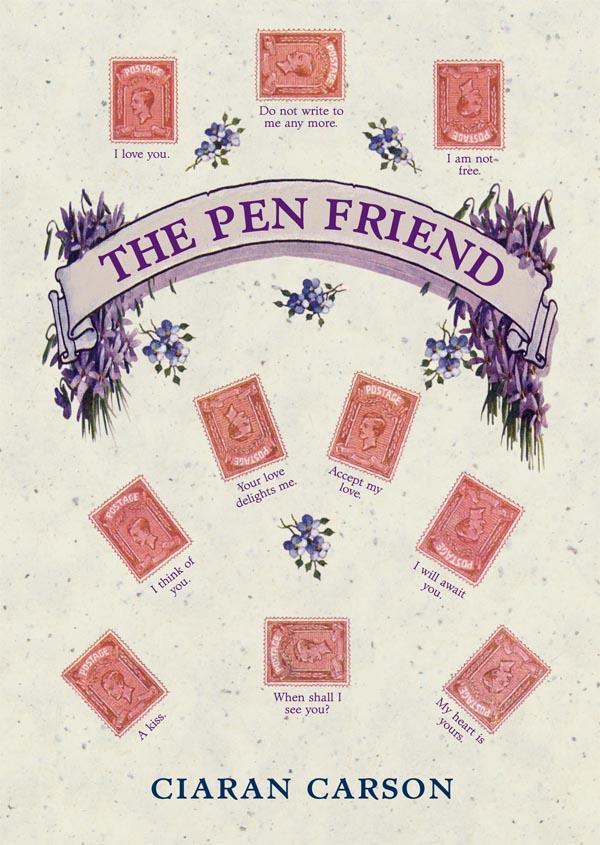
More than twenty years after the end of their love affair, Gabriel receives a series of cryptic postcards from his old flame. Inspired to write his own letter, Gabriel dwells in sensuous detail on perfumes, clothes, and conversations as he tries to recapture the spirit of their romance in 1980s Belfast. As Gabriel teases out the significance of the postcards, the layers of meaning in the images and messages, his reveries develop into richly textured meditations on writing, memory, spiritualism, and surveillance. The result is an elaborate and intricate web of fact and fiction, a narrative that marries sharp historical insights with imaginative exuberance, a strange and wonderful novel confirming Ciaran Carson as one of Ireland's most exciting writers.
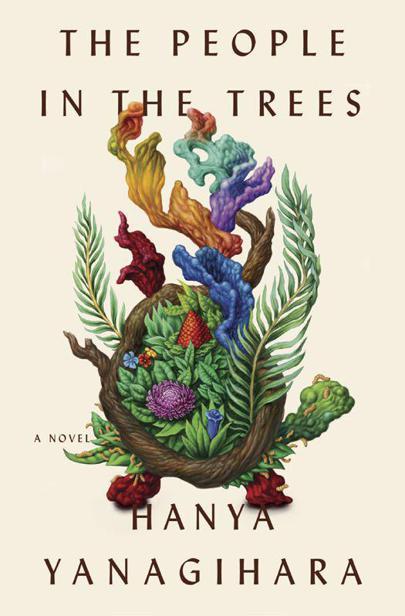
In 1950, a young doctor called Norton Perina signs on with the anthropologist Paul Tallent for an expedition to the remote Micronesian island of Ivu'ivu in search of a rumored lost tribe. They succeed, finding not only that tribe but also a group of forest dwellers they dub "The Dreamers," who turn out to be fantastically long-lived but progressively more senile. Perina suspects the source of their longevity is a hard-to-find turtle; unable to resist the possibility of eternal life, he kills one and smuggles some meat back to the States. He scientifically proves his thesis, earning worldwide fame and the Nobel Prize, but he soon discovers that its miraculous property comes at a terrible price. As things quickly spiral out of his control, his own demons take hold, with devastating personal consequences.
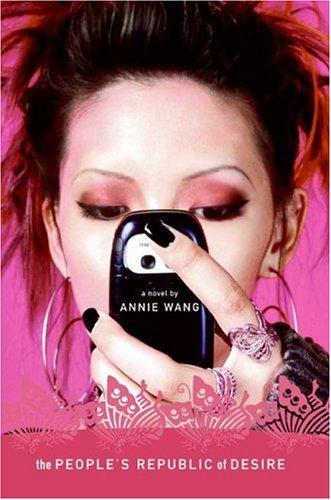
Those who know little to nothing about Chinese culture will receive an eye-opening experience of how China was and how China is now through Annie Wang’s novel The People’s Republic of Desire.
Wang takes readers on a journey with four cosmopolitan women learning to live life in the new China. Niuniu, the book’s narrator, is a Chinese American woman, who spent seven years living in the States obtaining her degree in journalism. In the book, Niuniu is now considered a “returnee” when she goes back to China to get over a broken heart. What she meets upon return to her homeland is not the traditional Confucian values she left, but a new modern China where Western culture seems to have taken over – to an extreme.
Niuniu, the narrator of the book, is called a “Jia Yangguiz” which means a “fake foreign devil” because of her Westernized values. Her friend Beibei is the owner of her own entertainment company and is married to a man who cheats, so Beibei deals with his infidelity by finding her own young lovers. Lulu is a fashion magazine editor who has been having a long-term affair with a married man, and thinks nothing of having several abortions to show her devotion to him. CC, also a returnee, struggles with her identity between Chinese and English.
In The People’s Republic of Desire the days of the 1989 idealism and the Tiananamen Sqaure protests seem forgotten to this new world when making a fast yuan, looking younger, more beautiful, and acting important seems to be of the most concern to this generation.
Wang uses these four woman to make humorous and sometimes sarcastic observations of the new China and accurately describes how Western culture has not only infiltrated China, but is taken to the extreme by those who have experienced a world outside the Confucian values. What was once a China consumed with political passions, nepotism, unspoken occurrences, and taboos is now a world filled with all those things once discouraged – sex, divorce, pornography, and desire for material goods. It’s taken the phrase “keeping up with the Joneses” to an all-time high.
Wang offers a glimpse of modern day Beijing and what it would take for any woman – returnee or otherwise – to move forward and conquer dilemmas in the fast-moving Chinese culture. The characters joke that “nowadays, the world is for bad girls” and all the values of their youth have been lost to this new modern generation of faking their identity, origin, and accent. It seems that such a cultural shock would be displeasing to those who knew the old China, but instead these young women seem to be enjoying the newfound liberties.
If you’re looking for a quick read with a plot, you won’t find it in The People’s Republic of Desire. Each of the 101 chapters read like individual short stories, separate stories about friends, family, and other individuals who Niuniu is acquainted with or meets and through which Wang weaves a humorous and often sarcastic trip into Beijing, China.
The book is filled with topics of family, friends, Internet dating, infidelity, rich, poor, and many of the same ideals most cultures worry themselves about. Many of the chapters end with popular phrases that give the reader an insight into Chinese culture and language. Wang does seem to use Niuniu’s journalistic background to intertwine the other characters and come to a somewhat significant conclusion.
As the press release states, “Wang paints an arresting portrait of a generation suffocating in desire. For love. For success. For security. For self actualization. And for the most elusive aspiration of all: happiness.”
With The People’s Republic of Desire, Wang does just that. She speaks not only of the new culture but also of the old ways and how China used to be. She may have educated readers about the new China with her knowledge of the Western and Chinese culture, but also Wang hits the nail on the head when it comes to showing most people’s needs. After all, aren’t most human beings striving for many of these same elusive dreams?
Joanne D. Kiggins
***
From Publishers Weekly
As Wang reveals in intimate detail, today's affluent Beijing women – educated, ambitious, coddled only children enamored of all things Western – are a generation unto themselves. The hyperobservant narrator of this fascinating novel (after Lili: A Novel of Tiananmen) is 20-something Niuniu, a journalist who was born in the United States but grew up in China and returned to America for college and graduate school. Now she's back in Beijing nursing a broken heart and discovering "what it means to be Chinese" in a money- and status-obsessed city altered by economic and sexual liberalization. Supporting Niuniu – and downing a few drinks with her – are her best buddies: entrepreneurial entertainment agent Beibei, sexy fashion mag editor Lulu and Oxford-educated CC. Sounds like the cast of Sex in the Forbidden City, but the thick cultural descriptions distinguish the novel from commercial women's fiction. A nonnative English speaker, Wang observes gender politics among the nouveau riche in careful, reportorial prose. Though Niuniu's romantic backstory forms a tenuous thread between the chapters, and the novel – based on Wang's newspaper column of the same title – doesn't finally hold together, this is a trenchant, readable account of a society in flux.
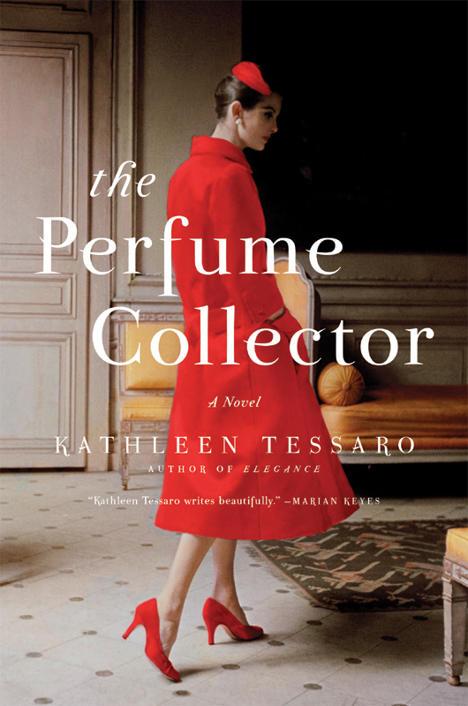
A remarkable novel about secrets, desire, memory, passion, and possibility.
Newlywed Grace Monroe doesn’t fit anyone’s expectations of a successful 1950s London socialite, least of all her own. When she receives an unexpected inheritance from a complete stranger, Madame Eva d’Orsey, Grace is drawn to uncover the identity of her mysterious benefactor.
Weaving through the decades, from 1920s New York to Monte Carlo, Paris, and London, the story Grace uncovers is that of an extraordinary women who inspired one of Paris’s greatest perfumers. Immortalized in three evocative perfumes, Eva d’Orsey’s history will transform Grace’s life forever, forcing her to choose between the woman she is expected to be and the person she really is.
The Perfume Collector explores the complex and obsessive love between muse and artist, and the tremendous power of memory and scent.
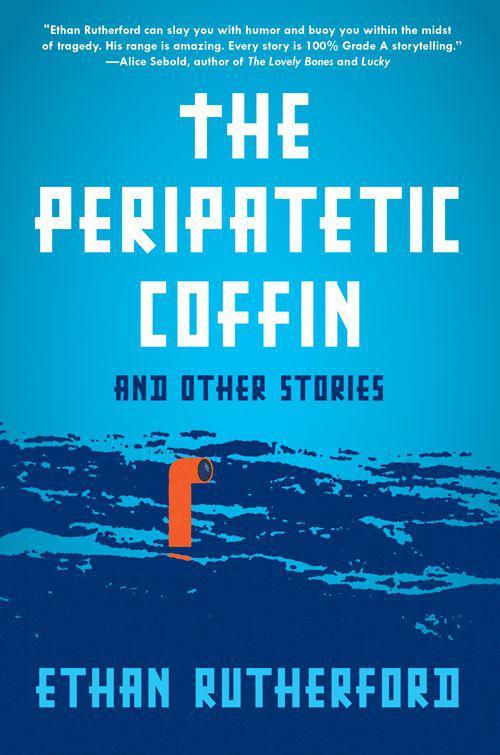
Alternately funny, menacing, and deeply empathetic, the wildly inventive stories in Ethan Rutherford’s The Peripatetic Coffin mark the debut of a powerful new voice in contemporary fiction
Worried about waning enrollment, the head counselor of the world’s worst summer camp leads his campers on a series of increasingly dubious escapades in an effort to revive their esprit de corps. A young boy on a sailing vacation with his father comes face-to-face with a dangerous stranger, and witnesses a wrenching act of violence. Parents estranged from their disturbed son must gird themselves for his visit, even as they cannot face each other. And in the dazzling title story, the beleaguered crew of the first Confederate submarine embarks on their final, doomed mission during the closing days of the Civil War.
Whether set aboard a Czarist-era Russian ship locked in Arctic ice, on a futuristic whaling expedition whose depredations guarantee the environmental catastrophe that is their undoing, or in a suburban basement where two grade-school friends articulate their mutual obsessions, these strange, imaginative, and refreshingly original stories explore the ways in which we experience the world: as it is, as it could be, and the dark contours that lie between.

Standing on the fringes of life… offers a unique perspective. But there comes a time to see what it looks like from the dance floor.
This haunting novel about the dilemma of passivity vs. passion marks the stunning debut of a provocative new voice in contemporary fiction.
This is the story of what it's like to grow up in high school. More intimate than a diary, Charlie's letters are singular and unique, hilarious and devastating. We may not know where he lives. We may not know to whom he is writing. All we know is the world he shares. Caught between trying to live his life and trying to run from it puts him on a strange course through uncharted territory. The world of first dates and mixed tapes, family dramas and new friends. The world of sex, drugs, and The Rocky Horror Picture Show, when all one requires is that perfect song on that perfect drive to feel infinite.
Through Charlie, Stephen Chbosky has created a deeply affecting coming-of-age story, powerful novel that will spirit you back to those wild and poignant roller coaster days known as growing up.
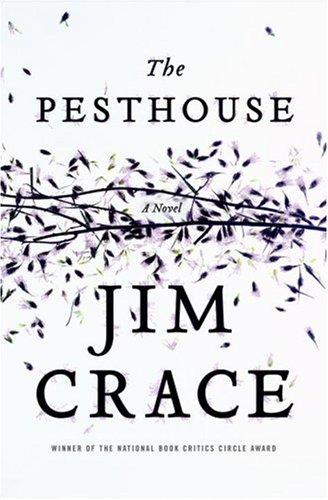
Jim Crace is a writer of spectacular originality and a command of language that moves a reader effortlessly into the world of his imagination. In The Pesthouse he imagines an America of the future where a man and a woman trek across a devastated and dangerous landscape, finding strength in each other and an unexpected love.
Once the safest, most prosperous place on earth, the United States is now a lawless, scantly populated wasteland. The machines have stopped. The government has collapsed. Farmlands lie fallow and the soil is contaminated by toxins. Across the country, families have packed up their belongings to travel eastward toward the one hope left: passage on a ship to Europe.
Franklin Lopez and his brother, Jackson, are only days away from the ocean when Franklin, nearly crippled by an inflamed knee, is forced to stop. In the woods near his temporary refuge, Franklin comes upon an isolated stone building. Inside he finds Margaret, a woman with a deadly infection and confined to the Pesthouse to sweat out her fever. Tentatively, the two join forces and make their way through the ruins of old America. Confronted by bandits rounding up men for slavery, finding refuge in the Ark, a religious community that makes bizarre demands on those they shelter, Franklin and Margaret find their wariness of each other replaced by deep trust and an intimacy neither one has ever experienced before.
The Pesthouse is Jim Crace’s most compelling novel to date. Rich in its understanding of America’s history and ethos, it is a paean to the human spirit.
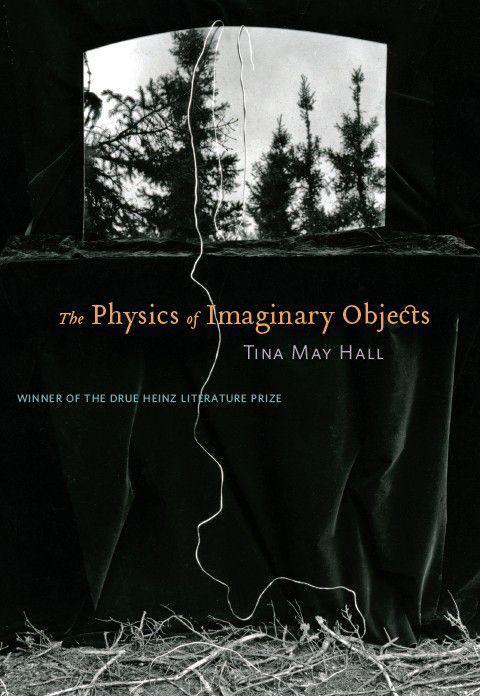
Winner of the 2010 Drue Heinz Literature Prize.
The Physics of Imaginary Objects, in fifteen stories and a novella, offers a very different kind of short fiction, blending story with verse to evoke fantasy, allegory, metaphor, love, body, mind, and nearly every sensory perception. Weaving in and out of the space that connects life and death in mysterious ways, these texts use carefully honed language that suggests a newfound spirituality.
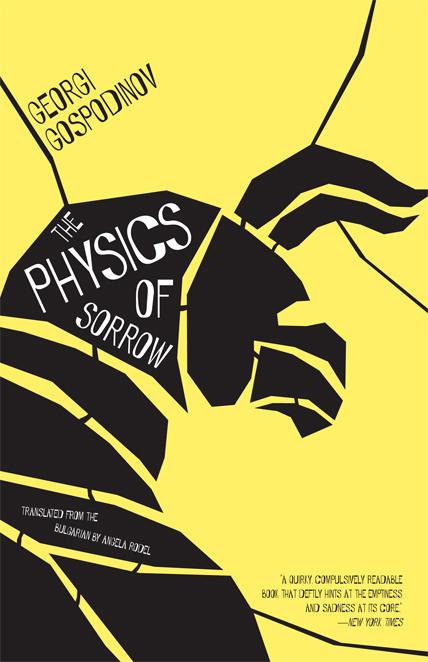
"Georgi Gospodinov wants to blow your mind — or maybe just provide the ultimate bathroom reader. The formal playfulness suggests Kundera with A.D.D. and potty jokes." — Ed Park, Village Voice
A finalist for both the Strega Europeo and Gregor von Rezzori awards (and winner of every Bulgarian honor possible), The Physics of Sorrow reaffirms Georgi Gospodinov's place as one of Europe's most inventive and daring writers.
Using the myth of the Minotaur as its organizing image, the narrator of Gospodinov's long-awaited novel constructs a labyrinth of stories about his family, jumping from era to era and viewpoint to viewpoint, exploring the mindset and trappings of Eastern Europeans. Incredibly moving — such as with the story of his grandfather accidentally being left behind at a mill — and extraordinarily funny — see the section on the awfulness of the question "how are you?" — Physics is a book that you can inhabit, tracing connections, following the narrator down various "side passages," getting pleasantly lost in the various stories and empathizing with the sorrowful, misunderstood Minotaur at the center of it all.
Physics of Sorrow will appeal to fans of Dave Eggers, Tom McCarthy, and Dubravka Ugresic for its unique structure, humanitarian concerns, and stunning storytelling.
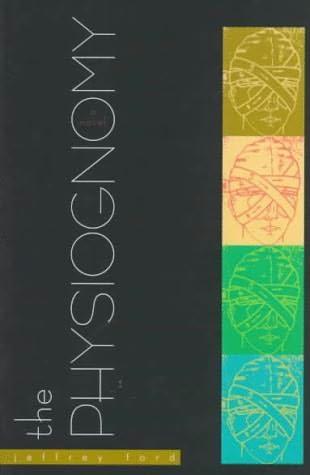
Sent from the Well-Built City to a barren mining town, physiognomist Cley is directed to find the thief who has stolen a supernatural and legendary white fruit that grew in the Earthly Paradise.

The extraordinary story of two generations in a Lisbon family of carpenters and of a father’s attempt to outrun his fate in the marathon at the Stockholm Olympics in 1912.
Set in the working-class district of Benfica in Lisbon, The Piano Cemetery tells the story of a family, and especially of the hopes and fears of the fathers who pass the baton of the generations on to their sons.
The Lazaro family are cabinet-makers who would rather be piano-makers. They have a carpentry shop in the Benfica district of Lisbon and there at the back is the ‘piano cemetery’ piled high with broken-down pianos that provide the spare parts needed for repairing pianos all over the city. It is a mysterious and magical place, a place of solace, a dreaming place and, above all, a trysting place for lovers.
The Piano Cemetery is a wonderfully accomplished novel in which the true story of the Portuguese marathon-runner, Francisco Lazaro, is woven into a rich narrative of love, betrayal, domestic happiness and dashed hopes. Narrated in part by the father of Francisco Lazaro on the day his grandson is born and the day he himself dies and in part by his son as he runs the Stockholm marathon of 1908, remembering his family and his loves as he struggles against the heat and strives to outrun death itself. It is a beautifully constructed tale, that is by turns, violent and tender, funny and moving, with flashes of true insight, startling imagery and an instinctive understanding of families and their ways.
The Piano Cemetery establishes José Luís Peixoto not only as the leading Portuguese novelist of his generation, but as a major figure on the international literary scene.
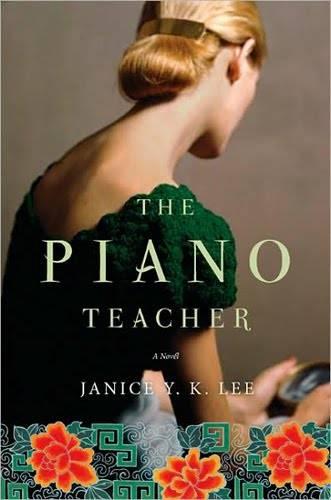
Former Elle editor Lee delivers a standout debut dealing with the rigors of love and survival during a time of war, and the consequences of choices made under duress. Claire Pendleton, newly married and arrived in Hong Kong in 1952, finds work giving piano lessons to the daughter of Melody and Victor Chen, a wealthy Chinese couple. While the girl is less than interested in music, the Chens' flinty British expat driver, Will Truesdale, is certainly interested in Claire, and vice versa. Their fast-blossoming affair is juxtaposed against a plot line beginning in 1941 when Will gets swept up by the beautiful and tempestuous Trudy Liang, and then follows through his life during the Japanese occupation. As Claire and Will's affair becomes common knowledge, so do the specifics of Will's murky past, Trudy's motivations and Victor's role in past events. The rippling of past actions through to the present lends the narrative layers of intrigue and more than a few unexpected twists. Lee covers a little-known time in Chinese history without melodrama, and deconstructs without judgment the choices people make in order to live one more day under torturous circumstances.